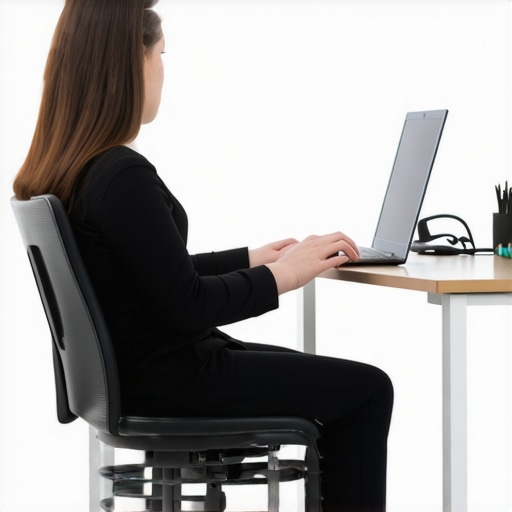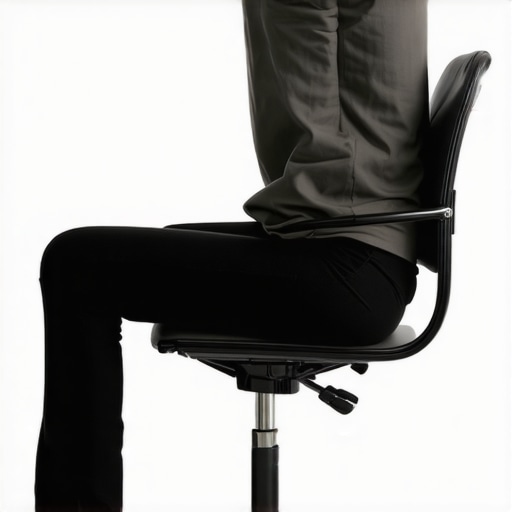
Why Most Lumbar Supports Are Actually Too Low
I vividly remember the day I finally realized why my back pain persisted even after using countless lumbar supports. I had spent years faithfully sitting with a cushion behind my lower back, believing I was doing the right thing. Yet, every morning, I’d wake up feeling stiff and sore, convinced I must be doing something wrong. Then, I experienced that lightbulb moment—most lumbar supports are actually placed too low to provide the relief we desperately seek.
Shocking Truth About Lumbar Support Placement
Most commercial lumbar supports, whether in office chairs or standalone cushions, are set in the wrong position. They’re typically placed around the sacrum or the lowest part of the lumbar spine, yet the real problem often lies higher up in your lower back—around the mid-lumbar region. When support is too low, it fails to engage the critical muscles and ligaments that maintain proper spinal curvature, leading to increased strain and discomfort.
In my experience, correcting this simple mistake made a massive difference. But understanding exactly where to position your lumbar support isn’t always obvious. And if you’re like me, you might have been misled by the industry’s standard advice, which often advocates for supports placed in the lower lumbar area. It’s a one-size-fits-all approach that doesn’t consider individual anatomy or posture tendencies.
Why this matters now more than ever
The modern workspace has transformed how we sit and work, often encouraging prolonged periods in ergonomically imperfect positions. According to a study published in the National Institutes of Health, prolonged poor posture significantly contributes to chronic back pain. As remote work becomes more common, many are unknowingly amplifying these risks with ill-fitting lumbar supports.
Have you ever felt that your back pain worsens after a long day of sitting, even with support? If so, you’re not alone. I’ve been there, and I learned that many of us are simply adjusting support incorrectly — often too low or in the wrong spot—unintentionally sabotaging our own comfort.
Here’s what we’ll uncover today…
We’ll explore practical ways to position your lumbar support for maximum benefit, debunk common myths, and discover how to tailor support to your unique spinal curve. Just imagine, sitting comfortably for hours without that nagging back ache. Ready to transform your posture and ease your pain? Let’s get started.
Is it really worth fussing over lumbar support placement?
I made the mistake early on of blindly following generic advice, thinking that any support is better than none. But real relief came when I learned to fine-tune the height and position of my lumbar cushion, focusing on my individual back’s shape. Trust me, a small tweak can make a huge difference in how your back feels after hours of sitting. Curious? Check out how expert techniques can optimize your back health and restore your mobility here.
Position Your Lumbar Support Precisely
First, identify the natural curve of your lower back. Sit upright and place your hands on your hips, feeling for the midline of your lumbar region. Use a mirror or have a trusted person observe your posture. The goal is to position the support around this mid-lumbar area where the natural inward curve is most pronounced.
When I adjusted my cushion higher to align with my mid-back, I noticed immediate relief. Initially, I placed it too low, just above my sacrum, which did little to support the actual problem zone. By shifting the cushion up by about 2 to 3 inches, I engaged my core lumbar muscles effectively, reducing strain and discomfort during prolonged sitting.
Use Visual Landmarks to Guide Placement
Imagine splitting your back into three sections horizontally—lower, middle, and upper. The support should align with the middle third. A practical method is to find the bottom of your ribcage and the top of your hips. Support should be centered somewhere in between, directly supporting the natural inward curve of your spine.
To make this easier, sit comfortably against your chair back, then place a small cushion or rolled towel at this targeted zone, adjusting until it feels snug without causing tension. This personal adjustment ensures the support aligns correctly with your anatomy.
Adjust Support Height During Real-Life Use
Take a moment to test your setup in your usual sitting position. Sit as you typically would during work or relaxation. If the support feels misplaced or causes discomfort, fine-tune its height while maintaining proper posture. Remember, static positions can mislead you—what feels right at first might shift as fatigue sets in.
I learned this lesson after a frustrating session where I kept readjusting my cushion, only to find that the optimal position was slightly higher than I initially thought. Repeated adjustments helped me settle into a setup that softened my lower back’s strain.
Monitor Your Posture and Support Effectiveness
Use simple cues like feeling for slight muscle activation in your mid-back and avoiding excessive compression or gaps. An effective support should allow your spine to maintain its natural curve without forcing you into an awkward position.
Over time, with consistent positioning, you’ll notice reduced stiffness and less morning soreness. Your body becomes accustomed to the correct support placement, reinforcing healthy sitting habits and minimizing chronic pain risks.
Integrate Supplementary Techniques
Combine lumbar support adjustments with regular micro-movements or stretches to enhance mobility and muscle engagement. For example, gentle pelvic tilts or seated cat-cow stretches can reinforce support effectiveness, much like how massaging a tense muscle enhances relief—more on here.
Remember, proper support isn’t just about placement; it’s about fostering an environment where your muscles and ligaments can work optimally, preventing future pain and deterioration.
Many people assume that chiropractic care or stretching alone can fully resolve chronic back and neck issues, but the truth is often more nuanced. One common misconception is that quick fixes, like popping a joint or doing generic stretching routines, are enough to restore mobility and eliminate pain. In reality, the complexity of spinal health requires a deeper understanding of the body’s compensatory patterns and the body’s adaptive responses. For example, relying solely on spinal adjustments without addressing muscular imbalances or neural factors can lead to temporary relief but long-term recurrence. Experts emphasize the importance of holistic approaches that include posture correction, mobility training, and neural reprogramming, as shown in recent research published in the Journal of Orthopaedic & Sports Physical Therapy. Moreover, many patients fall into the trap of ignoring the root cause—be it motor control deficits or connective tissue restrictions—leading to persistent issues despite multiple chiropractic visits. This is why integrating targeted mobility exercises and personalized rehab strategies is critical. Curious about how advanced techniques can unlock genuine, lasting relief? Check out this comprehensive guide on enhancing mobility naturally with chiropractic care. Have you ever fallen into this trap? Let me know in the comments.Maintaining your spinal health over time requires more than one-time adjustments or simple supports; it demands a strategic approach with the right tools and consistent techniques. Personally, I rely on a combination of professional-grade equipment and digital resources that empower me to monitor and improve mobility daily. One gadget I swear by is a high-quality foam roller, which I use to perform targeted myofascial release on tense muscles around my spine. It helps me prevent knots that can contribute to misalignment and pain, especially after long sitting sessions. For tracking progress and ensuring correct posture, I use a smart posture sensor like Upright Go. This device attaches discreetly to your back and provides real-time feedback when you slouch, allowing me to correct my habits instantaneously. By integrating these tools into my routine, I notice sustained improvements in flexibility and pain reduction, which motivates me to stay consistent.
In addition to physical tools, I leverage specialized software like MoviCor, an app designed to guide mobility exercises tailored to individual needs. It adapts routines based on your daily feedback and progress, making rehabilitative movements more effective and less guesswork. As the field evolves, I predict that wearable technology combined with AI-driven analytics will become the norm, offering even more personalized insights and proactive spinal maintenance.
How do I maintain my mobility tools and techniques over time?
Regularly inspecting your equipment, updating firmware or software, and calibrating devices ensure they function optimally. Incorporating scheduled check-ins with a chiropractic professional can help calibrate your DIY approach, ensuring you’re on the right track. Also, staying informed through trusted resources like this guide on improving mobility naturally keeps your strategies aligned with the latest insights.
To maximize benefits, I recommend trying out the foam rolling techniques I use after lengthy periods of sitting—targeting the thoracolumbar fascia can release tension that often contributes to chronic pain. Also, challenge yourself to consistently use a posture sensor during daily tasks to develop awareness. Small, consistent efforts with these tools can significantly enhance your long-term spinal health. Remember, the key is persistence and adaptation; as your body changes, so should your maintenance routine.
Lessons the Spine Taught Me That Words Can’t Capture
- Sometimes, the simplest adjustments—like raising your lumbar cushion—can unlock profound relief, reminding me that paying close attention to details truly matters.
- My biggest breakthrough was realizing that individualized support beats generic advice hands down; no two spines are identical, and embracing this changed my approach entirely.
- Building awareness through microscopic tweaks fostered a deeper trust with my body, proving that patience and persistence often outperform quick fixes in the pursuit of comfort.
- Learning to listen to my body’s signals made me appreciate that health isn’t just about cures but about understanding the subtle language of our muscles and ligaments.
Tools That Have Transformed My Back Journey
- The comprehensive guide on enhancing mobility naturally with chiropractic care opened my eyes to holistic strategies that support long-term spine health.
- High-quality foam rollers became my go-to for releasing muscular tension, helping me maintain the gains from proper lumbar support placement.
- The Upright Go posture sensor served as a gentle reminder to stay mindful of my sitting habits, reinforcing good habits throughout busy days.
- Advanced mobility apps like MoviCor personalized my routine, making consistent improvement an achievable daily goal rather than an overwhelming task.
Ignite Your Movement, Embrace Your Strength
Your lumbar support journey is a personal voyage—one that rewards patience, awareness, and proactive care. Remember, the path to lasting back comfort is not paved with quick fixes but nurtured through consistent effort and self-awareness. Let these insights inspire you to experiment, adjust, and ultimately, reclaim the movement and comfort you deserve. Have you tried customizing your lumbar support to better suit your unique spine? Share your experiences below—your story might just pave the way for someone else’s breakthrough.