Why Your Reading Osteopath Checks Your Pelvic Tilt During a Neck Exam
Why Your Reading Osteopath Checks Your Pelvic Tilt During a Neck Exam
I often see a look of mild bewilderment on a new patient’s face when they come into my clinic complaining of a stiff, aching neck, only for me to start my assessment by examining their hips. In my practice as a Reading Osteopath, and in my years lecturing on sports massage, I have learned that the site of the pain is rarely the sole source of the problem. If you are a resident in Reading dealing with chronic neck tension, you might be looking for a quick fix for your upper traps, but lasting relief requires a much deeper look at your biomechanical foundation.
The human body is not a collection of isolated parts; it is an integrated, interconnected system. When you visit osteopaths in Reading, our goal is to uncover the “why” behind your symptoms. Why is that specific cervical vertebrae under so much pressure? Why do your neck muscles feel like guitar strings? Often, the answer lies several feet below your neck, in the orientation of your pelvis. This “whole-body” approach is what differentiates a clinical assessment from a simple rub-down. Understanding the relationship between your pelvic tilt and your neck position is the first step toward moving away from temporary fixes and toward permanent structural health.
The Foundation Principle: Your Pelvis as the “Spinal Anchor”
Think of your spine as a tall mast on a sailing ship. The pelvis is the deck upon which that mast is stepped. If the deck is uneven or tilting, the mast cannot remain upright without significant tension in the rigging. In human terms, your pelvis is the foundation of your entire spinal column. When the base of the spine is misaligned, the top of the spine – your neck – must compensate to keep your head level.
This phenomenon is known as postural decompensation. The human body is hardwired with a “righting reflex.” Our brain’s primary priority is to keep the vestibular system (the inner ear) and our eyes level with the horizon. This is essential for balance, navigation, and survival. If your pelvis tilts forward or backward, it creates a ripple effect up the kinetic chain. To prevent you from looking at the ground or the sky, your mid-back and neck must distort their natural curves to bring your gaze back to center. This is a brilliant short-term survival mechanism, but a disastrous long-term strategy for your joints and muscles.
In my clinical experience, many patients searching for a sports massage near me are actually suffering from this foundational instability. While soft tissue work is vital, we must also address the “spinal anchor” to ensure the neck doesn’t simply tighten up again forty-eight hours after treatment. You can read more about this in our guide: The Hidden Link Between Neck Pain and Spinal Health.
Understanding Pelvic Tilt: Anterior vs. Posterior
When we talk about pelvic tilt, we are generally looking at two main deviations: Anterior Pelvic Tilt (APT) and Posterior Pelvic Tilt (PPT). In the modern world, especially for the high-performing workforce in Reading, APT is the most common culprit behind chronic musculoskeletal issues.
Anterior Pelvic Tilt (APT): This occurs when the front of the pelvis drops and the back of the pelvis rises. Imagine your pelvis is a bucket of water; in APT, you are “spilling” the water out the front. This is often caused by a combination of tight hip flexors (from prolonged sitting) and weak glutes and abdominals. This imbalance is frequently referred to as “Lower Crossed Syndrome.” When the pelvis spills forward, the lower back is forced into an exaggerated arch, known as hyperlordosis.
Posterior Pelvic Tilt (PPT): Conversely, PPT involves the pelvis tucking under, spilling the “water” out the back. This flattens the natural curve of the lower back and is often associated with tight hamstrings and a “slumped” posture. Both versions of tilt disrupt the kinetic chain, but they do so in different ways. As Reading Osteopaths, we use specific orthopedic tests to determine which tilt is dominating your posture. For a deeper dive into the mechanics of the lower body, check out our article on Why Your Pelvis Tilts Forward When You Stand and How to Fix It.
The Kinetic Chain: How the Hips Dictate the Neck
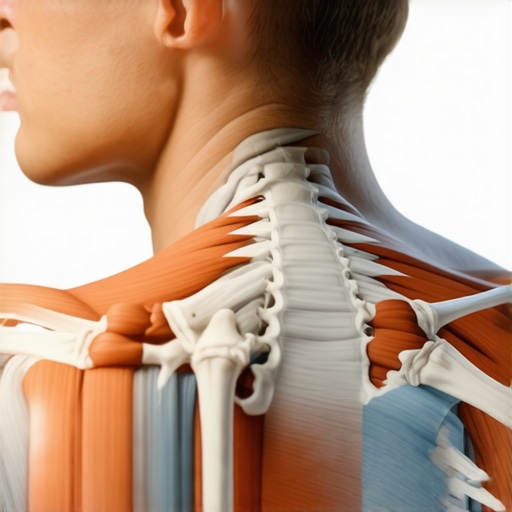
The spine is designed with a series of reciprocal curves: the inward curve of the neck (cervical lordosis), the outward curve of the mid-back (thoracic kyphosis), and the inward curve of the lower back (lumbar lordosis). These curves act like a spring, absorbing shock and distributing weight. When an anterior pelvic tilt increases the lumbar curve, the rest of the “spring” must react.
As the lower back arches more deeply, the mid-back (thoracic spine) often compensates by rounding further to maintain balance. This increased thoracic kyphosis then pushes the base of the neck forward. To keep the eyes level, the upper neck must then extend, leading to what we call Forward Head Posture (FHP). This is a classic example of the kinetic chain in action. You cannot fix the forward head posture without first addressing the rounding of the mid-back, which in turn cannot be fully resolved without leveling the pelvis.
The biological cost of this compensation is staggering. Data shows that for every inch the head moves forward from its ideal alignment, it gains approximately 10 pounds of “effective weight” on the cervical spine. If your head weighs 12 pounds and it sits two inches forward due to pelvic compensation, your neck muscles are effectively trying to hold up a 32-pound weight all day long. No wonder you feel like you need a sports massage near me every week!
Furthermore, research by Lee (2015) suggests a strong correlation between trunk posture and neck repositioning sense. A tilted pelvis literally confuses the nerves in your neck about where your head is in space, leading to a cycle of chronic tension and poor coordination. This is why we often recommend The 3-Step Move to Fix Your Forward Head Posture as part of a comprehensive recovery plan.
Why Reading Residents are Particularly at Risk
In my practice, I see a high volume of patients who work in the tech hubs of Green Park or commute into London via the Great Western Railway. The “Reading lifestyle” often involves what I call the “desk-to-commute” trap. You sit at a desk for eight hours, sit on a train for another hour, and then sit on the sofa to relax. This constant hip flexion is the primary driver of anterior pelvic tilt.
When you sit, your hip flexors (the psoas and iliacus) are in a shortened position. Over time, they “adaptively shorten,” meaning they stay tight even when you stand up. These muscles are attached to your lumbar spine; when they are tight, they pull your lower back forward and tilt your pelvis down. This is why sports massage reading is so effective – it’s not just about the neck; it’s about releasing those hip flexors to take the “tug” off the lower back.
Reading commuters also face the “commuter’s neck,” where the vibration of the train or the static posture of driving further fatigues the postural muscles already struggling with pelvic tilt. If you find yourself constantly shifting in your seat, you might find relief in our post on The Pelvic Tilt Secret for Sitting Comfortably.
What Happens During a Combined Pelvic and Neck Exam?
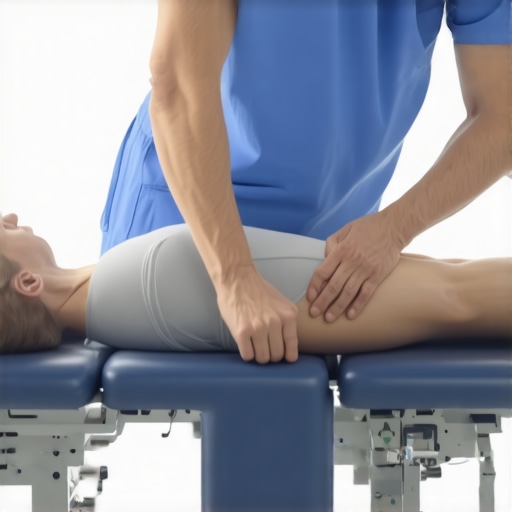
When you visit a Reading Osteopath, the examination is a systematic investigation. We begin with a standing assessment, looking at the heights of your iliac crests (the top of your hip bones) and the position of your “bony landmarks” like the ASIS and PSIS. We check for leg length discrepancies, which can often be “functional” – meaning your legs aren’t actually different lengths, but your pelvis is tilted so much that one leg appears shorter.
We then move to palpating the sacroiliac (SI) joints. If these joints are locked or dysfunctional, the pelvis cannot move fluidly, forcing the spine to overwork. During a neck exam, I will also assess your “pelvic reset” capability. Can you voluntarily move your pelvis into a neutral position? If not, the muscles are likely too tight, or the joints are restricted.
In some cases, the structural alignment of the hips is so significant that I might suggest consulting a Chiropractor Near Me for specific spinal adjustments. While osteopathy focuses heavily on the relationship between structure and function through soft tissue and mobilization, chiropractic care can provide the high-velocity adjustments needed to “reset” the nervous system’s input from the hip joints. We also frequently utilize caversham massage techniques to ensure the fascia surrounding the pelvis is pliable enough to hold a new, healthier position. You can learn more about this collaborative approach in our article: Why Chiropractic Adjustments Often Start with the Hips.
Corrective Strategies: Beyond the Treatment Room
Manual therapy is a catalyst, but the long-term solution involves changing how you move. To correct the pelvic-neck connection, we focus on two things: mobility in the tight areas and stability in the weak areas.
For those struggling with APT, I often prescribe the Copenhagen Plank. This exercise targets the adductors and the lateral line of the body, providing much-needed stability to the pelvis. Another staple is the Dead Bug, which teaches you how to keep your pelvis neutral while moving your limbs – a skill that is often lost after years of desk work.
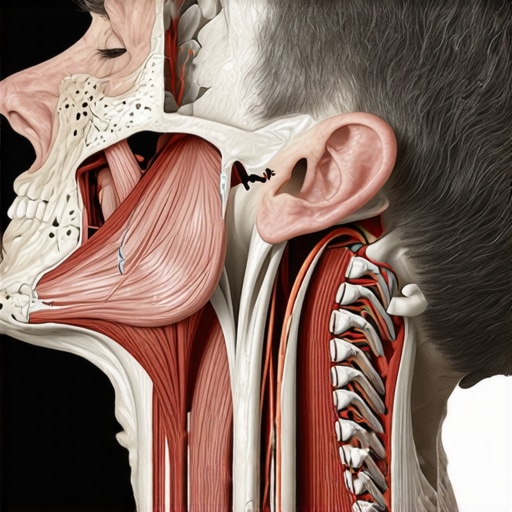
However, exercises alone can be difficult if the tissue is too “glued” down. This is where sports massage reading becomes an essential tool. By releasing the tension in the quadriceps, psoas, and the sub-occipital muscles at the base of the skull, we create a “window of opportunity” where your exercises will be significantly more effective. We also look at secondary factors, such as visual strain. Did you know that How Your Vision Affects Your Head Position and Neck Pain is a real factor? If you are squinting at a screen, you are more likely to pull your head forward, regardless of your pelvic tilt.
Conclusion: A Holistic Path to Pain-Free Living
If you have been chasing neck pain for months or even years without success, it is time to look lower. Your neck is often the victim, not the criminal. By addressing the pelvic tilt and the kinetic chain, we can take the unnecessary load off your cervical spine and allow your body to heal naturally.
As an osteopath in Reading, my mission is to help you understand your body so you can take control of your health. Whether you need a sports massage near me to deal with acute tension or a full biomechanical overhaul, remember that the foundation matters. Don’t just treat the symptom – fix the system. Your neck (and your hips) will thank you.