The 10-second reset for when your shoulder blades start burning
I was three hours into a deadline-driven afternoon, hunched over my laptop like a gargoyle, when that familiar, searing heat started creeping in right between my shoulder blades. It felt like a hot poker was being pressed against my rhomboids. I did what most people do: I reached back and tried to dig my thumb into the knot, and then I aggressively pulled my arm across my chest to stretch. It didn’t help. In fact, it felt worse. I realized in that moment that I was treating the symptom while ignoring the fact that my entire upper body had basically collapsed forward. Have you ever felt that localized fire that makes you want to rub your back against a doorframe like a grizzly bear just to get a second of relief? If you’ve been there, you know that once that burn starts, it’s almost impossible to ignore. Today, I’m going to show you a simple 10-second reset that I discovered after years of trial and error—and a few failed attempts at ‘stretching’ my way out of the problem.
That Deep Heat Between Your Shoulders Needs to Stop
For the longest time, I thought why your shoulder blade burns after a long drive or a long day at the desk was just the price of doing business in the modern world. I figured my muscles were just weak. But the truth is much more visceral: your muscles aren’t just tired; they are being overstretched and starved of blood flow. When your head drifts forward and your shoulders roll in, those muscles in the back are fighting a losing battle to keep you upright. We aren’t just looking for a temporary massage; we need to change the signal your nervous system is sending to those tissues. This is where the Bruegger position becomes an absolute game-changer. It’s not just a stretch; it’s a total neurological reboot for your posture.
Is a 10-second fix really enough to change anything?
It sounds like a gimmick, doesn’t it? I used to be the biggest skeptic. I thought if I wasn’t spent 20 minutes on a foam roller, I wasn’t doing ‘real’ work. One of the biggest mistakes I made early on was assuming that more intensity equals more relief. I would spend forever on rolling my back, only to have the pain return ten minutes later. But the body responds much better to frequent, short ‘micro-breaks’ than it does to one long session of aggressive stretching. According to a study published in the Journal of Physical Therapy Science, even brief postural corrections can significantly reduce the activation of the upper trapezius and increase oxygenation to the muscles. By performing a 10-second reset every hour, you prevent the ‘burn’ from ever reaching that point of no return.
Stop Yanking on Your Already Tired Muscles
The most important thing I want to tell you today is to stop overstretching the area that hurts. When your shoulder blades burn, those muscles are already long and weak. Pulling on them more is like pulling on a fraying rope. Instead, the secret lies in opening the front of your body. You need to open up your chest to give the muscles in the back a chance to relax. If you keep focusing only on where the fire is, you’ll never put the match out. We are going to focus on a move that creates an immediate ‘cooling’ sensation by activating the muscles that have gone to sleep while you were typing. This isn’t about gym-level effort; it’s about a subtle, precise shift in how you hold yourself that kills that mid-day shoulder burn instantly.Start by moving your body to the very edge of your chair. If you stay tucked back into the lumbar support, you won’t be able to engage the right muscles. Plant your feet flat on the floor, wider than your hips, and turn your toes out slightly. Think of this as creating a stable tripod for your spine. I remember trying this during a four-hour marathon Zoom call where my neck felt like it was made of dry wood. I felt ridiculous at first, but within seconds, that sharp ‘poking’ sensation in my upper back simply vanished.
Flip Your Palms to Extinguish the Heat
The core of the 10-second reset is about reversing the ‘closed’ position of your shoulders. Reach your arms down by your sides and rotate your palms so they face forward and then outward, pointing your thumbs behind you. This simple rotation forces your shoulder blades to sit down and back without you having to ‘squeeze’ them together aggressively. When you do this, you are performing the Bruegger position, which sends a neurological signal to your chest muscles to stop pulling your shoulders forward. 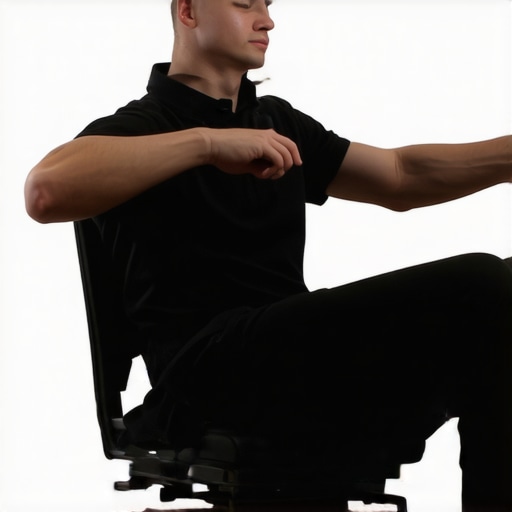
Ditch the Slouch with This Precise Sequence
While your hands are rotated out, gently tuck your chin in—not down toward your chest, but straight back like you are making a double chin. This aligns your skull over your cervical spine and is the first step toward unlocking neck pain relief. Hold this position for ten seconds while taking two deep, expansive breaths. You aren’t just stretching; you are recalibrating the tension levels in your nervous system.
How Your Monitor Height Fuels the Fire
You can do all the resets in the world, but if your environment is working against you, the burn will return. Often, why your screen height is the real cause of your headaches and shoulder pain is because it forces your eyes to dictate your posture. If your screen is too low, your head follows your eyes, and your neck muscles have to work ten times harder to keep your head from falling off your shoulders. Lift your monitor so that your eyes hit the top third of the screen while you are sitting tall. This small shift, combined with the 10-second posture check you can do anywhere, creates a workspace that supports your physiology rather than draining it.
Use Your Diaphragm to Take the Load Off
Most of us are ‘chest breathers’ when we are stressed, which uses the small muscles in the neck and tops of the shoulders to lift the ribcage. By the end of the day, these muscles are exhausted. Learning how to breathe through your diaphragm to reduce lower back pressure and neck tension is essential. When you take those two deep breaths during your 10-second reset, make sure your belly expands, not your shoulders. This ‘unloads’ the upper body and allows the burning sensation in your rhomboids to dissipate. If you find yourself consistently hitting a wall by mid-afternoon, implementing the 5-minute desk reset for busy professionals twice a day can prevent that cumulative fatigue from turning into a chronic injury.But here is the catch: even if you do that 10-second reset perfectly, you could be undoing all your hard work by falling for the ‘mobility trap.’ Most people think that if a muscle feels tight, it needs to be elongated. In my experience, especially when dealing with that mid-back fire, why stretching a tight muscle isnt always the answer becomes painfully obvious. Those muscles are usually ‘locked long’—they are already stretched to their limit because your shoulders are rolled forward. Pulling on them more is like trying to fix a frayed rubber band by stretching it further. 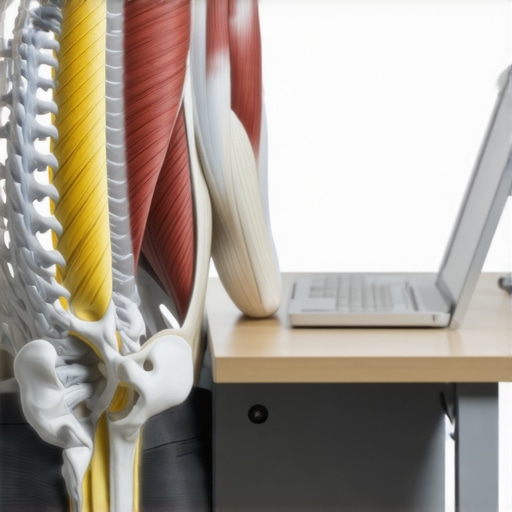
The Ice Pack Trap You Need to Avoid
One of the biggest ‘oops’ factors I see is people immediately reaching for an ice pack when their neck feels stiff. While ice is great for a brand-new injury, why icing a stiff neck might be making it harder to move is because it further reduces blood flow to an area that is already starved of it. For postural fatigue, heat is your best friend because it brings fresh, oxygenated blood to those overworked fibers. If you’ve been icing your ‘desk neck’ for weeks without progress, you’re likely just numbing the symptom while the underlying tension patterns get even more entrenched.
Why does your neck keep locking up despite daily stretching?
It’s because you are likely neglecting the ‘stability’ side of the equation. According to research published in the Journal of Manipulative and Physiological Therapeutics, patients who combined spinal adjustments with specific isometric strengthening saw a 40% greater reduction in pain than those who only used passive stretching. This is why the isometric hold that builds a bulletproof core is more effective than any foam rolling session. You aren’t just moving bones; you are training the nervous system to hold those bones in the right place.
Stop Chasing the Symptom and Start Looking at the Foundation
We often get tunnel vision. When your neck hurts, you look at your neck. But the hidden link between neck pain and spinal health often starts at the pelvis or even your feet. If your foundation is tilted, your head has to compensate to keep your eyes level with the horizon. This is why boost mobility ease pain chiropractic techniques unveiled focus on the entire kinetic chain. If you only treat the neck, you’re just painting over a crack in the wall while the house’s foundation is sinking. Have you ever fallen into this trap of stretching the same spot for months with no relief? Let me know in the comments.So, if stretching isn’t always the answer, what is? It’s about building a fortress around your habits. I learned the hard way that you can’t out-exercise a terrible environment. If you’re still using a laptop as your primary computer without any modifications, you’re essentially asking your spine to fail. The most critical tool in my kit isn’t a fancy massage gun; it’s a simple, $20 aluminum laptop riser paired with an external mechanical keyboard. By separating the keyboard from the screen, you allow your eyes to look straight ahead while your shoulders stay neutral. According to Professor Alan Hedge at Cornell University’s Ergonomics Lab, the ‘ideal’ laptop setup is technically impossible without these external peripherals because the keyboard and screen are physically too close to allow for both good arm and neck posture simultaneously. This is the cornerstone of the 4-point check for a healthier home office setup that I use every time I sit down to write. Beyond just the hardware, I’ve found that how to setup your workspace to stop the 3-pm headache involves more than just height adjustments—it’s about lighting and visual distance, too. If you’re leaning in because of glare, you’re re-engaging those burning rhomboids. I also personally swear by a ‘tactile cue’ like a small piece of tape on my desk. Every time my hand touches it, I perform that 10-second Bruegger reset. It’s a low-tech way to ensure effective neck pain management without needing a digital app to nag me.
How do I maintain my spinal mobility over time?
Consistency beats intensity every single time. You don’t need a 90-minute yoga session if you can master the art of the ‘micro-adjustment.’ I recommend scheduling a ‘joint lubrication’ break every 50 minutes. This isn’t just about moving; it’s about mobility mastery expert tips for back pain prevention and recovery that focus on the ‘hidden’ tight spots like your ankles and hips, which we often forget influence our neck. If you’ve felt like the hidden reason your desk chair feels uncomfortable is the chair itself, it might actually be your body’s lack of ‘movement variability.’ We were never meant to be static. #IMAGE_PLACE_HOLDER_D# To truly restore your range how chiropractic care enhances movement, you have to treat your body like a high-performance machine that requires daily calibration, not just an annual service. Looking ahead, I predict we are moving toward ‘smart’ ergonomics. We’re already seeing the rise of wearable sensors that vibrate when your head tilts too far forward. While I love the tech, don’t let it replace your internal awareness. The goal is to reach a point where your body naturally craves the correct alignment because it feels so much better than the alternative. If you want to jumpstart this process, my biggest ‘advanced’ tip is this: spend one hour tomorrow working while standing, but keep your weight shifted onto your heels. It sounds tiny, but it changes everything for neck back pain solutions insights from wellness experts. Give it a shot and see if that afternoon ‘heaviness’ disappears.
The Perspective Shift That Saved My Spine
The biggest lightbulb moment for me wasn’t learning a new exercise; it was realizing that my burning muscles were victims, not villains. I spent years trying to punish my upper back into submission with heavy massage, but I was just irritating tissues that were already at their breaking point. When I finally understood that these muscles were ‘locked long’ due to my chest being closed, I stopped attacking the pain and started supporting the structure. This is how you relieve neck back discomfort using these expert methods without feeling like you are constantly fighting your own body. I also learned that the ‘pop’ from self-cracking was a temporary dopamine hit, not a fix. Real relief came from the quiet, boring work of consistent 10-second resets.
My Personal Kit for a Pain-Free Workspace
If you want to maintain these results, you need a few non-negotiable tools that keep your environment from dragging you back into a slouch. I don’t go a day without my laptop riser; it is the only way to ensure the 10-second posture check you can do anywhere actually sticks. I also swapped my ice packs for a high-quality heating pad. For years, I iced my neck thinking it was inflamed, but why heat is usually better than ice for old injuries is because it restores the circulation that long hours of sitting tend to cut off. Lastly, I keep a simple tennis ball in my desk drawer—not to roll my lower back, but to gently pin against a wall to trigger blood flow in the pec muscles, which allows the shoulders to naturally fall back into place.
#IMAGE_PLACEHOLDER_E#
Start Your Journey Toward Lasting Comfort Today
You don’t have to accept that mid-afternoon burn as your inevitable reality. By implementing small, frequent neurological resets and adjusting your physical environment, you are giving your nervous system the safety it needs to let go of chronic tension. These neck back pain solutions insights from wellness experts are designed to be integrated into your life, not to become another chore on your to-do list. Remember, your spine is the anchor of your entire health, and even 10 seconds of care can ripple out into hours of better focus and energy. Have you ever tried stretching a burning muscle only to have the pain come back twice as strong ten minutes later? Let me know in the comments below!