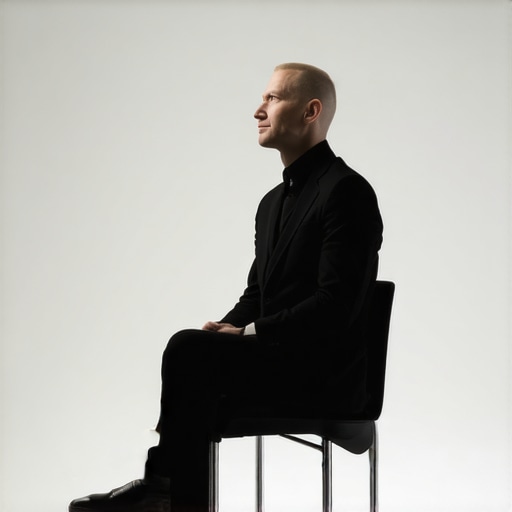
How your eyes are secretly dictating your posture
I remember sitting at my kitchen table three years ago, squinting at a tiny PDF on my laptop. Suddenly, a sharp, electric zip shot from the base of my skull right down to my shoulder blade. I froze. I couldn’t even reach for my water glass without wincing. I spent the next week blaming my ‘bad back’ and my ‘cheap desk,’ but I was looking at the wrong culprit. The real reason my spine was screaming had nothing to do with my lumbar support and everything to do with my pupils. Most of us think posture is a ‘back problem,’ but your brain prioritizes vision above almost everything else. If your eyes are struggling to focus or your screen is at the wrong angle, your body will sacrifice your neck’s health to get the perfect view. Today, I am going to show you exactly how to stop your eyes from pulling your spine out of alignment and share the simple habits that finally ended my daily headaches.
Your neck follows your gaze every single time
When I first started dealing with chronic stiffness, I made a massive mistake: I spent nearly eight hundred dollars on a high-end ergonomic chair. I thought a fancy headrest would solve it. It didn’t. I was still craning my neck forward because my monitor was too low, a classic example of how your screen height is the real cause of your headaches and muscle fatigue. Your body is incredibly efficient—or lazy, depending on how you look at it. If you need to see something, your cervical spine will distort itself into a ‘C’ shape just to help your eyes out. This is often the real reason your head feels heavy by the afternoon. When your eyes are tired, your posture collapses. I spent hours researching the best standing desks, convinced that if I just stood up more, the burning sensation in my shoulder blades would vanish. I even tried those weird kneeling chairs that make you look like you’re launching into space. Nothing worked. It wasn’t until a chiropractor pointed out that I was jutting my chin out like a turtle every time I read an email that the lightbulb finally went off. I was suffering from visual compensation, a fancy way of saying my neck was doing all the heavy lifting for my tired eyes. Have you ever noticed yourself leaning closer and closer to your monitor as the afternoon wears on, only to realize your shoulders are practically touching your ears?
Can a simple eye strain really ruin my entire posture?
It sounds a bit like science fiction, but the connection is biological. According to research published in the Journal of Physical Therapy Science, visual input is a primary driver for postural stability. When your visual field is distorted or strained, your brain sends signals to your neck and back muscles to ‘lock down’ and create a false sense of stability. This is why why your vision problems might be causing your neck pain. My early failure to recognize this kept me in a cycle of pain until I finally started using expert chiropractic solutions that addressed the whole picture, not just the spot that hurt. We aren’t just looking at muscles; we are looking at how your brain uses your eyes to navigate the world. I used to think I was just ‘getting old,’ but the truth was much more fixable. Now that we understand the ‘why,’ let’s look at the specific visual habits that are likely trashing your spinal health right now.
Reset your line of sight to save your spine
Think of your neck as a high-precision crane. The operator sitting in the ‘cab’ is your visual system. If the operator is constantly leaning over to see the load, the crane’s entire structure starts to warp under the uneven stress. To fix this, you don’t just grease the gears; you change the operator’s view. When I finally realized that my monitor height was the anchor dragging my head forward, I didn’t just move my screen; I re-engineered my whole visual environment to keep my gaze horizontal. By shifting the focus from the muscles to the eyes, you solve the root cause of the tension instead of just chasing the symptoms.
Lift your monitor to eye level right now
This is the non-negotiable first step. Your eyes naturally gravitate toward the center of the screen. If that center is below your horizontal eye line, your chin will drop and your upper back will round. I learned this the hard way during a deadline week in a cramped hotel room. I was using my laptop on a low desk, and by noon, my shoulder blades felt like someone was holding a match to them. I finally stacked three thick phone books under the laptop and used a separate keyboard. The relief was almost instant because my cervical spine was finally allowed to sit in a neutral stack. This is why your screen height is the real cause of your headaches. If you are using a laptop, you must use a stand or a stack of books; there is no way to ergonomically use a laptop sitting flat on a table for more than twenty minutes without sacrificing your posture. For a complete overhaul, follow the 4-point check for a healthier home office setup to ensure every angle supports your skeleton.
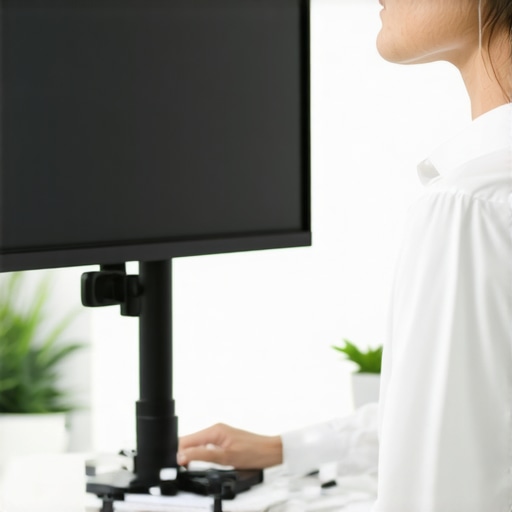
Break the visual lock every twenty minutes
When you stare at a fixed point for hours, your ciliary muscles—the tiny muscles that focus your eyes—get stuck. This ‘visual lock’ tells your brain that you are in a high-focus, high-stress state, which causes your neck muscles to tighten in sympathy. To combat this, I started setting a silent haptic alarm on my watch. Every twenty minutes, I look at something at least twenty feet away for twenty seconds. This isn’t just for your eyes; it’s a neurological reset for your neck. This is one of the most effective effective neck pain management techniques because it prevents the physical ‘freeze’ that happens when we are hyper-focused. If you feel that mid-day slump coming on, try the 5-minute desk reset for busy professionals to get your blood flowing again and clear the mental fog.
Use the Bruegger Position to reverse the turtle pose
When you catch yourself leaning in to read small text, you are likely suffering from what chiropractors call ‘forward head posture.’ To fix this instantly, I use a method called the Bruegger Relief Position. You sit on the edge of your chair, spread your knees, turn your palms outward, and gently pull your shoulder blades back and down while tucking your chin slightly. It feels like you are ‘un-turtling’ yourself. I do this every time I finish an email chain or a long document. It’s easily the fastest way to reset your posture. If you still find your shoulders creeping up, you might want to try the simple towel roll trick for neck relief at your desk to provide some passive support while you work. By managing how your eyes interact with your digital tools, you stop the pain before it even has a chance to start.
Stop stretching muscles that are already screaming for help
But here is where most people—including some of the ‘experts’ I first saw—get it completely wrong. We are taught that if a muscle feels tight, we should stretch it. That seems logical, right? Wrong. In my experience, when it comes to the neck and upper back, that ‘tightness’ you feel is often your muscles being overstretched and exhausted, not shortened. When your head drifts forward to see your screen, the muscles at the back of your neck are pulled taut like a rubber band. If you keep stretching them, you are just making the rubber band thinner and weaker. This is exactly why stretching a tight muscle isnt always the answer. Instead of relief, you often end up with more instability. I wasted months doing side-stretches that only led to more spasms because I didn’t realize my muscles were already at their limit.
The self-crack trap is ruining your progress
There is a specific ‘oops’ factor I see all the time: the temptation to ‘crack’ your own neck when it feels heavy or jammed. I used to be the king of this. I’d twist my head until I heard that satisfying ‘pop,’ thinking I was fixing the problem. But here is the nuance: you are usually cracking the joints that are already too mobile, not the ones that are actually stuck. This creates a cycle where you feel relief for five minutes, but the underlying tension returns even harder. Learning the truth about cracking your own back at home was a turning point for me. Professional adjustments target the specific restricted segment, whereas self-cracking just irritates the surrounding ligaments. Have you ever fallen into this trap of constantly needing to ‘pop’ your neck just to get through a meeting? Let me know in the comments.

Why does your neck feel stiff even after you’ve fixed your desk?
If you have raised your monitor and stopped the self-cracking, but that burning sensation persists, you are likely dealing with ‘regional interdependence.’ This is a fancy term for the fact that your body is a single integrated unit. A study published in the Journal of Manual & Manipulative Therapy highlights how pelvic positioning directly influences cervical spine mechanics. If your pelvis is tilted—perhaps because you should never sit with a wallet in your back pocket—your entire spine has to compensate, ending with a kink in your neck. This is the hidden link between neck pain and spinal health that most ergonomic checklists ignore. This is also why we adjust the pelvis to fix neck tension in many clinical settings. You cannot fix the top of the tower if the foundation is leaning. To get real results, you have to look at the whole picture, from your eyes down to your feet, using expert chiropractic solutions that work for the entire kinetic chain.
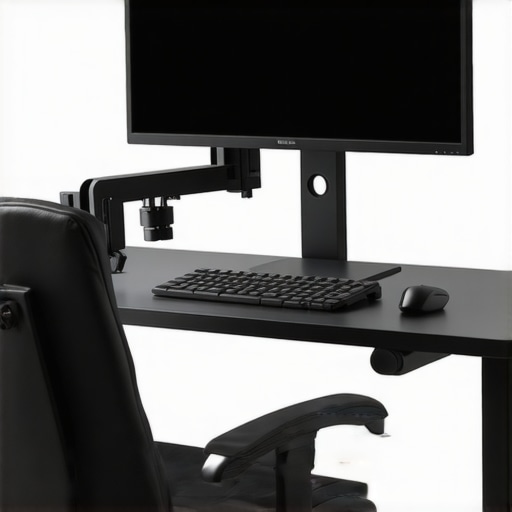
I used to think my body was a static object that I could ‘fix’ once and then forget about. I was wrong. Spinal health is a dynamic game of maintenance, much like keeping a car in alignment. Once I addressed the visual triggers and my workstation height, I had to find tools that made the right habits easier than the wrong ones. I transitioned from using a stack of books to a gas-spring monitor arm because it allows for micro-adjustments throughout the day. When my eyes get tired, I can lower the screen slightly to keep my gaze optimal without slouching. This kind of environmental control is a cornerstone of overcoming chronic neck discomfort. I also integrated a mechanical keyboard with a split design. By keeping my hands shoulder-width apart, I’ve stopped the internal rotation of my shoulders that was causing that deep, gnawing ache between my shoulder blades.
Stop guessing and start using these specific tools
The most effective tool in my kit isn’t actually a piece of furniture; it is a piece of software. I use a gaze-tracking app that reminds me when I’ve been leaning forward for more than five minutes. It’s a form of digital biofeedback that trains the brain to recognize ‘posture drift’ before it becomes a ‘posture problem.’ Beyond the tech, I swear by a simple lumbar roll. Even with a high-end chair, having a physical barrier that prevents your lower back from flattening out is essential. If you can’t control your lumbar curve, you can’t control your neck. To really lock this in, I practiced the dead bug exercise why it is the king of core stability every morning to ensure my midsection could actually support my spine while I sat.
How do I maintain this mobility for the next decade?
Consistency beats intensity every single time. Maintenance isn’t about doing a two-hour workout on Sundays; it’s about the two-minute ‘spine snacks’ you take between meetings. I follow the philosophy of Dr. Stuart McGill, a world-renowned expert in spine mechanics, who emphasizes ‘spinal hygiene’—the way we move during the mundane tasks of life. This means I don’t just ‘sit’; I sit with intention, using the best exercises to keep your spine young to lubricate the joints. I’ve also found that the isometric hold that builds a bulletproof core is the secret to staying upright when you’re tired. By building endurance in the deep stabilizers, you stop relying on your neck muscles to do the work of your torso. Looking ahead, I predict we are going to see a massive shift toward AI-integrated office furniture that automatically adjusts its height and tilt based on your real-time fatigue levels. Until then, you are the pilot of your own recovery. I highly recommend you try revitalize your mobility proven strategies for back pain relief by committing to just one of these ergonomic shifts today. Check out essential chiropractic tips for 2025 to see where the science of comfort is headed next.
The Uncomfortable Truth About Why Your Neck Still Hurts
When I look back at my journey, I realize that the biggest hurdle wasn’t the pain itself, but the way I thought about my body. I used to think of my spine as a set of separate blocks, rather than a living, breathing system controlled by my brain and eyes. One of the hardest lessons I learned was that no amount of fancy gear can save a person who refuses to change their habits. I also realized that consistency is far more powerful than intensity. Doing three minutes of mobility work daily is infinitely better than an hour-long session once a week. Finally, I had to accept that the hidden link between neck pain and spinal health often starts with our visual habits, not our lumbar curves.
My Go-To Toolbox for a Pain-Free Workday
If you are ready to stop the cycle of stiffness, start with these tools. First, get a gas-spring monitor arm; the ability to micro-adjust your screen height throughout the day is a game-changer for overcoming chronic neck discomfort. Second, I highly recommend looking into the 20-20-20 rule as a non-negotiable part of your workflow. Third, use a simple foam roller or a tennis ball to work on mid-back mobility during your breaks. These tools, combined with mastering back neck pain relief tips from the pros, will give you a foundation that no standing desk can provide on its own.
#IMAGE_PLACEHOLDER_E#
Small Wins Lead to a Lifetime of Mobility
Your body is incredibly resilient. It wants to be in balance, but it needs you to lead the way. By adjusting your screen, breaking your visual lock, and listening to the signals your nerves are sending, you are doing more than just fixing a posture issue; you are reclaiming your daily quality of life. Don’t wait for the pain to become unbearable before you start your journey toward revitalize your mobility proven strategies for back pain relief. The future of your spinal health is literally in your line of sight. Have you ever noticed your neck feeling better after simply looking away from your screen for a few minutes? Let me know in the comments below!