Why your slippers might be causing your lower back stiffness
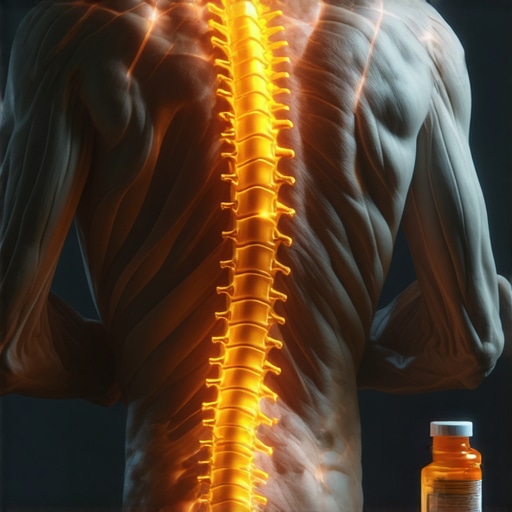
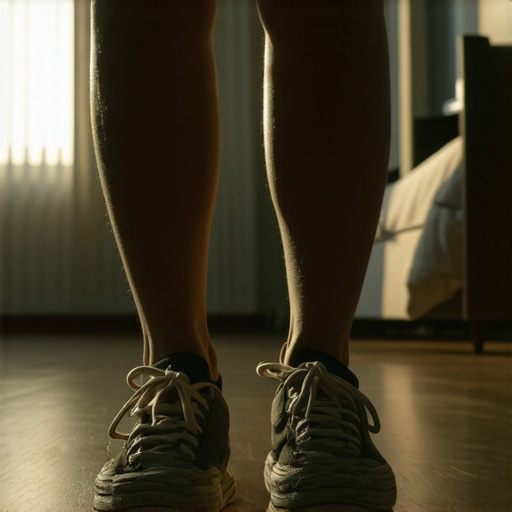
I remember shuffling to the kitchen last Tuesday morning, feeling less like a human and more like a rusty garden gate. Every step I took in my plush, cloud-like slippers—the ones I paid way too much for because they looked cozy—sent a dull, nagging ache straight into my lumbar spine. I’d spent months thinking I was doing my body a favor by avoiding the hard kitchen floor, but the reality hit me as hard as a cold tile: my footwear was the enemy. I used to think back pain was just a ‘getting older’ thing, or maybe related to how my sleeping position dictates morning stiffness, but I was wrong. The mistake I made was equating ‘soft’ with ‘supportive.’ I spent nearly two years working from home in flat, worn-out scuffs that had zero arch support, effectively forcing my back to do the work my shoes should have been doing. Today, I’m going to show you exactly why those slippers are making you stiff and how a simple switch can save your spine.
Your Comfy House Shoes Are Actually Sabotaging Your Spine
Most of us treat our home as a sanctuary where we can finally kick off our ‘real’ shoes and let our feet breathe. I was no different. I lived in a pair of fuzzy slip-ons that had the structural integrity of a marshmallow. What I didn’t realize is that walking on hard surfaces all day without a proper foundation creates a ripple effect. When your feet flatten out in a flimsy slipper, your knees rotate inward, your pelvis tilts, and your lower back muscles have to tighten up just to keep you upright. It’s a mechanical nightmare. According to research published in the journal Gait & Posture, even subtle changes in foot mechanics can significantly increase the load on the lumbar region. This is especially true if you already deal with the secret link between flat feet and chronic back pain. I ignored the warning signs for a year, thinking I just needed more coffee or a better chair, but the fix was actually right under my toes. Have you ever noticed that your back feels tighter after a long weekend of lounging around the house in your favorite old scuffs?
Is a pair of slippers really powerful enough to ruin my back?
It sounds like an exaggeration, right? I used to be the biggest skeptic. I thought, ‘It’s just a few steps to the fridge!’ But those steps add up, especially if you’re standing at a kitchen counter or a standing desk. If you don’t have a solid base, you’re essentially building a house on sand. Whether you are exploring the barefoot movement or looking for more cushion, the lack of a heel cup and arch support in traditional slippers is a recipe for disaster. My early mistake was thinking that if it felt soft, it was good. In reality, that lack of resistance was letting my arches collapse and my spine pay the price. We aren’t just talking about a little soreness; we’re talking about a fundamental misalignment that can lead to long-term mobility issues. It’s time to stop looking at slippers as a fashion choice and start seeing them as a piece of equipment for your spinal health. Let’s look at what actually happens to your vertebrae when your feet lose their grip.
Check if your slipper is a spine-killer with the fold test
The first thing you need to do—right now, if you can—is pick up your go-to house shoe and try to fold it in half. If the toe meets the heel with almost no resistance, you are essentially walking on a glorified sock. That lack of structure means your plantar fascia is doing all the heavy lifting, which eventually tugs on your calves and pulls your pelvis out of alignment. You want a sole that only flexes at the ball of the foot, not in the middle of the arch. When I first did this to my favorite fuzzy scuffs, they folded like a wet noodle. It was a wake-up call that my lower back pain wasn’t a mystery; it was a mechanical failure. This is often the first step in learning how to tell if your orthotics are actually helping your back or if you are just wasting money on insoles that your shoes cannot even support.
Look for the deep heel cup that locks your posture in place
A flat, loose slipper allows your heel to slide around, creating instability that travels up your entire kinetic chain. This is actually the reason why we look at your feet when your neck hurts; if your base is wobbly, your head will overcompensate to stay level, leading to tension at the base of the skull. A proper indoor shoe should have a deep heel cup that cradles the calcaneus bone. This prevents the sideways roll, or overpronation, that puts a twisting strain on your lumbar discs. Think of it like a car’s alignment—if the tires are tilted, the whole chassis vibrates. By securing the heel, you effectively boost your back health with simple yet effective chiropractic hacks that start the moment you step out of bed.
Why a gradual transition prevents a foot-muscle rebellion
When I finally traded my marshmallows for a pair of structured cork-bed slippers, I wore them for an entire Saturday of chores. By Sunday morning, my arches felt like they were on fire. It was not that the shoes were bad; it was that my feet had become lazy from years of zero support. You need to break in your feet just as much as the shoes. Start with just thirty minutes on day one, then an hour on day two. This allows the small intrinsic muscles of the foot to wake up and adapt without seizing. If you rush it, you might mistake muscle adaptation for a new injury. Slow and steady is how you restore your back mobility with proven chiropractic strategies. If you combine this with the 3-minute morning routine to lubricate your joints, you will find that the rusty gate feeling I described earlier disappears much faster. Focus on shoes with a rigid midsole and a contoured footbed to ensure your spine remains neutral even while you are just making coffee.One of the biggest lies we’re told is that a ‘strong core’ looks like a shredded six-pack. If you’re doing endless crunches thinking you’re protecting your L5-S1 disc, stop. In reality, why your core routine is failing your spine is often because you’re training for movement when your spine actually needs stability. Research by spinal biomechanics expert Dr. Stuart McGill shows that the ‘stiffening’ of the torso—the ability to resist movement—is what actually prevents injury, not the ability to bend into a pretzel. Instead of sit-ups, I tell my clients to focus on the dead bug exercise because it teaches your pelvis to stay neutral while your limbs move—exactly what happens when you walk.
Stop trying to sit perfectly straight all day
The ‘sit up straight’ advice our parents gave us is actually a bit of a trap. Trying to maintain a rigid, military posture for eight hours creates massive isometric fatigue in your paraspinal muscles. It’s not about being ‘straight’; it’s about being dynamic. Your spinal discs don’t have a direct blood supply; they rely on movement to ‘pump’ nutrients in and waste out. If you stay in any one position—even a ‘perfect’ one—you’re effectively starving those discs. This is why the Bruegger position is so effective; it isn’t a permanent way to sit, but a 30-second neurological reset that reminds your body where ‘neutral’ is. Have you ever fallen into the trap of trying to sit like a statue only to end the day feeling more exhausted? Let me know in the comments.
Can my jaw tension really be a footprint problem?
It sounds wild, but your body is a closed kinetic chain. This is exactly why we look at your feet when your neck hurts. If your arch collapses in a bad house shoe, your pelvis tilts, your mid-back rounds, and your head juts forward. To keep your eyes level, your suboccipital muscles at the base of your skull have to fire constantly. This mechanical compensation is often the root of how your jaw tension might be a sign of upper back issues. If you only treat the jaw or the neck, you’re just pulling weeds without getting the roots. You have to stabilize the base—your feet—to get the top of the tower to relax.
The danger of stretching through the pain
Here is the common ‘oops’ factor: stretching what feels tight. I see this constantly with hamstrings. You feel a pull in your lower back, so you reach for your toes. But if your pelvis is tilted because of those flimsy slippers we talked about, your hamstrings are already stretched to their limit. Pulling on them more is like tugging on a rope that’s already at its breaking point. This is why stretching a tight muscle isnt always the answer. Often, that tightness is actually ‘protective tension’—your brain is tightening the hamstrings to keep your unstable pelvis from tilting even further. By forcing a stretch, you’re actually removing your body’s last line of defense. Instead, focus on strategies to restore your back mobility by creating stability first, letting the brain feel safe enough to let those muscles go. True mobility isn’t just about how far you can reach; it’s about how well you can control the range of motion you already have.I stopped using those massive foam rollers for my lower back years ago. Why? Because a broad roller often causes the muscles to guard rather than relax. I switched to a standard lacrosse ball—it’s firm, cheap, and precise. I use it to hit the gluteus medius and the QL (quadratus lumborum). This is vital because if those muscles are locked, your lumbar spine is forced to compensate. This is exactly why you should stop rolling your lower back on a hard foam roller and focus on trigger point release instead. It feels like a ‘good’ pain that actually releases the tension rather than just flattening it. Another tool I personally rely on is an anti-fatigue mat with varied terrain. Unlike a flat mat, one with hills and ridges forces your feet to constantly adjust, which prevents the static loading that kills your discs. If you’re standing at a desk, this is a non-negotiable for spinal longevity.
How do I keep my spine healthy without spending hours at the gym?
The secret isn’t a 90-minute workout; it’s micro-adjustments. I use a ‘movement snack’ every 45 minutes. I set a timer on my phone, and when it goes off, I perform the Bruegger position for 30 seconds. This simple habit has done more for my long-term comfort than any expensive office chair ever could. Consistency beats intensity every single time when you are trying to revitalize your mobility. Long-term success isn’t about avoiding all discomfort; it’s about reducing the recovery time between episodes. When I started implementing these small daily tools, my ‘bad back days’ went from lasting a week to lasting about four hours.
Why your future t-shirt will vibrate when you slouch
I predict that within the next five years, we’ll move away from ergonomic chairs and toward ‘smart’ wearable feedback. We are already seeing the beginning of this with haptic sensors that clip to your shirt. Eventually, your clothing will use bio-feedback to remind you to engage your core before you even feel the first twinge of pain. Until then, you have to be your own sensor. You can master back and neck pain relief by learning to listen to the subtle cues your body sends—like that slight burning in your shoulder blade—before it becomes a full-blown spasm. In his book Becoming a Supple Leopard, Dr. Kelly Starrett emphasizes the ‘bracing sequence’—organizing your spine from the pelvis up before you even lift a coffee mug. This isn’t just for athletes; it’s for anyone who wants to restore your range and enhance movement. If you’re looking for an immediate win, check your monitor height. I used to have mine too low, which is the real cause of those 3 PM headaches. Raise it so your eyes hit the top third of the screen. Try this today: Spend two minutes tonight using a lacrosse ball on the soles of your feet. Since we know why we look at your feet when your neck hurts, loosening that plantar fascia before bed can actually lead to a looser neck in the morning.
The Hardest Lesson I Learned About Household Footwear
Looking back at my years of chronic stiffness, the biggest revelation wasn’t a complex medical diagnosis; it was realizing that comfort is often a trap. We confuse the feeling of ‘softness’ with the reality of ‘support,’ and our spine pays the price. I discovered that to revitalize your mobility isn’t about one massive lifestyle overhaul, but the removal of constant micro-stressors like poorly designed shoes. Another major lightbulb moment was understanding that my foot health directly impacted my headaches; the mechanical link is undeniable, and it’s exactly why we look at your feet when your neck hurts in a clinical setting. If the base is sinking, the tower will tilt. Finally, I learned that ‘movement snacks’—short, frequent bursts of alignment—are far more effective for the nervous system than trying to fix a week of bad posture in a single hour of aggressive stretching.
#IMAGE_PLACEHOLDER_E#
My Essential Toolkit for Lasting Spinal Relief
I don’t believe in cluttering your home with gadgets, but these four items changed my daily life. First, a simple lacrosse ball is my go-to for breaking up tension in the soles of my feet and glutes; it is far more precise than a standard foam roller. Second, I highly recommend reading Becoming a Supple Leopard by Dr. Kelly Starrett; it is essentially the manual for the human body that helps you understand how to move without injury. Third, an anti-fatigue mat with actual ridges—not just a flat one—is a game-changer if you spend time at a kitchen counter. Lastly, I use a simple phone timer to remind me to perform the Bruegger position every hour. These tools are the foundational pieces for anyone trying to restore your back mobility without turning their entire life upside down.
Take Back Control Of Your Mobility
You don’t have to live in a state of ‘good enough’ when it comes to your body. That rusty garden gate feeling isn’t a permanent part of who you are; it’s just a sign that your mechanics need a little tune-up. By making a simple switch in what you wear around the house and adding a few intentional movements to your day, you can achieve lasting back pain relief. Your spine is incredibly resilient when you give it the foundation it needs to thrive. Start with the fold test tonight and see what your feet are actually dealing with every morning. Have you tried the ‘fold test’ on your favorite pair of slippers? Let me know what you found in the comments below!