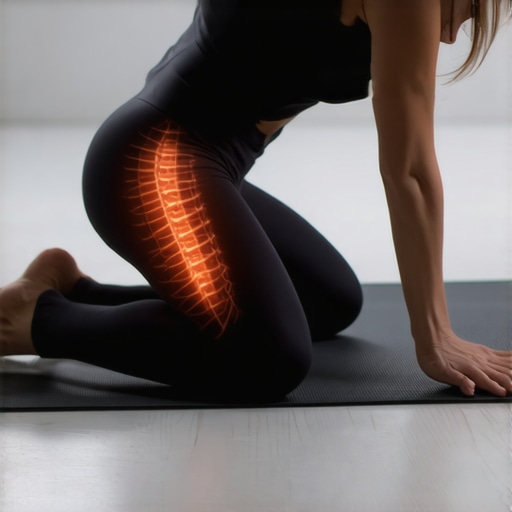
Stop sleeping on your stomach if you want to fix your back
I used to wake up every single morning feeling like I’d spent the night wrestling a bear. My neck was stuck in a permanent tilt, and my lower back had this dull, grinding ache that made putting on socks feel like an Olympic sport. For years, I blamed my mattress. I bought three different ‘orthopedic’ pillows. I even tried those copper-infused socks. Nothing worked. Then, during a particularly painful session with my chiropractor, he asked one question: ‘Do you sleep on your stomach?’ I told him I did—it was the only way I felt comfortable. He sighed, looked me dead in the eye, and said, ‘That’s why you’re falling apart.’ It was a lightbulb moment that changed everything. If you are struggling with chronic aches, you need to realize that your bed is often the crime scene.
Your Favorite Sleep Position is Your Spine’s Worst Enemy
It turns out that how your sleeping position dictates morning back stiffness is more than just a catchy headline; it’s a physiological reality. When you lie on your stomach, you’re forced to turn your head to one side just to breathe. Imagine standing in line at the grocery store for eight hours with your head cranked 90 degrees to the right. You’d be miserable! Yet, that’s exactly what we do to our cervical spines every night. This constant torque strains the small joints in your neck and sends ripples of tension all the way down to your pelvis. I made the mistake of thinking I could ‘stretch’ my way out of this, but neck pain no more only happens when you stop the daily insult to your joints. According to the Mayo Clinic, sleeping on your stomach places a significant amount of strain on your back because it makes it difficult to maintain a neutral spine position. This pressure can lead to numbness, tingling, and nerve irritation that follows you into your workday.
Is it really possible to change how I sleep after 30 years?
I get the skepticism. I really do. Sleeping on your back or side feels ‘wrong’ when you’ve been a tummy sleeper since the 90s. You feel exposed, or you just can’t drift off. But here is the promise: once you align your body correctly, the quality of your REM sleep skyrockets because your nervous system isn’t screaming in pain all night. We are going to dive into how to restore your back mobility by retraining your nighttime habits. Have you ever tried to switch positions and failed within twenty minutes? I want to hear about it—what’s the biggest thing keeping you from staying on your side? It’s time to stop the cycle of waking up stiff and start reclaiming your morning mobility. We aren’t just looking for a temporary fix; we are aiming for a total structural reset.To stop the damage, you have to treat your bed like a structural laboratory. You aren’t just lying down; you are positioning a complex tower of 24 vertebrae that need to stay stacked perfectly for eight hours. My first attempt at this was a disaster. I tried to just ‘will’ myself to stay on my back, but I woke up three hours later, face-down, with my neck screaming. I realized that my body’s muscle memory was stronger than my conscious mind. I had to create physical barriers. This is where the secret to side sleeping without hip or shoulder pain becomes your blueprint. You aren’t just changing a habit; you are engineering a environment where your spine has no choice but to relax.
Build a Pillow Fortress to Stop the Midnight Flip
Think of your body like a car on a lift; if it’s not braced, it’s going to tilt. To transition from a stomach sleeper to a side sleeper, you need a long body pillow. Place it tightly against your chest and tuck the bottom between your knees. This accomplishes two things: it prevents your top leg from sliding forward (which twists your lower back) and it provides a tactile ‘wall’ that stops you from rolling onto your stomach. I remember the first week I did this; I felt like a mummy, but for the first time in a decade, I didn’t wake up with that grinding sensation in my lumbar spine. This simple bracing technique is one of the most effective boost your back health simple yet effective chiropractic hacks because it offloads the pressure from your SI joints immediately.
Find the Goldilocks Zone for Your Neck
If your pillow is too flat, your head tilts down. If it’s too thick, your head is propped up like you’re watching a movie in the front row. Both are recipes for disaster. You need to fill the gap between your ear and the mattress perfectly so your neck stays parallel to the bed. I spent $200 on a ‘fancy’ pillow only to realize a simple kontoured foam one worked better. Learning how to choose the right pillow height for your body type is the difference between a loose, mobile neck and one that feels like it’s made of rusted iron. Imagine your neck is a bridge; if the supports are uneven, the whole structure starts to crack. This is why we focus so much on mastering back neck pain relief tips from the pros 300 to ensure your cervical curve isn’t being flattened while you dream.
Roll Like a Log to Save Your Discs
The moment you wake up is the most dangerous time for your spine. Your discs are hydrated and ‘plump’ after sleeping, making them more susceptible to injury if you twist suddenly. Most people sit straight up or twist their torso to reach for the alarm. Stop doing that. Instead, use the ‘log roll’ method. Keep your shoulders and hips in one line, roll to your side, and use your arms to push your torso up while your legs swing to the floor. When I started doing this, the morning ‘zings’ in my lower back vanished. It is essential to master the proper way to get out of bed to protect your discs if you want to maintain the mobility you worked so hard to gain overnight.Most people reach for their toes or pull their head to the side the moment they feel a ‘knot.’ It seems logical—the muscle feels tight, so you should pull it, right? In reality, this is often the worst thing you can do. In many cases, that tightness is what we call ‘protective guarding.’ Your nervous system is deliberately tightening the muscle to stabilize an underlying joint issue or a disc that is under stress. When you force a stretch on a muscle that is trying to protect you, the brain reacts by tightening it even further. This is why stretching your neck to the side might be causing more spasms rather than the relief you’re hunting for. Instead of pulling at the tissue, we need to focus on mobility mastery expert tips for back pain prevention and recovery that prioritize joint alignment over simple muscle length.
Why does my neck hurt even more after a deep massage?
I hear this from patients all the time. They go for a deep-tissue session, feel great for an hour, and wake up the next day unable to move. If you have an underlying spinal misalignment, a deep massage can be a ‘trap.’ By forcing those guarding muscles to relax, you are essentially removing the temporary structural support your body built to protect your nerves. This is where overcoming chronic neck discomfort requires a structural approach rather than just a muscular one. According to a study published in the Journal of Manipulative and Physiological Therapeutics, addressing the joint mechanics (the ‘hardware’) is necessary before the muscles (the ‘software’) can truly let go of their tension. Understanding the difference between muscle soreness and spinal pain is the first step toward stopping this cycle.
The Common Trap of Icing a Stiff Neck
We’ve been told to ‘ice for everything’ since we were kids, but for chronic morning stiffness, you might be making a mistake. Ice is a vasoconstrictor, which can actually cause muscles to contract and stiffen further if there isn’t active, acute swelling. I found that why icing a stiff neck might be making it harder to move is often due to the fact that your joints need blood flow and warmth to lubricate. Transitioning to heat or even gentle isometric holds can be far more effective than an ice pack. Have you ever fallen into this trap of stretching a ‘knot’ or icing a stiff joint only to feel worse the next day? Let me know in the comments—I’d love to help you troubleshoot your routine. Reclaiming your health is about working with your body’s protective instincts, not fighting them.Once you’ve stopped the daily insults to your neck and back, the real work begins: maintenance. I used to think I could just get adjusted once and be fixed forever, but that’s like brushing your teeth once and expecting no cavities for life. To truly keep the gains, I rely on a few specific tools that live right next to my desk. The most important one is surprisingly low-tech: a simple tennis ball. Learning how to use a tennis ball to release upper back tension allows me to pinpoint micro-spasms before they turn into full-blown headaches. It is about being proactive rather than reactive, catching the tension in your rhomboids before it pulls your cervical vertebrae out of alignment.
Keep Your Progress from Sliding Backward
I also swear by the Dead Bug exercise. If you haven’t tried it, you’re missing out on the literal king of spinal protection. Research by Dr. Stuart McGill, a world-renowned expert in spine biomechanics at the University of Waterloo, suggests that stiffening the core through specific isometric holds is far superior to traditional spinal flexion for long-term health. This is why the dead bug exercise why it is the king of core stability is my daily go-to. It trains your nervous system to keep the spine neutral while your limbs move, which is exactly what happens when you’re walking, lifting groceries, or just living life. Without this deep stabilization, even the best chiropractic adjustment won’t ‘stick’ because your muscles won’t know how to support the new alignment. 
How do I maintain my spinal mobility over time?
Consistency beats intensity every single time. You do not need a two-hour gym session; you need two minutes of focused movement every hour. I personally use the bruegger position the fastest way to reset your posture whenever my smart-watch nudges me to stand. This isn’t just about standing up; it is about neurologically reversing the slump that happens when we stare at screens for too long. If you want to revitalize your mobility, you have to treat these small breaks as non-negotiable appointments with your future self. I predict that in the next few years, we will see a massive shift toward bio-feedback wearables that monitor pelvic tilt and forward-head posture in real-time, moving us from reactive ‘fixing’ to proactive ‘optimizing.’ To get ahead of the curve, my challenge to you is this: for the next three days, perform one minute of the Dead Bug before you leave the house. Notice how much more anchored your back feels by lunchtime. It is these tiny, specific shifts that lead to back pain recovery how chiropractic care transforms lives in the long run.
The Breakthrough Realizations that Finally Stuck
After years of observing how patients interact with their environment, I realized that spinal health isn’t a destination—it’s a continuous dialogue with your nervous system. One of the most significant lightbulb moments for many is discovering how a single tight ankle can cause chronic back pain by forcing your pelvis into a dysfunctional tilt during every step you take. Your body is an interconnected chain, and ignoring a stiff joint in your foot can eventually lead to a herniated disc in your lumbar spine. Stop treating ‘tightness’ as an enemy to be stretched away; instead, see it as a protective signal from your brain trying to stabilize an underlying weakness. Focus on movement quality over simple muscle length, and your body will finally stop fighting itself. #IMAGE_PLACEHOLDER_E#
Gear That Actually Earned a Spot in My Routine
You don’t need an expensive home gym to maintain your mobility, but you do need the right tools to combat the modern world. I always keep a high-density tennis ball nearby to tackle micro-spasms in the upper back before they lock up the neck. To truly transform your mornings, I recommend implementing the 3 minute morning routine to lubricate your joints before you even check your email. This simple habit hydrates your discs and wakes up your stabilizer muscles. At the end of a long day, the 5 minute routine to decompress your spine after work acts as a physical reset, ensuring that the day’s stress doesn’t follow you into your sleep. These tools are the infrastructure of a resilient, pain-free life.
Choose Consistency Over Perfection Today
The journey to lasting relief doesn’t require a total life overhaul in twenty-four hours. It starts with the small, deliberate choice to ‘log roll’ out of bed tomorrow or to check your screen height one more time. Authentic back pain recovery how chiropractic care transforms lives by changing the way you move through the world, one minute at a time. If you find yourself struggling with a specific persistent ache that won’t go away despite these habits, feel free to contact us for a deeper look at your structural alignment. Your future self will be incredibly grateful for the investment you are making in your mobility right now. Which of these habits—the pillow fortress or the morning joint lubrication—do you think will be the biggest game-changer for your routine? Let me know in the comments!