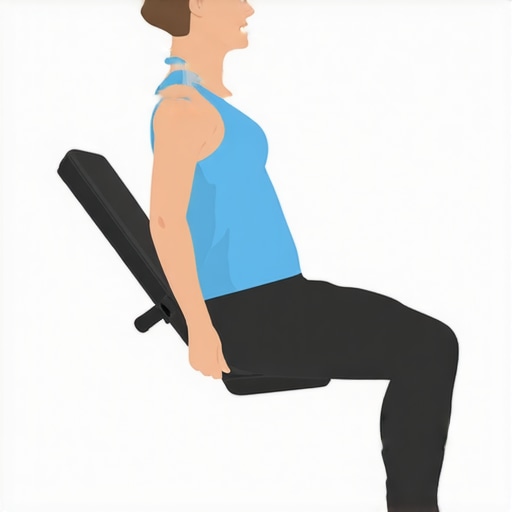
Stop tucking your tailbone when you stand
I remember the exact moment I realized I had been secretly sabotaging my own posture. I was at my desk, feeling that familiar tightness in my lower back, when I caught a glimpse of myself in the mirror. There I was, standing tall—cue the confident posture—only to notice my hips tucked under, as if I was trying to hide something. That uncomfortable tugging sensation in my pelvis? It was my body’s way of telling me I was doing it all wrong. I had fallen into the trap of tucking my tailbone, believing it would make me stand more upright, but in reality, I was just inviting more discomfort and misalignments.
Why We Tuck Our Tails and How It Backfires
Many of us have fallen for the myth that tucking your tailbone helps achieve perfect posture. I used to do it without even thinking, thinking I was correcting a slump when in fact, I was compounding the problem. The truth is, tucking your tailbone excessively can actually cause your pelvis to tilt forward unnaturally, which throws off your spinal alignment. A misaligned pelvis can cascade into neck pain, backaches, and even limit your mobility over time. Interestingly, a study by the National Institute of Health highlights how poor pelvic positioning can contribute to chronic back discomfort. (Source: see here)
Is Correcting Your Posture Really Worth It?
You might be skeptical and wonder if fixing this little habit is really going to make a difference. Believe me, I was there. Early on, I made the mistake of thinking that simply standing up straighter meant pulling my shoulders back or forcing my hips into a certain position. But that only made me more tense and uncomfortable. The real breakthrough came when I learned how to facilitate natural pelvic alignment without over-tucking or over-arching. This subtle shift has been a game-changer—not just for relieving persistent pain but for improving overall mobility and confidence.
If you’ve been battling with similar issues, you’re not alone. I want to guide you through the nuances that can help you find a balanced, pain-free posture. In the next sections, we’ll explore simple, effective techniques to stop tucking your tailbone artificially and start embracing a healthier alignment. Ready to ditch the discomfort? Let’s dive in.
Master the Pelvic Reset Technique
Begin by lying on your back with knees bent and feet flat on the floor. Place a small rolled towel under your lower back for support. Gently tuck your pelvis toward your ribs, flattening the small of your back against the towel. Hold this position for 5 seconds, then slowly release. Repeat 10 times. During my first attempt, I felt awkward and unstable, but persistence helped me notice immediate relief in my lower back within a week.
Synchronize Breathing with Movement
Inhale deeply through your nose, allowing your belly to expand. As you exhale slowly through your mouth, engage the pelvic muscles to gently tuck the tailbone under. Think of this as a slow, controlled movement—like drawing a bowstring. Deep breathing helps relax surrounding muscles, making the pelvic adjustment more effective and comfortable. I found that pairing breath with the motion helps prevent accidental over-tucking, which can aggravate discomfort.
Implement Dynamic Posture Drills
Stand with feet hip-width apart. Shift your pelvis forward and backward in a controlled manner—imagine you’re steering a slow, deliberate pendulum. Focus on maintaining a neutral spine—your ears, shoulders, hips, knees, and ankles should align. Do this for 30 seconds initially, increasing duration gradually. This dynamic movement trains your body to find its natural pelvic position, transforming static correction into a functional habit. Once, I tested this during a break and felt my hips open up significantly, reducing tension that had built up from lingering in poor posture.
Use Real-Time Feedback to Refine your Technique
Place a mirror or use a video camera to observe your side profile. Check if your pelvis is tilted forward (anterior tilt) or tucked under (posterior tilt). Aim for a balanced, slight anterior tilt that aligns your pelvis under your rib cage. Adjust your movements accordingly, prioritizing comfort over perfection. This approach made me aware of subtle corrections I wasn’t noticing, leading to more consistent posture improvements.
Incorporate Habitual Practices Throughout Your Day
Set reminders to check your pelvic position during work or daily activities. When sitting, avoid crossing legs or placing your wallet in the back pocket—these habits can tilt your pelvis over time. Instead, sit with your feet flat and use a lumbar support if necessary. During my workday, I paused every 30 minutes to reset my pelvis, which gradually ingrained correct alignment as a default posture, reducing chronic pain episodes.
Enhance Mobility with Targeted Stretches
Stretch tight hip flexors and hamstrings, which often pull the pelvis into a tilted position. For example, perform the kneeling hip flexor stretch, holding each side for 30 seconds. Flexible hips support a neutral pelvis, preventing habitual tucking or over-arching. In my journey, integrating these stretches helped me maintain better pelvic positioning without conscious effort, significantly easing back discomfort. For more effective mobility strategies, consider methods from chiropractic care.Many people assume that the usual stretches, posture corrections, or visiting a chiropractor will fix all their neck and back issues. However, as an expert in spinal health, I can tell you that common beliefs often overlook critical nuances. For instance, most think that simply strengthening core muscles or aligning the pelvis is enough, but without addressing the interconnectedness of your muscular and nervous systems, these efforts can fall flat. A prevalent myth is that pain relief can be achieved by quick fixes like popping or cracking joints, but studies, such as those highlighted in expert insights, show that integrated, personalized approaches yield sustainable results. One trap to avoid is over-reliance on passive treatments—think massages or medication—while neglecting active strategies like mobility drills and posture awareness. An advanced question I often get is: How do neural pathways influence my perceived pain and mobility? The answer is fascinating; research indicates that chronic pain can be partly due to the brain’s learned responses, warranting techniques that retrain neural circuits, such as mindful movement or neuroplasticity exercises. For example, in mobility enhancement methods, subtle neural re-educations are often the missing piece. Remember, the journey to lasting relief involves understanding these nuanced aspects—it’s not just about cracking joints or stretching indiscriminately. Stay vigilant, and incorporate active movement, neural retraining, and precise biomechanical adjustments. Have you ever fallen into this trap? Let me know in the comments.
Maintaining your progress and ensuring long-term relief from back and neck pain requires the right tools and consistent strategies. Over the years, I’ve refined my approach by incorporating specific equipment and methods that deliver tangible results and support ongoing mobility. One of my go-to tools is a quality foam roller, which I use daily to release my thoracic and lumbar muscles. Unlike generic rollers, I prefer a dense, high-quality foam that applies enough pressure without causing discomfort. Rolling targets my fascia and helps prevent muscle tightness that can reignite pain episodes.
In addition, I rely heavily on resistance bands for functional strength training. These bands allow me to perform controlled mobility exercises that strengthen supporting musculature around my spine. Personally, I favor the loop bands with moderate resistance, as they enable me to perform shoulder rotations and hip openers that directly enhance my posture. Regularly integrating band exercises has been shown to improve muscular coordination and spinal stability, as noted in studies like chiropractic research.
Another essential piece of equipment is an ergonomic chair with adjustable lumbar support. I customize my chair to maintain proper pelvic tilt throughout the day, avoiding forward or backward tilts that can undo my efforts. A simple yet effective upgrade I recommend is adding a small rolled towel at the lower back—this mimics the technique I described earlier and helps sustain a neutral spine during prolonged sitting. The key is to check in with yourself every 30 minutes and adjust as needed, turning posture correction into a habit rather than an effort.
Beyond physical tools, leveraging technology can keep you on track. I use mobile apps that remind me to perform mobility drills or resets, syncing with my schedule to prevent slouching or stiffness. These digital nudges, combined with a dedicated daily routine, foster consistency, which is crucial for lasting results. The trend toward personalized, tech-assisted mobility routines is growing, and I believe future innovations will offer even more tailored interventions, possibly integrating biofeedback or AI coaching.
How do I maintain my back health over time? I stay committed to a daily routine that combines self-myofascial release, strength training with resistance bands, ergonomic adjustments, and mindful monitoring. Remember, your spine is a complex system that responds well to proactive care. Incorporate these tools into your lifestyle and observe how your mobility and comfort improve steadily. For detailed guidance on relieving persistent neck and back discomfort, exploring expert techniques can be insightful—check out these proven strategies.
How can I keep my posture aligned for good?
Consistent habits are paramount. Set reminders, use ergonomic supports, and practice daily mobility drills. And don’t forget to periodically reassess your setup and techniques to adapt as your body changes. Incorporating ingredient-specific tools like foam rollers and resistance bands into your routine creates a sustainable foundation for long-term relief. As the field advances, expect more integrated solutions that combine tech and biomechanics — making it easier than ever to stay on top of your spinal health. Ready to upgrade your toolkit? Try the 2-minute foam roll session to release tension before it turns into pain, and see how instantly your mobility improves.
Through my journey with persistent neck and back pain, I’ve uncovered insights that reshape the way I approach recovery and mobility. One of the most surprising lessons was realizing that true change begins with small, consistent habits rather than dramatic overhauls. For instance, dedicating just two minutes daily to a simple pelvic reset technique can gradually realign your posture and alleviate discomfort, proving that persistence beats intensity every time. Additionally, I learned that neuroplasticity plays a significant role—by consciously retraining my nervous system through mindful movement and intentional breathing, I unlocked a level of relief that passive treatments couldn’t provide. Perhaps most profoundly, I discovered that embracing a holistic perspective—considering how habits, environment, and mental awareness interact—empowers you to make sustainable improvements. This holistic approach, rooted in understanding your body’s subtle signals, offers a pathway to lasting mobility and pain relief that I wish I had known earlier.