The ‘Bruegger Relief’ Position to Combat Desk-Bound Slump
It happened again—my neck stiff, shoulders aching after an endless day at my desk. One moment, I was typing away, and the next, my head felt like it was weighted down by a brick. The familiar tension crept up my spine, making me wonder if I was doomed to a lifetime of discomfort. That lightbulb moment hit me hard: I needed a smarter way to handle this all-too-common problem.
The Hidden Power of a Simple Shift
As someone who’s wrestled with chronic neck and back pain, I know the struggle all too well. Sitting for hours, hunching over screens, and ignoring my body’s signals has become my daily routine—until I discovered the Bruegger Relief Position. This simple change in my posture turned out to be a game-changer, a practical method that I now swear by.
But why is this position so effective? Well, it’s all about breaking free from the cycle of tension that builds up in our sedentary lifestyles. When I first tried it, I didn’t expect much. I thought, “It’s just a posture tweak.” Boy, was I wrong. The relief was almost instant, and over time, it helped me regain mobility I thought I had lost.
Many of us underestimate how much our daily habits contribute to chronic discomfort. According to a study by the American Chiropractic Association, poor posture can lead to long-term spinal issues and ongoing pain. Knowing this, I was motivated to explore solutions that could fit into my busy routine.
Do you find yourself battling the same sluggish, stiff feeling after long hours at your desk? If so, you’re not alone. Thousands experience this daily, but few realize a simple, effective change can provide lasting relief.
The journey towards comfort starts with understanding the root cause. And that’s exactly what we’ll tackle together. Next, I’ll share practical steps backed by expert insights to help you fight back against the desk slump and reclaim your mobility.
Start With Awareness and Alignment
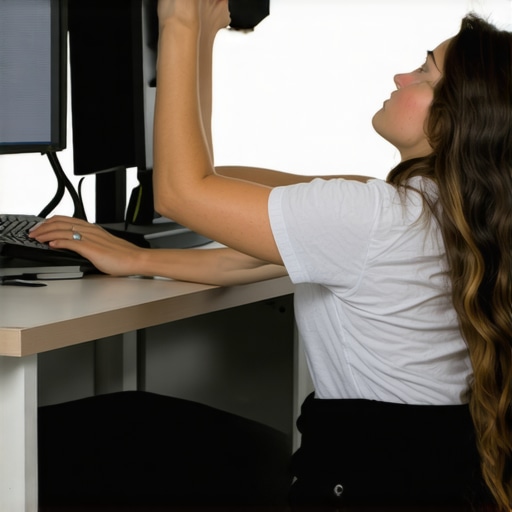
The first step is to observe how you sit and move during your day. Imagine your spine as a stack of perfectly balanced books—each vertebra stacked without tilt or wobble. To achieve this, set a reminder to check your posture every 15 minutes. When I did this during a typical workday, I noticed my head tilted forward and shoulders rounded, which increased tension. Correct this by gently tucking your chin and rolling your shoulders back, aligning your ears over your shoulders. Think of it like steering a ship—small adjustments keep you on course.
Implement Practical Movements to Break Tension
Next, incorporate targeted movements to reverse the effects of prolonged sitting. For example, perform arm circles to loosen shoulder joints—imagine winding up a toy before play. Then, do neck retraction exercises, similar to pulling your head back to make a double chin. During a messy afternoon, I realized I’d been craning my neck forward while focusing on my screen. Using these exercises, I felt immediate relief, reminiscent of releasing tensioned wires—restoring smooth function. These motions boost circulation, helping tissues recover from strain.
Adjust Your Environment for Lasting Comfort
Optimize your workspace with ergonomic adjustments. Elevate your monitor so your eyes gaze straight ahead, preventing the neck from downward bending—a common culprit behind pain. Use a small towel roll behind your lower back to support its natural curve, much like a cradle for a sleeping baby. During my home office setup, I experimented with a rolled towel and found it prevented my lower back from flattening out during long hours, which reduced fatigue and discomfort. Regularly reviewing and fine-tuning your setup maintains these benefits over time.
Practice Breathing and Relaxation Techniques
Deep breathing can release tension stored in your neck and shoulders. Try inhaling slowly through your nose, filling your belly—like inflating a balloon—and exhaling fully. I used this trick during a stressful meeting; it was like pressing a reset button on my nervous system, easing tightness. Consistent practice of diaphragmatic breathing increases oxygen flow, promoting relaxation and reducing muscle guarding that often leads to pain.
Engage in Gentle Strengthening
Building resilience in your neck and back muscles is key. The bird-dog exercise is an excellent start—imagine reaching out to touch the ceiling with opposite limbs, stabilizing your spine like a balanced bridge. I tried this after a few days of neglecting core work, and noticed a significant decrease in discomfort, especially when bending or twisting. Strengthening stabilizers prevents strain during activities, much like insuring a building against stressors.
Know When to Seek Professional Guidance
If pain persists despite these steps, consult a specialist. Professional adjustments or personalized therapy can target underlying issues that generic routines might miss. I learned this the hard way when a stubborn knot didn’t budge with self-care. Visiting a chiropractor enabled targeted treatment—think of it as tuning an instrument for perfect sound—and complemented my routine for better results. To find trusted help, explore options at our contact page.
Many people believe that all types of movement or stretching are universally beneficial for neck and back pain. However, not all exercises or auto-piloted routines help—and some can even worsen your condition. A prevalent myth is that pushing through pain with any form of stretching will eventually lead to relief. In reality, aggressive stretching without proper guidance can irritate irritated tissues or exacerbate existing injuries. For example, overzealous hamstring stretches can intensify lower back discomfort if your muscles are already tight or if your pelvis is misaligned. Instead, focusing on gentle, targeted mobility exercises and understanding individual nuances, like your specific spinal biomechanics, is crucial. To dive deeper into effective strategies tailored to your needs, consider consulting expert sources such as our comprehensive guide on [effective neck pain management](https://quackersspinal.com/effective-neck-pain-management-a-step-by-step-guide).
Tools I Recommend for Lasting Relief and Mobility
Maintaining mobility and managing neck or back pain over the long term requires more than just exercises; it demands precise tools and consistent strategies. Personally, I rely on a few key pieces of equipment that have transformed my routine. The first is a high-quality foam roller, which I use daily to release muscle tension in my thoracic and lumbar regions. Unlike generic rollers, I prefer the textured ones that mimic my massage therapist’s touch, providing deep tissue stimulation without overdoing it. Regular use helps prevent the buildup of adhesions and keeps my tissues supple, making movements easier and pain less frequent.
Secondly, I swear by a posture correction app on my smartphone. These apps employ motion sensors and reminders—like alerts to straighten your back or activate muscle engagement—aligning well with the evidence-based practices discussed in our comprehensive guide. I check in with it during the day to ensure I’m maintaining proper alignment, especially during long periods of sitting. These digital tools build awareness and make good habits instinctive, which is crucial for long-term success.
On the more technical side, a portable infrared heating pad has been instrumental. I use it before stretching sessions to increase blood flow and warm stiff muscles. Unlike standard pads, the infrared variety penetrates deeper, offering relief that lasts longer and prepares my tissues for movement. Scientific studies point to heat therapy’s effectiveness in reducing muscle tightness, which aligns with the advice offered in expert insights.
Looking ahead, I anticipate integrating smart wearables that monitor posture and muscle activity in real-time. Advances in AI and biosensing could soon provide personalized feedback, prompting corrective actions exactly when needed. This trend seems promising because it aligns with the growing emphasis on data-driven health strategies, potentially automating maintenance routines and preventing setbacks before they occur.
How do I keep my routine effective over years?
Consistency is the real challenge. To preserve the benefits of these tools, I set aside a dedicated few minutes daily for active maintenance—whether rolling out tight spots, checking my posture, or applying heat therapy. Scheduling these short sessions prevents neglect and turns maintenance into a seamless part of my day. It’s also vital to revisit and adjust your tools periodically—what worked a year ago may need tweaking as your body adapts. Regularly reviewing your progress with a healthcare professional can help fine-tune your routine, ensuring long-term success.
One advanced tip you can try today is incorporating trigger point therapy using a small massage ball. Focus on areas where tension accumulates, such as your upper traps or iliopsoas. Applying targeted pressure can break up stubborn adhesions and enhance circulation, promoting more effective stretching and strengthening. Remember, consistency over time yields the best results, so make this a habitual part of your routine for sustained relief and improved mobility.
Enhance your maintenance approach by adding these specific tools into your daily routine and observe how your pain and mobility improve over months. Stay proactive, and don’t hesitate to seek expert assistance when needed—your spine will thank you for it.
3 Myths About Neck Pain That Held Me Back From Real Progress
One of the biggest surprises was realizing that some widely accepted ideas about neck pain were actually unhelpful or even harmful. I used to think that stretching aggressively was the key to relief, but learned the hard way that overdoing it can irritate tissues and worsen symptoms. Recognizing that gentle, targeted movements outperform brute force was a lightbulb moment that transformed my approach.
Another misconception was believing that all pain meant a serious injury needing invasive treatment. Embracing the idea that mobility exercises, combined with lifestyle adjustments, could prevent problems gave me hope and control.
Finally, I used to think avoiding activity was best for recovery. However, understanding the importance of movement—performed correctly—actually accelerates healing and keeps my spine resilient.