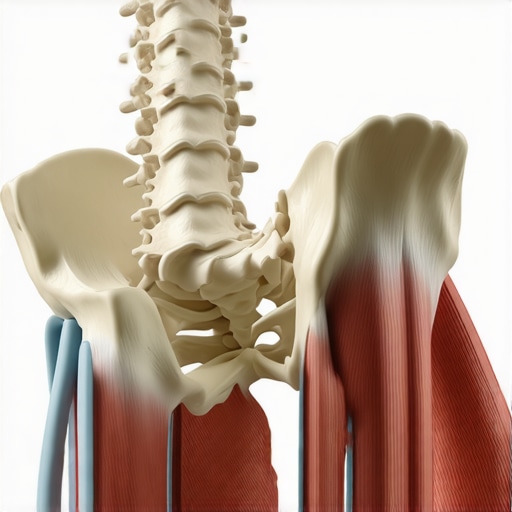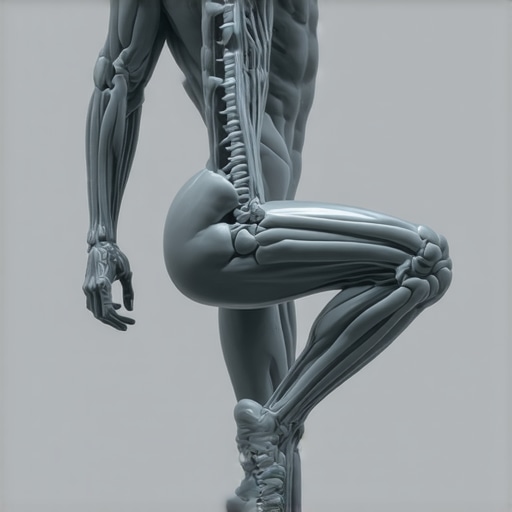
The link between ankle mobility and lower back stability
I was standing in my kitchen three years ago, reaching down for a simple wooden spoon I’d dropped, when it happened. A sharp, lightning-bolt sensation shot through my lumbar spine, leaving me breathless and leaning against the counter for support. Like most people, I immediately blamed my ‘weak core.’ I spent the next six months doing every plank, bird-dog, and dead bug exercise known to man, yet the stiffness remained. It wasn’t until a chiropractor looked at how I walked—specifically how my feet hit the floor—that I realized I was looking at the wrong end of the problem. My lower back wasn’t the culprit; it was the victim of my rock-stiff ankles. We often treat our bodies like a collection of separate parts, but in reality, you are a single kinetic chain. Today, I want to show you exactly how how a single tight ankle can cause chronic back pain and why unlocking your lower half is the fastest way to find lasting relief.
Your Spine Follows Where Your Feet Lead
For years, I made the classic mistake of thinking that back pain required back solutions. I would stretch my hamstrings until they screamed, but the moment I tried to pick up my grocery bags, that familiar ache would return. What I eventually learned is that if your ankles can’t bend properly (a movement called dorsiflexion), your body has to find that range of motion somewhere else. Usually, that ‘somewhere else’ is your lower back. When you walk, squat, or even just stand, your ankles act as the primary shock absorbers. If they are locked up—perhaps from an old sports injury or years of walking in flat shoes—your lower back has to arch excessively to keep you upright. This constant overcompensation is what leads to those morning ‘stiff-man’ vibes we all dread. A study published in the Journal of Physical Therapy Science confirms that restricted ankle dorsiflexion significantly alters gait patterns, leading to increased mechanical stress on the lumbar region. It’s a domino effect that starts at the pavement and ends at your spine.
Does fixing my feet really help my back?
I get it; it sounds a bit like a reach. You’re probably thinking, ‘My back is what hurts, why are we talking about my heels?’ I was a skeptic too. But think about it this way: if the foundation of a house is tilted, do you try to fix the roof first? Of course not. When we focus on mobility mastery, we have to address the base. Have you ever felt like your lower back is perpetually ‘tight’ no matter how much you stretch it? Tell me, do your ankles feel like they have a full range of motion, or do they feel like they’re stuck in concrete when you try to squat down? Most of us are living with ‘frozen’ ankles without even realizing it, and your spine is paying the price every single day. We’re going to break down how to test your own mobility and the simple shifts that can take the pressure off your discs for good.The first step to fixing a problem is admitting you have one—or in this case, measuring it. I call this the ‘Five-Inch Reveal.’ Stand facing a wall with your toes about five inches away. Keep your heel firmly planted and try to touch your knee to the wall. If your heel lifts or your knee wobbles inward, you’ve found the leak in your kinetic chain. I remember kneeling on a dusty gym floor three years ago, trying this for the first time. My right knee hit the wall easily, but my left was stuck three inches out. It was a lightbulb moment; no wonder my left lower back was constantly seizing up. My body was literally lopsided. To revitalize your mobility, you must first balance these foundations. 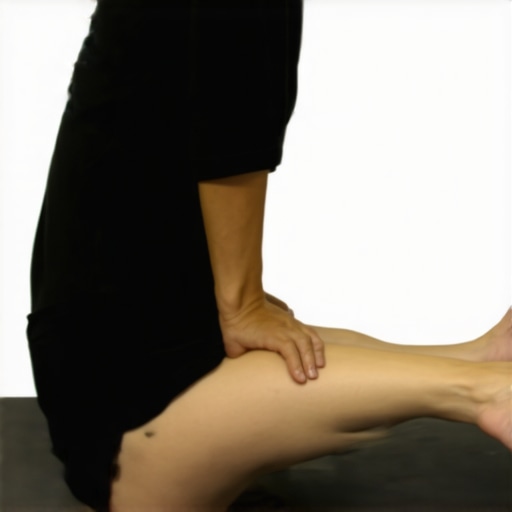
Adjust Your Foundation to Stop the Lumbar Overload
When your ankles are stiff, they act like rusty hinges on a heavy gate. Instead of the gate swinging smoothly, the wood—your back—starts to creak and splinter under the pressure. To stop this, we focus on manual mobilization. In a clinical setting, we often adjust your ankles to help your chronic hip pain and back tension because a joint that doesn’t slide won’t let the muscles glide. At home, you can use a ‘banded distraction’—looping a thick resistance band around the front of your ankle while lunging forward. This helps the talus bone slide backward, clearing the path for your shin to move forward. You’ll feel an immediate release of pressure, almost like someone let the air out of a balloon that was about to pop in your lower spine.
Fix Your Gait to Save Your Spine
Once the joints are moving, you have to teach them how to work during your daily movements. If you trudge along like you’re wearing rigid ski boots, your lower back absorbs every single strike against the pavement. Learning how to fix your gait for better spinal alignment involves transition to a ‘mid-foot’ strike rather than a heavy, jarring heel strike. Think of your foot as a tripod; you want to distribute weight evenly through the heel, the base of the big toe, and the base of the pinky toe. This simple shift prevents force from traveling directly up to your L5-S1 discs. Pay attention to what your gait analysis reveals about your lumbar health; often, a ‘clunky’ step is a direct signal that your back is about to flare up.
Restore Back Mobility with Integrated Movement
You can’t just fix the feet and ignore the rest. To truly restore your back mobility, you need to integrate these ‘new’ ankles into functional patterns like the hip hinge. Instead of bending at the waist and straining the lumbar fascia, let your ankles and hips share the load. When I finally combined better ankle flexion with proper hinging, the lightning-bolt pains I experienced in my kitchen stopped happening. It wasn’t magic; it was just mechanics. Your spine was never meant to be the primary mover in a squat or a lift; it is a stabilizer. By letting your ankles do their job, you finally give your back permission to rest.Most people assume that if a muscle feels tight, the solution is to pull on it until it lets go. In my years of rehabilitating my own spine, I’ve found this is often the fastest way to a flare-up. Let’s dig deeper: if your lower back is in a state of ‘neurological guarding,’ your brain is literally locking those muscles down to protect a vulnerable disc. When you force a stretch, your brain perceives it as a threat and responds by making the muscle even tighter. This is why stretching a tight muscle isn’t always the answer. We need to stop thinking about muscles as simple rubber bands and start viewing them as sensors controlled by the nervous system.
Is it possible to stretch your way into more pain?
Yes, absolutely. I see this most often with people who spend hours on the floor doing hamstring stretches. If your hamstrings are tight because your pelvis is tilted—remember my ankle issue?—then stretching the hamstring is just tugging on a rope that is already at its limit. Instead of relief, you end up with more instability in the sacroiliac joint. A study published in the International Journal of Sports Physical Therapy (2021) notes that prolonged static stretching can actually reduce the ‘stiffness’ required for joint stability, potentially leaving your lumbar spine unprotected during daily movements. 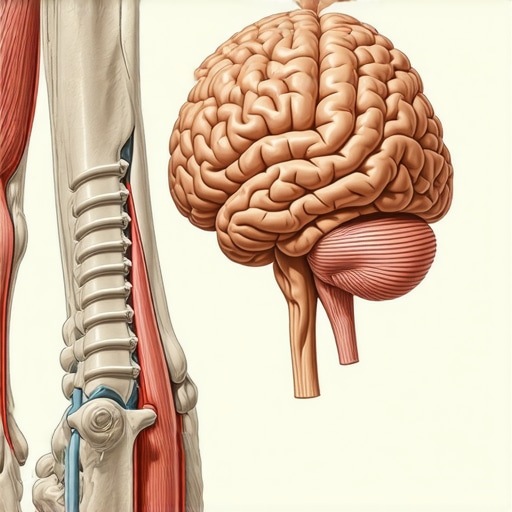
Stop Beating Up Your Lower Back with a Foam Roller
This is the ultimate ‘oops’ factor. I see so many people at the gym taking a hard plastic roller and mashing it directly into their lumbar spine. Please, stop rolling your lower back on a hard foam roller. Unlike your upper back, which has the rib cage for support, your lower back is relatively unsupported. When you put all your body weight on a roller in that area, you’re essentially shoving your vertebrae into a deep arch that can aggravate your facet joints. If you need to roll, stick to the glutes or the thoracic spine. If you’re struggling with that afternoon slump, look at the real reason your head feels heavy by the afternoon; it’s likely a postural collapse from the ground up, not a lack of foam rolling. We also need to talk about the ‘core’ obsession. Many of us are taught to ‘brace’ or ‘suck in’ our stomachs, but why your core isn’t engaging during your workouts often comes down to poor diaphragm function. If you can’t breathe, you can’t stabilize. This chain reaction even travels upward; it’s why we look at your feet when your neck hurts. The body is a closed loop. You might be seeking effective neck pain management, but if your pelvis is tilted due to those stiff ankles we discussed, your head will naturally shift forward to keep your vision level. This ‘forward head carriage’ adds ten pounds of pressure to your cervical spine for every inch of tilt. Instead of just cracking your neck, we need to restore your back mobility and foundation first. Have you ever fallen into this trap of over-stretching or over-bracing? Let me know in the comments.Once you stop the cycle of over-stretching, you need a strategy to keep those joints sliding. I’ve spent thousands of dollars on gadgets, but only two have actually moved the needle for my chronic back and neck issues. The first is a heavy-duty resistance band for banded distraction. When I use this to mobilize my ankles, I’m not just pulling on a muscle; I’m creating space in the joint capsule itself. According to a study published in the Journal of Bodywork and Movement Therapies, these self-mobilization techniques can significantly improve joint range of motion and reduce local pain perception more effectively than static stretching alone. It’s the difference between pulling on a knotted rope and actually untying the knot. The second tool is a simple slanted wedge. I use it to perform calf stretches while I brush my teeth, ensuring my foundations never tighten up during the day. This is how you boost your back health without needing an extra hour in the gym.
How do I maintain this mobility without a daily marathon of exercises?
The secret isn’t doing more; it’s doing the right things at the right time. I’ve found that the 5-minute desk reset is more valuable than a 90-minute yoga class once a week. You want to give your nervous system frequent ‘safety’ signals. If you sit for eight hours and then try to ‘fix’ it with one session, your body will resist. Instead, I focus on the 3-minute morning routine to lubricate your joints to set the tone for the day. This isn’t about fitness; it’s about hygiene for your discs. Think of it like brushing your teeth for your spine. 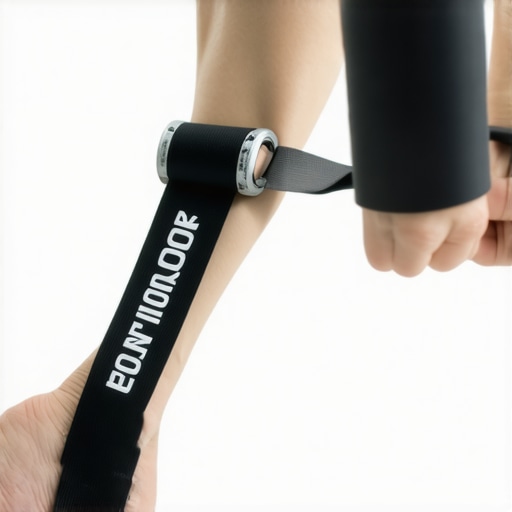
The Shift Toward Biofeedback and Real-Time Gait Data
Looking ahead, we are moving away from ‘guessing’ why we hurt. I’m currently experimenting with wearable sensors that clip onto my waistband to track my pelvic tilt throughout the day. In the next few years, I predict we will see AI-driven apps that analyze your phone’s camera feed to provide a real-time gait analysis, telling you exactly when your ankles are tightening up before the back pain even starts. This proactive approach is the ultimate goal of mobility mastery. For now, we rely on feel and consistency. To really stabilize the gains you’ve made, I highly recommend incorporating the isometric hold that builds a bulletproof core. Unlike traditional sit-ups, isometrics teach your muscles to protect your spine while you move your limbs—which is exactly what happens when you’re walking or lifting. My challenge to you: try the banded ankle lunge I described tonight for exactly two minutes on each side. You might find that your ‘tight’ lower back suddenly feels like it has room to breathe for the first time in years.
Hard-Won Truths from My Journey to Pain-Free Living
After years of trial and error, I’ve realized that pain is rarely the problem itself; it’s usually just the messenger notifying you of a fire burning somewhere else in your body. When I stopped chasing the ache in my lumbar spine and started looking at how my feet interacted with the earth, everything changed. One major lightbulb moment was discovering how expert methods for relieving discomfort focus on the whole kinetic chain rather than isolated spots. Another truth? Your body has a memory. If you’ve spent a decade walking with stiff ankles, it won’t unlearn that pattern in a single afternoon. Be patient with yourself. Finally, remember that ‘tightness’ is often a neurological protective strategy. Instead of forcing a stretch, try to convince your brain that it’s safe to let go through gentle, consistent mobilization.
The Minimalist Toolkit for Long-Term Spinal Health
You don’t need a garage full of expensive gadgets to find relief. I personally swear by a heavy-duty resistance band for performing the banded distractions we discussed; it’s the only tool that actually helps the ankle bones glide within the joint capsule. I also recommend a simple slant board or foam wedge for your daily calf resets while you’re doing mundane tasks like brushing your teeth. If you’re looking to dive deeper into the mechanics of these adjustments, I suggest reading up on chiropractic techniques to boost mobility. These aren’t just exercises; they are your partners in maintaining the space you’ve worked so hard to create. Lastly, a simple tennis ball can be a lifesaver for releasing tension in the arches of your feet, which directly impacts how your pelvis and back stack up during the day.
#IMAGE_PLACEHOLDER_E#
Give Your Body Permission to Move Again
Living with chronic back pain can feel like a life sentence, but it is often just a sign that your foundation is slightly out of alignment. By shifting your focus from the symptom to the system, you are taking back control of your own story. It starts with one banded lunge, one mindful step, and one decision to stop rolling your lower back and start mobilizing your ankles. We have seen how careful chiropractic intervention transforms lives by addressing these hidden links. You are not ‘broken’—you are just slightly out of sync, and every small adjustment brings you closer to the fluid, effortless movement you were designed for. Take that first step today, quite literally, and watch how your body responds to being truly heard and supported. Have you ever tried the five-inch wall test only to find one ankle is significantly stiffer than the other? Let me know your results in the comments below!