How to fix your gait for better spinal alignment
I remember the exact moment I realized my walk was making me miserable. I was crossing a grocery store parking lot, and my lower back felt like it was being compressed by a hydraulic press. I looked at my reflection in a car window and saw it: a heavy-footed, duck-like waddle that sent a shudder through my entire frame with every heel strike. It wasn’t just ‘bad posture’; it was a repetitive trauma I was inflicting on myself thousands of times a day. For years, I had been focusing on stretching my hamstrings and cracking my own neck, but the real culprit was hiding in plain sight—literally under my feet. Today, I am going to show you how to audit your own stride so you can stop the cycle of chronic discomfort and finally align your spine from the ground up.
How I Accidentally Wrecked My Back with Every Step
One of the biggest mistakes I made early on was assuming that if my back hurt, the problem must be in my back. I spent hundreds of dollars on lumbar supports and standing desks, yet the truth about built-in lumbar support is that it cannot fix a foundation that is fundamentally tilted. I was a ‘heel-striker,’ slamming my feet into the pavement like I was trying to kill ants. This vibration traveled straight up my legs and settled into my L5-S1 discs. It turns out, why walking on concrete all day is wrecking your lumbar spine is a lesson I learned the hard way. I didn’t realize that how a single tight ankle can cause chronic back pain until a specialist pointed out my lack of dorsiflexion. My body was compensating for my stiff ankles by tilting my pelvis forward, creating a permanent arch in my lower back that no amount of foam rolling could fix. Have you ever felt that sharp, nagging pinch in your hip after just a ten-minute walk?
Is Gait Analysis Just Overpriced Hype?
I’ll be honest, I used to think gait analysis was some fancy marketing gimmick used to sell custom orthotics. I mean, we’ve been walking since we were toddlers, right? How hard can it be? But when you consider that the average person takes between 5,000 and 10,000 steps a day, according to the American Chiropractic Association, even a 2-millimeter deviation in your foot strike can translate into thousands of pounds of unnecessary force on your spinal joints over a single week. Once I looked at what your gait analysis reveals about your lumbar health, the skepticism vanished. It’s not about walking ‘perfectly’ like a runway model; it’s about ensuring your joints aren’t grinding against each other. Learning the secret to walking without hip pain changed my life because it moved the focus away from the symptoms and toward the mechanics. We are going to break down the specific shifts you can make right now to stop the ‘thud’ and start the glide.
Fixing the Foundation with the Quiet Step Method
To stop the hydraulic press feeling in your back, we have to address the ‘thud.’ Most people walk like they are wearing concrete boots, sending a shockwave from the heel directly into the L5-S1 disc. Think of your legs as the suspension system of a car. If your ankles are stiff, your spine becomes the shock absorber. The first thing I tell people is to try the ‘Quiet Step’ test. Go into a hallway with hard floors and walk normally. Can you hear your footsteps? If it sounds like a drum solo, you are destroying your alignment. I remember a few years ago, I tried to power walk through a terminal at O’Hare, and by the time I reached my gate, my lower back was screaming. I realized I was leading with my heels and locking my knees. When I intentionally softened my landing and aimed for a mid-foot strike, the relief was almost instantaneous. This is a primary reason why walking on concrete all day is wrecking your lumbar spine; the surface gives nothing back, so your joints must take it all.
Stop Smashing Your Heels into the Pavement
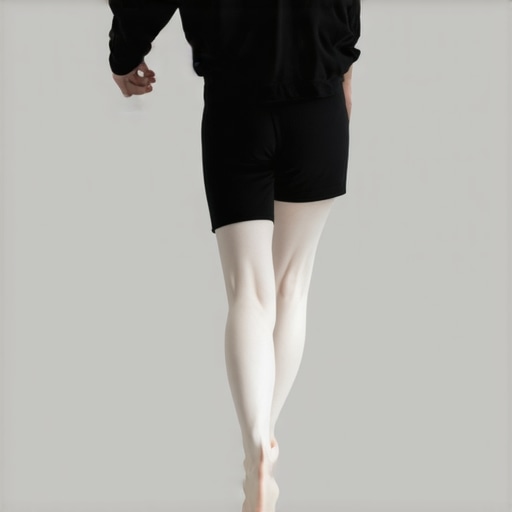
A proper stride should be a roll, not a strike. When your heel hits first and hard, it acts like a brake, jerking your pelvis forward. This is often why walking in flat shoes might be worsening your alignment, as many modern shoes lack the necessary rockered sole to facilitate a natural transition. Instead, focus on landing softly on the outer edge of your mid-foot and rolling inward. If you feel like you are ‘sneaking’ across the floor, you’re doing it right. This reduces the sheer force on the sacroiliac joint and stops the repetitive jarring that causes inflammation. 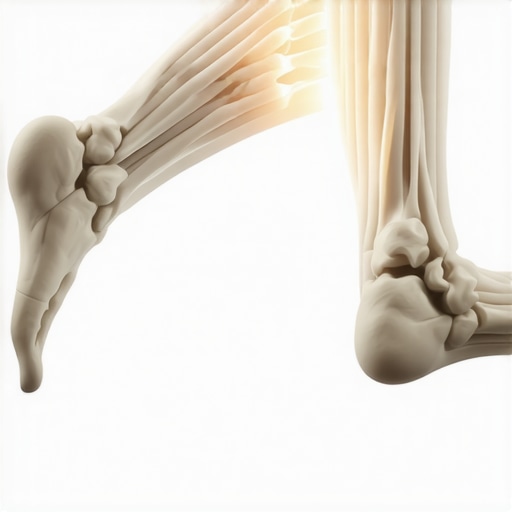
The Big Toe is Your Secret Engine
Forward propulsion should come from your toes, not by pulling your body forward with your hip flexors. If your big toe doesn’t flex, your body compensates by twisting the knee or tilting the pelvis. I once worked with a hiker who had debilitating sciatica; it turned out his big toe was effectively ‘frozen’ from old soccer injuries. Once we focused on how to improve your balance by strengthening your toes, his back pain vanished because his glutes finally started firing correctly. When you walk, imagine you are ‘pushing the ground away’ behind you with your big toe. This engages the posterior chain and takes the load off the small, vulnerable muscles in your lumbar region. If you find this difficult, it might be a sign of how a single tight ankle can cause chronic back pain, preventing that crucial push-off phase.
Keep Your Pelvic Bucket from Spilling
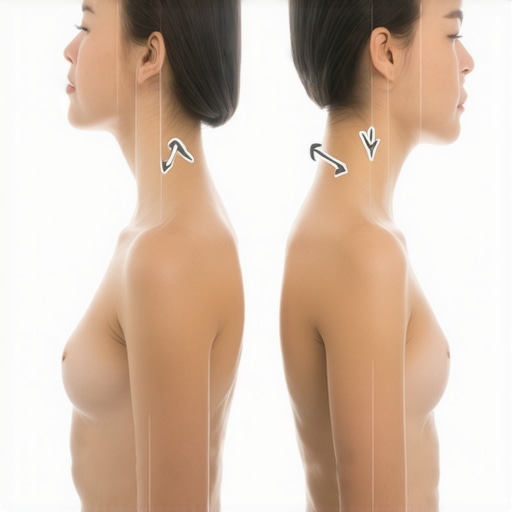
Imagine your pelvis is a bucket filled to the brim with water. If you walk with a heavy arch in your back—what we call ‘duck-walking’—you are spilling water out the front. This position puts the facet joints of your spine in a constant state of compression. This is why your morning walk makes your lower back ache; you’re essentially grinding your vertebrae together for thirty minutes. To fix this, engage your lower core just enough to ‘level’ the bucket. It shouldn’t feel like a workout; it should feel like a subtle tuck. This is also why we adjust the pelvis to fix neck tension. If the bucket is tilted at the bottom, the head has to crane forward to maintain balance, creating a chain reaction of pain. You can practice this by using the simple wall drill to reverse forward head posture, which helps you feel what a truly neutral spine and pelvis feel like when stacked correctly.
Why Your Favorite Hamstring Stretch Might Be Wrecking Your Back
I see it every day in the clinic: patients who are incredibly dedicated to their mobility, yet their pain won’t budge. They spend twenty minutes a day touching their toes, convinced that if they could just ‘loosen up,’ the back pain would vanish. But here is the nuance most people miss: tightness is often a protective mechanism, not a lack of flexibility. If your brain perceives your spine is unstable, it will command your hamstrings and lower back muscles to tighten up like a natural brace. When you force a stretch on those muscles, you are essentially trying to rip off a bandage that your body put there for a reason. In many cases, why stretching a tight muscle isnt always the answer becomes painfully clear once the temporary relief wears off and the spasms return with a vengeance.
Is Your Stretching Routine Actually Destabilizing Your Spine?
Advanced movers often ask me why their yoga practice isn’t curing their sciatica. The reality is that we often confuse ‘neural tension’ with ‘muscle tightness.’ If you feel a sharp, zingy pull when you stretch, you aren’t lengthening a muscle; you are irritating a nerve. According to research published in the Journal of Strength and Conditioning Research, aggressive static stretching can actually decrease the stability of the joints it’s meant to protect by dulling the ‘proprioceptive’ feedback your brain needs to maintain balance. This is a massive ‘oops’ factor for many. If you have been why static stretching might be prolonging your back pain, it is likely because you are stretching the very structures meant to keep you upright. Have you ever fallen into this trap? Let me know in the comments.
Stop Chasing the Burn and Start Building Real Stability
The most dangerous trap in recovery is failing to recognize the difference between muscle soreness and spinal pain. If you keep pushing through a ‘good’ burn that is actually a ‘bad’ disc signal, you might be how to tell if your exercise routine is wearing out your discs without even knowing it. Instead of passive stretching, I advocate for ‘active’ range of motion. This is where revitalize your mobility: proven strategies for back pain relief comes into play. It is about teaching your muscles to control the movement, not just flop into a position. When we look at the hidden link between neck pain and spinal health, we see that the same principles apply. A neck that feels tight might actually need a stronger upper back, not more side-stretching, which is why stretching your neck to the side might be causing more spasms for many office workers. #IMAGE_PLACE_HOLDER_C#
Reclaim Your Movement by Doing Less
Sometimes the best thing you can do for a flared-up back is to stop ‘poking the bear.’ We are obsessed with doing more—more stretches, more foam rolling, more exercises. But true mobility mastery involves knowing when to let the inflammation settle. If you are constantly using chiropractic techniques to find relief, ensure you are not undoing that work by sitting in a chair that is the hidden reason your desk chair feels uncomfortable. We have to look at the 23 hours a day you are not in the gym to truly solve the puzzle.
The Three Tools I Actually Carry in My Travel Bag
I’ve spent thousands of dollars on ‘ergonomic’ gadgets that ended up as expensive dust collectors. But three specific items changed how I manage my spine daily, and they cost less than a single dinner out. First, a standard lacrosse ball. Unlike the bulky foam roller—and let me tell you, you really should stop rolling your lower back on a hard foam roller—the lacrosse ball allows for pinpoint accuracy in the glutes and the space between the shoulder blades. I use it for a ‘psoas release’ every evening. If your hip flexors are tight from sitting, they pull on your lumbar spine, which is how a single tight ankle can cause chronic back pain in a roundabout way. Second, I rely on a portable lumbar roll. Most chairs are designed for aesthetics, not anatomy, and I’ve shared the truth about built-in lumbar support in modern chairs because most of them actually encourage a slouched pelvis. Finally, I use silicon toe spreaders for twenty minutes a night. If your toes are squished, your balance suffers, and your back pays the price. Using these tools is part of the mobility mastery expert tips for back pain prevention and recovery that keep me out of the ‘acute’ zone.
How do I maintain a pain-free spine for the long haul?
Maintenance isn’t about doing more; it’s about doing the right things consistently. Dr. Stuart McGill, the world-renowned spinal biomechanics expert and author of Back Mechanic, notes that ‘spinal hygiene’—the way you move throughout the entire day—is far more critical than the specific exercises you do for thirty minutes. For me, this means never skipping my core stability routine. I don’t do sit-ups; I do the dead bug exercise why it is the king of core stability and the isometric hold that builds a bulletproof core. These moves teach my body to stay rigid where it needs to be so my limbs can move freely. If you’re unsure if your efforts are working, you need to learn how to tell if your orthotics are actually helping your back or if they are just masking a deeper gait issue. 
Why Your Feet Need Room to Breathe and Move
I predict that in the next five years, we will see a massive shift toward wearable haptic technology in our footwear. Imagine a sock that vibrates when your heel strike exceeds a certain force threshold. Until then, we have to be our own sensors. I moved away from ‘marshmallow’ shoes because they hide the feedback my brain needs to walk correctly. It’s a major reason why walking in flat shoes might be worsening your alignment—they often lack the structural integrity to support the arch while being too stiff to allow for toe push-off. If you are struggling with recurring knots, learning how to use a tennis ball to release upper back tension is a great temporary fix, but you have to look at the ‘foundation’ below your ankles. Stop guessing and start testing. Go try the ‘Quiet Step’ test I mentioned earlier right now. If you can hear yourself walking down the hall, your spine is taking a hit with every single step. Fix the sound, and you’ll fix the stress.
The hard truths I learned about spinal health and walking
It took me years to realize that the most important part of my recovery wasn’t a single exercise, but the constant awareness of how I carry myself through the world. I used to think I could out-train a bad gait, but you can’t undo thousands of heavy steps with ten minutes of stretching. One major lightbulb moment was recognizing that why stretching a tight muscle isnt always the answer—often, my body was just trying to protect itself from my own clumsy movements. I also learned that chiropractic techniques unveiled a level of freedom in my joints that I couldn’t reach alone, but I had to do the daily work to keep it. Resilience isn’t something you find; it’s something you build, one ‘Quiet Step’ at a time.
My non-negotiable resources for a bulletproof lower back
If you’re ready to dive deeper, I recommend starting with Dr. Stuart McGill’s work; his book Back Mechanic is the gold standard for understanding how to stabilize your spine. I also swear by a simple lacrosse ball for soft tissue work and switching to footwear that actually allows your toes to spread. For more advanced guidance, mobility mastery expert tips for back pain prevention and recovery can provide the roadmap you need to transition from acute pain to lasting strength. I truly believe that revitalize your mobility: proven strategies for back pain relief is about reclaiming the simple joy of a walk in the park without checking your watch for when you can sit down again.
#IMAGE_PLACEHOLDER_E#
You are capable of moving without fear again
The transition from a ‘waddle’ to a ‘glide’ doesn’t happen overnight, but the results are cumulative. When you stop smashing your heels and start using your big toes, you aren’t just fixing a walk; you’re changing how your brain perceives safety in your own body. You don’t have to live in a state of permanent stiffness. By applying these small shifts and focusing on the dead bug exercise why it is the king of core stability to protect your midsection, you can reclaim a life of fluid, painless movement. Keep showing up for your spine, and your spine will show up for you.
Which part of your gait feels the most ‘stuck’ right now? Let me know in the comments below!