The Proper Way to Rotate Your Pelvis at the Driving Range to Protect Your Spine
The Proper Way to Rotate Your Pelvis at the Driving Range to Protect Your Spine
The landscape of golf has changed dramatically over the last decade. No longer are we restricted by the seasons or the setting sun. The surge in popularity of the indoor golf simulator and year-round, high-tech driving range facilities has allowed enthusiasts to “grind” on their game 365 days a year. Whether you are searching for an indoor golf simulator near me to escape a rainy afternoon or hitting the local golf driving range for a midnight session, the opportunity to improve has never been more accessible.
However, this accessibility comes with a hidden cost. As an elite-level golf coach, I, Austin Jarchow, PGA, have seen a troubling trend: a massive uptick in chronic lower back pain among amateur golfers. The culprit isn’t just the volume of swings; it’s the mechanics of how the body moves – specifically, the pelvis. Many golfers use these high-tech facilities to chase ball speed and distance, but improper pelvic rotation during these sessions often leads to debilitating spinal issues. Elite coaching isn’t just about the flight of the ball; it’s about ensuring your body can sustain those swings for a lifetime. When people search for golf lessons near me, they are often looking for a quick fix for a slice, but they should be looking for a coach who understands that spinal longevity is the foundation of a great game.
The Biomechanics of Pelvic Rotation: The Engine of Your Swing
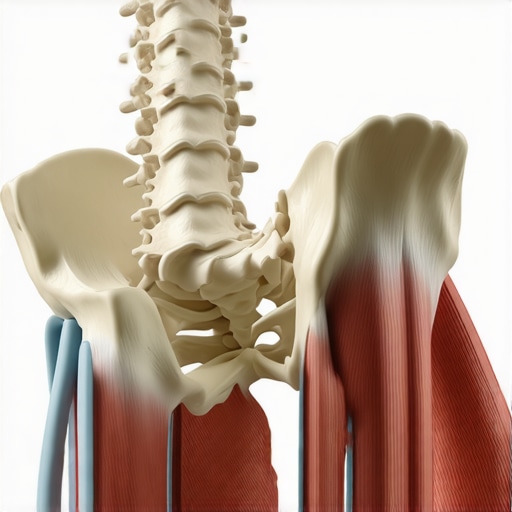
In the world of biomechanics, the pelvis is often referred to as the “engine” of the golf swing. It acts as the primary link between the lower body, which generates power from the ground, and the upper body, which delivers that power to the clubhead. If the engine is misaligned, the entire machine suffers. To protect your spine while practicing at a driving range near me, you must first understand the concept of Neutral Pelvic Posture (NPP).
According to the Titleist Performance Institute (TPI), finding a neutral pelvis at address is the foundation of a free, unrestricted turn. When your pelvis is in a neutral position, your lumbar spine is under the least amount of stress. Unfortunately, many golfers fall into two dangerous categories: “S-Posture” and “C-Posture.”
- S-Posture (Anterior Pelvic Tilt): This occurs when a golfer arches their lower back excessively at address. It creates a “spinal roadblock” because the facet joints of the vertebrae are compressed before the swing even begins. When you try to rotate from this position at the golf driving range, you are essentially grinding bone on bone.
- C-Posture (Posterior Pelvic Tilt): This is characterized by a rounded upper back and a tucked-under pelvis. While it might feel “relaxed,” it severely limits the range of motion in the thoracic spine, forcing the lower back to over-rotate to compensate.
Achieving a neutral pelvis allows the hip joints to socket correctly, facilitating a rotation that protects the intervertebral discs rather than shearing them.
Why Indoor Simulators Increase Injury Risk
While indoor golf is a fantastic tool for development, it presents unique risks compared to traditional outdoor play. When you are at an indoor golf near me facility, you are likely using trackman golf or similar launch monitor technology. This leads to what I call the “Trackman Trap.”
The “Trackman Trap” occurs when a golfer becomes obsessed with the numbers on the screen. You see a 240-yard carry and immediately want to hit 250. This leads to a “more is better” mentality, where golfers swing harder and faster without regard for their physical limits. Chasing trackman golf near me numbers without proper form is a primary cause of mid-back and lower-back “pinches.” Why chasing Trackman distance often leads to a nagging lower back flare-up is a conversation I have with my students weekly.
Furthermore, indoor golf simulators near me involve repetitive stress in a highly controlled environment. On a real golf course, you hit a shot and then walk several hundred yards. This walk acts as a “reset” for your muscles and joints. In a golf sim environment, you might hit 100 balls in 60 minutes from a static, often harder surface. This lack of recovery time between swings means that any mechanical flaw in your pelvic rotation is magnified a hundredfold. The Hidden Reason Your Trackman Sessions Are Aggravating Your Back Pain often boils down to this lack of intermittent rest and the intensity of the “simulator grind.”
Step-by-Step: The Proper Pelvic Rotation Technique
To move safely and powerfully, we look to the wisdom of legendary coaches like Pete Cowen. One of the most vital concepts in a safe golf swing is the idea that the trail hip (the right hip for a right-handed golfer) must move up and back during the backswing.
1. Loading the Hip (The Backswing)
Instead of thinking about “turning” the hips horizontally – which can lead to a dangerous sway or a flat turn – focus on the right hip socket moving upward and toward the heel. This “up and back” motion creates space for the arms to drop and ensures that the weight is loaded into the glutes and hamstrings rather than the lower lumbar spine. This is the secret to a powerful and safe swing that you can practice at any driving range.
2. The Lateral Shift and Sequencing (The Downswing)
The most dangerous move in golf is a violent “spin” from the top of the swing. If you simply rotate your pelvis as fast as possible without a proper sequence, you torque the lumbar spine. The downswing should start with a subtle lateral shift toward the target, followed by the rotation of the pelvis. This sequence allows the forces to be absorbed by the large muscles of the legs rather than the small structures of the back.
3. The “Pelvis Rotation with Support” Drill
When you are at a golf driving range near me, try this drill: Stand with your back toward a wall or use a golf club held against your thighs. Practice the backswing by feeling your right glute touch the wall (or move back away from the club). As you transition to the downswing, feel the left glute replace it on the wall. This ensures you are rotating within your “cylinder” and not sliding or thrusting toward the ball.
By mastering this move, you avoid the dreaded “Early Extension,” where the pelvis moves toward the ball and the spine is forced to straighten abruptly to make room for the club – a leading cause of herniated discs. To prepare your body for this move, consider incorporating The 3-Step Morning Routine for Hip Mobility into your daily life.
Common Mistakes to Avoid at the Driving Range
Practice doesn’t make perfect; practice makes permanent. If you are searching for indoor golf simulators to get your reps in, make sure you aren’t reinforcing these two common pelvic errors:
The “Spin-Out”
This happens when a golfer tries to generate speed by clearing the hips too early and too fast. Without a stable lead leg, the pelvis “spins out,” leaving the upper body behind and creating a massive amount of “X-Factor” stretch. While some X-Factor is good for speed, too much – especially without the requisite flexibility – will eventually tear the soft tissues surrounding the spine.
The “Early Extension”
As mentioned before, this is the “spine killer.” If your pelvis moves toward the ball during the downswing, your brain knows you are going to hit the ground or miss the ball. To compensate, your spine “stands up” or extends. This sudden change in spinal angle under high-velocity rotation is a recipe for disaster. This isn’t just a golf problem, either; the way we hinge our hips affects everything. You might be surprised to learn The specific reason your lower back hurts after washing dishes is often the same mechanical failure as early extension in the golf swing.
The Chiropractic Connection: Mobility for Better Golf
You can have the best golf lessons in the world, but if your body is physically incapable of reaching the correct positions, your swing will always be a compromise. This is where the intersection of golf coaching and chiropractic care becomes essential. You cannot rotate a pelvis that is “locked” or misaligned.
When the sacroiliac (SI) joints or the lumbar vertebrae are restricted, the body will find a way to move – usually by over-stressing a neighboring joint like the hip or the mid-back. This is why many golfers find that their search for golf lessons near me eventually leads them to a chiropractor. Professional adjustments can restore the range of motion needed for that “up and back” hip move. When your joints move freely, your swing becomes more efficient and significantly less painful.
At Quackers Spinal, we understand that the body is an interconnected system. Why we look at your pelvis when your neck hurts is a common question, and the answer lies in the kinetic chain. A restriction in the pelvis can manifest as tension in the shoulders or neck as the body tries to compensate for a poor turn. By utilizing care to Restore Your Range: How Chiropractic Care Enhances Movement, you give yourself the physical capacity to execute the drills and techniques we discuss at the driving range.
Conclusion: Play Longer, Play Better
The rise of the indoor golf simulator and high-tech driving range is a boon for the game, but it requires a more disciplined approach to practice. Proper pelvic rotation is not just a “swing thought” – it is a fundamental requirement for spinal health. By focusing on a neutral posture, the Pete Cowen “up and back” technique, and avoiding the “Trackman Trap,” you can enjoy the benefits of indoor golf near me without the lingering back pain.
Remember, your swing is only as good as your body’s ability to move. If you find yourself struggling with “pinches” during your sessions or if you feel stiff after an hour in the golf sim, it’s time to take action. Elite coaching combined with proper spinal maintenance is the only way to ensure you’re still flushing irons well into your golden years.
Ready to protect your spine while lowering your handicap? Whether you need technical golf lessons that prioritize biomechanics or a mobility assessment to unlock your rotation, we are here to help. Contact Austin Jarchow for elite coaching or visit Quackers Spinal for a comprehensive assessment of your spinal health. Let’s make your next session at the indoor golf simulators near me your best one yet.