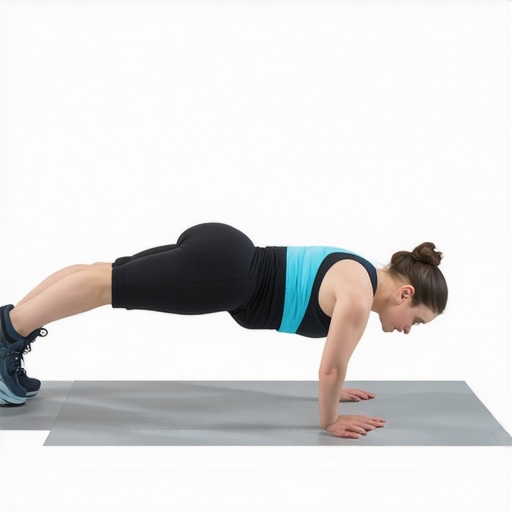
The proper way to use a foam roller on your upper back
The first time I tried to “fix” my posture with a foam roller, I looked like a fish out of water, gasping as I crunched over a piece of hard plastic. My mid-back was screaming, and I thought, “Surely, more pressure is better, right?” Wrong. I spent twenty minutes rolling back and forth over my lumbar spine—a move I now know is a recipe for a week of spasms. If you’ve ever felt that nagging burn behind your shoulder blades after a long drive or a day at the desk, you know the desperation of wanting just one good pop or a moment of release. My neck felt like it was made of rusted iron, and my head felt like a bowling ball sitting on a toothpick. Today, I’m going to show you how to actually use that foam cylinder to melt away tension without accidentally bruising your ribs or aggravating your discs. We are focusing purely on the thoracic spine, that middle section of your back that holds the key to your mobility and, ultimately, your sanity. [IMAGE_PLACEHOLDER]
The Mistake That’s Keeping Your Back Stiff
When I started out, I treated my foam roller like a steamroller. I’d go from my tailbone all the way up to my skull, thinking the “crunchy” sounds were a sign of progress. It felt “productive” in the moment, but my body hated me for it the next morning. You see, your lower back—the lumbar spine—needs stability, not a piece of high-density foam grinding into your delicate vertebrae. If you stop rolling your lower back on a hard foam roller, you’ll find that your body stops fighting back with those frustrating protective spasms. I’ve learned through trial and a lot of error that why your shoulder blade burns after a long drive often has more to do with your rib cage and mid-back than the actual spots that are screaming for attention. By narrowing our focus strictly to the upper back, we can restore your back mobility using strategies that help avoid the “bruised” feeling most beginners complain about. Have you ever tried to roll out a “knot” only to find it felt like you’d been punched in the ribs the next day? You aren’t alone, and quite frankly, you’re probably just rolling the wrong segments.
Is foam rolling just a temporary Band-Aid?
It’s a fair question to ask if this is actually worth the floor space in your living room. A lot of people worry they’re just masking symptoms rather than fixing the root cause. I used to be a skeptic too, especially when my “self-adjustments” only lasted ten minutes. However, research published in the Journal of Bodywork and Movement Therapies suggests that myofascial release can significantly improve joint range of motion without decreasing muscle performance, provided the pressure is applied to the right tissues. It’s not just about the muscle; it’s about the fascia and the nervous system. When you use the roller correctly, you’re essentially telling your brain it’s okay to let go of that “guarded” feeling. If you’re struggling with the real reason your head feels heavy by the afternoon, the answer usually lies in opening up the chest and mid-back to support your neck. We’re not just rolling for the sake of it; we’re re-educating the spine to move as a unit. Many people fail because they treat their back like a piece of dough, but it’s more like a series of interconnected hinges. If one hinge is stuck, the others overwork. Relieving neck and back discomfort requires a gentle hand and a bit of patience, not a “no pain, no gain” attitude. Before we dive into the specific “how-to” steps, I want to make sure you have the right mindset: this is about precision, not power.
Map Your Upper Back Without the Guesswork
To start, sit on the floor with the foam roller behind you. Lean back so the roller is resting right at the base of your shoulder blades. I remember one specific night in a cramped hotel room after an eight-hour drive; my back felt like a sheet of plywood. I tried to just lay on it, but nothing happened. The trick is to support your head with your hands—don’t pull on your neck, just cradle it like a precious bowl. Keep your knees bent and your feet flat. If you feel a sharp pinch, you might need to check how to tell if your shoulder blade pain is actually a rib issue before continuing.
Give Yourself a Big Hug to Move Your Shoulder Blades
This is the part everyone skips. If your shoulder blades are flat against your ribs, the roller is just hitting bone, not the tight muscles underneath. Cross your arms over your chest as if you’re giving yourself a massive hug. This pulls the scapulae apart, exposing the paraspinal muscles. Lift your hips just an inch off the ground. Now, push with your legs to roll slowly from the middle of your back up toward the base of your neck. Never go lower than the bottom of your rib cage. I used to think the “crunchy” feeling was bad, but often it’s just the fascia releasing.
Turn Your Roller into a Pivot Point
Instead of just rolling up and down like a rolling pin on dough, try using the roller as a fulcrum. Drop your hips back to the floor and pick one stiff segment. Gently lean back over the roller while keeping your core engaged. This isn’t a deep backbend; it’s a focused extension of one vertebra. If you find your lower back arching too much, you’re losing the benefit. This is where you can restore your back mobility by teaching each segment to move independently. It is more about precision than sheer force.
How Breathing Unlocks the Stiffest Segments
When I finally got that first “release” in that hotel room, it wasn’t because I pushed harder; it was because I finally exhaled. Your ribs are attached to your spine, so if you’re holding your breath, your spine can’t move. As you lean back over the roller, take a deep breath into your belly. You might find that why your breathing pattern might be the cause of your rib pain is directly linked to how your mid-back refuses to let go. Spend about 30 seconds on each “stuck” spot. This isn’t about speed; it’s about convincing your nervous system to relax. If you’re consistent, this becomes the 60-second move to open up your chest after a day at the desk that keeps you from feeling like a gargoyle by 5 PM. Don’t be surprised if you hear a few muffled pops—that’s often just gas moving within the joint fluid, but remember the truth about cracking your own back at home is that the movement is the goal, not the noise.Everyone tells you that if a muscle feels tight, you need to stretch it until it yields. In my years of dealing with my own ‘desk-bound’ spine, I’ve found that why stretching a tight muscle isn’t always the answer. Sometimes, a muscle is tight because it’s trying to protect a joint that’s unstable or misaligned. When you aggressively stretch a muscle that is in ‘protective mode,’ your brain actually ramps up the tension to compensate. It’s like a tug-of-war where you’re pulling against your own nervous system. A study published in the British Journal of Sports Medicine has highlighted that excessive static stretching can lead to temporary muscle weakness and, in some cases, doesn’t actually reduce the risk of injury if the underlying mechanics are off. This is precisely the one thing your physical therapist wants you to stop doing when you’re in an acute flare-up.
The Ice Trap That Keeps Your Neck Stiff
There’s also the common mistake of over-relying on cold packs. Most of us were taught the R.I.C.E. method from a young age. But if you’re dealing with a chronic stiff neck from looking at a screen, why icing a stiff neck might be making it harder to move becomes clear once you realize ice constricts blood flow to already starved tissues. For those ‘old’ nagging aches that have been hanging around for weeks, why heat is usually better than ice for old injuries is a total game changer. Heat brings oxygen and nutrients to the area, allowing the fascia to actually become more pliable during your foam rolling session. If you roll cold, stiff muscles, you’re essentially trying to stretch a frozen rubber band. It doesn’t end well.
Why does my back tighten up again just hours after rolling?
This is the most common frustration I hear from readers. You spend ten minutes on the floor, feel like a new person, and then by lunch, the ‘gnawing’ sensation is back. This happens because foam rolling is a tool for neural input, not necessarily a permanent structural change. To make the relief stick, you have to follow it up with movement that ‘locks in’ the new range. If you don’t restore your range how chiropractic care enhances movement through active stabilization exercises, your brain will revert to its old, safe (but stiff) patterns. You need to combine the release with actual strengthening of the deep neck flexors and the mid-back stabilizers. This is why overcoming chronic neck discomfort often requires more than just a piece of foam; it requires a strategy that resets the nervous system. Have you ever fallen into this trap where the relief only lasts for a few minutes? Let me know in the comments below!
The real secret to staying mobile isn’t found in a one-off rolling session on a Tuesday night; it’s found in the boring, repetitive habits you cultivate when you aren’t in pain. If you only pull out the foam roller when you can’t turn your head, you are already playing catch-up. I like to think of spinal health as ‘spinal hygiene.’ Just as you wouldn’t wait for a cavity to brush your teeth, you shouldn’t wait for a spasm to the 30-second morning move to hydrate your spinal discs. In my own routine, I’ve moved away from generic rollers and toward a double lacrosse ball, often called a ‘peanut.’ Why? Because a standard roller is too blunt for the specific joints where your ribs meet your spine. The peanut allows you to cradle the spinous processes while applying direct pressure to the stiff connective tissues on either side. This precision is how you the best exercises to keep your spine young actually start to yield permanent changes in how you sit and stand.
How do I maintain these mobility gains over time?
Maintenance is about micro-adjustments, not hour-long gym sessions. Dr. Stuart McGill, a legendary spine biomechanist at the University of Waterloo, advocates for the concept of ‘building a tolerance’ for your daily environment. This means if you spend eight hours at a desk, your ‘maintenance’ isn’t just stretching; it’s changing the physical load on your discs. I personally use the 5-minute desk reset for busy professionals twice a day—once at 11 AM and once at 3 PM. These breaks act as a ‘clear all’ button for the tension accumulating in your upper back. If you skip these, the fascia begins to solidify in that ‘hunched’ position, making your evening rolling session three times harder than it needs to be. You have to realize that boost your back health simple yet effective chiropractic hacks only work if the input is consistent enough to convince your nervous system that the new, open posture is safe.
The Tools That Actually Earn Their Spot in My House
I’ve tried every gadget on the market, from vibrating massage guns to electric heat wraps. Most of them are fluff. However, I swear by a dedicated lumbar support that I move from my office chair to my car. If you learn how to use a standing desk without hurting your hips, you’ll find that alternating between sitting and standing is the ultimate tool for long-term results. I also recommend using a simple wall-mounted mirror near your workspace. It’s a low-tech feedback loop; if I catch my reflection and see my shoulders creeping toward my ears, I immediately perform a postural reset. Looking forward, I predict we will see AI-driven webcam software that tracks our thoracic angle in real-time, vibrating our phones the second we start to slump. Until then, we have to be our own monitors. I want you to try this today: set a timer for every 60 minutes and perform one ‘Bruegger’s Relief Position’ to open up your chest. Use the 4-point check for a healthier home office setup to ensure your environment isn’t fighting against your progress. Consistency beats intensity every single time.
What Nobody Tells You About Chasing the Perfect Back Pop
After years of experimenting on my own spine, I’ve realized that the ‘pop’ is just a side effect, not the finish line. One of the biggest shifts in my thinking happened when I realized that my neck stiffness wasn’t actually a neck problem—it was a foundation problem. I learned that why we look at your feet when your neck hurts is because your body is an interconnected chain; if your arches are collapsing, your mid-back has to stiffen up just to keep you upright. I also stopped chasing the ‘big crunch’ and started focusing on micro-movements. If you focus on quality, you’ll find that mobility mastery is about teaching your brain to trust your range of motion again, rather than forcing a joint to click. Lastly, I learned that ‘no pain, no gain’ is the fastest way to a flare-up. If a move feels like a sharp jab, your body is telling you to pivot, not push.
Gear That Actually Earns its Floor Space
You don’t need a gym full of equipment to keep your spine healthy, but a few specific tools make a world of difference. First, I highly recommend a ‘peanut’ or two taped-together lacrosse balls; it provides the specific pressure needed for the thoracic joints that a wide foam roller simply cannot reach. Second, invest in a high-quality lumbar roll for your car or office chair. Understanding the truth about lumbar support will save you from the constant fatigue of ‘active sitting’ when you’re just trying to get through a workday. Finally, use a simple wall mirror to perform the 4-point check for a healthier home office setup. Seeing your posture in real-time is the best teacher you’ll ever have. If you’re feeling overwhelmed by where to start, you can always contact us for a personalized assessment to see which tools fit your specific spinal curve.
Moving Toward a Life Without the Afternoon Burn
The journey to a mobile, pain-free spine isn’t a sprint; it’s a series of small, intentional choices you make every single day. You don’t have to be perfect; you just have to be consistent. By focusing on your thoracic mobility and avoiding common foam rolling mistakes, you are effectively turning back the clock on your spinal health. Imagine a day where you don’t reach for the ibuprofen by 3 PM, or where you can turn your head comfortably to check your blind spot while driving. That reality is possible when you stop fighting your body and start supporting its natural mechanics. Whether you are dealing with chronic neck pain or just want to feel less like a rusted hinge, these small resets are your ticket to lasting comfort. Did your foam roller come with instructions when you bought it, or did you have to learn the ‘hard way’ like I did? Let me know your experience in the comments below!