Why Your Left Hip is Likely Tighter Than Your Right
Picture this: you’re standing in front of the mirror after a long day, trying to stretch out the stiffness in your hips. Suddenly, you notice that your left hip feels noticeably tighter and more restricted than your right. It’s a small discomfort, but it nagged at me for years until I finally connected the dots—my hips weren’t just tight; they were signaling something deeper. That realization was a lightbulb moment, and I know many of you might be experiencing the same thing.
Understanding the Left-Right Hip Disparity
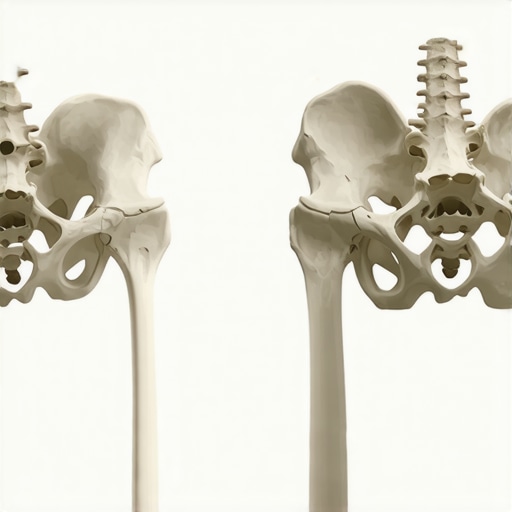
It’s surprisingly common to have one hip tighter than the other. Our daily habits—like favoring one side while sitting, or carrying a bag on a specific shoulder—can gradually pull things out of balance. Over time, this imbalance can lead to discomfort, altered movement patterns, and even longer-term issues like back or knee pain. What’s more eye-opening is that this isn’t just about flexibility; it’s often a sign that your body’s overall alignment and mobility are affected. I’ve seen multiple clients regain their mobility simply by addressing this asymmetry, and I want to share their stories and solutions with you.
Could This Be Just a Stiff Hip, or Is There More?
Early on, I used to dismiss the unevenness as normal stiffness from exercise. But ignoring it was a mistake. I underestimated how much the hips influence the entire kinetic chain. If one side is tighter, other areas have to compensate, which can strain muscles and joints elsewhere. That’s why addressing hip tightness isn’t just about stretching; it’s about understanding why the imbalance exists in the first place. As I delved deeper, I realized that improper movement habits and structural misalignments were often to blame. And here’s the kicker—improving hip mobility can dramatically enhance your quality of life, reducing pain and restoring confidence in your movement.
According to recent research, addressing asymmetries can prevent chronic pain and improve functional movement (source: here). The good news? Small adjustments and targeted exercises can make a big difference. Have you noticed your left hip feeling tighter or more restricted? If so, you’re not alone—and thankfully, help is within reach. In the next sections, we’ll explore simple yet effective strategies to restore balance, improve mobility, and get back to feeling like yourself.
Identify and Assess Your Imbalance
Start by standing in front of a mirror, flex your hips slightly, and observe if one side appears tighter or higher than the other. Notice your gait when walking; does one leg seem to lift more effortlessly? During a typical day, pay attention to which hip naturally takes the load—are you favoring one side? I once caught myself leaning more on the right foot during casual errands, which over time contributed to discomfort. Document these observations to track your progress and identify patterns.
Incorporate Targeted Mobility Exercises
Focus on gentle, specific movements that release tension and improve movement in your hips. For instance, use the hip circles to loosen tight capsules, or perform pigeon stretches to open the external rotators. After a painful session in my living room trying to realign my hips, I noticed immediate but temporary improvements. Consistency is key—schedule daily 5-minute routines that target your tight side to foster imbalance correction.
Use the Wall Hip Flexor Stretch
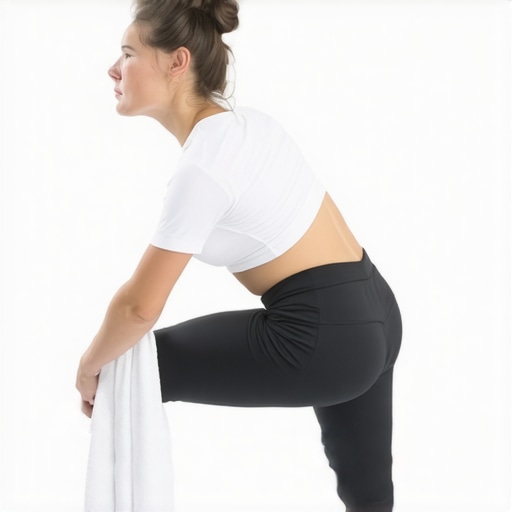
Stand next to a wall, raise one knee towards your chest, and gently push your hips forward to stretch the front of your hip. This is especially useful if sitting all day tightens your hip flexors. I find that this stretch helps counteract the tendency to tilt my pelvis forward, which is common in sitting habits.
Implement Core and Pelvic Stability Drills
Stability exercises like pelvic tilts and bridge lifts activate muscles that stabilize your pelvis and hips. Lie on your back, bend your knees, and lift your hips while squeezing your glutes—this was a game-changer for me. It enhances muscular balance, especially when combined with proper breathing to maximize engagement.
Progress with Unilateral Exercises
Focus on movements that target one side at a time, such as step-ups or single-leg Romanian deadlifts. During a session, I felt awkward initially performing a single-leg squat, wobbling until my stabilizers caught up, but this unilaterally strengthens the weaker side. Remember to perform these slowly, maintaining control and proper form.
Adjust Your Daily Habits for Lasting Change
Alter habits that reinforce imbalance: switch your carrying side, adjust your sitting posture by using ergonomic supports, or modify your footwear. I realized that carrying my backpack on the same shoulder day after day exacerbated my hip tightness, so I started alternating sides. Small, consistent adjustments like this reinforce the gains from your mobility work.
Monitor and Evolve Your Routine
Regularly evaluate your progress by reassessing your hips in front of the mirror and noting improvements in mobility or symmetry. Record exercises and stretches that yield the best results, and don’t hesitate to tweak as needed. If persistent tightness or discomfort continues, exploring chiropractic intervention might provide targeted relief and correction.
 Many assume chiropractic care is simply about quick fixes—cracking a joint and leaving it at that. But this misconception overlooks the nuanced complexity of spinal health and mobility. In my years of practice, I’ve seen patients gravitate toward trendy solutions or oversimplified routines that, surprisingly, do more harm than good. A common myth is that all chiropractic adjustments are equally effective regardless of the approach. In reality, techniques need to be tailored, considering individual biomechanics and underlying issues. Rigidly applying generic adjustments without thorough assessment often leads to temporary relief, but not lasting change. For example, research has demonstrated that specific, targeted chiropractic techniques can significantly improve neural function and mobility, especially when combined with proper muscle activation strategies (source).
Another misconception is that only acute pain benefits from chiropractic; many believe chronic issues are untreatable or require medication. However, misunderstanding the role of chiropractic in neuro-musculoskeletal health hampers early intervention. Addressing misalignments and mobility restrictions proactively prevents the cascade of compensations that often lead to persistent pain, as emphasized in recent studies on long-term spinal health (source).
Beware of the trap that chiropractic is only about manual adjustments. Effective care involves educating patients on movement patterns, ergonomic habits, and exercise that reinforce stability—turning passive treatment into active lifestyle change. I often emphasize that true improvement stems from understanding the hidden links between posture and mobility, which many overlook.
What about the common belief that stretching alone suffices to fix back or neck pain? While flexibility is essential, over-reliance on stretching without strengthening core and stabilizer muscles can exacerbate imbalances. Competitive athletes, for instance, sometimes ignore targeted stabilization, leading to recurrent injuries. Advanced practitioners incorporate functional assessments and neuromuscular re-education, which have proven to yield superior, sustainable results (source).
And now, let’s explore a critical question for the more experienced: how do subtle spinal misalignments influence your nervous system beyond immediate pain? Small displacements in vertebrae may seem insignificant, but they can interfere with nerve signals, affecting organ functions, immune response, and even mental clarity. Recognizing these hidden impacts is crucial for true wellness and not just symptom suppression. Scientific literature increasingly supports this holistic perspective, showing measurable improvements in systemic health after precise spinal corrections (source).
By understanding these nuances, you’re better equipped to avoid pitfalls and embrace a comprehensive approach to spinal health. Remember, lasting relief doesn’t come from quick fixes but from addressing the root causes through informed, tailored care. Have you ever fallen into this trap? Let me know in the comments.Maintaining your spinal health and mobility over time requires the right tools and a proactive approach. First, I personally rely on a high-density foam roller, like the TriggerPoint GRID, to release adhesions and improve circulation in my back and hips. Its dense surface helps target deep tissue, making my recovery sessions more effective. Additionally, I use a resistance band for assisted stretches and strengthening exercises—particularly for hip mobility and shoulder stability—because it offers variable resistance and is portable. Incorporating these tools into a daily routine has significantly reduced my pain and increased my flexibility. Looking ahead, I predict that integrating smart technology—like wearable motion sensors—will become a game-changer, providing real-time feedback and personalized mobility plans. How do I maintain my mobility tools over time? Regular cleaning of the foam roller and resistance bands ensures hygiene, while replacing worn-out equipment prevents ineffective therapy. To maximize long-term results, schedule periodic assessments with your chiropractor who can tailor your tool use and exercises, ensuring sustained progress. Remember, consistent maintenance with the right equipment is key to preventing setbacks and scaling your mobility efforts effectively.
Lessons from the Frontline: Hidden Truths About Spinal Health
I realized early in my career that true mobility benefits come not just from individual stretches but from understanding the intricate dance between our muscles, nerves, and spinal alignment. One lightbulb moment was recognizing how often I had overlooked the subtle cues my body was giving—that tiny asymmetry or minor discomfort was a call for attention, not just a nuisance. Embracing this mindset transformed my approach, teaching me that personalized care, patience, and deep listening are essential for lasting change. I learned that quick fixes pale in comparison to the wisdom gained through consistent assessment and tailored exercises, leading to more effective and sustainable results.
Tools and Resources That Transformed My Practice and Perspective
First, a quality foam roller like the TriggerPoint GRID became an invaluable ally in releasing deep tissue adhesions, enhancing circulation, and maintaining mobility between chiropractic visits. Second, I trust the comprehensive insights offered by the book “Revitalize Your Mobility,” which distills complex biomechanical concepts into actionable strategies. Third, leveraging online platforms such as detailed tutorials on targeted stretches helps keep my patients engaged and accountable. Lastly, my collaboration with skilled chiropractors through resources like these proven strategies has deepened my understanding of how individualized adjustments and movement coaching can dramatically shift recovery outcomes.
Your Next Step—Embrace the Journey Towards Better Mobility
Remember, every small effort you make toward understanding and improving your spinal health is a powerful step forward. The path to lasting relief and enhanced movement isn’t a sprint but a steady marathon—one where patience, consistency, and curiosity lead the way. Take courage in knowing you have the tools, knowledge, and support to transform your mobility and banish persistent back and neck pain. Start today, and celebrate each milestone along your journey to a healthier, more vibrant you.
What small change will you commit to today that could make a difference in your mobility or pain levels? Share your plans below—I’d love to hear about your progress!
}