Why your perfect posture is actually making you stiff
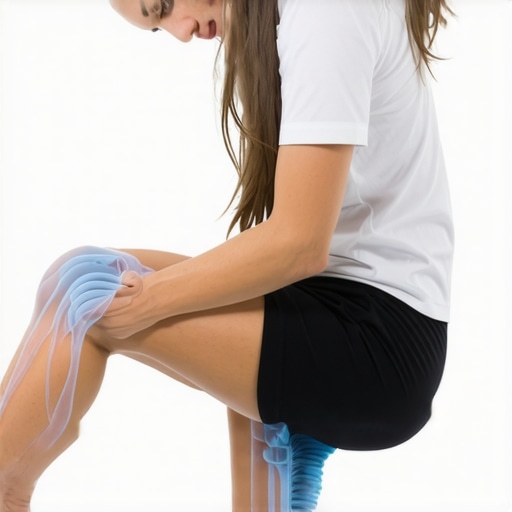
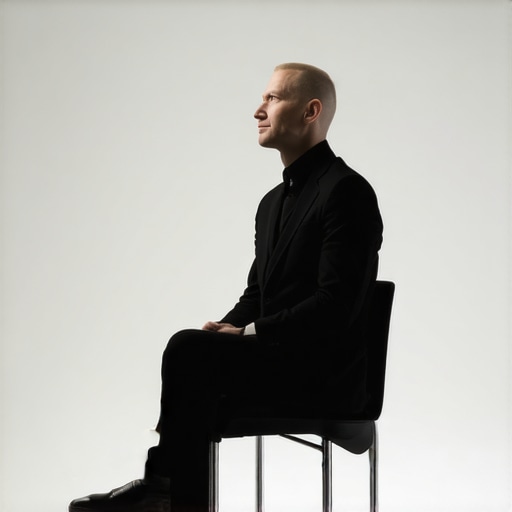
I remember sitting at my desk, shoulders pinned back with such intensity that my traps started screaming before noon. I was proud of it. I looked ‘proper,’ like a model for a 1950s finishing school. But by the time I stood up to go home, I felt a decade older. My neck was locked, and my lower back had that dull, thumping ache that wouldn’t quit. I was falling into the trap of ‘perfect’ posture, and it was making me miserable. I used to think that if I could just hold my spine in a perfectly straight line for eight hours, my chronic aches would vanish. I bought the lumbar rolls, the ergonomic chairs, and even those vibrating devices that buzz when you slump. But here’s the kicker: the straighter I sat, the worse I felt. My lower back felt like it was made of dry concrete.
The Statue Trap is Killing Your Mobility
The biggest mistake I made—and I see neighbors and friends making it every single day—is treating posture like a static pose. We’ve been told that there is one ‘ideal’ way to stack our bones, and we should stay there. But your body wasn’t designed to be a statue. When you force yourself into a rigid ‘perfect’ position, you’re actually creating massive amounts of isometric tension. Your muscles are working overtime to hold you still, which cuts off blood flow and leads to that familiar, gnawing stiffness. Instead of focusing on a rigid line, we need to focus on better posture through mobility. Movement is medicine for your joints. According to a study published in the Journal of Physical Therapy Science, prolonged static sitting—even in an ‘upright’ position—significantly increases muscle fatigue and spinal discomfort compared to more frequent postural changes. This is because your spinal discs actually rely on movement to stay hydrated and healthy.
Is all this focus on ‘correct’ alignment actually worth the hype?
It’s a fair question. If ‘good’ posture makes us stiff and ‘bad’ posture causes pain, is there a middle ground? The truth is that your ‘next’ posture is always your best posture. The skepticism shouldn’t be about whether alignment matters—it does—but about the rigidity we bring to it. If you’re constantly fighting your natural curves to look like a mannequin, you’re going to lose. I spent years trying to stretch out the tightness, but I eventually learned that stretching a tight muscle isn’t always the answer. Sometimes, that muscle is tight because it’s trying to stabilize a spine that’s being forced into an unnatural, frozen position. Today, we’re going to solve this by moving away from the ‘statue’ mindset and embracing ‘dynamic flow.’ Have you ever felt more exhausted after a day of ‘sitting up straight’ than you do after a day of moving around? I’d love to know if you’ve experienced this same frustration. Before we dive into the specific movements, let’s look at why your 10-second posture check might actually be lying to you.
Master the 10-Second Reset Before the Burn Starts
To fix the ‘statue’ problem, you need a toolkit of tiny, low-effort movements. The goal isn’t to look a certain way, but to prevent your nervous system from sending out ‘lockdown’ signals that result in chronic stiffness. I remember being stuck on a cross-country flight last year—usually a recipe for a week of leg numbness and lumbar stiffness. Instead of trying to sit ‘correctly’ in those cramped seats, I performed a 10-second posture check every time the seatbelt light went off. I didn’t pull my shoulders back; I just let my breath drop into my belly and wiggled my tailbone. It looked messy, and the person in 14B probably thought I was restless, but I walked off that plane without the usual limp. The key was keeping the joints lubricated through micro-shifts rather than trying to endure a static pose for six hours.
Oxygenate Your Spine to Dissolve Tension
Most of us unconsciously hold our breath when we’re trying to concentrate or force ourselves to sit up straight. This creates a pressure cooker in your abdomen, forcing your back muscles to act as stabilizers for the lack of internal support. Learning how to breathe through your diaphragm is the fastest way to signal to your lower back muscles that they can stop ‘guarding’ your spine. Think of your diaphragm like a hydraulic pump; every time you inhale deeply into your belly, you’re creating internal space that decompresses the lumbar discs from the inside out.
Turn Your Desk into a Movement Zone
You don’t need a fancy gym to maintain mobility throughout the work day. A simple 5-minute desk reset can counteract hours of screen time. The trick is to stop thinking about ‘breaks’ as something you do once an hour and start seeing them as continuous micro-adjustments. Instead of sitting on your sit-bones like they are glued to the chair, imagine your pelvis is a bowl of water. Gently tip it forward, then back, just a few millimeters. This tiny ‘slosh’ keeps the ligaments in your lower back from becoming brittle and prevents the dreaded afternoon ache.
Avoid the Trap of Aggressive Stretching
When your neck feels like a tight guitar string, your first instinct is to pull it to the side as hard as you can to ‘release’ the tension. Please, stop doing that. I’ve seen so many patients realize that stretching your neck to the side might be causing more spasms because it triggers a stretch reflex—a safety mechanism where the muscle clamps down even tighter to protect itself. Instead, try a 30-second move to stop mid-day shoulder burn, which focuses on gentle rotation and shoulder blade ‘flossing’ rather than blunt force. If you do use external support, make sure you know the correct way to use a lumbar roll so it facilitates a natural curve rather than pinning your spine into an uncomfortable, rigid arch. Movement is about flow, not force.
Why a Hard Core Might Be Your Biggest Weakness
It sounds counterintuitive, but one of the most common mistakes I see in my clinic is over-bracing. We’ve been conditioned to ‘engage our core’ at all times, but if your abdominal wall is always turned up to 10, your spine loses its ability to absorb shock. This is precisely why your core routine is failing your spine; you’re building a cage when you should be building a support system. In my years of practice, I’ve found that true stability comes from reflexive movement, not constant tension. According to a study in the Journal of Biomechanics, constant intra-abdominal pressure from ‘bracing’ can increase the compressive load on the L4-L5 discs by over 40% in some static positions. True core strength is about being able to switch muscles on and off, not leaving them on a permanent ‘high’ setting.
The Pelvis-Neck Connection You Can’t Ignore
Another nuance that beginners often miss is the regional interdependence of the body. You might come in with a kink in your neck, but the first thing I’ll do is check your hips. There is a hidden link between neck pain and spinal health that starts much lower than you’d think. It’s exactly why we look at your pelvis when your neck hurts. If your foundation is tilted, your head—which weighs about as much as a bowling ball—has to compensate by shifting off-center. When we adjust the pelvis to fix neck tension, we aren’t just guessing; we are stabilizing the entire kinetic chain from the ground up. When the pelvis is out of alignment, it creates a ‘domino effect’ that travels up the spine; the neck is just the end of the whip.
Why does your jaw tension always seem to travel down to your shoulders?
This isn’t just in your head. The neurological pathways for the jaw (TMJ) and the upper cervical spine are incredibly intertwined in the brainstem. If you are a ‘clencher,’ you are essentially telling your neck muscles to stay in a state of high alert. Investigating the connection between your jaw tension and neck mobility is often the missing piece for patients who have ‘tried everything’ for their chronic headaches. Advanced practitioners also look at ‘upstream’ drivers; if you spend all day squinting at a screen, your suboccipital muscles stay permanently contracted.
The Foam Roller Mistake That Wrecks Your Progress
One major ‘oops’ factor that drives me crazy is the misuse of recovery tools. Please, stop rolling your lower back on a hard foam roller. Your lumbar spine lacks the structural protection of the ribcage, and putting direct, blunt pressure on those vertebrae can cause the surrounding muscles to spasm in self-defense. This creates a cycle of ‘relief’ followed by even more intense stiffness. Research from the International Journal of Sports Physical Therapy suggests that over-aggressive foam rolling on unstable segments can actually decrease local joint stability. Instead of smashing the tissue, focus on the bird dog variation that fixes wobbly core muscles to build functional resilience. We also need to talk about sensory input; you might be surprised to learn how your eyes are secretly dictating your posture. Have you ever fallen into this trap of over-stretching or ‘bracing’ your core until you’re blue in the face? Let me know in the comments.
I’ve spent a small fortune on ‘spine gadgets’ over the years, but the most effective tool in my kit actually cost about two dollars. I keep a high-altitude tennis ball in my laptop bag at all times. It’s my secret weapon for pinpointing the exact spot where my rhomboids start to seize. If you know how to use a tennis ball to release upper back tension, you can essentially give yourself a deep-tissue treatment between meetings. It’s far more precise than a bulky massage gun, and unlike the foam roller, it allows for targeted pressure that doesn’t overwhelm the nervous system.
The Simple Gear I Keep Under My Desk
My home office isn’t a high-tech lab; it’s a collection of small, purposeful supports. I learned the hard way that even a thousand-dollar ergonomic chair won’t save you if you don’t perform a 4-point check for a healthier home office setup. I use a simple angled footrest to keep my knees slightly lower than my hips, which prevents my pelvis from tucking under and flattening my lumbar curve. When I transition to my standing station, I’m extremely careful about how to use a standing desk without hurting your hips. I’ve noticed that if I lock my knees, my lower back starts to throb within fifteen minutes. The trick is to keep a slight micro-bend and shift my weight between my left and right legs every few minutes to keep the blood flowing.
How do I keep my spine young as I age?
It’s a question I get asked constantly in my clinic, and the answer is always consistency over intensity. You don’t need a grueling hour-long gym session every day; you need a 3-minute morning routine to lubricate your joints. Think of your spine like a rusty gate—if you don’t move it through its full range every morning, it’s going to creak and eventually lock up. Incorporating the best exercises to keep your spine young, like gentle axial rotations and controlled cat-cows, ensures that you’re maintaining mobility before the day’s postural stress sets in. I also swear by the 30-second morning move to hydrate your spinal discs right before I have my first cup of coffee. Dr. Alan Hedge, an ergonomics expert at Cornell University, famously proposed the ’20-8-2′ rule: 20 minutes of sitting, 8 minutes of standing, and 2 minutes of moving or stretching. I believe the future of spine health isn’t in better chairs, but in ‘smart’ workspaces and wearables that gently nudge us to fulfill this movement ratio based on our biometric data. We are finally moving toward a more intuitive, biological approach to productivity. My challenge for you: tomorrow morning, before you check your emails or scroll through social media, try that 30-second disc hydration move. Your back will feel the difference by noon, and your future self will thank you for the extra lubrication.
Lessons from the Adjustment Table You Won’t Find in Textbooks
Over the years, I’ve realized that the most successful patients aren’t the ones with the most expensive chairs; they are the ones who stop trying to ‘fix’ their bodies and start listening to them. One of the biggest shifts I see occurs when someone stops viewing their spine as a structural beam and starts seeing it as a dynamic system. Here are a few lightbulb moments I’ve gathered: first, your pain is often a protective ‘software’ glitch, not just ‘hardware’ damage. Second, micro-movements during a meeting are worth more than an hour of aggressive stretching at the gym. Third, chiropractic secrets to regain full mobility after injury often involve retraining how your brain perceives stability, not just moving bones. When we focus on revitalize your mobility proven strategies for back pain relief, we are essentially teaching your nervous system that it is safe to let go of that protective tension.
My Personal Arsenal for Lasting Comfort
I don’t believe in over-complicating things. If a tool isn’t easy to use, it stays in the drawer. My essential toolkit includes a simple tennis ball for trigger point release, a firm lumbar roll for those long drives, and a commitment to movement variety. If you’ve been overcoming chronic neck discomfort insights from top chiropractors often point toward these small, consistent habits rather than one-off miracles. I also suggest mastering the dead bug exercise why it is the king of core stability because it protects your lower back without the harmful compression of traditional sit-ups. These are the foundations I trust because I use them myself every single day.
#IMAGE_PLACEHOLDER_E#
Your Spine Deserves More Than Just One Good Day
True health isn’t a destination you reach and then stop; it’s a relationship you maintain with your body. It is easy to get discouraged when a flare-up happens, but remember that your body is remarkably resilient when given the right signals. By moving away from the ‘statue’ mindset and embracing the ‘dynamic flow’ we’ve discussed, you are giving yourself the gift of long-term freedom. You don’t have to live with that nagging ache as your ‘new normal.’ Start small, stay curious, and keep moving. Your journey toward better posture and mobility is a marathon, not a sprint, and every micro-adjustment counts. Which of these micro-shifts are you going to try first during your next long work block? Let me know in the comments!