Why Your Sports Bra Might Be Causing Mid-Back Pain
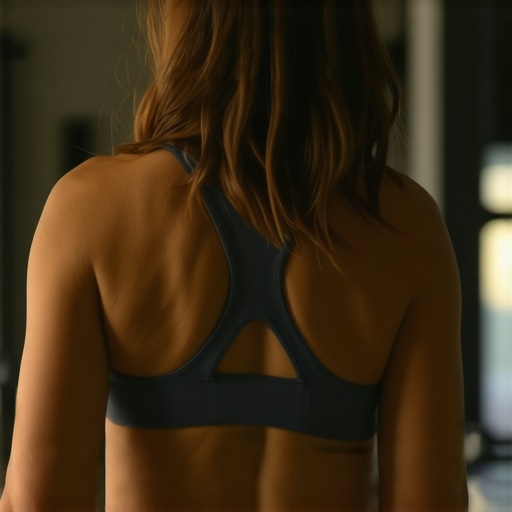
I was halfway through my third mile on the treadmill when it hit me. Not a runner’s high, but a sharp, biting pinch right between my shoulder blades. I spent the next three days convinced I’d pulled a muscle or that I needed to finally stop slouching at my desk. I even tried the proper way to use a foam roller on your upper back, which helped for a minute, but the burning always came back the moment I zipped up for my next workout. It wasn’t until I sat down with a specialist that I realized my high-support bra was actually acting like a medieval torture device for my thoracic spine.
The heavy price of extra-tight straps
For years, I made the mistake of thinking that support was synonymous with constriction. I would buy the smallest band size I could tolerate, thinking that if I couldn’t breathe deeply, at least nothing was moving. Boy, was I wrong. When you crank those straps down or wear a band that is too tight, you are not just holding things in place; you are effectively bracing your ribcage and forcing your mid-back to work overtime. This constant tension is often why your mid-back feels like it needs to pop every time you take it off. It is about understanding back pain as a functional issue rather than just a muscle knot.
Does a piece of fabric really have this much power over your spine?
You might be skeptical. It is just fabric, right? But the biomechanics are real. A study published in the Journal of Science and Medicine in Sport highlights that breast mass and poor bra fit can significantly alter trunk muscle activity and spinal load. When your bra doesn’t fit, your body compensates by rounding the shoulders forward, which leads to that nagging ache. I found that the 5-minute doorway stretch for rounded shoulders was a lifesaver, but it was only a band-aid until I addressed the root cause: the hardware I was wearing. We are going to dive into how to fix your setup so you can move without that familiar burn. Have you ever finished a workout and felt like you needed to peel your shoulders off your chest because of the pressure?
Stop treating your straps like a suspension bridge
The biggest mistake most of us make is relying on the shoulder straps to do the heavy lifting. Think of your sports bra like a backpack: if all the weight is pulling on your shoulders, your neck is going to scream. The support should come from the band, which acts like the waist belt on a hiking pack. If that band is sliding up your back, your straps are likely too tight, creating a pulley system that drags your cervical spine into a forward slump. I remember a particularly brutal 10k where I’d cinched my straps so tight I actually developed a tension headache by mile four. It wasn’t a fitness issue; it was a mechanical one. When your gear pulls your head forward, you need to understand the hidden link between neck pain and spinal health before the damage becomes chronic.
Test your band for the two-finger clearance
You should be able to slide two fingers comfortably under the band without it feeling like a tourniquet. If it is tighter than that, you are restricting your diaphragm. This is where things get messy for your mobility. When you can’t expand your ribs laterally, your body forced you to use your ‘accessory’ breathing muscles in your neck and shoulders. This is exactly why we look at your ribcage movement for better mobility during an assessment. If your ribs are locked, your spine stays stiff. 
Reset your thoracic spine during the day
Even with a perfect fit, the psychological effect of wearing high-compression gear can make you hold your breath. I’ve started implementing a ‘rib-flare’ check every hour. Imagine your ribcage is an umbrella opening 360 degrees. If you feel resistance against your bra band, that’s actually a good thing—it means you’re using your full lung capacity. If you feel that familiar biting sensation between the blades, try the 10-second reset for when your shoulder blades start burning to recalibrate your posture. I used to think I just needed more massages, but I actually needed to stop bracing against my own clothes.
Why your mid-back carries the burden of your lower back
It is all connected. If your bra is forcing your mid-back into a rounded ‘C’ shape, your lower back has to arch excessively to keep you upright. This is a primary reason why we adjust your mid-back to help your lower back recover. You cannot fix the bottom if the middle is pinned into a bad position by a wire or an overly tight racerback. I’ve found that switching to an ‘X’ back or a cross-strap design often redistributes the pressure away from the base of the neck, which is a key component of mobility mastery. It is about creating a setup that allows for movement rather than one that serves as a cage. When you prioritize understanding back pain as a result of these daily micro-stressors, you can finally stop the cycle of inflammation and start moving with real freedom.
I used to be a self-appointed ‘posture police’ officer. I would sit bolt upright, suck my belly in, and keep my shoulders pinned back, thinking I was doing my spine a favor. But here is the contrarian truth that most specialists won’t tell you: that ‘perfect’ posture is often exactly why your perfect posture is actually making you stiff. When you force your body into a static, rigid position, you are essentially asking your muscles to act like concrete pillars rather than dynamic shock absorbers. For women wearing high-compression gear, this rigidity is amplified, locking the thoracic spine into a ‘safe’ but suffocating cage.
Your rigid core might be the enemy of your mobility
Everyone talks about ‘bracing’ your core, especially during a heavy lift or a run. However, there is a massive trap here that I see all the time. If your core is always ‘on’ and your bra is already providing external compression, your spine loses its ability to rotate. This is why your strong core might actually be too rigid for your own good. True stability comes from the ability to move through a full range of motion, not from being a statue. I’ve found that when the mid-back can’t rotate, the neck and lower back have to pick up the slack, leading to that chronic, grinding fatigue. A 2020 study published in the British Journal of Sports Medicine debunked the myth that any specific posture is ‘ideal,’ instead suggesting that the best posture is your next posture. Movement is the goal, not a fixed position.
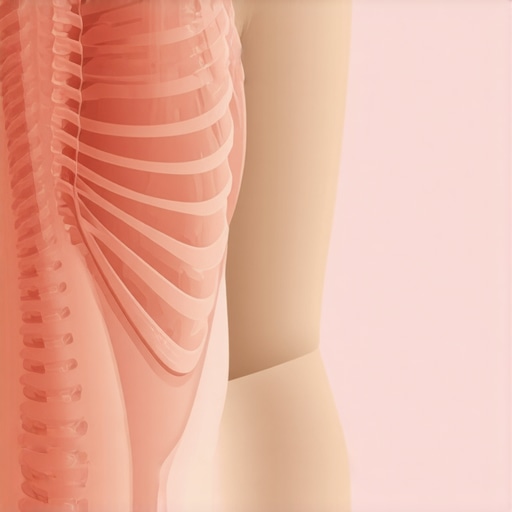
Why do my neck muscles tighten up even when I am just walking?
If you feel your traps creeping toward your ears during a simple stroll, it is rarely a ‘neck problem.’ It is often a breathing problem. When a tight bra band restricts your lower ribs, you become an ‘apical breather,’ meaning you use your neck and chest muscles to pull air into the top of your lungs. This creates a direct path to chronic tension. This is the hidden link between neck pain and spinal health that most people ignore. You are essentially doing thousands of tiny ‘shrugs’ every single day just to breathe. It is no wonder your neck feels like it’s made of knotted rope by 5 PM. Before you reach for the ibuprofen, look at how your ribs are moving.
Stop icing your neck every time it feels stiff
Here is the ‘oops’ factor I fell for for years: the ice pack trap. When my upper back felt like it was on fire after a workout, I’d immediately numb it with ice. But I’ve learned that why icing isn’t always the best move for a stiff neck is because it can actually increase muscle guarding. If the stiffness is coming from a lack of blood flow or a mechanical restriction caused by your gear, cold can make those tissues even more brittle. Instead, we focus on how to restore your range how chiropractic care enhances movement by addressing the joints that are actually stuck. Have you ever fallen into this trap of icing a problem that actually needed movement? Let me know in the comments.
The hidden nuance of leg length and back tension
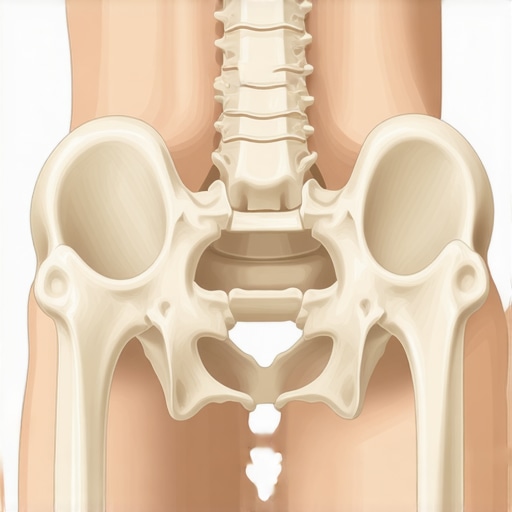
You might think your sports bra and your feet live in two different worlds, but your body doesn’t work in silos. If you have a slight pelvic tilt, it changes how your ribcage sits, which in turn changes how your bra fits on one side versus the other. This is why we check your leg length during every visit. If one side of your back is always tighter, it might not be the strap; it might be the foundation. When we align the pelvis, the ribcage can finally drop into a neutral position, taking the ‘bite’ out of those shoulder blade hotspots. It is all about the big picture of your mechanics. When was the last time you looked at your gear as a part of your spinal health strategy? Let’s start treating it that way.
I’ve spent thousands of dollars on gadgets that promised to fix my posture, but most of them ended up in the bottom of a junk drawer. The tools I actually use daily are surprisingly low-tech but highly specific. For example, I stopped using a generic foam roller for my upper back and switched to a dense, 80mm mobility ball. I found that how to use a tennis ball to fix that spot under your shoulder blade is a great entry point, but moving to a firmer rubber ball changed the game for my thoracic mobility. It allows me to pin the muscle and move my arm through its full range, which is far more effective than just rolling back and forth like a piece of dough.
My non-negotiable tools for daily spinal maintenance
Beyond the physical tools, I rely heavily on a specific routine of ‘micro-breaks.’ I use a simple haptic feedback sensor that clips onto my shirt and vibrates when I slouch for more than 60 seconds. It sounds annoying, but it’s the only thing that broke my habit of leaning into my monitor. This kind of tech helps you boost your back health simple yet effective chiropractic hacks by turning passive knowledge into active habits. I also keep a pair of toe spacers on my desk. It sounds crazy, but since why we look at your feet to solve your neck issues is a real clinical principle, keeping my foundation wide helps stabilize my entire posterior chain while I work.
How do I maintain these mobility gains over time?
Maintenance isn’t about doing a grueling hour-long session once a week; it’s about ‘spinal hygiene.’ Dr. Stuart McGill, a world-renowned expert in spine biomechanics and author of Back Mechanic, stresses that the way you move during your daily tasks—like brushing your teeth or picking up a pen—matters more than your gym time. I’ve adopted his ‘Big 3’ core exercises as a morning ritual to ensure my spine is supported before I even have my first cup of coffee. This consistency is the secret to mobility mastery. If you can’t commit to a full routine, focus on one high-impact move like the spider-man stretch that clears up morning stiffness. It hits the hips, the t-spine, and the hip flexors in one go.
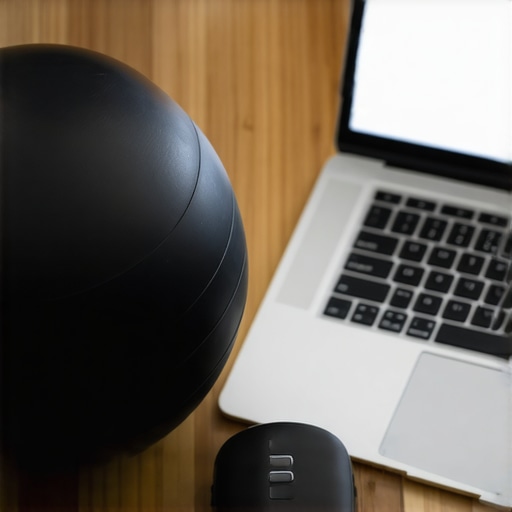
Why biofeedback is the future of pain management
I predict that in the next five years, we will see a massive shift toward wearable ‘smart clothing’ that monitors ribcage expansion and pelvic tilt in real-time. We are already seeing the early stages of this with apps that use your phone’s camera to analyze your gait. This tech will make it easier to restore your range how chiropractic care enhances movement because you’ll have data to show exactly where you’re locking up during your workday. Until that tech becomes mainstream, the best tool you have is your own awareness. I want you to try this right now: set a timer for every 30 minutes today and perform a quick ‘rib-flare’ check to ensure you aren’t bracing against your gear. If you’re ready to take this seriously, I highly recommend looking into a professional assessment to find your specific mechanical ‘leaks.’ Let’s stop guessing and start fixing.
The Hardest Truths I Learned While Fighting Back Pain
After years of trial and error, I’ve realized that support should never mean suffocation. My biggest lightbulb moment was discovering that my ‘perfect’ alignment was actually a rigid cage; truly understanding back pain means realizing that movement, not stillness, is the goal. I also learned that if I can’t breathe into my back ribs, my neck will always pay the price. Finally, I stopped blaming my muscles and started looking at my mechanics—sometimes why your perfect posture is actually making you stiff is because you’re trying too hard to stay ‘correct’ instead of stay mobile.
My Go-To Kit for Keeping My Spine Happy
I don’t believe in expensive fads, but I do believe in tools that work. I swapped my foam roller for a dense mobility ball because I found how to use a tennis ball to fix that spot under your shoulder blade is far more precise for targeted relief. I also swear by toe spacers to help my foundation, as why we look at your feet to solve your neck issues is a vital connection most people miss. For daily movement, I never skip the spider-man stretch that clears up morning stiffness, which resets my hips and spine in seconds.
Take Your Body Back from Your Gear
Your clothes should work for you, not against you. When you start prioritizing ribcage expansion and pelvic alignment, the nagging aches start to fade. It is about small, consistent choices that lead to mobility mastery. Whether it is through restore your range how chiropractic care enhances movement or simply loosening your straps, you deserve to move without restriction. Don’t let a tight band dictate your health. Have you ever noticed a specific piece of clothing causing you a mid-back pinch or shoulder pain? Let me know in the comments below!