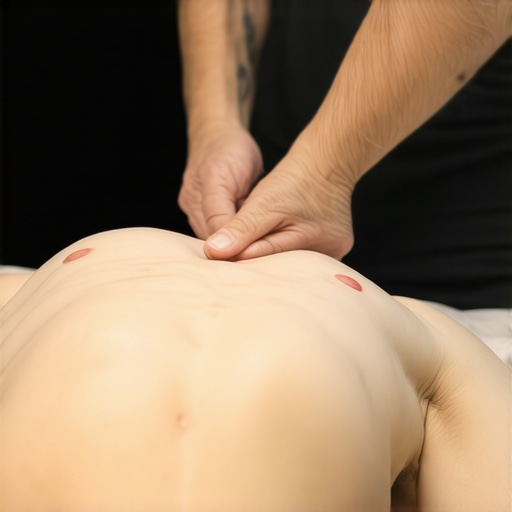
Why we check your hips when you have neck pain
I remember the moment clearly. I was hunched over my desk, neck stiff, shoulders tense, feeling like I was carrying the weight of the world on my shoulders—and my mind suddenly snapped: Could my hips be part of the problem? That realization was a lightbulb moment for me, and it completely changed the way I approach neck and back pain today.
Unraveling the Hidden Connection Between Your Hips and Neck Pain
Have you ever experienced persistent neck tension that just won’t loosen, no matter how many stretches or massages you try? It’s frustrating, isn’t it? You start to wonder if something deeper is going on—something beyond the usual muscle strain. Well, that’s exactly what I stumbled upon early in my journey. I used to think neck pain was isolated, a problem for the neck itself. Turns out, our bodies are more interconnected than we might realize. The way your hips move and how your pelvis is aligned can significantly influence your neck’s health. In fact, studies show that pelvic misalignments can alter your posture and create a chain reaction, leading to neck discomfort and even headaches (source: [Quackers Spinal](https://quackersspinal.com/neck-back-pain-solutions-insights-from-wellness-experts)). But why would your hips affect your neck? The answer lies in our body’s kinetic chain—an intricate network where one area impacts another. When your hips are tight, misaligned, or weak, they can cause your pelvis to rotate or tilt, leading your upper body to compensate. Over time, this imbalance can strain your neck muscles, nerves, and joints, causing pain that feels separate but is deeply connected. Early on, I made the mistake of only focusing on my neck—treating the symptoms without addressing the root cause. I overlooked how my hips, sitting habits, and posture contributed to that stubborn pain. That’s a mistake I don’t want you to make. By understanding and checking your hips, you’re not just treating the pain you feel—you’re tackling its source. Over the next sections, I’ll walk you through simple, effective ways to assess and improve your hip mobility and alignment. Ready to get to the core of your neck pain? If you’ve been silently battling this kind of discomfort, this could be the breakthrough you’ve been waiting for.
Assess Your Hip Mobility with the Wall Test
Start by testing your hip movement. Stand facing a wall, about a foot away, and lift one knee to your chest, trying to touch it to the wall. If your knee can’t reach or if your pelvis tilts excessively, your hip mobility may be limited. I once tried this after feeling persistent neck tension. Initially, I struggled, but I noted which side was tighter. This simple test revealed asymmetries I hadn’t recognized before, guiding my focus towards targeted stretches.
Incorporate Dynamic Hip Stretches into Your Routine
Once you’ve identified tight hips, move into targeted stretches. The Many people assume that neck pain is solely a localized issue, but this oversimplifies the complex interplay of body mechanics. For example, the widespread belief that stretching tight muscles always alleviates pain can be misleading; in some cases, overstretching or incorrect techniques may exacerbate problems. One common myth is that chiropractic adjustments immediately fix misalignments without addressing underlying movement patterns. While adjustments can be effective, relying solely on quick fixes without understanding your biomechanics may lead to recurrent issues.
A nuanced point many overlook is the subtle role of neuromuscular control in mobility. Focusing only on joint mobility neglects the importance of proprioception and muscular coordination, which are critical for long-term relief. Research from reputable sources highlights that comprehensive approaches—combining manual therapy, exercises targeting motor control, and education—yield better outcomes than isolated interventions. Learn more about effective strategies from [Quackers Spinal](https://quackersspinal.com/relieve-neck-back-discomfort-using-these-expert-methods) or [mastering back and neck pain relief](https://quackersspinal.com/mastering-back-neck-pain-relief-tips-from-the-pros-300).
Beware of the trap of expecting instant results. Quick fixes might provide temporary relief but ignore the root causes such as poor posture habits, faulty movement patterns, or overlooked structural imbalances. This can lead to a cycle of dependency on chiropractic sessions or pain medications, which often do not address the core issues. Instead, developing an understanding of your body’s dynamics empowers you to make sustainable changes.
### What advanced techniques can improve neuromuscular control for neck and back health?
Practitioners who incorporate functional movement assessments and neuromuscular retraining have reported significant improvements in long-term mobility. For instance, training your deep cervical flexors and thoracic stabilizers can dramatically reduce neck tension and improve alignment. A study published in the Journal of Bodywork and Movement Therapies emphasizes the importance of integrating soft tissue work with movement training for optimal results. To explore effective methods in this area, visit [Chiropractic secrets to regain full mobility](https://quackersspinal.com/chiropractic-secrets-to-regain-full-mobility-after-injury).
By understanding these nuances, you can avoid common pitfalls and tailor your approach for lasting relief. Remember, healthy movement and structural integrity require a holistic perspective. Have you ever fallen into this trap? Let me know in the comments.Maintaining your spinal health over the long term requires the right tools and consistent effort. One of my favorites is a high-quality foam roller, which I use daily to release fascia tightness and improve mobility. Unlike generic foam rollers, I opt for a dense, textured design, allowing for targeted myofascial release on areas like the thoracic spine and hips. Regular rolling helps maintain tissue elasticity, reducing strain on the neck and back muscles, and supports proper alignment. Additionally, I recommend investing in a posture correction device, such as a smart ergonomic monitor stand or adjustable desk setup. These tools promote optimal alignment during work, minimizing the risk of poor posture habits that can reverse gains made through exercise. Personalized software like posture-tracking apps can also remind you to sit upright, preventing slouching.
How do I keep my improvements going over time?
Consistency is key. Incorporate these tools into your daily routine, even on busy days. Periodic reassessment through movement tests, like the wall test, helps you catch emerging imbalances early. Looking ahead, technology integration will likely make maintaining spinal health even easier, with wearable sensors providing real-time feedback on posture and muscle activation. As research continues, expect smarter apps that adapt to your unique movement patterns, guiding you toward healthier habits automatically. Until then, make it a habit to use your foam roller after sitting for extended periods and check your workstation setup regularly. These small, deliberate actions accumulate into significant, lasting improvements. For a detailed guide on integrating manual therapy with movement exercises, check out [this resource](https://quackersspinal.com/mastering-back-neck-pain-relief-tips-from-the-pros-300). Don’t wait—try incorporating a daily foam rolling routine today and feel the difference in your neck and back mobility!Through my journey, I learned that personal experience often reveals truths that textbooks overlook. One pivotal lesson was realizing that my body’s interconnectedness isn’t just a concept—it’s a roadmap for effective healing. Recognizing subtle asymmetries in my hips revealed root causes of persistent neck tension, emphasizing the importance of holistic assessment over isolated treatments. I also discovered that consistency with mobility routines and embracing a comprehensive approach—combining manual therapy, movement training, and proper ergonomics—can lead to lasting relief rather than temporary fixes. These insights transformed my perspective, urging me to look beyond symptoms and address unseen imbalances, offering a blueprint for anyone eager to genuinely improve their neck and back health.