The 5-Second Core Brace for Getting Out of a Car
Ever felt that sinking feeling of wincing as you try to get out of your car, only to realize your back’s protesting or your neck is stiff as a board? I remember one morning, fumbling with my door handle, and suddenly my lower back shot a sharp reminder—it’s time for a change. That lightbulb moment made me realize I needed a quick, effective way to protect my body during those everyday movements.
Why Getting Out of a Car Shouldn’t Be a Pain in the Neck or Back
Many folks overlook how a simple act like exiting a vehicle can strain our muscles or misalign our spines. It might seem trivial, but over time, these small, repeated stresses accumulate, leading to chronic discomfort or worse—injury. Early in my journey, I thought I could muscle through, but I learned the hard way that proper technique is crucial.
Did you know? According to a study published in the Journal of Bodywork and Movement Therapies, improper movement patterns during routine activities can significantly contribute to back pain and neck tension. It’s not just about big injuries; it’s about consistent habits sneaking up on us. That’s where the 5-Second Core Brace comes into play—a simple yet powerful tool to safeguard your spine during daily movements.
But I have to admit, my initial mistake was underestimating how crucial engaging my core is for stability. I thought it was only for athletes, not everyday tasks. Fast forward, and I see how mastering this quick technique has transformed my mobility and reduced discomfort.
In this post, I’ll share how you can incorporate the 5-Second Core Brace into your routine to make getting out of your car safer and pain-free. It’s a game-changer, and I promise, once you get the hang of it, you’ll wonder how you ever managed without it.
How to Properly Brace Your Core for Exiting Your Car
Imagine your core as a natural corset—stabilizing your spine and pelvis during movement. To execute the brace, stand tall, gently tighten your abdominal muscles as if preparing for a light punch to the stomach. Think of pulling your belly button slightly inward without holding your breath. This engaged state creates a solid foundation, reducing strain during motions like getting out of your vehicle.
Step 1: Find Your Neutral Position
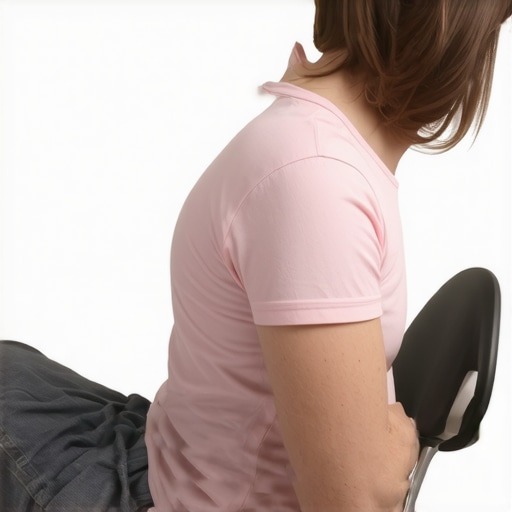
Sit comfortably with your back supported, then shift to a tall, upright posture, aligning your ears over your shoulders and shoulders over your hips. This neutral alignment ensures you’re not overextending or slouching, which can exacerbate strain.
Step 2: Engage the Core
Slowly tighten your abdominal muscles as if you’re preparing to gently resist someone pushing against your stomach. Avoid holding your breath; instead, breathe out slowly while maintaining the contraction. This creates intra-abdominal pressure, which acts like a natural brace. Think of it as inflating a balloon inside your abdomen to provide internal support.
Applying the Brace During the Exit Process
When you’re ready to step out, perform the brace just before initiating the movement. For instance, as you reach for the door handle, activate your core. This tension stabilizes your lumbar spine and pelvis, preventing unnecessary hyperextension or twisting.
During my own attempt, I vividly recall bracing as I reached for the handle; my lower back felt more supported, and I experienced less discomfort compared to before. The key is consistency—making this a habitual part of your movements.
Practicing the Technique in Real-Life Situations
Start by practicing this brace in low-stakes situations, such as sitting at your desk or standing in line. Focus on activating your core without tensing your neck or shoulders. Over time, integrate this into activities like bending, lifting, or stepping over obstacles. The goal is to create a reliable movement pattern that becomes second nature.
Remember, engaging your core isn’t about straining or overcontracting; it’s about creating a stable internal support that protects your back during routine motions. If you’re unsure whether you’re doing it correctly, consider consulting a professional experienced in spinal health or contacting a chiropractor for personalized guidance.
Graceful Transitions and Reinforcement
As you become adept, focus on smooth, controlled movements. Avoid rushing or jerking, which can undo your stabilization efforts. Consistent practice reinforces the neural pathways involved in bracing, making it an automatic response during daily activities, ultimately reducing your risk of injury and discomfort.
Incorporate this technique into your routine, whether you’re exiting your car, lifting grocery bags, or even twisting to reach for something. Over time, the simple act of bracing will become a natural reflex, providing ongoing protection for your spine and promoting healthier movement patterns.
For more detailed strategies on back pain prevention and recovery, explore how chiropractic care can transform your mobility or check out expert tips for mobility mastery.
Many individuals assume that simply stretching or taking over-the-counter pain medication are enough to resolve mobility issues or spinal discomfort. However, this misconception can delay true healing and even worsen the problem. In my experience working with clients, I’ve found that some pervasive myths obscure the real causes and effective solutions for neck and back pain. One common fallacy is that pain always indicates a **structural damage** needing surgery or aggressive intervention. While injuries can occur, chronic discomfort often stems from **movement patterns and neuro-muscular control** issues that aren’t visible on scans. For example, people tend to ignore how **poor motor control** contributes more significantly to ongoing pain than the degree of tissue damage. This aligns with recent research from the National Center for Biotechnology Information, emphasizing that restoring proper movement mechanics is paramount for long-term pain relief.
**Don’t fall into the trap** of believing that pain is always a sign that something is broken; instead, see it as a message from your nervous system asking for better movement and control. Another widespread myth is that **rest is the best remedy**, which can actually lead to stiffness and worsened mobility. In fact, staying active and engaging in gentle, purposeful movement promotes healing by encouraging circulation, flexibility, and neuromuscular re-education.
A more nuanced misconception involves the role of **chiropractic care**. Many think of chiropractic adjustments solely as a quick fix or a mechanical realignment. While adjustments can provide immediate relief, their true benefit lies in **restoring proper neural communication and movement patterns**, which, when combined with proper exercise and posture habits, lead to sustainable results. This is why integrating chiropractic know-how with **neuromuscular training and functional movement** is more effective than focusing exclusively on the adjustment.
When I guide clients through these concepts, I emphasize that **advanced mobility** isn’t about stretching endlessly or relying on passive therapies alone**, but about **retraining the brain and nervous system** to activate muscles correctly and optimize movement efficiency. For those who want a deeper understanding, I recommend exploring [how chiropractic care can transform your mobility](https://quackersspinal.com/back-pain-recovery-how-chiropractic-care-transforms-lives) and [expert tips for back pain prevention and recovery](https://quackersspinal.com/mobility-mastery-expert-tips-for-back-pain-prevention-and-recovery).
What about you? Have you ever fallen into this trap? Let me know in the comments. Remember, by challenging common myths and understanding the nuanced nature of mobility and pain, you can take more precise steps toward lasting relief and better movement.Maintaining long-term mobility and spinal health isn’t about quick fixes but about integrating reliable tools and practices that support your progress. One of my top recommendations is investing in a high-quality foam roller. I personally use the 36-inch foam roller because it offers the perfect balance of firmness and size, allowing me to target my back, hips, and legs effectively, promoting muscle release and improving tissue flexibility. Regular foam rolling helps reduce trigger points and enhances circulation, which are essential for maintaining mobility over the years. Additionally, incorporating a set of resistance bands into your routine can be transformative. I prefer loop bands with varying resistance levels—they are versatile and portable, enabling me to perform gentle strengthening exercises that reinforce stability, especially around the core and pelvis. Consistent use helps prevent injuries and mitigates the effects of age-related muscle degeneration. As technology advances, I also recommend exploring neuro-muscular re-education via apps like Bolt Motion, which utilize sensor feedback to correct movement patterns in real-time. These tools provide instant coaching, ensuring you execute exercises correctly, thereby maximizing benefits and reducing the risk of strain. Looking ahead, the future of spinal health support is likely to see increased integration of wearable tech with AI-driven analytics, offering personalized movement insights and preventative protocols tailored specifically for your body’s needs.
How do I maintain gains and prevent setbacks over time?
One effective approach is to establish a disciplined routine that combines regular self-care with professional guidance. Scheduling periodic check-ins with your chiropractor or movement specialist ensures your technique stays on point and adapts to any changes in your mobility. Moreover, tracking your progress with simple logs or apps can help identify patterns or areas needing attention before they evolve into issues. Remember, consistency is key—small daily actions compound into significant long-term improvements. Remember to approach your mobility journey gradually; pushing too hard or neglecting rest can set you back. If you’re unsure about how to combine these tools effectively, consider consulting professionals who can tailor strategies to your specific needs. To deepen your understanding, I encourage you to explore [how chiropractic care can support lasting mobility](https://quackersspinal.com/back-pain-recovery-how-chiropractic-care-transforms-lives), which emphasizes the synergy between proper tools and expert guidance. Ultimately, the secret lies in making these practices a sustainable part of your lifestyle. Start today by incorporating one new tool—perhaps a resistance band—into your routine, and observe how your body responds over the coming weeks. Your neck, back, and overall mobility will thank you for taking proactive steps today.
Four Surprising Truths I Discovered About Spine Safety
- Realizing that core engagement isn’t just for athletes transformed my approach, leading me to see everyday movements as opportunities to strengthen my spine’s resilience rather than risks of injury.
- Discovering that internal stability, achieved through simple bracing techniques, can dramatically reduce strain—saving me from pain I thought was inevitable during routine tasks like getting out of the car.
- Understanding that myths such as ‘rest is best’ often hinder recovery pushed me to stay active in mindful ways, fostering better long-term mobility and less discomfort.
- Learning that the brain’s control over movement is more crucial than tissue health alone shifted my focus from passive remedies to active neuromuscular retraining, which made my progress sustainable.
My Go-To Resources That Keep Me Moving
- Chiropractic care insights at Enhance Mobility Naturally with Chiropractic Care—This site offers practical, holistic strategies for spinal health based on modern neuroscience and clinical experience, which I trust for continuous guidance.
- Expert mobility tips from Mobility Mastery: Expert Tips for Back Pain Prevention and Recovery—A treasure trove of actionable advice that keeps me informed and motivated to improve daily movement habits.
- In-depth learning in How Chiropractic Care Can Transform Your Mobility—This resource deepens my understanding of the connection between spinal health and overall vitality, reinforcing my commitment to proactive self-care.
Take the Step Toward Better Mobility Today
Remember, lasting improvements come from small, intentional changes backed by reliable knowledge and consistent practice. Your journey to pain-free movement and a healthier spine starts now—embrace these insights, prioritize your body’s signals, and make mobility a daily habit. Share your experience below: Have you ever tried a core bracing technique while getting out of your car? Let me know how it went!