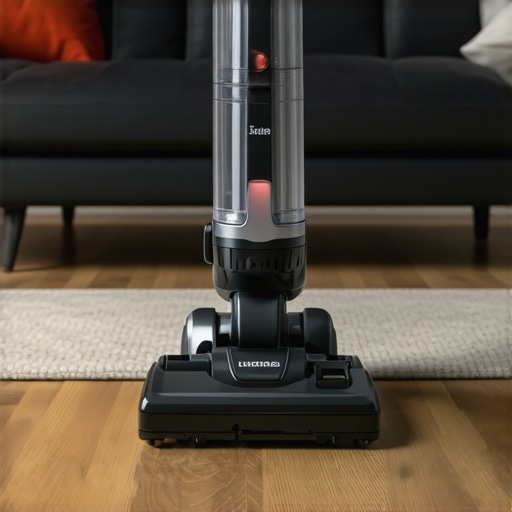
The proper way to vacuum without straining your lumbar discs
Ever bent over with the vacuum hose, only to be greeted by that familiar jolt of sharp back pain? I’ve been there too—slouched over, fighting to keep my balance, feeling that twinge in my lumbar discs that made me rethink every movement. That lightbulb moment hit me hard: everyday chores like vacuuming shouldn’t come with a risk to my spinal health, yet I was unknowingly sabotaging myself.
Many of us overlook how simple tasks can strain our backs if we don’t approach them properly. And honestly, I used to think that no matter how I bent or twisted, I’d be fine—until pain whispered otherwise. It’s frustrating to realize that some of our habits, ones we’ve done countless times, could be causing long-term damage.
Did you know that improper lifting, bending, or even vacuuming techniques can increase pressure on your lumbar discs, potentially leading to chronic pain or injury? A study published in the *Journal of Orthopaedic & Sports Physical Therapy* notes that repeated poor posture during daily activities can accelerate spinal degeneration (Van der Beek et al., 2014). That’s why it’s crucial to learn how to tackle chores safely.
Today, I’m here to share proven strategies that help you keep your home spotless without sacrificing your back. We’ll explore practical ways to modify your technique, improve your posture, and incorporate habits that protect your lumbar discs. Think of it as giving your spine a much-needed upgrade, allowing you to move freely and pain-free.
So, if you’ve ever felt the dread of reaching for the vacuum, knowing the discomfort that’s waiting for you, keep reading. These simple adjustments can make all the difference—and trust me, your back will thank you.
Mastering Ergonomic Vacuuming Techniques
Adopt a Neutral Posture During Vacuuming
Start by positioning yourself so that your spine remains in its natural curve. Stand upright with your shoulders relaxed, and avoid leaning forward excessively. I recall a time when I used to hunch over the vacuum, leading to soreness that lingered for days. Now, I make it a habit to keep my chest open and back straight, which immediately reduces strain.
Use Your Legs, Not Your Back
Think of your legs as the engine powering your movements, not your lower back. When you need to reach or bend, hinge at your hips rather than your waist. I noticed that when I squatted slightly with knees bent, I could maneuver comfortably without that nagging back ache. This technique distributes the effort more evenly across large muscle groups, easing lumbar stress. Want to learn more about safe movement patterns? Check out chiropractic secrets to boost mobility.
Keep the Vacuum Close and within Comfortable Reach
Extend your arm to reach distant spots rather than twisting your torso. For example, I used to stretch my arm and twist awkwardly to reach under the furniture, which caused discomfort. Now, I move the entire body by stepping closer to the area, maintaining a straight back. Imagine your torso as a rigid board; twisting it puts unnecessary pressure on your discs. To avoid this, pivot your feet and move your body instead of twisting your spine, much like turning a steering wheel rather than twisting your torso. For detailed techniques, visit tips to prevent reach-related pain.
Maintain Smooth, Controlled Movements
Rushing increases the chance of poor form. I remember one chaotic weekend when I franticly vacuumed and felt the familiar sharp pain in my lower back afterward. Since then, I focus on slow, controlled actions, engaging core muscles to stabilize the spine. Engaging your core is like tightening the cables of a suspension bridge—stabilizing your entire structure. When I consciously activate my abdominal muscles during chores, I notice less fatigue and discomfort. Want to learn how to activate your core effectively? Visit core activation tips for back health.
Implement Ergonomic Tools and Supports
Using adjustable tools can drastically reduce back strain. I added a long-reach duster to my cleaning arsenal, which enabled me to maintain posture and avoid bending. Think of ergonomic adaptations as upgrading your vehicle to avoid unnecessary wear and tear. When vacuuming, choose models with adjustable handles or consider adding a supportive mat if you’re standing for extended periods, mirroring the approach recommended in ergonomic support strategies. This not only makes the task easier but also better for your spine’s longevity.
Schedule Regular Breaks and Stretching
Don’t push through fatigue. I’ve found that taking brief breaks every 15 minutes allows my muscles to recover and resets my posture. Simple stretches like hip hinges or gentle spinal twists help release accumulated tension. It’s like tuning a musical instrument; brief adjustments keep the strings from snapping under pressure. Consistency in these habits, inspired by mobility-enhancing routines, transforms chores from a back enemy into a manageable task.
Many individuals believe that pain relief is simply about addressing the immediate symptom, but in my experience, this overlooks a crucial nuance: the body’s complex feedback system. The common myth that pain always indicates a local problem is pervasive, yet often misleading. For example, someone might focus solely on the area where they feel discomfort, ignoring the root causes like poor posture habits or spinal misalignments that contribute to chronic issues. This oversight can lead to frustration, as symptomatic treatments only mask symptoms without addressing underlying causes.
A trap I often see patients fall into is seeking quick fixes—such as over-the-counter pain medications or short-term massage therapies—without understanding the importance of restoring proper spinal mobility and alignment. These approaches may provide temporary relief but don’t correct the biomechanical dysfunctions that perpetuate pain cycles. According to a review published in the *Journal of Manipulative and Physiological Therapeutics*, focusing solely on symptom relief without considering posture and movement patterns often results in recurrent pain (Hoving et al., 2012).
Furthermore, many believe that better flexibility or stronger muscles alone will resolve their issues. While stability and mobility are key, neglecting the nuanced relationship between joint mechanics and nervous system function can be a costly oversight. For instance, a misaligned cervical spine might cause neck pain, but also trigger symptoms elsewhere, like headaches or dizziness, illustrating how interconnected the system truly is.
Curiously, advanced practitioners understand that assessing and treating the neuro-musculoskeletal linkages—especially at the upper cervical region—can produce profound, long-term improvements. The subtle shift of a vertebra, often missed by traditional approaches, can restore normal neural signals and unlock mobility previously thought unreachable. This sophisticated understanding underscores the importance of expert evaluation. If you’re interested, I recommend exploring insights from top chiropractors who focus on these advanced nuances.
Another common misconception is that mobility issues are solely due to aging or inactivity. However, the reality is more nuanced; often, the culprit is repetitive strain or poor movement habits ingrained over years. For example, prolonged sitting with poor ergonomics can subtly erode spinal health, creating microtraumas that accumulate over time. Recognizing and correcting these habits through targeted chiropractic strategies can drastically change one’s trajectory, preventing long-term degeneration.
If you’ve ever fallen into the trap of ignoring these subtleties, you’re not alone—it’s an easy oversight. But embracing a comprehensive view that considers the interplay of posture, movement, nervous system health, and biomechanics is essential for true, lasting relief. Want to learn how to identify and correct these hidden issues? Visit this resource to get started. Remember, understanding these nuances empowers you to take control of your health and move towards pain-free living. Have you ever fallen into this trap? Let me know in the comments.Maintaining a healthy back and neck isn’t a one-time effort; it’s a continuous process that requires the right tools and disciplined habits. Personally, I rely on specific equipment and techniques that have proven effective in my practice and daily routine to ensure long-term mobility and pain prevention. One of my most trusted tools is the **adjustable foam roller**. Unlike generic rollers, I prefer a high-density foam roller with variable firmness, which allows me to target nuanced trigger points along my thoracic and lumbar regions. Regularly using it helps prevent muscle tightness that often leads to nerve compression and pain. For detailed techniques, check out proper foam rolling methods.
Another indispensable item is a **lumbar support cushion** integrated into my office chair. It encourages me to maintain a neutral spine posture, reducing the risk of microtraumas from prolonged sitting. I also swear by **digital posture training apps**, like Upright, that provide real-time feedback on my sitting and standing habits. These apps can be game-changers in developing awareness around ergonomic slipping points. As I often emphasize in chiropractic techniques for mobility, consistent use of technological aids can foster habits that protect your spinal health.
Looking ahead, the trend in maintaining spinal health points toward integrating biofeedback devices with AI analytics. Imagine a future where your posture is constantly monitored through smart clothing, providing actionable tips before any strain turns into pain. This technology can assist in recognizing subtle postural deviations that aren’t easy to feel in real-time.
How do I keep my spinal health strategies effective over time? Consistency with tools like my foam roller and posture apps is key, but I also focus on scheduled chiropractic check-ins every few months. These visits ensure that any misalignments or muscle imbalances don’t spiral into chronic issues. As referenced in insights from top chiropractors, regular professional assessments coupled with at-home tools create a comprehensive approach to long-term wellness.
Lastly, I recommend trying the **core activation technique** I recently detailed in restoring back mobility. It’s simple, effective, and can be incorporated into your daily routine to reinforce spinal stability.
Investing in the right tools—like ergonomic supports, self-myofascial release gear, and digital feedback devices—can significantly reduce your risk of chronic back and neck pain. The future combines these with technological innovations that make long-term maintenance smarter and more personalized. Ready to elevate your spinal health? Start with integrating one of these tools into your daily routine today — your back will thank you.Throughout my journey towards better spinal health, I uncovered lessons that went beyond typical advice, revealing insights only insiders and seasoned practitioners grasp. One pivotal realization was that **pain often disguises a deeper imbalance**—what feels like local discomfort may be a manifestation of systemic misalignments or poor movement patterns. Recognizing this shifted my focus from temporary symptom relief to long-term solutions, encouraging me to seek targeted chiropractic care that addresses root causes rather than just surface pain. Additionally, I learned that **consistent, mindful habits trump sporadic fixes**—small daily adjustments, like proper lifting techniques or ergonomic setups, compound into significant, lasting benefits. Lastly, I discovered that **trusting the process involves embracing patience**; spinal recovery isn’t instant, but sustained effort and professional guidance, such as regular check-ins or personalized exercises, pave the way toward enduring mobility. These insider lessons underscore the importance of a comprehensive, proactive approach—the kind that Transform your understanding of back health, moving you from reactive treatments to empowered, lifelong maintenance.