Why walking in flat shoes might be worsening your alignment
I remember the exact moment I thought I’d finally cracked the code to natural living. I ditched my cushioned sneakers for a pair of paper-thin ballet flats, convinced that by being closer to the ground, I was somehow fixing years of office-chair damage. Boy, was I wrong. Within a week, my morning walk felt like a slow crawl through broken glass, and that familiar, nagging ache in my lumbar spine returned with a vengeance. It wasn’t just tired feet; my entire frame felt completely out of whack, and I realized my attempt at being trendy was actually a fast track to chronic discomfort.
Why Flat Shoes Often Fail Your Spine
Most of us assume that flat means anatomically correct, but for the modern human walking on concrete jungles, it’s often a recipe for disaster. I made the mistake of thinking my feet could handle zero support while trekking five miles a day on pavement. The reality is that walking on concrete all day is wrecking your lumbar spine if your shoes aren’t absorbing any of that impact. Today, I want to show you why those cute flats are tilting your pelvis and how you can reclaim your alignment without wearing clunky orthopedic boots. When your heel strikes a hard surface without a bit of lift or arch support, the shock doesn’t just disappear. It travels straight up. It hits your ankles, bypasses your knees, and settles right in your lower back. I spent months wondering why your morning walk makes your lower back ache, only to realize my footwear was effectively turning my spine into a shock absorber. According to the American Podiatric Medical Association, lack of proper support can lead to overpronation, where the foot rolls inward excessively, which rotates the leg bone and pulls the pelvis out of alignment.
Are minimalist shoes actually worth the hype?
You’ve probably seen the barefoot movement influencers claiming that traditional shoes are foot coffins. I fell for it too! While the barefoot movement has its merits for strengthening foot muscles, jumping into it without a transition period or the right mechanics is a gamble with your health. If your arches are already flat, those shoes might be amplifying the secret link between flat feet and chronic back pain. Have you ever noticed your back pain flares up specifically after wearing a certain pair of comfortable flats for a few hours? I’d love to hear if you’ve had that same frustrating realization after trying a new shoe trend. We often think our back issues start in the back, but more often than not, we look at your feet when your neck hurts because the chain reaction is undeniable. Let’s dig into how your gait is actually shifting your center of gravity and what you can do to stop the slide.
Check your soles to see the damage already done
If you flip your favorite pair of flats over, you will likely see a lopsided wear pattern on the heel or the ball of the foot. This is your first clue that your shoes are sabotaging your skeleton. I once wore a pair of stylish, thin-soled loafers for a three-day trade show on marble floors. By the second afternoon, my lower back felt like it was being compressed by a hydraulic press, and my calves were screaming. When I finally looked at my shoes, the outer edge of the right heel was almost ground down to the cork. That uneven wear was a neon sign that my gait was skewed, forcing my pelvis to tilt every time I took a step. Understanding what your gait analysis reveals about your lumbar health is the first step to stopping the cycle. If you see that one-sided wear, your spine is literally compensating for a ‘flat tire’ on one side of your body.
Build an internal arch with the short foot technique
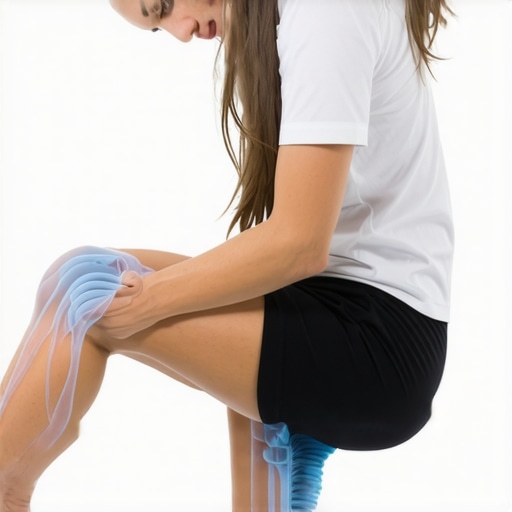
Next, you need to address the shock absorption problem. Think of your spine like the suspension on a mountain bike. When you hit a bump—in this case, the pavement—the shock should be dissipated by your arches and muscles. When those fail, the impact travels upward. This is often how a single tight ankle can cause chronic back pain because that lack of mobility in the joint prevents the foot from doing its job correctly. To fix this, I started practicing the ‘short foot’ technique. Instead of letting my foot go limp in my shoes, I practice pulling the ball of my foot toward my heel without curling my toes. It feels like you are trying to shorten your foot by an inch. This engages the intrinsic muscles of the arch. It feels weird at first, like trying to pick up a pencil with your toes, but it builds the foundation you need to handle hard surfaces without your spine taking the hit. 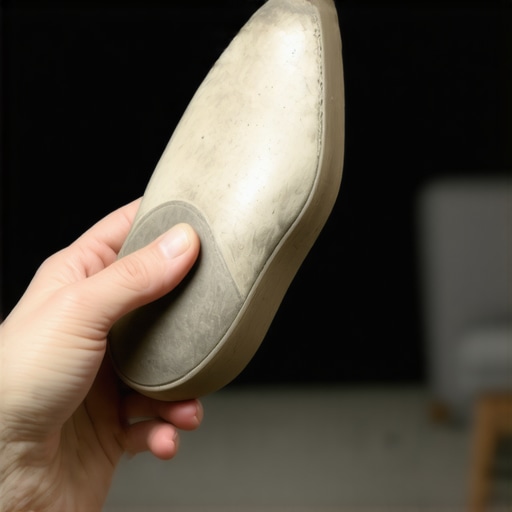
Stop the shockwave before it reaches your neck
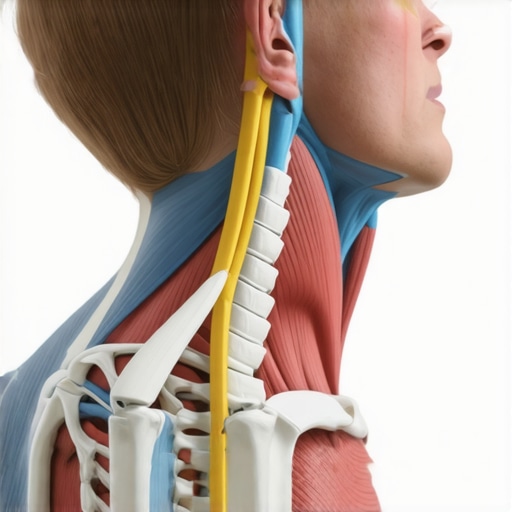
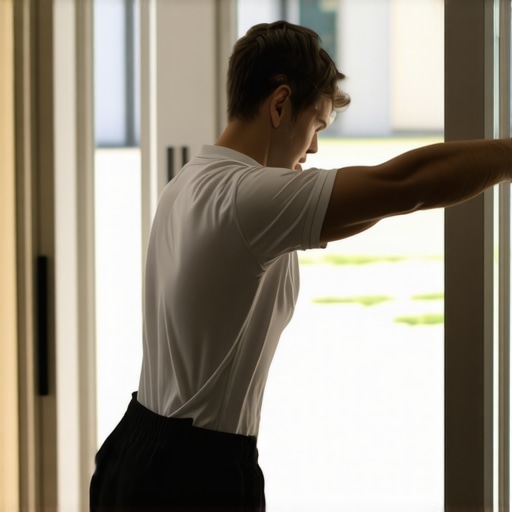
Don’t just assume your ‘comfortable’ shoes are doing you favors. You need to know how to tell if your orthotics are actually helping your back or if they are just masking the symptoms. Many off-the-shelf inserts provide a soft cushion but do not actually support the structural alignment of the heel. While you are retraining your feet, perform the 10-second posture check you can do anywhere to ensure your shoulders haven’t slumped forward to compensate for your tilted pelvis. If you find yourself in pain after a long day in the wrong shoes, don’t just ice your back. Use how to use a tennis ball to release upper back tension to address the compensatory tightness that travels up the kinetic chain. We often forget that the body is one continuous loop of tension; when the bottom fails, the top works overtime to keep you upright.Let’s dig deeper into a nuance that almost every fitness enthusiast misses. Everyone tells you to stretch when you feel tight. I used to spend twenty minutes every morning pulling my neck to the side, thinking I was a ‘mobility master.’ But here is the contrarian truth: that tightness is often your nervous system’s way of protecting a joint that feels unstable. When you force a stretch, your body reacts by clamping down even harder. I’ve seen so many people fall into the trap of why stretching your neck to the side might be causing more spasms because they are essentially fighting their own biology. If you’ve ever felt like your muscles are ‘locked’ no matter how much you foam roll, you’re likely dealing with a protective tension rather than a short muscle.
Why stretching that tight muscle is actually making it worse
The ‘oops’ factor here is a common mistake: stretching a nerve when you think you’re stretching a muscle. If you feel a zing or a sharp heat while pulling on your hamstrings or neck, you aren’t helping your flexibility; you are irritating your neural tissue. According to a systematic review published in the British Journal of Sports Medicine, static stretching has shown little to no effect on all-cause injury prevention. In many cases, why stretching a tight muscle isn’t always the answer becomes clear once you realize that the brain uses ‘stiffness’ as a brake system. If the brain doesn’t trust your stability, it won’t give you mobility. Have you ever fallen into this trap? Let me know in the comments.
Is your constant need to pop your own neck a sign of instability?
Many of us have a habit of twisting our own necks or backs to get that satisfying ‘crack.’ I used to do this every hour at my desk. However, the hidden nuance is that you are likely only moving the joints that are already too loose (hypermobile), while the truly ‘stuck’ segments remain jammed. This creates a cycle where you feel relief for ten minutes, but the tension returns because the underlying mechanical issue hasn’t changed. Learning the truth about cracking your own back at home can save you from long-term ligament laxity. Instead of self-adjusting, you should focus on boost mobility ease pain chiropractic techniques unveiled which target the specific restricted segments rather than the ones already moving too much.
The stability secret that protects your discs
True relief comes from giving your nervous system a reason to let go of that protective tension. This is where stability training replaces passive stretching. I stopped the aggressive pulling and started focusing on intra-abdominal pressure. Learning how to breathe through your diaphragm to reduce lower back pressure acts like an internal airbag for your spine. When your core is stable, your brain finally feels safe enough to relax the ‘tight’ muscles in your neck and hips. I highly recommend mastering the dead bug exercise why it is the king of core stability to provide the structural support your spine craves. 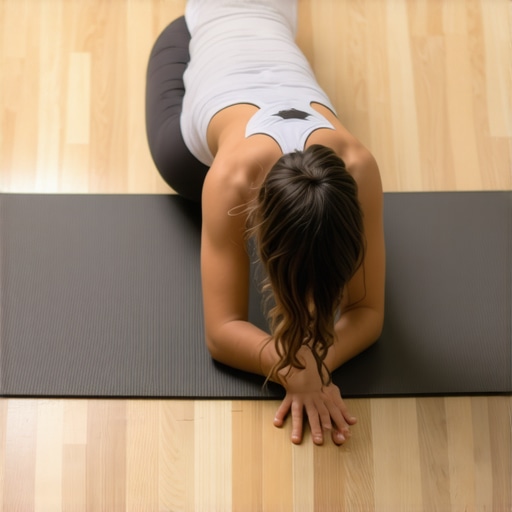 Once the stability is there, you will find your range of motion improves naturally without ever having to touch your toes in a forced stretch again. This shift from ‘forcing’ to ‘supporting’ is the hallmark of advanced spinal care.Once you stop the cycle of unnecessary stretching, the real work begins: maintenance. I used to think I needed a two-thousand-dollar ergonomic office chair to save my back, but I eventually learned that even the most expensive seat can’t compensate for a lack of movement. I found that the truth about lumbar support is more about frequent adjustments than the chair’s price tag. In my own journey, a simple, firm lumbar roll was the game-changer. It forces your spine into a natural curve rather than letting you melt into a bucket-style seat. However, there is a trick to it; you have to know how to use a lumbar roll without making your back stiffer, specifically placing it right at the belt line, not higher up in the mid-back where most people instinctively shove it.
Stop wasting money on fancy gear and master these basics
Beyond the desk, I started incorporating tools that focus on ‘active’ recovery. Instead of a soft foam roller that just squishes your tissue, I switched to a firm lacrosse ball for pinpoint pressure. This allows you to target the exact spot where a rib might be acting up or a muscle is guarding. It’s a key part of revitalize your mobility proven strategies for back pain relief because it addresses the fascia, not just the muscle fibers. I also swear by the ‘Big 3’ exercises popularized by Dr. Stuart McGill, a world-renowned spine biomechanics expert at the University of Waterloo. His research emphasizes that ‘spinal hygiene’—the way you move throughout the day—is far more important than any singular workout. For example, mastering the isometric hold that builds a bulletproof core creates the necessary ‘stiffness’ to protect your discs during heavy lifting or even just grocery shopping.
How do I stay pain-free without constant appointments?
The secret to long-term success is a ‘reset’ habit. I don’t wait for pain to appear; I use the Bruegger position the fastest way to reset your posture every time I finish a deep-work session. It takes thirty seconds and reverses the ‘closed’ position of sitting. If you can combine these micro-breaks with boost your back health simple yet effective chiropractic hacks, like varying your standing position, you effectively stop the cumulative load from reaching a breaking point. 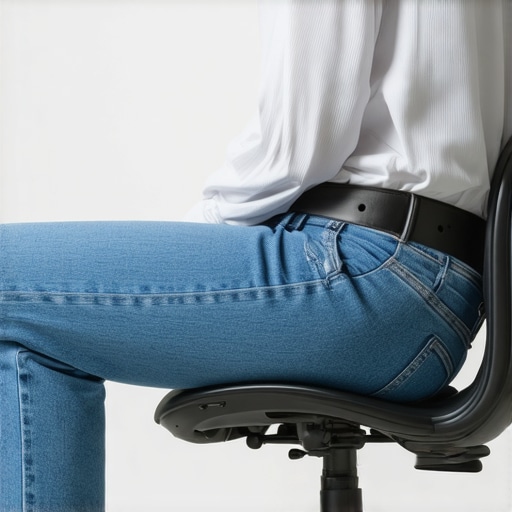 Looking ahead, I predict we are moving toward ‘smart’ biomechanics where wearable sensors will provide real-time haptic feedback the moment your pelvis tilts or your head drifts forward. Until then, you are your own best sensor. My challenge for you this week: try the isometric core hold for just 10 seconds, three times a day, and notice how much lighter your lower back feels. Consistency here is what separates those who ‘manage’ pain from those who actually move past it.
Reflections on the Lessons My Spine Taught Me the Hard Way
After years of trial and error, I finally realized that more effort does not always equal better results. Here are the lightbulb moments that changed everything for me:
- Movement is better than a perfect chair. I spent a fortune on ergonomics, but the real relief came when I prioritized mobility mastery and expert tips for back pain prevention over sitting still in a fancy seat.
- Stability is the foundation of flexibility. My body stopped feeling tight once I started giving it the stability it craved through core work rather than aggressive stretching.
- Small changes compound. Fixing how I stood in line or how I picked up my groceries did more for my lumbar health than any single hour-long workout ever could.
- Pain is a messenger, not an enemy. Instead of masking a backache with pills, I started asking why my gait was off or why my breathing was shallow.
The Resilience Kit I Use to Stay Aligned
You do not need a gym full of equipment to maintain a healthy frame. Here are the specific resources and tools that have earned a permanent spot in my routine. First, I highly recommend looking into restore your back mobility proven chiropractic strategies to understand the mechanics of your joints. I also rely on a simple firm lacrosse ball for myofascial release—it is far more effective than a soft roller for hitting those deep trigger points. #IMAGE_PLACEHOLDER_E# Finally, for anyone feeling overwhelmed by conflicting advice, checking out neck and back pain solutions from wellness experts provides a clear, science-backed roadmap that cuts through the noise.
Reclaim Your Freedom of Movement Today
Taking care of your spine is not about achieving a state of perfection; it is about making choices that support your body’s natural design. Whether it is swapping your shoes, mastering your breath, or finally trying that dead bug exercise, every small action counts toward a life with less back pain. You have the tools now to stop the shockwave and start building a more resilient version of yourself. If you ever feel stuck or need a more personalized approach to your alignment, do not hesitate to reach out and contact us for guidance. Which part of your daily routine do you think is hitting your lower back the hardest? Let me know in the comments below!