How to use a lumbar roll without making your back stiffer
I’ll never forget the Tuesday my back finally staged a full-scale mutiny. I was sitting at my desk, trying to be a responsible adult by using one of those foam lumbar rolls I’d seen online. I strapped it to my chair, leaned back, and waited for the magic to happen. Instead of relief, I felt a dull, grinding ache starting at my tailbone and climbing up my spine. By lunch, I could barely stand up straight. I looked like a human question mark. It was humiliating. I thought I was doing everything right, but I was actually making my spine fight against itself. We’ve all been there—buying the gadget, following the rules, and ending up in more pain than when we started.
Why My Fancy New Lumbar Roll Actually Hurt Like Hell
The truth is, most of us use these things as a set it and forget it solution. But your spine isn’t a shelf; it’s a dynamic, living structure. When I first started trying to fix my posture, I made the classic mistake of thinking the roll should be firm enough to push my back into place. I even tried to stop rolling your lower back on a hard foam roller because I realized that aggressive pressure often triggers a guarding response. My muscles were literally clenching to protect my spine from the very thing meant to help it. If you’ve ever felt like your lumbar support is actually making things worse, you aren’t crazy. You’re likely just falling into the same trap I did. Today, I want to show you how to revitalize your mobility by using that roll as a guide, not a blunt instrument.
Does this thing even work or is it just a gimmick?
It’s a fair question. Skepticism is your friend when it comes to back health. If built-in lumbar support in modern chairs often fails to do the job, why would a $20 foam cylinder be any better? The answer lies in the placement and the feedback loop it creates with your brain. According to research from the Journal of Physical Therapy Science, maintaining the natural lordotic curve is essential for reducing disc pressure, but if the support is too thick or poorly positioned, it can actually increase muscle fatigue. Have you ever felt that sharp burn in your lower back after using a support for just ten minutes? Tell me in the comments if you’ve had that exact I think this is hurting moment. We’re going to fix that right now by looking at the subtle shifts that make a massive difference.
Find the Belt Line Sweet Spot
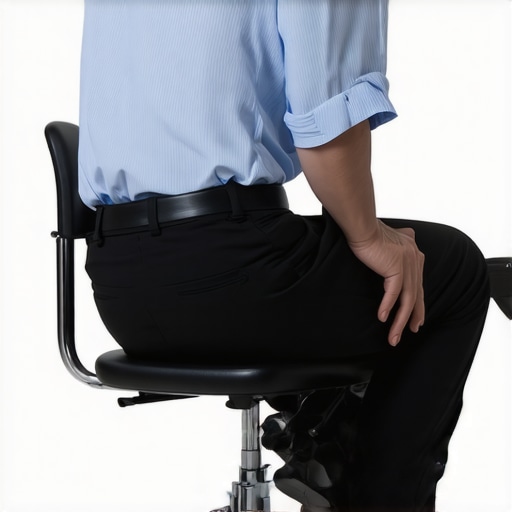
The first thing you have to fix is the where. I spent years jamming my support right into the middle of my back, thinking that is where the curve lived. It does not. If you place it too high, you are actually encouraging your upper back to slouch over the top of the roll. You want that roll tucked into the small of your back, specifically just above your waistband. Think of it like a kickstand for a bike; if the kickstand is at the handlebars, the bike is still falling over. You need it at the base. Placing it here allows the pelvis to tilt slightly forward, which is the secret to better posture and mobility without feeling like you are wearing a corset.
Why Harder Support is Actually Worse for Your Discs
I remember one specific drive from New York to Vermont where I forgot my roll and grabbed a hard, frozen Nalgene bottle from the cooler. I figured firm support is good support. Halfway through the trip, my legs started going numb. I was essentially bruising my own nerves. That is when I realized that whether your chair is actually helping depends entirely on how much your tissues can relax into the support. A lumbar roll should not be a brace; it is a sensory reminder. If the roll is so hard it feels like a rolling pin, your body will guard against it. To enhance mobility naturally with chiropractic care principles, the support should be soft enough that you can breathe through it. When you inhale, your diaphragm should move freely, and you should feel a slight, gentle increase in pressure against the roll. If you are holding your breath because the roll is poking you, you are triggering a stress response that tightens the very muscles you are trying to relax.
Active Sitting Beats Passive Propping
Do not just lean back and melt into the chair. The best way to use any lumbar tool is to pair it with occasional muscle engagement. I often recommend the dead bug exercise for floor work, but in a chair, you can mimic that stability by gently pulling your belly button away from your shirt buttons for three seconds every time you feel the roll against your skin. This prevents the lazy spine syndrome where your ligaments take all the weight instead of your muscles. This kind of back pain recovery is about teaching your brain to hold its own weight again.
Check Your Pelvic Tilt Every Hour
Your pelvis is the foundation of your entire spinal column. If the foundation is tilted, the lumbar support is just a Band-Aid on a crumbling wall. Make sure you are not tucking your tailbone under you, which is a common mistake called the sacral sit. Instead, sit directly on your sit bones. This creates the natural space for the lumbar roll to do its job. If you feel a sharp pinch, you might need to stop stretching a tight muscle and instead focus on your pelvic neutral position. This simple shift is often the missing piece in proven chiropractic strategies for long-term comfort and avoids the common pitfalls of modern office ergonomics.Most people assume that when a muscle feels tight, it needs to be elongated. This is one of the most persistent lies in modern fitness. If your lower back feels like a guitar string tuned three octaves too high, your first instinct is to reach for your toes. But here is the nuance: tension is often a symptom of instability, not a lack of flexibility. When you have a tight hamstring, your brain might be intentionally shortening that muscle to protect a vulnerable lumbar disc. If you force a stretch, you’re essentially trying to cut the safety line. This is exactly why stretching a tight muscle isn’t always the answer. Instead of forcing length, we need to provide the brain with a sense of safety through stability. Most of us are pulling on a knot that the body is trying to keep tied for its own protection.
The Hidden Connection Between Your Toes and Your C-Spine
I used to spend twenty minutes every morning doing deep static stretches, thinking I was ‘opening up’ my hips. In reality, I was just irritating my sciatic nerve. We have to stop treating our bodies like a collection of rubber bands and start seeing them as a complex electrical grid. If you have a ‘short circuit’ in your pelvis, your neck is going to feel the shock. This is often why we look at your feet when your neck hurts. Your body is a kinetic chain; if your big toe isn’t moving properly, your brain will change the way you walk, which eventually forces your lower back to overcompensate. It’s a domino effect that most people miss because they are too busy chasing the ‘spot’ where it hurts.#IMAGE_PLACE_HOLDER_C#
Don’t Chase the Pop: The Cavitation Myth
Another massive mistake? Thinking that a loud ‘pop’ equals a successful fix. People often fall into the habit of the truth about cracking your own back at home, assuming that the sound is the goal. But cavitation—the gas bubble release—is just a side effect. If you are cracking the same spot every hour, you aren’t fixing a stuck joint; you’re likely creating hypermobility in a segment that is already working too hard. Real back pain recovery comes from identifying which joints are actually stuck and which ones are just screaming for help. You don’t need more movement everywhere; you need the right movement in the right place.
Why does my back still lock up even though I’m ‘doing the work’?
It’s frustrating to feel like you’re doing all the ‘right’ things—the exercises, the lumbar rolls, the ergonomic desk—and still wake up stiff. This usually happens because of a phenomenon called ‘micro-movements.’ You might be stable during your 10-minute core routine, but then you spend eight hours making tiny, repetitive ‘spine-twisting’ movements as you reach for your mouse or phone. A study published in the journal *Clinical Biomechanics* highlights that it’s these cumulative, low-load cycles that often lead to disc herniation more than a single heavy lift. You have to enhance mobility naturally with chiropractic care by addressing the 95% of your day spent outside of the gym. Have you ever fallen into this trap of doing the ‘work’ but ignoring the ‘habits’? Let me know in the comments.
Stability is the Secret to Real Mobility
The final piece of the puzzle is understanding that stability is the precursor to mobility. You cannot have a mobile spine if your core is ‘quiet.’ This is why I always go back to the dead bug exercise as a diagnostic tool. If you can’t keep your back flat while moving your limbs, your brain will never ‘allow’ your back to be loose because it doesn’t trust you to keep it safe. Stop trying to stretch your way out of a stability problem. It’s like trying to fix a wobbly table by sanding down the legs—eventually, you just run out of wood. Restore your range by building the tension where it belongs so you can release it where it doesn’t.
Stop Thinking of Healing as a Destination
I’ve realized that the finish line for back health is a myth. You don’t just ‘fix’ your spine and then go back to slouching on the sofa for the rest of your life. It’s more like brushing your teeth—a daily hygiene habit for your nervous system. To restore your range effectively, you have to realize that the work you do in the gym is only a small percentage of the battle. The real magic happens during the other 23 hours of the day when you aren’t thinking about it. This is why I swear by the 10-second posture check you can do anywhere. It’s not about being perfect; it’s about being aware. If you can catch yourself before the dull ache starts, you’ve already won.
The Only Tools I Actually Use Every Single Day
I’ve spent thousands on gadgets—gravity boots, expensive massage guns, and chairs that look like they belong on a spaceship. Most of them are currently gathering dust. Now, I keep it simple. I use a high-density silicone lacrosse ball for targeted release. Why? Because foam rollers are often too broad; they can’t get into the nook of the shoulder blade where most of us hold our stress. I also invested in a high-quality monitor arm. If your screen is too low, you’re constantly fighting ‘tech neck’ and pulling your cervical spine out of alignment. Learning how to setup your workspace to stop the 3 pm headache changed my productivity more than any cup of coffee ever could. It’s about building an environment that supports your body, rather than one your body has to survive. #IMAGE_PLACE_HOLDER_D#
How do I maintain my spinal health over time?
Consistency beats intensity every single time. You don’t necessarily need a 90-minute yoga session; you need a 5-minute routine to decompress your spine after work. Dr. Stuart McGill, a world-renowned expert on spine mechanics and author of *Back Mechanic*, emphasizes the importance of core stability because it provides the maximum benefit with the least amount of shear force on the discs. I’ve integrated his ‘Big Three’ exercises into my morning coffee ritual. While the water boils, I do my bird-dogs and side bridges. It’s non-negotiable. Looking ahead, I suspect the future of spinal health lies in AI-integrated biofeedback wearables. We are already seeing prototypes of sensors that track ‘micro-slumps’ in real-time, providing haptic feedback to help you unlock neck pain relief before inflammation even starts. For now, your best tool is your own body awareness. Try this tonight: before you get into bed, use the Bruegger position for exactly 30 seconds to open up your chest and reset your shoulders. It’s the fastest way to signal to your nervous system that it’s time to relax and recover after a long day.
What My Body Taught Me After 500 Hours of Sitting
I used to think back health was about buying the right equipment. I was wrong. After years of trial and error, here are the shifts that actually moved the needle for me:
- Pain is a conversation, not an attack. When your back hurts, it’s often just your brain asking for a change in position. If you listen to those early signals, you don’t need the heavy-duty interventions later.
- The over-correction trap is real. Standing up too straight or jamming a hard roll into your spine creates new tension. Aim for relaxed alignment rather than a rigid military posture.
- Movement snacks beat movement feasts. Doing a massive yoga session on Saturday won’t undo 40 hours of slouching. I found that mobility mastery comes from the 30-second breaks you take between emails throughout the day.
My Minimalist Toolkit for a Resilient Spine
You don’t need a thousand-dollar chair to feel better. I’ve narrowed my focus down to these three essentials that I trust personally:
First, I highly recommend picking up a copy of Back Mechanic by Dr. Stuart McGill. It is the closest thing we have to an owner’s manual for the human spine. Second, use a simple silicone ball for trigger point release; it is more precise than a foam roller for those sticky spots near your shoulder blades. Finally, integrate chiropractic secrets to boost neck comfort by simply adjusting your monitor height—your eyes lead your spine, so put the screen exactly where you want your head to be. #IMAGE_PLACEHOLDER_E#
Take the First Small Step Toward Freedom
Recovering your life from back pain is not a sprint. It is a series of small, intentional choices that add up over months and years. Whether you are starting with proven chiropractic strategies or just committing to a daily 10-minute walk, the important part is that you start today. Your body has an incredible capacity to heal if you just give it the right environment and enough time. You are not broken; you are just out of practice. I hope you will join me in treating your spine with the respect it deserves.
Have you found that certain chairs or lumbar gadgets actually made your back pain worse instead of better? Let me know in the comments below!