Why your bike seat angle is the cause of your back ache
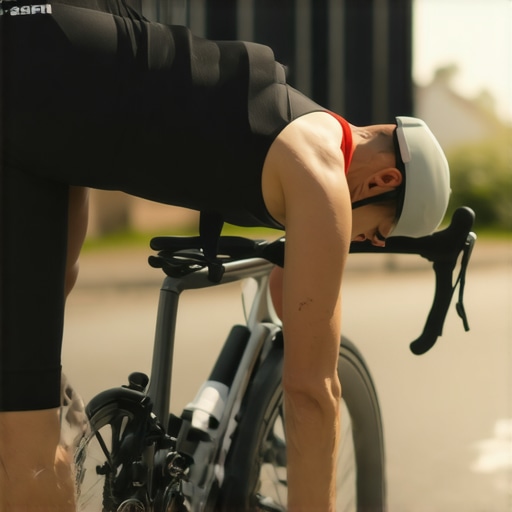
I remember rolling my bike into the driveway three miles short of my goal, teeth clenched and tears prickling my eyes. It was not the steep hill that broke me; it was the sharp, radiating heat in my lower back that made every pedal stroke feel like a personal insult. I used to think my understanding of back pain was solid, but I was missing the most obvious culprit right between my legs. For months, I blamed my age, my shoes, and even the “cheap” frame of my road bike. I made the classic mistake of throwing money at a new carbon-fiber seat, thinking luxury was the cure. In reality, I was just mounting a more expensive torture device because my saddle angle was completely wrong. Today, I am going to show you how to stop that stabbing pain for good.
Why Your Bike Saddle is Secretly Betraying Your Spine
When we talk about cycling discomfort, most people point to the sit bones. But the real danger lies in how a tilted seat forces your pelvis to rotate and locks up your lumbar. If your saddle is tilted too far up, you are likely arching your lower back to compensate, which puts immense pressure on your spinal discs. Conversely, a nose-down tilt often makes you slide forward, forcing your arms to jam into the handlebars and causing that dreaded shoulder blade burn. Research from the International Journal of Sports Physical Therapy indicates that even a minor deviation from a neutral pelvic tilt can significantly increase the load on spinal stabilizers during repetitive movement. This is not just about being comfortable; it is about mobility mastery and protecting your long-term health. Have you ever finished a ride and felt like you needed to crawl to the nearest couch because your spine felt fused? If so, you are likely fighting your equipment rather than the road.
Can a tiny tilt really fix all this pain?
It sounds too simple to be true, right? I was the ultimate skeptic. I figured if my back hurt, I needed a month of rest or a complex spinal decompression routine. While those tools are great for recovery, they are merely bandages on a wound you keep reopening every time you clip into your pedals. The truth is, your body is an interconnected chain. When your saddle angle is off, your pelvis tilts, your core disengages, and your spine takes the hit. By learning how to adjust your bicycle seat correctly, you are not just fixing a bike; you are resetting your entire posture. I spent years doing it wrong, but once I found that sweet spot of a neutral level, the relief was almost instantaneous. We are going to stop the guesswork today and get your ride back on track.
Find a Truly Flat Surface or Don’t Bother
You cannot adjust a bike seat on a slanted driveway and expect success. I spent forty minutes one afternoon squinting at my saddle, convinced I had it perfectly level, only to find that my garage floor had a subtle drain slope that threw everything off. Place your bike on a kitchen floor or a concrete slab. Use a spirit level—or a leveling app on your phone—and lay it across the length of the saddle. If your saddle has a ‘dip’ in the middle, place a hardcover book on top of it first, then put the level on the book. This gives you a true horizontal baseline.
Start at Zero and Work in Millimeters
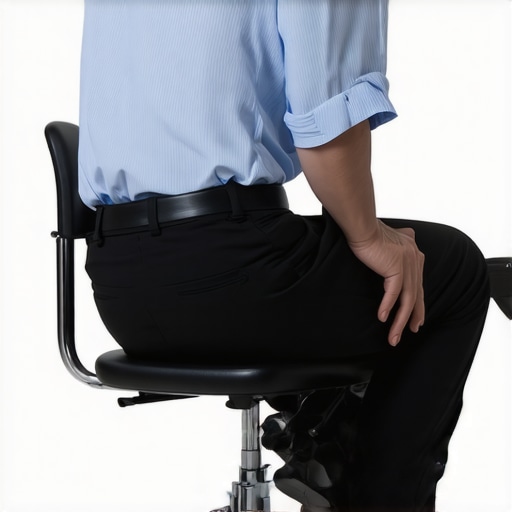
Once you have your baseline, you need to understand that the human spine reacts to millimeters, not inches. Most riders find their ‘sweet spot’ within one or two degrees of perfectly level. If you are experiencing that sharp, localized lumbar sting, your nose might be slightly too high, forcing your pelvis to tilt backward. This is a primary reason people look for expert methods to relieve neck and back discomfort—the issue often starts at the base of the spine and travels upward. Loosen the bolts just enough to let the saddle pivot. If you’re a man, a tiny nose-down tilt (about 1-2 degrees) often relieves perineal pressure and lets the sit bones do their job. For women, a perfectly level or slightly nose-up position sometimes provides better support for the wider female pelvis. I spent years riding with a five-degree nose-down tilt because I thought it ‘looked’ aggressive, only to end up with chronic SI joint inflammation.
#IMAGE_PLACE_HOLDER_B#
The Incremental Tweak That Saves Your Lumbar
I remember one ride through the foothills where every bump felt like a hammer hitting my spine. I finally pulled over, took out my hex key, and tipped the nose down by what felt like a microscopic amount. When I got back on, the change was jarring. My core suddenly felt ‘engaged’ rather than ‘stretched.’ When your saddle angle is correct, your deep stabilizers can actually fire. If you find your core isn’t engaging during your workouts, a poorly angled seat might be the culprit, as it forces the superficial back muscles to do all the stabilizing work.
Stop the Shoulder Blade Fire by Fixing the Tilt
It seems counterintuitive that a seat adjustment fixes your neck, but the body is a closed loop. When your saddle is tilted too far down, you constantly slide toward the handlebars. To stop yourself from falling off the front of the bike, you push harder with your triceps and lock out your elbows. This shoves your humerus into the shoulder socket and creates that agonizing shoulder blade burn that many cyclists mistake for a weak upper back. By leveling the seat, you allow your weight to stay centered over your sit bones, taking the load off your hands. This simple geometry change is one of those simple yet effective chiropractic hacks that prevent long-term nerve impingement.
Test Your Progress on a Real Climb
Don’t assume you’ve fixed it just because it feels good in the garage. Take a multi-tool with you on a fifteen-minute test ride that includes at least one moderate incline. Climbing is where saddle angle issues become glaringly obvious. If you feel the need to constantly scoot back on the saddle while going uphill, your nose is likely too low. If you feel like you’re being ‘pushed’ off the back, it’s too high. Finding this balance is essential to restore your back mobility and ensure your rides are building health rather than breaking down your joints.
Stop Stretching Your Tight Hamstrings Right Now
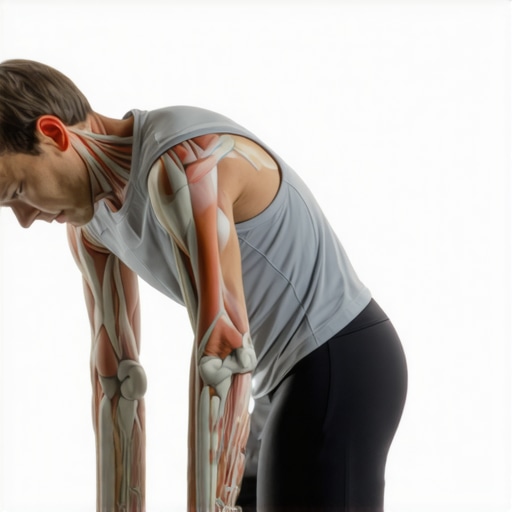
I see it at every trailhead: a group of cyclists leaning over their top tubes, aggressively reaching for their toes because their lower back feels ‘tight.’ I used to be that guy. Everyone tells you that tight hamstrings cause back pain, but in my experience, stretching them is often the biggest mistake you can make. If your saddle angle is forcing your pelvis into a dysfunctional tilt, those hamstrings are pulling tight to act as a protective brake for your spine. When you stretch that tension away without fixing the underlying mechanical issue, you aren’t loosening up; you are literally pulling the emergency brake off a car rolling downhill. This is one of the most common reasons why expert methods to relieve neck and back discomfort often fail—they address the symptom rather than the structural guardrail.
How does a ‘locked’ pelvis mask itself as a hamstring issue?
When we dig deeper into the biomechanics of the cycling stroke, we find a phenomenon called functional tightness. According to a study published in the Journal of Manipulative and Physiological Therapeutics, pelvic misalignment can cause compensatory muscular tension that mimics chronic strain, making traditional stretching counterproductive until the joint mechanics are restored. If you have been religiously stretching but finding that your stretching a tight muscle isn’t always the answer, it is because your nervous system is intentionally keeping those muscles short to stabilize your SI joints. Pushing through that ‘tightness’ can actually lead to a disc bulge because you are removing the only stability your lower back has left. This is the ultimate ‘oops’ factor for the advanced rider: confusing a protective mechanism for a flexibility problem.
#IMAGE_PLACE_HOLDER_C#
The Hidden Nuance of the Pelvic-Neck Connection
Most riders treat their body like a series of isolated parts, but your spine is a single kinetic chain. I once spent months trying to solve a persistent ‘crunch’ in my upper vertebrae, only to realize it was my seat tilt causing my pelvis to rotate forward, which then forced my chin up to see the road. This ‘tech neck’ on a bike is a recipe for disaster. It is exactly why we adjust the pelvis to fix neck tension in a clinical setting. By correcting the base of the spine, the top usually follows suit. If you are chasing expert chiropractic solutions that work, you have to look at the geometry of your seat first. A level saddle allows the pelvis to sit neutral, which lets the lumbar curve naturally and keeps the cervical spine from overextending.
Your Nervous System is the Real Mechanic
The real ‘secret’ that many pros won’t tell you is that pain isn’t just about bones and muscles; it is about how your brain perceives threat. If your saddle is uncomfortable, your brain sends a signal to ‘armor’ your core and back muscles. This constant state of high-tone leads to exhaustion and chronic ache. Learning the truth about chiropractic adjustments and your nervous system helps you understand that we aren’t just moving bones; we are lowering the ‘threat level’ in your body. When the bike fits and the joints move, the brain relaxes the muscles. Have you ever fallen into this trap of stretching a muscle that was actually trying to protect you? Let me know in the comments. By following these tips from the pros, you can finally stop the cycle of ‘stretch, ride, hurt’ and start building a more resilient, mobile body on and off the road.
Building a pain-free life on two wheels is not a one-and-done event; it is a discipline. I have seen too many riders find their ‘sweet spot’ only to lose it three weeks later because a bolt vibrated loose. This is why my saddle bag always contains a dedicated 4mm torque wrench. I personally use the Wera Click-Torque A 5 because precision is the difference between a great ride and understanding back pain the hard way again. If your saddle slips even a fraction of a degree, your lumbar spine is the first to know. To keep your progress, you need to treat your bike like a medical instrument. This precision-first approach is one of the most underrated simple yet effective chiropractic hacks for athletes. I also recommend keeping a digital inclinometer in your garage. I use a digital angle finder to ensure that when I swap components, my pelvic tilt remains identical to the millimeter. #IMAGE_PLACE_HOLDER_D#
How do I maintain my spinal alignment over time?
Maintenance is about regular audits, not just fixing things when they break. Every 500 miles, I perform a ‘hardware audit’ where I check my seat post for slippage and my cleat alignment. A study in the Journal of Science and Medicine in Sport highlights that repetitive asymmetrical loading—often caused by subtle equipment shifts—is a leading predictor of lower back overuse injuries in cyclists. This is why I rely on expert methods to relieve neck and back discomfort before the pain becomes a barrier. Beyond the bike, you must prioritize your recovery. I have integrated the 5-minute routine to decompress your spine after work as a non-negotiable part of my post-ride ritual. It is about resetting the system so the next ride starts from a neutral baseline.
The future of cycling is predictive posture AI
We are moving toward a world where your bike will tell you when your form is failing. I am already seeing early versions of pressure-sensitive saddle covers that sync with your phone to alert you when your pelvic weight distribution shifts. This real-time biofeedback will eventually make expert chiropractic solutions that work even more accessible by preventing the injury before the first nerve signal is even sent. Until those tools are standard, you have to be your own mechanic. I want you to try this one advanced tip: the next time you feel that familiar ‘pull’ in your lower back, don’t stop to stretch. Instead, check if your hips are rocking side-to-side. If they are, drop your saddle height by exactly 3mm. This tiny change can immediately restore your back mobility by taking the strain off your SI joints. Start small, track your changes, and reach out to us if you need to contact us for a more personalized ergonomic assessment.
Lessons from the Miles Where My Back Finally Stopped Screaming
Looking back at my years of struggling with saddle tilt, three lightbulb moments stand out that changed everything for my spine health. First, your eyes are often terrible at judging horizontal planes. I once spent a week riding with a 3-degree upward tilt because my garage floor was slanted, and I wondered why my lumbar felt like it was in a vice. Second, your core is your seat’s best friend. If your saddle angle is wrong, your nervous system will literally unplug your deep stabilizers to protect your spine, making your understanding of back pain feel like a confusing mystery. Finally, I learned that stiff isn’t always short. My hamstrings weren’t tight because they were short; they were tight because they were holding onto my pelvis for dear life. Once the seat leveled out, the tightness vanished without a single stretch.
Tools That Turned My Bike Into a Healing Machine
I do not leave home without a few specific items that ensure my spinal alignment stays intact. I highly recommend investing in a digital inclinometer; it is a simple tool that removes all the guesswork from your pelvic tilt. For those who want to dive deeper into the why behind their movement patterns, the book Becoming a Supple Leopard is an incredible resource for mobility mastery. I also keep a small pre-set torque wrench in my saddle bag to prevent the creeping tilt that happens over rough gravel. These are not just gadgets; they are the frontline defense against repetitive strain. If you have been searching for tips from the pros, start with precision measurement tools.
You Deserve a Ride Without the Chronic Ache
Cycling should be your escape, not a source of physical dread. It took me years to realize that I was not getting old—I was just riding a poorly configured machine. By taking these small, millimetric steps to align your equipment with your anatomy, you are doing more than just fixing a bike; you are reclaiming your freedom to move. You can restore your back mobility and enjoy the road again. Don’t let a few degrees of tilt stand between you and your next great adventure. Have you ever felt that specific stabbing sensation in your lower back halfway through a climb? Let me know in the comments below!