The Nerve-Safe Way to Reach Under the Bed
I will never forget the Tuesday morning my favorite slipper decided to migrate to the farthest, darkest corner under my king-sized bed. I did not think twice. I just bent over, twisted my torso, and reached. Snap. It was not the floorboards; it was my lower back. That one quick movement sent me into a spiral of spasms that lasted three days. I am a big believer in how chiropractic care transforms lives, but even the best adjustments cannot save you if you are constantly sabotaging your spine with these daily micro-injuries. Today, I want to show you exactly how to navigate those awkward reaches so you do not end up frozen on the carpet like I did.
Why Your Bedtime Retrieval Mission is a Spinal Hazard
Most of us treat our bodies like heavy-duty cranes, but we are actually built more like a delicate series of pulleys and levers. When you reach deep under the bed, you are not just stretching a muscle; you are putting immense pressure on your intervertebral discs and potentially irritating the sensitive nerves that exit your spine. I made the classic mistake of thinking I could just power through a stiff back, but it turns out how you pick up anything—whether it is your toddler or a dust bunny—dictates your long-term mobility. According to research published in the journal Spine, spinal loading increases by over 400 percent when we combine forward flexion with rotation. It is the perfect storm for a disc injury. Have you ever felt that terrifying, electric zapping sensation when you leaned over just a little too far?
Is reaching for a lost shoe really worth a week of agony?
I know what you are thinking. It is just a three-second reach, so how bad can it be? Trust me, I was the king of that skepticism. But after my third episode of being stuck in a hunched position, I realized that my nerves were screaming for a different approach. We often focus on big gym lifts, yet we ignore the way we empty the dishwasher or retrieve things from the floor. If you are already feeling that sharp, electric throb down your leg, you might need to look into nerve flossing techniques to calm the system down. We are going to fix your form today, starting with the three points of contact rule that would have saved me weeks of discomfort if I had only used it sooner.
Turn Your Body Into a Tripod
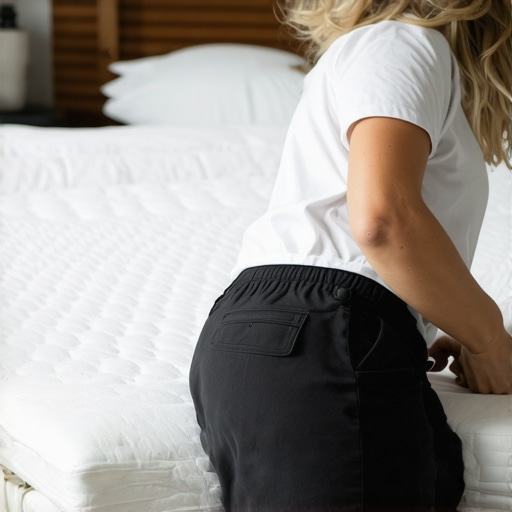
To avoid the ‘snap’ I experienced, you need to stop thinking of your spine as a crane and start thinking of your body as a tripod. The secret is the three-point contact rule. When you reach under a bed or a low sofa, one hand must act as a stabilizer. I remember trying to fish out a rogue Lego piece for my nephew last month. Instead of just diving in, I knelt on one knee and braced my left hand firmly against the bed frame. I looked like I was prepping for a 100-meter dash, but my spine stayed neutral. By using my arm to take half my upper body weight, I offloaded the pressure from my lumbar discs. This is one of those simple yet effective chiropractic hacks that shifts the load from your small spinal muscles to your much larger shoulder and arm complex.
Lock Your Core Before the Lean
Most people let their stomach muscles go slack the moment they see something they need to pick up. Before you hinge forward, imagine someone is about to poke you in the belly and brace accordingly. This intra-abdominal pressure acts like a natural weight belt. If you struggle with this, practicing the dead bug variation that actually fixes lower back instability can train your nervous system to keep your spine steady while your limbs are moving. It’s about building a ‘bracing’ habit so that your spine doesn’t bear the brunt of a sudden twist. 
Ditch the Crane Move to Save Your Discs
We often bend at the waist with straight legs, creating a long lever that puts massive torque on the lower back. Think of a rusty door hinge; if the hinge is stuck, the wood around it will eventually splinter. Your hips are the hinges, and your spine is the wood. If you don’t hinge at the hips, your spine has to ‘splinter’ or flex to reach the floor. To fix this, you must lead with your butt. Push your hips back as if you are trying to close a car door with your glutes. This keeps the weight centered over your base of support. If you find your hips feel like they are made of concrete, you might need to restore your range through chiropractic care to ensure your joints are actually capable of that movement.
The Golfer’s Lift for Tiny Objects
For light things like a slipper or a pen, use the golfer’s lift. As you reach down with your right hand, let your left leg swing out behind you. This counterbalances your weight and keeps your back straight without any effort. It’s the same logic used in the simple pivot move for pain-free gardening. The goal is to keep the spine as a single, rigid unit rather than a flexible straw that is prone to kinking.
Wake Up Your Glutes Before You Lean
Your glutes are the engines of your lower body, but for many of us, these engines are permanently stalled from sitting. When your glutes are ‘asleep,’ your lower back has to do double the work to pull you back up from a reach. You can actually feel this; if your lower back throbs after a simple reach, it’s likely because your glutes won’t fire and your spinal extensors are overworking. Before you tackle a day of cleaning or reaching under furniture, do ten quick glute squeezes to wake up the nerves and remind your brain that these muscles are available for heavy lifting. It sounds silly, but that ‘neurological wake-up call’ can be the difference between a productive afternoon and a weekend spent on a heating pad.
Waking up your glutes is a great start, but let’s dig deeper into why so many of us still get ‘zapped’ even when we think we’re being careful. There is a common belief in the fitness world that if your back hurts, you just need to stretch more. In my experience, this is the quickest way to turn a minor tweak into a major episode. When you feel that tightness in your hamstrings while reaching under a couch, your brain might actually be tightening those muscles on purpose to protect a vulnerable spine. If you force a stretch on a muscle that is trying to act as a splint, you are essentially pulling the pin out of a grenade.
The Stretching Trap That Keeps You Stiff
Most people I see in the clinic are convinced that stretching your hamstrings won’t fix your lower back pain if the root cause is actually an unstable disc. If you’ve been religiously touching your toes every morning but your back still feels like a rusted hinge when you reach for a dropped pen, you’re likely dealing with ‘protective tension.’ Instead of lengthening the muscle, you should be looking at how to restore your back mobility through controlled stability. A study published in the Journal of Bodywork and Movement Therapies highlights that individuals with chronic low back pain often suffer from an over-reliance on superficial muscles while their deep stabilizers remain dormant. This ‘Oops’ factor—treating a stability problem with a flexibility solution—is exactly why many people never fully recover.
Is your core strength actually masking a deeper stability problem?
We’ve been told for decades that a ‘strong core’ is the holy grail of back health. However, there is a massive nuance here that most people miss: strength is not the same as coordination. You can have the strongest abdominal muscles in the world, but if they don’t fire at the exact millisecond you lean forward, they are useless. In fact, why your core strength isn’t stopping your back from hurting usually comes down to ‘segmental instability.’ Your big ‘six-pack’ muscles are great for moving, but they are terrible at stabilizing the individual vertebrae during a reach. This is where mastering the dead bug variation that actually protects your back becomes more valuable than a thousand sit-ups. It teaches those deep muscles to stay ‘on’ while your limbs are moving.
The Hidden Influence of the Pelvic Floor
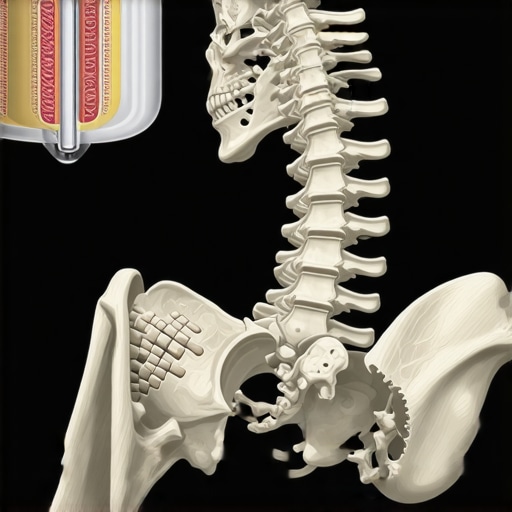
Another layer of expertise that often goes ignored is the relationship between your breath and your internal pressure. If you hold your breath while you reach, you are actually increasing the shear force on your spine. I’ve found that why your pelvic floor matters for spinal stability is because it acts as the ‘bottom’ of your core canister. If that canister doesn’t hold pressure correctly, the spine bears the weight. This is why many high-level athletes still suffer from ‘micro-tweaks’—they have the power, but they lack the internal pressure management. By learning mobility mastery techniques that incorporate diaphragmatic breathing, you create a natural internal cushion for your discs. Have you ever fallen into the ‘strong abs’ trap, only to have your back go out anyway? Let me know in the comments. We need to stop focusing on how much we can lift and start focusing on how well we can stabilize.
I have spent a small fortune on gadgets that promise to align me overnight, but the reality is that the best tool in your arsenal is a consistent, low-tech protocol. If you are a desk worker, you absolutely need to implement the morning spinal hygiene routine every desk worker needs to lubricate your joints before the day’s stress begins. I personally use a percussion massager to manage my recovery, but I see so many people using them like a jackhammer directly on their vertebrae. You have to learn how to use a massage gun on your lower back safely by focusing on the soft tissue of the glutes and the quadratus lumborum rather than the bone itself. Dr. Stuart McGill, a leading authority in spine biomechanics and author of Low Back Disorders, argues that building ‘spine sparing’ habits is far more valuable than any individual exercise. His research emphasizes that the cumulative load of how we sit and stand often outweighs the benefits of a one-hour gym session.
Stop Guessing with Your Home Maintenance
Even your office setup—the place you likely spend eight hours a day—is a tool that is either helping or hurting you. Most people sit far too low, which forces the pelvis to tuck and the lower back to round. I discovered through trial and error that the specific chair height that stops mid-back burning is usually much higher than standard desk settings allow. By raising my seat and using a small footrest, I allowed my hip flexors to relax, which immediately took the ‘pull’ off my lumbar spine. It is about creating an environment where your body doesn’t have to fight to stay upright.
How can I keep my spine healthy as I age?
Consistency is the only real secret. You cannot ‘out-adjust’ a lifestyle that is sedentary and uncoordinated. I recommend integrating mobility mastery expert tips for back pain prevention and recovery into your weekly schedule. This is not about doing more; it is about doing the right things frequently. Whether it is a quick decompression walk or a series of pelvic tilts, these micro-habits are what prevent the ‘snap’ I described earlier from ever happening again. If you are not checking in with your mobility regularly, you are essentially driving a car without ever looking at the oil light.
The Future of Back Health is Wearable
Looking ahead, I predict we will see a massive shift toward wearable biofeedback. We are already seeing the first generation of sensors that can detect when your pelvic floor disengages or when your head drifts too far forward during a gaming session. These tools will eventually move beyond simple tracking and offer real-time ‘neurological nudges’ to help us maintain a neutral spine without even thinking about it. Until that technology is perfected, you have to be your own sensor. My strongest advice is to try one advanced tip today: next time you stand up from your chair, hinge forward at the hips while keeping your chest tall instead of leading with your head. It is the easiest way to turn a mundane movement into a spine-saving habit that lasts a lifetime.
What I Finally Learned After My Third Spinal Spasm
I used to think that as long as I wasn’t lifting 100 pounds with a rounded back, I was safe. I was wrong. The hardest lesson I learned is that the cumulative load of small, sloppy movements is what eventually breaks you. I’ve realized that understanding back pain isn’t just for doctors; it’s a necessary skill for anyone who wants to stay active into their 80s. I also stopped treating my chiropractor like a mechanic I only visit when the ‘engine’ is smoking. Instead, I started using back pain recovery strategies as preventative maintenance. Finally, I learned that my body isn’t fragile—it’s actually incredibly resilient, provided I stop asking it to perform physics-defying maneuvers without proper bracing.
The Essential Toolkit for a Spine That Stays Silent
If you are serious about changing your relationship with your spine, I highly recommend checking out these resources that fundamentally shifted my perspective. First, Low Back Disorders by Dr. Stuart McGill is the ‘Spinal Bible’ for understanding biomechanics. Second, I cannot recommend a high-quality lumbar roll enough for those long drives; it’s a simple way to relieve neck and back discomfort by maintaining your natural curves. Third, find a percussion massager but learn to use it correctly—not on the bone, but on the surrounding tissue to help with blood flow. These tools don’t replace the need for movement, but they certainly make the journey toward enhancing mobility naturally a lot smoother.
#IMAGE_PLACEHOLDER_E#
Your Best Days Are Still Ahead of You
It is easy to feel defeated when your back ‘goes out’ over something as silly as a slipper or a pen. But remember, every micro-adjustment you make today—from bracing your core before you lean to using the golfer’s lift—is a deposit into your future health. You aren’t just avoiding pain; you are reclaiming your freedom to move without fear. This journey toward back pain recovery is not a sprint, but a series of mindful choices that lead to a more vibrant life. Don’t be afraid to take that first step toward better movement patterns today. Have you ever experienced that terrifying ‘snap’ while reaching for something tiny? Let me know your story below.