
The 10-second stretch for people who type all day
I sat there, frozen. My mouse hand was numb, and my neck felt like it was being squeezed by an invisible vice. I had been “powering through” a spreadsheet for three hours without moving an inch. That was my wake-up call. We weren’t built to be statues. If you spend your day clicking, dragging, and typing, you know exactly what I’m talking about. That dull ache between the shoulder blades isn’t just “part of the job”—it’s your body screaming for a change. Today, I want to share the exact 10-second move that saved my sanity and my spine.
Stop Treating Your Body Like a Statue
For years, I made the classic mistake of thinking I could out-exercise a bad desk setup. I’d go to the gym for an hour and then sit motionless for eight. I even tried to force myself to “sit up straight” until I realized that sitting like a soldier can actually make you stiffer. The real secret isn’t about maintaining one “perfect” position; it’s about frequent, intentional movement. Often, we don’t even realize how our eyes are secretly dictating our posture, pulling our chins forward toward the monitor. This “tech neck” creates a massive amount of leverage on the cervical spine. Have you ever felt that sharp, burning sensation right under your shoulder blade after a long afternoon? I used to get it every single day around 3 PM. I found that the 10-second reset for when your shoulder blades start burning is the only thing that actually provides immediate relief. It’s not about a full yoga session; it’s about a nervous system “interrupt” that tells your muscles they can finally let go.
Can a stretch this short really do anything?
I get the skepticism. Most people think if you aren’t sweating or holding a pose for two minutes, it doesn’t count. But here is the reality: According to a study published in the Journal of Physical Therapy Science, frequent micro-breaks are significantly more effective at preventing long-term strain than one long session of stretching at the end of the shift. Think of it like hydration—it’s better to sip water throughout the day than to chug a gallon at midnight. If you’ve been struggling with constant tension, you might also want to look at why your screen height is the real cause of your headaches. Often, the environment is the trigger, but the 10-second stretch is the antidote. Does your neck feel like it’s clicking or grinding every time you look over your shoulder? If so, you’re exactly where I was two years ago. We are going to fix that right now. This isn’t just about “feeling better”—it’s about preventing the kind of chronic issues that lead to long-term chiropractic interventions. Let’s dive into the mechanics of this move. But first, check your chair—is it helping or hurting? If you’re unsure, my 5-minute desk reset can help you get the foundation right before we start the movement.
The 10-Second Reset That Stops the Burning Under Your Shoulder Blades
The 10-second reset isn’t just a stretch; it’s a reboot for your nervous system. Think of your body like a laptop that has too many browser tabs open. Eventually, the system starts to lag, the fan kicks on, and everything slows down. Your muscles do the same when you’re hunched over a keyboard. Your brain ‘locks’ those muscles into a protective, frozen state to keep you upright. To break this cycle, you need a physical interrupt. I remember being in a high-stakes board meeting three years ago, feeling a sharp, hot poker sensation under my right shoulder. I was losing my train of thought. Right there, I stood up and did a quick version of the 10-second posture check you can do anywhere. My colleagues stared like I was crazy, but that immediate relief allowed me to finish the presentation without a pounding headache.
Execute the Chin Tuck Without Feeling Like a Robot
The core of this reset is the ‘Chin Tuck.’ Most people do this wrong by looking down at their chest. Instead, imagine a string is pulling the crown of your head toward the ceiling while you pull your chin straight back, like you’re making a double chin for a funny photo. This tiny movement decompressess the base of your skull and engages the deep neck flexors that have gone dormant. It is one of the most effective chiropractic secrets to boost neck comfort and function because it reverses the leverage your heavy head puts on your spine.
The Simple Wall Drill That Reverses Tech Neck
If you have a wall nearby, use it. This is the ‘gold standard’ for office workers. Lean your back against the wall, ensuring your heels, glutes, and shoulders are touching. Now, try to get the back of your head to touch the wall without tilting your chin up. Hold this for ten seconds. You might feel a strange tension in the front of your neck—that’s the feeling of weak muscles finally waking up. This is the simple wall drill to reverse forward head posture that I swear by. It’s far more effective than reaching for a foam roller because it builds stability where you actually need it.
Why Your Body Needs an Interrupt Instead of a Long Stretch
We have been told for decades that we need to hold stretches for minutes to see results. But when it comes to chronic desk tension, why stretching a tight muscle isn’t always the answer becomes clear: your muscles aren’t actually short; they are just ‘on’ all the time. They are exhausted. A long, aggressive stretch can actually trigger a stretch reflex that makes the muscle tighten even more to protect itself. By using the 30-second move to stop mid-day shoulder burn, you are sending a signal to your brain that the ‘danger’ of the static posture is over. It’s like clicking ‘refresh’ on that laggy laptop. It doesn’t take much, but it has to be frequent. I now set a timer for every 45 minutes—not to go for a walk, but just to perform this 10-second reset. It’s the difference between ending the day with a stiff neck or feeling like I could actually go for a run after work.
It doesn’t take much, but it has to be frequent. I now set a timer for every 45 minutes—not to go for a walk, but just to perform this 10-second reset. It’s the difference between ending the day with a stiff neck or feeling like I could actually go for a run after work. But let’s go deeper, because even the best stretches can’t overcome a misunderstanding of how your body actually functions under stress.
Stop Trusting the Marketing Behind Ergonomic Chairs
We’ve been sold a lie that a thousand-dollar chair will solve our problems. In reality, the truth about built-in lumbar support is that it often acts as a crutch that lets your core muscles ‘switch off.’ If you rely solely on that plastic bulge to hold you up, your stabilization muscles begin to atrophy. I see this ‘oops’ factor constantly: patients who buy the most expensive gear but still have the worst pain. Sometimes, your soft sofa is doing more harm than your hard office chair because it provides zero feedback to your nervous system. You need a surface that encourages active sitting, not passive slouching that locks your pelvis into a fixed, weakened position.
Is Your Stretching Habit Actually Fueling Your Spasms?
This is where most people get stuck in a cycle of chronic pain. You feel a ‘knot’ in your upper trap, so you pull your head to the side to stretch it. But here is the advanced nuance: that muscle might be tight because it is being overstretched by your forward-head posture. It is already at its mechanical limit, like a rubber band pulled taut. Adding a static stretch on top of that can trigger a protective contraction. A study from the International Journal of Sports Physical Therapy suggests that static stretching can actually reduce the stiffness required for joint stability, leading to micro-trauma in the ligaments. This is why static stretching might be prolonging your back pain rather than fixing it. Instead of pulling on the muscle, you should be strengthening the stabilizers that take the load off it.
How Your Big Toe Controls Your Neck Pain
It sounds radical, but your body is a closed kinetic loop. If you have limited ankle mobility or a collapsed arch, your entire pelvis shifts to compensate for the lack of balance. This ripple effect travels up the spine until it hits your cervical region. I’ve had cases where we spent weeks on the neck with zero progress, only to find that the real problem was coming from their feet. This is the essence of mobility mastery. 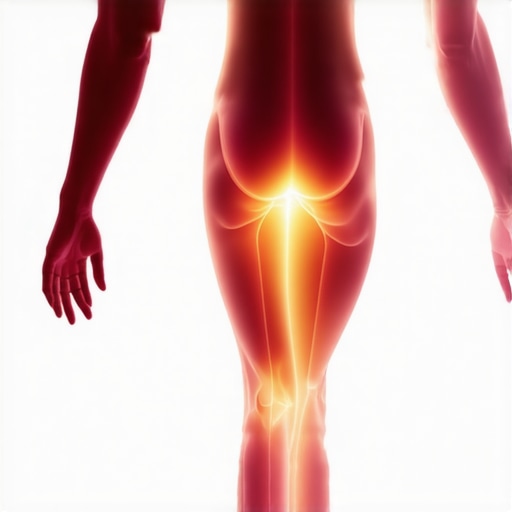 If you want a ‘bulletproof’ spine, you have to stop looking at the pain site and start looking at the movement chain. Even something as simple as sitting with a wallet in your back pocket can tilt your pelvis enough to cause a neck spasm three hours later. Have you ever fallen into the ‘more stretching is better’ trap only to find yourself stiffer the next day? Let me know in the comments. If you’re ready to get serious about a real fix, check out my guide on chiropractic techniques unveiled to see how we realign the whole system.
The Gear That Actually Earns Its Keep
I’ve wasted thousands on ‘ergonomic’ gimmicks over the years, but the truth is that your body doesn’t need a spaceship-grade chair; it needs targeted feedback. The only two things that permanently stay on my desk are a simple lacrosse ball and a haptic posture sensor. I use the ball to target the exact spots where my ribs meet my spine, which is a game-changer for mid-back stiffness. If you’ve never tried it, learning how to use a tennis ball to release upper back tension is the cheapest ‘chiropractor-in-a-pocket’ you’ll ever find. Unlike a standard foam roller, which can be too broad to get between the shoulder blades, a smaller, denser ball allows for the kind of targeted decompression your nervous system craves. I personally follow the core stabilization protocols established by Dr. Stuart McGill, a world-renowned expert in spine biomechanics. His research, frequently highlighted in The Spine Journal, emphasizes that true spinal health comes from building ‘stiffness’ in the core to protect the joints rather than constantly trying to stretch everything into submission. This is why I recommend mastering the proper way to use a foam roller on your upper back without accidentally irritating the very nerves you’re trying to soothe.
How do I maintain my mobility as my workload increases?
The trap we all fall into is thinking we can ‘bank’ mobility on a Saturday yoga class and spend it all week in a cubicle. It doesn’t work that way. To scale your physical health alongside a demanding career, you need to automate your movement. I use a specific piece of software that locks my screen for 20 seconds every 30 minutes, forcing me to look away and reset my neck. You also need to audit your environment for ‘posture traps.’ For instance, I realized my lower back was aching because of my foot placement while standing. Learning how to use a standing desk without hurting your hips changed my entire afternoon energy levels. These small, daily adjustments are expert methods to relieve neck and back discomfort that build a foundation for long-term results. If you aren’t consistent, you’re just putting out fires instead of fireproofing the building. Consistency is the only way to truly unlock neck pain relief for 2025 and beyond.
The Era of Wearable Biofeedback Is Here
I predict that in the next few years, we won’t just be tracking our steps; we’ll be tracking spinal shear forces in real-time. We are moving toward a future where smart clothing will tell you exactly when your cervical spine has reached its ‘mechanical limit’ for the day. Until then, we have to rely on high-level self-awareness and the right tools. I want you to try this right now: the next time you feel that familiar burn under your shoulder blade, don’t reach for the ibuprofen. Instead, perform the 10-second reset we discussed and then do one set of ‘Bird-Dogs’ to wake up your deep spinal stabilizers. It’s an advanced move, but it’s the secret to mobility mastery. This proactive approach is how you ensure that a high-stress week doesn’t turn into a month of chronic pain. We are shifting from a ‘fix it when it breaks’ mindset to a performance-optimized lifestyle where your spine is your greatest asset, not your biggest liability.
The 10-second reset is just the first step in a much larger journey toward physical freedom. After years of struggling with that nagging burn under my shoulder blades, I finally realized that my body wasn’t failing me; I was failing to listen to its signals. By implementing these tiny interruptions, you aren’t just stretching; you are retraining your nervous system to stay relaxed under the pressure of a modern workload.
The Hardest Lessons I Learned Before My Spine Finally Forgave Me
I spent years thinking I could out-exercise a bad desk habit, but the truth was much more nuanced. One of the most counterintuitive things I discovered is that stretching a muscle that is already overextended can actually trigger more spasms. This is precisely why stretching your neck to the side might be causing more spasms rather than fixing them. Your muscles are often ‘tight’ because they are working overtime to hold your heavy head up. Adding a long, static stretch to an exhausted muscle just makes it scream louder. I also had to accept that the hidden link between neck pain and spinal health often starts with our breathing. If you are a chest-breather, you are using your neck muscles thousands of times a day just to take a breath. Finally, I learned that the isometric hold that builds a bulletproof core is far more effective for long-term comfort than any fancy ergonomic chair could ever be.
My Personal Toolkit for Fighting Office-Induced Stiffness
You don’t need a gym full of equipment to keep your spine healthy. I’ve narrowed my daily survival kit down to a few essential habits and tools that provide the highest return on investment. First, I never go a day without using a small, firm ball for self-myofascial release. Learning how to use a tennis ball to release upper back tension is the most cost-effective way to manage knots between the shoulder blades. Secondly, if you are struggling to find a starting point, I highly recommend the 5-minute desk reset for busy professionals as a baseline for your workday. #IMAGE_PLACEHOLDER_E# I also rely on high-quality lumbar support—not from a built-in chair feature, but from a separate roll that I can move. If you use one, make sure you know how to use a lumbar roll without making your back stiffer, as improper placement can actually increase pressure on your discs.
The Future of Your Spine is Written in Your Small Habits
We are entering an era where we must be the CEOs of our own physical health. Consistency will always beat intensity. You don’t need a marathon yoga session; you need the discipline to perform a 10-second tuck and a quick bird-dog variation that fixes wobbly core muscles to keep your foundation strong. As you move forward, remember that you have the power to unlock neck pain relief for 2025 by simply refusing to stay a statue. Your body was designed for movement, for rhythm, and for resilience. Don’t let a spreadsheet take that away from you. Have you ever tried the wall drill and felt your neck muscles start to shake or vibrate? Let me know what happened in the comments below!