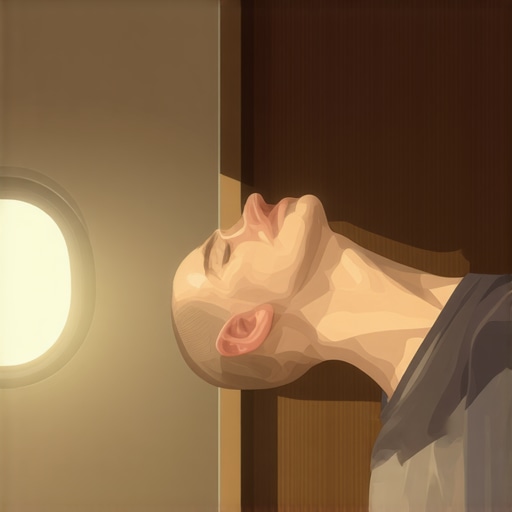
The side-sleeper’s guide to pillow placement
I woke up on a Tuesday morning last year, and for a split second, I thought I’d actually been in a car wreck while I was dreaming. I tried to roll over to hit the snooze button, but my neck felt like it was fused together with rusted rebar. It was that sharp, breath-taking jolt that makes you stay perfectly still while your eyes water. I’d spent eight hours in what I thought was a comfortable side-sleeping position, only to wake up completely immobile. It was a wake-up call, literally. Most of us think that if we’re on our side, we’re doing our spine a favor, but without the right strategy, we’re actually just slowly kinking our neck like a garden hose. Today, I’m going to show you exactly how to stack, tuck, and wedge those pillows so you can finally wake up feeling like a human being again instead of a stiff board. [image_placeholder]
Your Pillow Stack is Probably Ruining Your Spine
For years, I made the classic rookie mistake of thinking more was better. I would pile up three soft, decorative pillows thinking I was creating a cloud, but in reality, I was forcing my cervical spine into a literal mountain climb. When your head is propped too high, or worse, sinking too low because of a flat pillow, your muscles never actually shut off. They spend the entire night guarding your nerves and joints. According to the Sleep Foundation, maintaining a neutral spinal alignment is the single most important factor for sleep quality and musculoskeletal health. If you’ve been struggling with overcoming chronic neck discomfort, the culprit is almost certainly your nightly geometry. I’ve learned the hard way that the secret to side sleeping without hip or shoulder pain isn’t just about the mattress; it’s about filling the physical gaps between your body and the bed. Have you ever felt that weird, dull ache in your shoulder blade before you even get out of bed? That’s your body telling you the alignment is off.
Is Fancy Memory Foam Actually Worth the Hype?
You’ve seen the ads for the expensive NASA-inspired pillows and probably wondered if it’s all just marketing fluff. I used to be a total skeptic, too, sticking with my cheap bin pillows until my neck finally gave out and I couldn’t drive. The truth is, the material matters far less than the loft. We need to bridge the specific distance between your ear and the tip of your shoulder. If that gap isn’t supported, your head hangs, and your vertebrae pay the price. We’re going to fix that right now by looking at how your sleeping position dictates morning back stiffness and what you can do to change it tonight. Have you ever tried the ‘three-pillow’ trick for your knees and arms?
Ditch the Stack and Measure Your Shoulder Gap
Think of your neck like a suspension bridge. If the cables on one side are too tight and the other side is sagging, the whole structure starts to groan. To stop that Tuesday morning ‘wrecked’ feeling, you need a pillow that matches the distance from your ear to the edge of your shoulder. If your pillow is too soft, your head tilts down, stretching the top nerves; too firm, and your head is cranked upward. I remember a trip to a budget motel where the pillows were basically napkins. I was desperate and ended up rolling a hand towel into a ‘log’ and stuffing it into the pillowcase right under the curve of my neck. It felt weird for ten minutes, but for the first time in years, I woke up without that burning sensation in my traps. This is one of those chiropractic secrets to boost neck comfort and function that doesn’t cost a dime.
How to Keep Your Pelvis from Rotating
Your spine doesn’t end at your shoulder blades. When you sleep on your side, your top leg eventually slides forward and hits the mattress. This creates a slow-motion twist in your lower back that lasts for hours. It’s like wringing out a wet washcloth; eventually, the fibers start to fray. By placing a firm pillow between your knees—from the thigh down to the ankle—you keep your hips stacked. This is the secret to side sleeping without hip or shoulder pain. When I finally committed to the knee pillow, the dull ache in my sacroiliac joint vanished within three nights. It keeps your lumbar spine neutral so your body can actually focus on back pain prevention and recovery while you dream.
The Hugging Trick for Better Shoulder Space
If you wake up with tingly fingers or a numb arm, you’re likely ‘collapsing’ your chest. Most side sleepers pull their top shoulder forward, which pinches the nerves in the neck and shoulder. I call this the ‘Hunchback Sleep.’ Instead, grab a third, thinner pillow and literally hug it. This act keeps your top shoulder from dropping toward your chin and maintains space for your ribcage to expand. If you’re already dealing with issues, neck pain no more isn’t just a dream; it’s a result of preventing this mechanical collapse. It’s a simple fix that addresses the hidden link between neck pain and spinal health by ensuring your upper back isn’t under constant tension.
Don’t Forget the Anchor Point
Even with the right pillows, you need to be careful about how you move. If you’ve ever felt a sharp jab just reaching for the lamp, it’s because your joints are vulnerable after being static for so long. Using expert methods to relieve neck back discomfort often starts with these micro-adjustments. When you’re tucked in with your ‘pillow fort,’ you’re effectively creating an external skeleton that takes the load off your muscles. This is especially important for overcoming chronic neck discomfort, as it allows the inflammation to actually go down overnight rather than being reignited by poor posture.
Now, let’s go a layer deeper. Most people think that when a muscle feels tight, the solution is to pull on it until it gives up. But here’s the hard truth: why stretching a tight muscle isn’t always the answer. Often, that ‘tightness’ is actually a protective spasm—your brain’s way of putting a cast on a joint it doesn’t trust. If you try to stretch through that protection, you’re just tearing at a safety mechanism. This is exactly why static stretching might be prolonging your back pain instead of resolving it. Research published in the *Journal of Orthopaedic & Sports Physical Therapy* suggests that aggressive stretching on an unstable segment can actually inhibit the muscle’s ability to stabilize the spine, leaving you more vulnerable to injury when you finally roll out of bed.
Stop Stretching Your Way into More Pain
The biggest ‘oops’ factor I see with my readers is the immediate reflex to ice a stiff neck. We’ve been conditioned to think inflammation is the enemy, but why icing a stiff neck might be making it harder to move is because it slows down the lymphatic drainage and blood flow needed to flush out metabolic waste from a night of poor positioning. You feel numb, sure, but the underlying ‘kink’ remains frozen in place. Instead, gentle movement and heat are often the real heroes for morning stiffness.
Can Your Pelvis Really Dictate Your Neck Comfort?
It sounds counterintuitive, but your neck issues might actually be a ‘basement’ problem. I’ve seen countless patients fix their pillow setup only to find the pain persists because their foundation is crooked. This is why we adjust the pelvis to fix neck tension. If your hips are out of alignment, your entire spine has to ‘snake’ its way up to keep your eyes level with the horizon. No amount of memory foam can fix a neck that is forced to compensate for a tilted pelvis. When you boost mobility and ease pain with chiropractic techniques unveiled during a full-body check, you’re addressing the root cause, not just the symptom at the top of the chain.
Another common myth is the ‘sit up straight’ mantra. For many, why sit up straight is actually bad advice for some comes down to the natural curvature of their spine. Forcing a rigid, military-style posture creates massive tension in the mid-back that eventually migrates to the neck by bedtime. The goal isn’t rigidity; it’s effortless alignment. By focusing on overcoming chronic neck discomfort through functional movement rather than forced posture, you allow your body to find its natural neutral. Have you ever spent a fortune on high-end pillows only to wake up with the same old ache? Have you ever fallen into the trap of stretching a muscle that just won’t let go? Let me know in the comments below—I’d love to hear your ‘pillow-fail’ stories.
I’ve spent thousands on gadgets that promised to “fix” my neck overnight, but the most effective tool in my kit actually cost $10 at a sporting goods store: two lacrosse balls and a roll of athletic tape. By taping them together to create a “peanut,” you can target the thoracic spine without putting direct pressure on your vertebrae. I use this every evening to reverse the “slouch” of a ten-hour workday. If you want to restore your range, you have to address the stiffness in the mid-back that forces your neck to work double time. A study in the Journal of Bodywork and Movement Therapies highlights that self-myofascial release on the thoracic region significantly improves cervical range of motion, proving that the neck is often just a victim of its neighbors.
How do I keep my spine feeling young for the next decade?
The secret isn’t a single marathon stretching session; it’s the 3-minute morning routine to lubricate your joints. Think of your spinal discs like sponges. Overnight, they soak up fluid, but they need movement to pump out waste products. I personally swear by the “Cat-Cow” combined with a specific bird-dog variation that fixes wobbly core muscles. This isn’t just about strength; it’s about neurological awareness. When you boost your back health with chiropractic hacks, you’re training your brain to support your weight through your bones rather than your overworked muscles.
I also get asked a lot about the truth about inversion tables for disc relief. While hanging like a bat feels great, it’s not a permanent fix. In the next few years, I predict we’ll see a massive shift toward smart apparel—shirts with embedded sensors that vibrate the second your scapula starts to wing or your chin drifts forward. Until then, you are your own best sensor. If you’re serious about back pain recovery, you need to treat your spine like a high-performance car that requires regular alignment checks, not just an oil change when the smoke starts pouring out. Start tonight by trying the “peanut” drill for exactly two minutes—your neck will thank you by Thursday.
Lessons from the Night I Threw My Pillow Across the Room
It took me nearly a decade to realize that sleep isn’t a passive activity; it is an active recovery phase that requires a specific mechanical setup. One of the biggest ‘lightbulb moments’ for me was realizing that your pillow height actually needs to change as your mattress ages and starts to sag. If you have been unlocking neck pain relief through exercise but still wake up stiff, your physical environment is likely sabotaging your best efforts. Another hard-earned lesson? Do not wait for the pain to become a ‘wreck’ before you adjust. If you feel even a slight pull in your upper traps at 11 PM, fix your pillow then; do not just hope it disappears by 7 AM. This proactive approach is a cornerstone of effective neck pain management that most people ignore until they cannot turn their head to back out of the driveway.
#IMAGE_PLACEHOLDER_E#
The Gear That Actually Rescued My Spine
Beyond the basic pillow fort, I have curated a small toolkit that ensures I do not revert to my old, slumped-over self. First is the ‘peanut’ tool I mentioned earlier—it is non-negotiable for anyone who spends hours at a desk. Second, I highly recommend a firm, cylindrical bolster for your knees rather than a standard bed pillow, as it provides much more stable hip support throughout the night. Lastly, nothing beats a professional assessment to ensure your ‘home repairs’ are actually targeting the correct spinal segments. You can always reach out to our team if you are unsure where your alignment is failing. These tools, when combined with proven strategies for back pain relief, form a permanent shield against the wear and tear of daily life.
Your First Step Toward a Fluid Morning
You do not have to live in a perpetual state of ‘morning rust.’ By taking just ten minutes tonight to stack your pillows properly and commit to the knee-tuck, you are signaling to your nervous system that it is finally safe to relax. We often overcomplicate the process of overcoming chronic neck discomfort, but the most profound changes usually happen during those quiet hours when your spine is finally supported. Start small, remain consistent, and pay close attention to what your body tells you the moment you open your eyes. Which of these pillow hacks are you brave enough to try tonight? Let me know in the comments below!