How to Hit 100 Balls at the Driving Range Without Your Lower Back Giving Out
How to Hit 100 Balls at the Driving Range Without Your Lower Back Giving Out
It is a scene I see played out nearly every weekend. A golfer arrives at the driving range, full of enthusiasm and perhaps a bit of frustration from a previous round. They purchase the “Jumbo” bucket – 100 to 150 balls – and proceed to a stall. In the span of about 45 minutes, they machine-gun their way through the entire bucket. There is no routine, no pause, and very little thought given to the mounting tension in their mid-section. By the time they reach the last ten balls, they are “all arms,” and by the time they are putting their bag back in the car, a dull, throbbing ache has settled into their lower back.
As a Travel Physical Therapist and TPI Certified Golf Fitness Instructor, I call this the “Range Rat Trap.” We often equate volume with improvement, but in the world of golf biomechanics, high volume without a strategy is a recipe for injury. If you are searching for a driving range near me or looking to book time at an indoor golf simulator, you need to understand that your lower back is likely the victim of your movement patterns, not the culprit of your pain.
The data backs this up. According to research from the Titleist Performance Institute (TPI) involving over 31,000 golfers, 28.1% of players deal with lower back pain after every round. Even more telling is that over 23% of professional golfers play through some form of back pain. Whether you are taking golf lessons to fix a slice or just hitting a golf sim for fun, your lumbar spine is under a level of rotational stress that it simply wasn’t designed to handle in isolation.
How to Tell if Your Back Pain is Serious
The Biomechanics of the “Victim” Spine
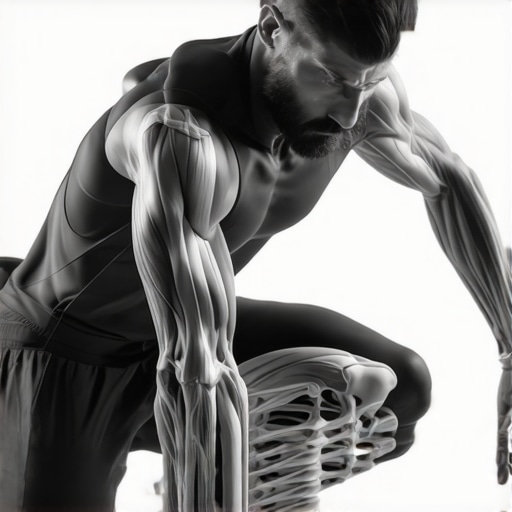
In the TPI philosophy, we utilize a concept called the Body-Swing Connection™. This is the idea that physical limitations in your body directly dictate how you swing the club. When we look at the human body, we see a stack of alternating segments: some are designed for stability, and others are designed for mobility. This is known as the “Joint-by-Joint” approach.
The lumbar spine (your lower back) is designed for stability. Its primary job is to protect the spinal cord and provide a solid foundation for the rest of the torso. Conversely, the hips and the thoracic spine (your mid-back) are designed for mobility. They are the “engines” of rotation in the golf swing.
The problem arises when the “engines” stop turning. If your hips are tight – which is common for anyone who spends eight hours a day sitting at a desk – they cannot provide the necessary rotation during the backswing or downswing. Because the brain is goal-oriented (it just wants to get the club back), it will find that rotation somewhere else. It inevitably asks the lumbar spine to step in and do the work.
Here is the clinical reality: the lumbar spine only has about 10 to 15 degrees of total rotation. That is a tiny amount of movement. When you force it to rotate 30 or 40 degrees because your hips are locked up, you are essentially asking a hinge to act like a ball-and-socket joint. Do this 100 times in a row at the driving range, and you aren’t just practicing golf; you are practicing a repetitive strain injury.
The Proper Way to Rotate Your Pelvis at the Driving Range to Protect Your Spine
Indoor Golf Simulators: A Different Kind of Stress
In recent years, the rise of the indoor golf simulator has changed how we practice. Searching for indoor golf near me or a trackman golf near me has become the norm, especially during the winter months. While an indoor golf setup offers incredible data, it also presents a unique set of stressors that can be harder on the back than a traditional grass range.
The “Mat Effect”
Most indoor golf simulators utilize artificial mats. While modern mats are getting better, they still have significantly less “give” than natural turf. If you tend to hit the ball slightly “fat” (hitting the ground before the ball), the mat doesn’t allow the club head to dig. Instead, it bounces, sending a violent shockwave up the shaft, into your lead wrist, through your elbow, and eventually settling in your thoracic and lumbar spine. This repetitive jarring can lead to acute flare-ups that you might not experience on grass.
The Pacing Problem
At a traditional golf driving range near me, there are natural pauses. You might walk to get more balls, wait for the person next to you, or simply look out at the horizon to see where your ball landed. In a golf sim, the ball is often auto-teed or sits right at your feet. Golfers tend to hit balls three times faster in a simulator than they do outdoors. This lack of recovery time means your core muscles fatigue faster, and once those stabilizing muscles give out, the structural components of your spine take the brunt of the load.
Chasing Numbers
When you are using a trackman golf system, it is incredibly tempting to “chase the numbers.” You see a ball speed of 145 mph and you want to hit 150 mph. This leads to maximum-effort swings on every single shot. In a 100-ball session, swinging at 110% effort is unsustainable and is the fastest way to cause a disc herniation or a muscle strain.
Why practicing at an indoor golf simulator often leads to mid-back stiffness
Why chasing Trackman distance often leads to a nagging lower back flare-up
The 100-Ball Strategy: Quality Over Quantity
If you are going to hit 100 balls, you need a tactical plan. You cannot simply rake and hit. If you look at the consensus across the golf fitness community and forums like Reddit, the general agreement is that 150 balls is far too many for a single session if you aren’t a professional athlete with a dedicated recovery team. For the average amateur, 50 to 80 balls is the “sweet spot,” but if you insist on hitting 100, follow these rules:
- The 30-Second Rule: Never hit a ball within 30 seconds of the last one. Use this time to step out of your stance, reset your grip, and take a deep diaphragmatic breath. This allows the elastic tissues in your back to “reset” their resting length.
- Block vs. Random Practice: Do not hit 100 drivers. Switch clubs every 10 balls. Moving from a wedge to a 7-iron to a driver changes your posture and the angle of your spine. This prevents “pattern overload,” where you stress the exact same tissues in the exact same way for an hour.
- The “Gate” Drill: If you are at a golf simulator near me, use the technology for more than just distance. Focus on path and face angle. When you focus on technical precision rather than raw power, your swing naturally becomes more controlled and less violent.
Why Your New Golf Lessons Won’t Fix the Back Pain You Get at the Driving Range
The “Pre-Range” Mobility Routine
Before you take your first swing at the driving range near me, you must “unlock” the areas that protect the lower back. As a PT, I recommend these three specific movements to prime the body for rotation.
1. Cat-Cow Variation for Thoracic Relief
Instead of the standard quadruped position, try doing this standing while leaning on your golf club. Arch your mid-back toward the sky, then drop your chest toward the ground. This “wakes up” the thoracic spine. If your mid-back can move, your lower back doesn’t have to.
The Cat-Cow Variation for Targeted Mid-Back Relief
2. The Lat Stretch
The Latissimus Dorsi is a massive muscle that connects your arm to your lower back. If your lats are tight, they will pull your lower back into an “S-Posture” (too much arch) during the backswing. Use the indoor golf bay’s frame or a golf club to stretch your lats by reaching forward and hinging at the hips.
The Lat Stretch That Frees Up Your Lower Back Instantly
3. Hip Internal Rotation (The Secret Sauce)
This is the most important movement for a golfer. On your backswing, your trail hip must rotate internally. If it can’t, your pelvis will “sway” or “slide,” and your lower back will be forced to twist to compensate. Spend two minutes doing seated or standing hip internal rotation pivots to ensure your “engines” are ready to turn.
The 3-Step Morning Routine for Hip Mobility
Swing Mechanics: Protecting the Lumbar
While I am a Physical Therapist and not a swing coach, biomechanics and swing mechanics are inseparable. During your golf lessons, you might hear your instructor talk about posture. From a clinical perspective, we are looking for two specific “red flags” that destroy the lower back:
S-Posture
This occurs when a golfer has too much arch in their lower back at address. It creates “lower crossed syndrome,” where the hip flexors are tight and the glutes are turned off. This puts the lumbar vertebrae in a compressed position before the swing even starts. When you rotate from this position, you are essentially grinding the facet joints of your spine together.
C-Posture
This is the opposite – a rounded, slouching upper back. This often stems from a lack of thoracic mobility. If you start rounded, you cannot rotate; you can only “tilt.” This tilting motion creates a massive amount of lateral shear on the discs of the lower back.
The goal is a **neutral pelvis**. Think of your pelvis as a bucket of water. You don’t want the water spilling out the front (S-posture) or the back (C-posture). A neutral spine allows the core musculature to support the vertebrae during the high-velocity phase of the swing.
The Pelvic Tilt Secret for Effortless Posture While Walking
Post-Session Recovery
What you do after you leave the indoor golf simulators near me is just as important as the practice itself. Many golfers reach for an ice pack the moment they feel a twinge. However, unless you have had a sudden, sharp “pop” (which indicates an acute tear), heat is often the better choice for the “achy” back associated with the range.
Heat helps to increase blood flow to the muscles that have become ischemic (restricted in blood flow) due to constant tension. It helps the “knots” or trigger points in the quadratus lumborum and paraspinal muscles to relax. If you find yourself searching for golf lessons near me because your back pain is limiting your progress, it’s time to look at your recovery as part of your training.
Why Heat Packs Are Better Than Ice for Chronic Muscle Tension
Conclusion: Play Longer, Practice Smarter
Hitting 100 balls at the driving range shouldn’t be a physical endurance test. It should be a focused session of skill acquisition. By understanding that your lower back is the “victim” of poor hip and thoracic mobility, you can change your approach to the game. Whether you are hitting at a high-tech trackman golf facility or a local grass range, the principles of the Body-Swing Connection™ remain the same.
If you are tired of your back dictating how many holes you can play or how many balls you can hit, it’s time for a professional assessment. Don’t wait for a minor ache to become a chronic injury. Book a TPI screening or a spinal checkup at Quackers Spinal today to identify your mobility leaks and build a swing that lasts a lifetime.