The danger of sitting with a wallet in your back pocket
I remember a cross-country drive back in 2015 when I honestly thought my lower back was giving up on me for good. By hour three, a sharp, white-hot pain started radiating down my right leg, making every gas pedal press feel like a chore. I was convinced I needed a new car, or at the very least, a trip to a specialist for some scary-sounding surgery. It wasn’t until I limped into a rest stop and felt that familiar, three-inch-thick lump under my right cheek that the lightbulb finally flickered on. I had been sitting on a ‘Costanza’ wallet—packed with three years of receipts and half-stamped coffee cards—for five hundred miles. That realization was my first real lesson in understanding back pain through the lens of daily habits rather than just ‘bad luck.’
Your Back Pocket is a Hidden Trap for Your Pelvis
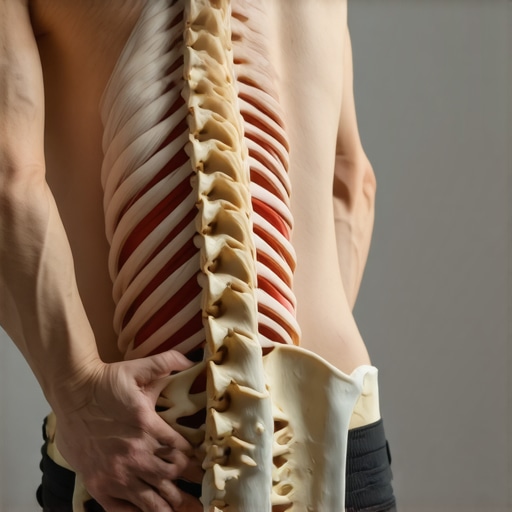
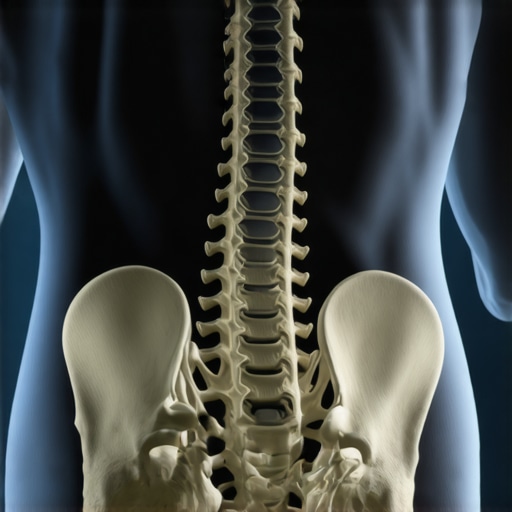
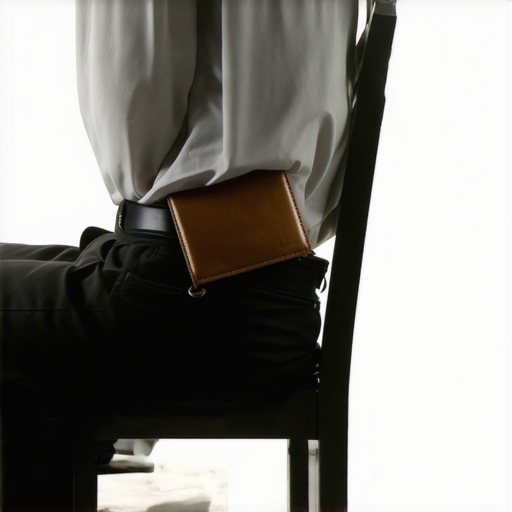
When you shove that leather brick into your back pocket and sit down, you aren’t just carrying your ID; you are creating a massive structural imbalance. Think of it like a shim under a table leg, except that table is your skeleton. Sitting on a wallet causes one side of your pelvis to tilt upward, which forces your lower spine to curve in the opposite direction to keep your head level. It is a silent, daily assault on your alignment that can lead to what we call ‘wallet sciatica.’ I spent far too long making the mistake of blaming my office chair, when the culprit was literally stuck to my backside. It’s a classic example of why your wallet in your back pocket is tilting your pelvis and wrecking your foundation.
Is a small leather pouch really capable of causing chronic pain?
It sounds a bit dramatic to blame a few credit cards for a lifetime of stiffness, doesn’t it? I was skeptical too, until the pain became impossible to ignore. The truth is that even a small elevation—as little as half an inch—under one sit-bone can shift your center of gravity. According to the Mayo Clinic, prolonged asymmetric sitting puts uneven pressure on the sciatic nerve and the piriformis muscle, leading to that deep, nagging ache that many of us mistake for a disc issue. Your body is a master at adapting, but it does so by tightening muscles that shouldn’t be tight, which is why we look at your pelvis when your neck hurts during a consultation. Today, I’m going to show you exactly how to break this habit and what chiropractic techniques can help reset your spine after years of lopsided sitting. Have you ever noticed your back acting up specifically after a long commute or a day at the desk? Let me know, because you might be surprised at how simple the fix is once we stop sitting on our problems. We’re going to walk through the steps to reclaim your comfort and get your hips back on level ground.
Move your essentials to your front pocket immediately
The quickest way to stop the cycle of pelvic tilting is to remove the physical obstacle that started it. I know it feels bulky to have your phone and wallet in the same space, but your spine will thank you for the symmetry. When I finally made the switch, I opted for a slim, minimalist cardholder that barely took up any space. This change alone ensures you are sitting on your sit-bones equally, rather than perching on one side like a bird on a lopsided branch. If you are worried about comfort during travel or daily errands, learning how to sit on a long flight without triggering sciatica starts with this one basic rule: keep your back pockets entirely empty.
Open your hips with a simple two-minute reset
After years of sitting on a leather brick, your hip flexors have likely become chronically tight and ‘shortened’ on one side. You can’t just wish this away; you need to actively encourage the tissue to lengthen and let go. I use the 2-minute hip opener for people who commute over an hour every single evening to reverse the damage. It involves a deep lunge position where you tuck your tailbone under and lean slightly forward. I remember the first time I did this after a six-hour drive; I could actually feel the tension in my sacrum dissolving. It targets the psoas muscle, which is the primary connector between your legs and your spine, and helps neutralize that ‘Costanza’ tilt that wrecks your foundation.
Master the king of core stability for a resilient spine
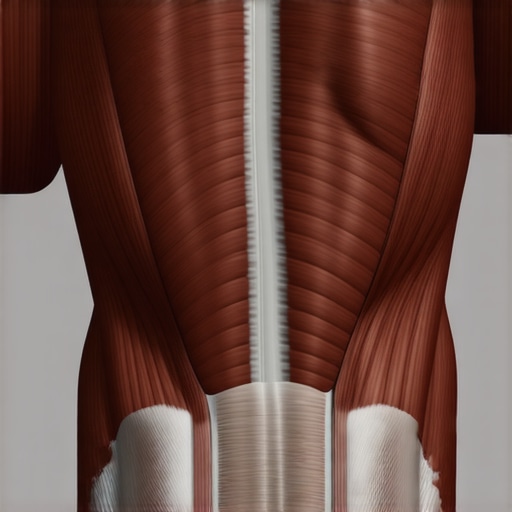
Once the tension is gone, you have to build a ‘brace’ to keep your pelvis level during movement. This is where most people fail—they do traditional sit-ups, which actually strain the lower back discs further. Instead, you need exercises that teach your spine to stay perfectly still while your limbs move. I’ve found that the dead bug exercise is the king of core stability for this exact purpose. 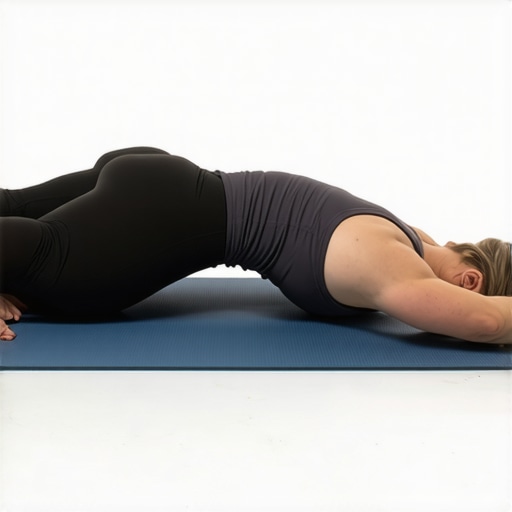 When I first tried it, I was shocked by how much my lower back arched off the floor. The key is to keep your spine glued to the mat. If you can move your arms and legs without that gap forming, you’ve finally won the battle against lopsided sitting.
Why physical adjustments are the final piece of the puzzle
Even with the best habits, a spine that has been crooked for years often needs a manual nudge to return to center. This isn’t just about ‘cracking’ joints; it’s about providing the brain with the correct neurological feedback. In our clinic, why we check your leg length during every visit is specifically to see if your pelvis is actually sitting level or if your muscles are still pulling you into a defensive tilt. Using specific chiropractic techniques, we can release the deep structural restrictions that stretching alone can’t reach. It’s about more than just temporary comfort; it’s about how to restore your range so you can move without thinking about your back every five seconds. I’ve seen patients who thought they were doomed to chronic stiffness completely transform their gait once their pelvis was properly aligned and their core was finally engaged to relieve neck and back discomfort simultaneously.
Your tightest muscles might actually be protecting you
Most people think that if a muscle feels tight, the logical solution is to stretch it until it gives up. I used to be that guy, spending twenty minutes every morning trying to touch my toes to fix my nagging ache. But here is the nuance that most beginners miss: tightness is often a neurological defense mechanism. If your brain senses that a joint is unstable or that your pelvis is out of alignment, it will command the surrounding muscles to ‘lock down’ to prevent further injury. This is why stretching a tight muscle isn’t always the answer. When you force a stretch on a muscle that is trying to protect an unstable spine, you’re essentially ripping the Band-Aid off a wound that hasn’t yet healed. Instead of relief, you often end up with more spasms because the brain just tightens the muscle further in response to the perceived threat.
The static stretching trap can prolong your recovery
One of the biggest ‘oops’ factors I see in the clinic is patients who try to ‘stretch out’ an acute lower back spasm using long, static holds. It feels like you’re doing something productive, but why static stretching might be prolonging your back pain comes down to blood flow and nerve irritation. A study published in the Journal of Sports Sciences suggests that prolonged static stretching can actually decrease muscle force and delay the protective reflexes your spine needs to stay stable. If you have a true spinal issue, pulling on those muscles can irritate the nerves even more. This is also where people fail to recognize the difference between muscle soreness and spinal pain. One needs gentle movement, while the other needs structural stability and a precise adjustment.
How do you tell if your stiffness is a structural misalignment or just a tired muscle?
It is the million-dollar question for anyone dealing with chronic discomfort. If you stretch a muscle and the tension returns within thirty minutes, you aren’t dealing with a ‘short’ muscle; you’re dealing with a ‘tight’ one caused by a structural imbalance elsewhere. For instance, how a single tight ankle can cause chronic back pain is a classic example of a distant joint forcing your lower back to overcompensate. If your ankle doesn’t flex, your hip works harder; if your hip works harder, your lower back loses its stable base. This is the ‘hidden link’ that beginners often ignore when they only focus on where it hurts.
Perfect posture might be your biggest mistake
We’ve all been told to sit up straight with shoulders back and chest out. But staying in a rigid, ‘military’ posture is actually a recipe for disaster. This ‘perfect’ alignment often leads to a phenomenon where your muscles never get to rest, which is why your perfect posture is actually making you stiff. True mobility is about the ability to move through various ranges, not the ability to hold a statue-like pose for hours. In our practice, we focus on how to restore your back mobility with proven chiropractic strategies that prioritize functional movement over rigid aesthetics. We want your spine to act like a dynamic spring, not a frozen rod. Have you ever fallen into the trap of over-stretching a painful spot only to have it feel worse the next day? Let me know in the comments, because understanding these subtle shifts in how we treat our bodies is the first step toward lasting relief.
Stop overcomplicating your recovery with expensive gadgets
I spent a small fortune on high-tech massage guns and vibrating rollers before I realized that the most effective tool in my kit cost less than a cup of coffee. While fancy devices have their place, they often provide a ‘global’ vibration that misses the deep, specific trigger points that keep your pelvis lopsided. For those localized knots, I personally swear by the simplicity of a tennis ball. Using it against a wall allows you to control the pressure exactly where the muscle meets the bone. It’s the most targeted way I’ve found to how to use a tennis ball to release upper back tension without accidentally bruising your ribs. In my experience, these low-tech solutions work better because they require you to be mindful of your body’s feedback rather than just zoning out while a machine does the work.
The specific desk tools that saved my neck
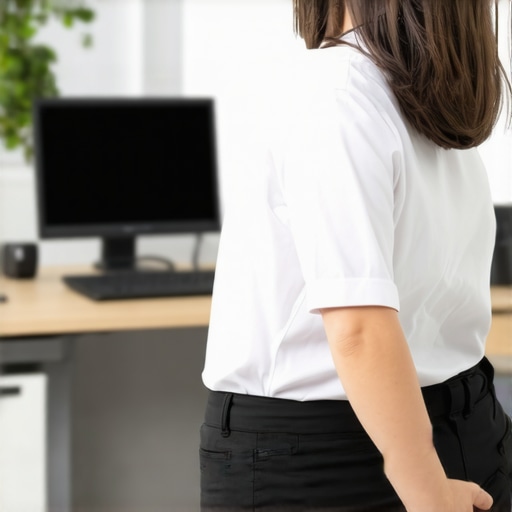
If you spend eight hours a day in front of a monitor, no amount of evening stretching will fix the damage of a poor setup. I eventually realized that why your screen height is the real cause of your headaches was the missing link in my recovery. Your eyes dictate your posture; if your screen is too low, your head will naturally drift forward. I fixed this by using a simple monitor riser and adding a lumbar roll to my chair. However, most people use these rolls incorrectly, placing them too low. When you learn the correct way to use a lumbar roll in your office chair, you’ll feel an immediate reduction in the ‘pulling’ sensation in your lower back. 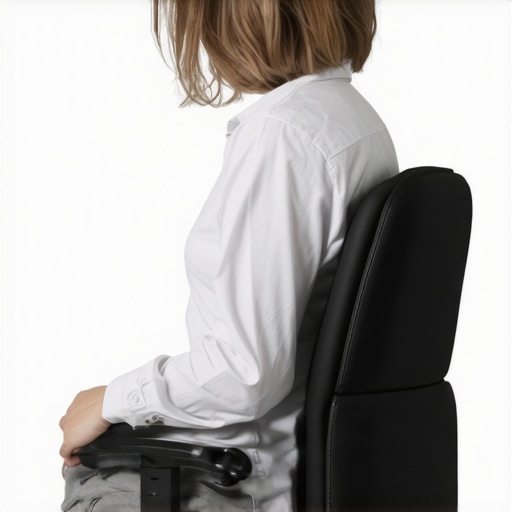
How do I keep my spine healthy as I get older?
Maintaining your results over time isn’t about doing more; it’s about being more consistent with less. According to the research of Dr. Stuart McGill, a world-renowned expert in spine biomechanics at the University of Waterloo, ‘spinal hygiene’—the way we move during mundane tasks—is more critical for long-term health than the intensity of our workouts. This means mastering the ‘hip hinge’ when you pick up a laundry basket or even just the simple trick to keep your spine neutral while washing dishes. I’ve integrated a the 3-minute morning routine to lubricate your joints into my daily life, which acts like a biological oil change for my vertebrae. Predictive movement is the future of spinal care; by the time you feel pain, the structural shift has already been there for weeks.
Movement is the only real health insurance
As we move into 2025 and beyond, I predict we will see a massive shift toward wearable technology that tracks pelvic tilt in real-time. But until those sensors are built into every shirt we buy, you have to be your own bio-feedback loop. I challenge you to try one advanced tip tonight: before you go to sleep, spend five minutes learning how to breathe through your diaphragm to reduce lower back pressure. This isn’t just ‘yoga breathing’; it’s a mechanical way to expand the ribcage and decompress the spine from the inside out. Once you feel that internal expansion, you’ll realize that the power to restore your range has always been within your own control, provided you have the right tools and the patience to use them correctly.
The hard truths I learned while straightening my spine
Refining my posture taught me that relief isn’t always a straight line. Some mornings you’ll wake up feeling stiffer because your nervous system is recalibrating to its new, centered position. I also realized that why icing a stiff neck might be making it harder to move is a valuable lesson in listening to your body’s need for blood flow rather than just numbing the symptoms. The biggest lightbulb moment? Your body is an interconnected chain; if you ignore your foundation, the rest of the structure will eventually buckle. Consistency in small, daily habits always beats a once-a-month ‘heroic’ gym session when you are trying to heal.
My tried-and-tested kit for long-term alignment
If you want to stop the cycle of recurring aches, you need a few reliable allies in your daily environment. First, invest in a dedicated lumbar support—but make sure you learn the correct way to use a lumbar roll in your office chair to avoid creating new pressure points. Second, I recommend looking into Dr. Stuart McGill’s research on spine hygiene to understand how to move without strain. Third, swap that bulky wallet for a slim front-pocket cardholder to remove the mechanical ‘shim’ from your pelvis. Lastly, keep a tennis ball in your desk drawer to address mid-day tension before it turns into a full-blown spasm.
Start rebuilding your foundation tonight
You don’t have to live with the ‘Costanza’ tilt forever. By making these small adjustments—swapping your pockets, engaging your core, and seeking professional guidance—you can finally silence the back pain that has been holding you back. It’s about taking that first small step to restore your back mobility with proven chiropractic strategies and reclaiming your ability to move without fear. Your future self will thank you for the symmetry you start building today. Have you checked your back pockets lately and found a hidden source of pressure you didn’t expect? Let me know in the comments below!