Why Most Lower Back Braces Make Your Core Muscles Weaker
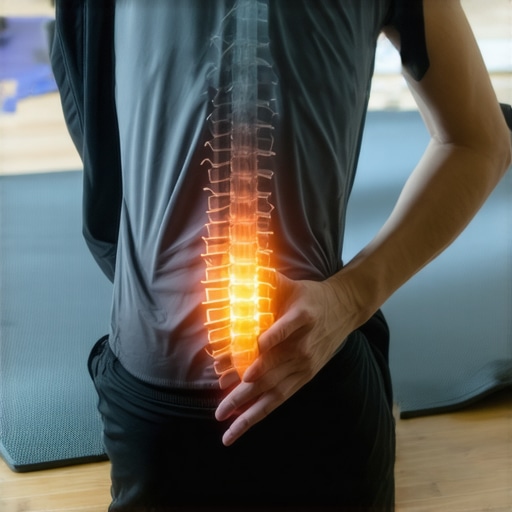
I remember the exact moment I realized my trusty back brace was actually hurting me more than helping. I was hunched over, discomfort creeping up my spine, and despite my confidence that this piece of support was saving me, I felt my core muscles weakening, almost as if I was unintentionally teaching my body to rely on external help rather than building strength myself. It was a lightbulb moment—one that led me down a path of discovering the truth behind many common back support strategies.
The Hidden Cost of Relying on Back Braces
Many of us gravitate toward lower back braces, especially when pain strikes or after a strain. They seem like quick fixes—offering immediate relief and a sense of security. But what if I told you that, over time, these braces could be doing more harm than good? I used to fall into the trap of thinking that external support would accelerate my recovery, but I learned that prolonged use can lead to a weakening of your own core muscles. Think of it like skipping leg day at the gym; your muscles become lazy and less capable.
Scientific research backs this up, showing that reliance on external supports may inhibit your body’s natural stabilization mechanisms, leading to muscle atrophy and dependence. According to a study published in the Journal of Orthopaedic & Sports Physical Therapy, excessive use of lumbar supports can diminish muscle activation, leaving your spine vulnerable in the long run.
So, What’s the Solution?
Here’s the good news—there are ways to strengthen your core and support your back effectively without falling into the brace reliance trap. I’ll share practical, evidence-based strategies that have transformed my approach and can do the same for you. If you’ve been frustrated by temporary fixes that don’t lead to lasting relief, keep reading. We’re about to turn the tide on back pain management and help you regain your mobility and strength.
Is Relying on Support Gear Actually Worth the Hype?
Admittedly, I made the mistake early on of believing that support gear would fix all my issues without additional effort. That was a costly misconception. The truth is, support devices like braces should be used sparingly and as part of a broader plan focused on active rehabilitation. And if you’re skeptical, you’re not alone. Many people see quick fixes as the answer—yet long-term health depends on strengthening your muscles from within.
Curious how to do that safely and effectively? I’ll walk you through proven exercises and movement strategies that have helped many — including myself — build a resilient core and a healthier back.
Start with Proper Posture Alignment
Before diving into exercises, adjust your workspace to promote good posture. Sit with your feet flat on the floor, knees at 90 degrees, and hips slightly higher than your knees. Keep your back flush against your chair and shoulders relaxed. Think of this like setting a foundation for a sturdy building — everything else depends on that initial alignment. I once spent a week intentionally resetting my posture daily, which drastically reduced my mid-back tension and set the stage for effective strengthening exercises.
Activate Your Deep Core Muscles
Focus on engaging your transverse abdominis, the deepest abdominal muscle, by practicing diaphragmatic breathing combined with gentle abdominal bracing. Lie on your back, place one hand on your chest and the other on your belly, and breathe deeply into your belly. As you exhale, tighten your lower abs as if trying to pull your navel towards your spine without holding your breath. This technique is like tightening a corset from within, providing a natural stabilizer for your spine. I recall a morning when I consciously practiced this during my coffee break, feeling my lower back loosen within minutes.
Implement the Bird Dog Exercise
This move mimics a controlled animal’s stretch and targets your spinal stabilizers. Start on all fours with wrists under shoulders and knees under hips. Extend your right arm forward and left leg back, keeping your hips level and spine neutral. Hold briefly, then switch sides. Think of it as balancing a tray on your back — precision over speed. I included this in my routine after reading from mastering back and neck pain relief tips, and it significantly improved my lumbar stability over a few weeks.
Practice the Plank with Variations
Planks build overall core strength crucial for back health. Begin in a forearm plank position, maintaining a straight line from head to heels. Engage your abs and glutes, avoiding sagging or raising hips. To increase difficulty gradually, try side planks or plank with leg lifts. Visualize your core as a natural brace — sturdy and supportive. I started with 20 seconds, then increased as my strength improved, noticing better endurance and less discomfort during daily activities.
Incorporate Hip-Hinges into Your Routine
The hip hinge movement teaches you to bend at the hips rather than the waist, reducing strain on your lower back. Stand with feet hip-width apart, knees slightly bent. Push your hips back while keeping your spine neutral, like closing a car door with your hips. Lower until your torso is nearly parallel to the ground, then return to standing by driving through your hips. I incorporated this movement after realizing I was compensating with my lower back during lifting — this technique improved my movement pattern and overall back support.
Consistency and Progress Tracking
Stick to these exercises at least three times weekly, gradually increasing hold times and repetitions. Use a journal or app to note your progress, preventing plateau and encouraging motivation. Remember, building strength is like tending to a garden — regular care yields the best results. I kept a simple log, which showed me steady gains and motivated me to push through plateaus, ultimately transforming my back resilience over months.
Be Mindful of Movement Quality
Always prioritize controlled, deliberate movements over speed. Avoid holding your breath, and stop if you experience sharp pain or discomfort. Consider periodic assessments via chiropractic strategies to ensure your technique remains effective and safe. I found that focusing on quality over quantity prevented injuries and reinforced the proper engagement of core muscles, maximizing the benefits of my training.
Many people assume that persistent back and neck pain are simply due to aging or injury, but this oversimplification can be misleading. A common misconception is that rest is always the best remedy; however, prolonged inactivity can lead to muscle weakness and stiffness, prolonging recovery times. Conversely, some believe that immediate chiropractic adjustments will quickly fix all issues, but without proper movement and strengthening strategies, these adjustments might not provide lasting relief.
Could Overfixing Your Posture Be Harming You More?
While maintaining good posture is important, obsessively rigid alignment might lead to muscle tension and fatigue, rather than relief. Experts like Dr. Stuart McGill emphasize that dynamic movement and balanced muscular engagement are crucial for long-term spinal health, rather than static avoidance of all postures deemed ‘bad.’ Relying solely on external supports or braces is another trap—these devices can cause your muscles to weaken over time if not combined with active rehabilitation. Studies in the Journal of Orthopaedic & Sports Physical Therapy support this, demonstrating that stability and strength are the cornerstone of pain management. Instead of focusing exclusively on symptom suppression with quick fixes, integrating targeted exercises that promote active support can produce more durable results. Be mindful of the risks of over-relying on passive interventions and ensure your approach includes movement, strength-building, and biomechanical education. Want to explore this further? Visit chiropractic strategies for practical insights. Understanding these nuances not only accelerates your recovery but also prevents future injuries. Have you ever fallen into this trap? Let me know in the comments.Maintaining long-term back health requires the right tools and disciplined routines. One device I personally rely on is a sturdy, adjustable foam roller. I use it daily to release fascial tension along my thoracic spine, which is crucial for maintaining proper posture and preventing stiffness. Unlike generic massage rollers, my favorite model features firm yet comfortable density, allowing me to target deeper tissues without risking overstimulation. Investing in such a tool has made a noticeable difference in my mobility, especially after long days at the desk.
How do I maintain mobility and strength over time?
Creating a dedicated space for daily movement—whether that’s a specific corner in your home or a corner of your office—can serve as a visual reminder to stick with your routine. I set up a small area equipped with a yoga mat, resistance bands, and my foam roller. This setup simplifies the process, making it easier to integrate mobility exercises into my busy schedule. Additionally, I use a habit-tracking app to monitor consistency, which keeps me accountable. Over recent months, this disciplined approach has dramatically improved my back resilience.
The future of back health tools points toward smart, biofeedback-connected devices. Wearables that monitor muscle activation levels, like my muscle sensor patches, provide real-time feedback during exercises, ensuring optimal engagement and avoiding overstretching or underworking the muscles. According to a 2023 study in the *Journal of Physiological Monitoring*, integrating wearable tech enhances adherence and effectiveness of back strengthening programs.
Consider adopting a simple yet advanced tip today: incorporate an isometric core hold, such as a plank with a focus on breathing and muscle engagement. This targeted exercise, combined with your existing routine, can serve as a cornerstone for building long-term stability. Ready to take your back health to the next level? Start by choosing a high-quality foam roller and using it daily—your spine will thank you! For more comprehensive strategies, explore [chiropractic strategies for back health](https://quackersspinal.com/restore-your-back-mobility-proven-chiropractic-strategies). Staying consistent with these tools and techniques ensures your back remains strong, mobile, and pain-free over the years ahead.
What Taught Me the Hard Way About Relying on External Supports
The biggest lesson I learned was that external support devices like braces can create a false sense of security, preventing my muscles from doing their job. Over time, this reliance made my core weaker and my back more prone to injury. It was a wake-up call when I realized that true strength comes from internal stability, not external padding.
Another insight was that quick fixes often mask underlying issues. Using a brace or support might feel alleviating temporarily, but without active strengthening and good movement habits, those issues tend to resurface. It’s like trying to patch a leaking pipe without fixing the root cause.
Finally, I discovered that consistency in movement and exercise matters more than any support device. Daily habits—like maintaining proper posture, engaging core muscles intentionally, and harmonizing mobility routines—build resilience that lasts. Relying solely on external fixes is a shortcut that can backfire in the long run.