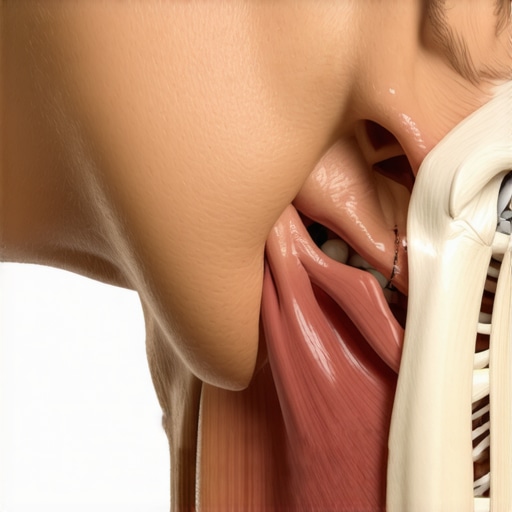
Why your jaw tension is a hidden cause of neck stiffness
It was after yet another sleepless night, tossing and turning, that I realized something strange—my jaw muscles felt tighter than usual, and my neck was more rigid than ever. I’d been struggling with persistent neck stiffness for weeks, trying every trick in the book, from stretching to adjustments, but nothing stuck. That lightbulb moment hit me hard: my jaw tension might actually be the silent enemy lurking behind my neck pain.
Discovering the Hidden Connection Between Jaw Tension and Neck Stiffness
Many of us overlook how interconnected our muscles and posture are. When I started paying closer attention, I noticed a pattern—tight jaw muscles often coincided with tightness in my neck and shoulders. It’s more common than you think. In fact, research shows that chronic jaw clenching and teeth grinding aren’t just about dental issues—they significantly influence your neck and spinal health (source: Quackers Spinal). This realization was a game-changer for me.
Most health advice centers around stretching the neck or adjusting posture, but what if the root cause is elsewhere—literally in your jaw? My early mistake was focusing solely on my neck muscles, ignoring the tension running up into my jaw, which only prolonged my discomfort. I learned the hard way that addressing jaw tension can unlock lasting relief and restore mobility.
So, today I want to share how this often-overlooked connection might be impacting you—and what you can do about it. If you’ve been battling neck stiffness that just won’t quit, keep reading. We’re going to explore simple but effective ways to identify and release jaw tension, ultimately freeing your neck from that relentless grip.
Is Your Jaw Tension Actually Worth the Hype?
You might be skeptical—probably thinking, “My jaw tension is minor compared to my neck pain.” I get it. I was there too, dismissing jaw clenching as a minor annoyance rather than a major pain contributor. But dismissing this connection was one of my biggest early mistakes, delaying the relief I desperately needed. Trust me, recognizing and tackling jaw tension isn’t just hype; it’s a proven step towards reducing chronic neck discomfort and improving your overall mobility.
If this resonates with you, consider exploring this angle further. You might just find that a simple adjustment—like relaxing your jaw or learning specific exercises—can change everything. For more tailored strategies, check out our comprehensive guides on overcoming chronic neck discomfort and uncover expert insights into effective solutions.
Are you ready to stop the cycle and finally find relief? The journey starts with understanding the full picture—because sometimes, the answer is closer than you think.
Identify Your Jaw Clenching Habits
Start by paying attention to when you unconsciously tighten your jaw. Do you notice grinding your teeth at night or clenching during stressful moments? To make this awareness concrete, set a timer to check every hour, and gently place your index fingers on your jaw muscles. If you feel tightness or tension, it’s a sign you need to work on releasing that grip. Remember, we often carry tension without realizing it, much like holding a heavy bag without noticing until it causes discomfort.
Practice Gentle Jaw Relaxation Exercises
Once you’ve identified periods of tension, incorporate simple relaxation techniques. For example, open your mouth slightly, relax your tongue, and breathe deeply through your nose. The goal is to soften your jaw muscles, much like slowly releasing a spring. I found that doing this in the mirror helped me visually observe the tension easing, which encouraged me to trust the process and be patient. Repeat this exercise for 2-3 minutes several times a day, especially during stressful situations or before bedtime.
Implement Posture Techniques to Prevent Unnecessary Tension
Your jaw and neck muscles don’t operate in isolation. If your head is protruding forward, gravity and poor posture increase jaw tension, like a puppet with strings pulled too tight. To counter this, practice the chin tuck exercise: gently pull your chin back and slightly down, aligning your ears over your shoulders. Think of this as reining in a runaway horse—bring it back to balanced control. Doing this regularly helps reset your posture and keeps jaw tension at bay. Incorporate this habit into your daily routine, such as while working at your desk or during breaks.
Use Self-Myofascial Release Techniques
If you feel specific tight spots in your jaw or neck, employing self-massage can be effective. Use your fingertips to apply gentle pressure in circular motions along the jawline, masseter muscles, and the sides of your neck. This is akin to loosening tight rubber bands—releasing the stored tension gradually. For targeted relief, I used a soft massage ball against a wall to massage my jaw muscles, which significantly reduced persistent tightness after a few minutes. Be cautious to avoid excessive pressure, and always listen to your body.
Establish a Routine for Ongoing Relief
Consistency is key. Making these steps a daily habit ensures muscle tension doesn’t build up unnoticed again. For me, setting alarms to remind me to perform jaw relaxation and posture checks throughout the day was a game-changer. Think of it as tuning your car regularly; small adjustments prevent bigger breakdowns. Integrate these practices into your morning or evening routine to build lasting habits that support neck mobility and reduce stiffness.
Many people believe that chiropractic care is solely about cracking backs or necks, but this oversimplification can lead to misunderstanding its true potential. Contrary to common assumptions, effective chiropractic treatment targets underlying neuromusculoskeletal dysfunctions, not just symptomatic relief. For example, some practitioners focus exclusively on spinal adjustments, neglecting muscle imbalances, postural habits, or nerve impairments that contribute to chronic pain. This narrow approach often results in short-term relief but fails to address the root cause, leading to recurrent issues.
A prevalent myth is that all neck or back pain can be cured with a few visits. While chiropractic adjustments are powerful, they are most effective when combined with patient education, lifestyle modifications, and targeted exercises. Relying solely on passive treatments can create dependency, delaying true recovery. According to a study published in the Journal of Alternative and Complementary Medicine, multimodal approaches that include movement therapy and ergonomic coaching yield better long-term outcomes than spinal manipulation alone (source: Quackers Spinal).
Beware of the trap some fall into—thinking that chiropractic care is akin to quick fixes or that it should produce immediate results without effort. My own experience taught me that genuine improvement requires understanding and addressing the nuanced interactions between muscles, nerves, and joint mechanics. For instance, tightness in the jaw may be tangential but significantly influence neck mobility, so a comprehensive assessment is crucial.
Advanced practitioners recognize that persistent pain often involves complex neurophysiological factors. Central sensitization—a condition where the nervous system becomes hypersensitive—can prolong symptoms despite spinal adjustments. As Dr. David Yates notes, “Proper management of chronic pain involves multiple domains, including pain education, psychological support, and physical therapy” (source).
Can Chiropractic Help When Everything Else Fails?
Sometimes, conventional treatments like medication or passive therapies don’t yield lasting relief. In such cases, recognizing the importance of a detailed, individualized approach becomes essential. Chiropractic care that integrates neurological assessments, soft tissue therapies, and biomechanics correction can uncover hidden contributors to pain. If you’ve been feeling stuck, exploring these advanced strategies might change your perspective. Don’t hesitate to seek a practitioner who understands the full scope of musculoskeletal health—sometimes, the elusive answer is in the details you haven’t considered yet. Have you ever fallen into this trap? Let me know in the comments.Maintaining your neck and back health requires more than just periodic adjustments or stretches; it involves a set of reliable tools and consistent routines tailored to your unique needs. Over the years, I’ve integrated specific equipment and software that have significantly enhanced my mobility and pain management, ensuring lasting results. Here, I’ll share the exact tools I personally recommend for sustained wellness.
Invest in a Quality Posture Corrector and Wearable Tech
One of the simplest yet most effective tools I use daily is a posture corrector. I prefer models that provide real-time feedback via gentle vibrations, prompting me to correct my posture before habits become ingrained. Combining this with wearable devices like the Upright GO or Lumo Lift has allowed me to monitor my posture objectively, identify patterns, and make informed adjustments. These devices sync with smartphone apps that provide detailed analytics, helping me stay accountable even on busy days.
Utilize Trigger Point Therapy Tools for Targeted Relief
Chronic tension in muscles like the levator scapulae or the suboccipital region can contribute to neck pain and limited mobility. I rely on foam rollers with pinpointed nodes or massage balls to perform self-myofascial release. The Trigger Point therapy ball, in particular, helps me target stubborn knots. Regular use prevents tension buildup and maintains tissue elasticity. For long-term improvement, I dedicate five minutes daily to these self-massage routines, focusing on areas that tend to tighten up.
Incorporate Ergonomic Workspace Setup Software
In today’s digital age, poor workstation ergonomics are a common culprit for neck and back issues. I’ve found that ergonomic assessment software like Ergonomics Plus or even free tools like the HumanScale app can help optimize my desk setup. These programs analyze my posture during work, suggest adjustments, and remind me to take micro-breaks. Proper alignment minimizes strain, preventing chronic problems from developing.
Commit to Guided Mobility and Strengthening Apps
Consistency is key in long-term wellness. I personally use apps like PhysiApp or ROMWOD to follow guided mobility routines tailored for neck and back health. These platforms provide expert-led videos and tracking features, making it easier to stay committed. Over time, these routines have improved my flexibility and muscular balance, which are critical for preventing recurring pain and maintaining full mobility.
Prediction: Embracing Tech for Personalized Care
As technology advances, I believe the future of long-term health maintenance will lean heavily on AI-powered diagnostics and customized routines. Imagine a system that continuously analyzes your muscle function, posture, and movement patterns through smart wearables, then prescribes personalized exercises and adjustments in real-time. This integration could revolutionize how we prevent pain before it starts.
How do I keep my tools effective over time?
Regularly updating your equipment is vital. For instance, replacing foam rollers or massage balls every six months ensures effective trigger point therapy. Consistent calibration of wearable devices guarantees accurate feedback. Additionally, I review and adjust my routines quarterly based on progress and new research, like the findings from the Journal of Bodywork and Movement Therapies, which highlight the importance of periodized routines for sustained benefits (source). Ultimately, staying committed and adaptable keeps this health strategy sustainable.
Don’t forget: integrating these tools with a comprehensive chiropractic approach ensures you’re covering all bases. For example, combining self-care routines with expert guidance, like those available through our [contact page](https://quackersspinal.com/contact-us), can maximize your results. Give one of these advanced tools a try today—your neck and back will thank you for it!  Reflecting back on my journey through persistent neck stiff-ness, I realize that some of the most profound lessons came from embracing less obvious causes like jaw tension—something many overlook. Recognizing that addressing these hidden contributors can unlock lasting relief has been transformative, showing me that a holistic approach often holds the key to true mobility and comfort. By exploring connections that aren’t surface-level, I’ve learned to trust in the body’s intricate design and the importance of personalized care. Remember, your path to pain-free movement might require thinking beyond traditional stretches or adjustments—sometimes, the secrets lie in the muscles and habits you least suspect.