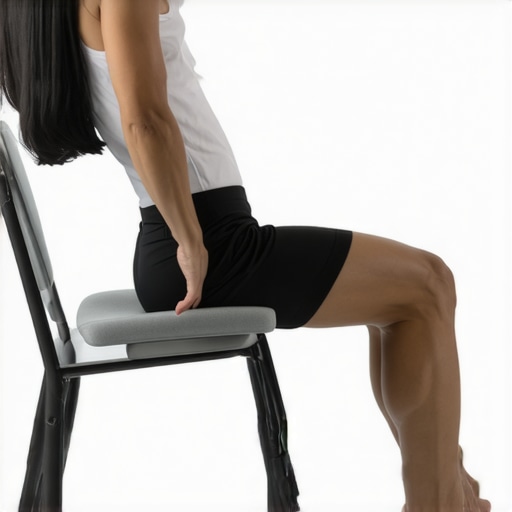
The 60-second chair stretch for tight hip flexors
Ever been caught in that frustrating moment—standing before a mirror, trying to reach your toes, only to realize your hips refuse to cooperate? Or maybe you’ve felt that familiar, dull ache in your lower back after a long day at the desk, wondering if the tension in your hips is secretly pulling your entire posture out of whack. It hits hard when you least expect it. I remember the exact day I hit my breaking point—my hips felt so tight that even a simple sit or stand became uncomfortable, and I started to think, “Is this just part of aging?” But what changed everything for me was discovering a simple, 60-second chair stretch specifically targeting those stubborn hip flexors.
Why Tight Hip Flexors Matter More Than You Think
Understanding the role of hip flexors is eye-opening. These muscles, located at the front of your hips, are responsible for lifting your knees and helping you stand from a seated position. When they’re tight, it’s like trying to walk with a stubborn, immovable hitch in your step. This tightness doesn’t just stay in the hips; it can cascade into your lower back, cause discomfort in your knees, and even lead to mobility restrictions that make everyday tasks daunting. I used to dismiss my hip tightness as just a minor inconvenience, but I soon realized how interconnected our musculoskeletal system is. A consultation with my chiropractor opened my eyes to the fact that neglecting this area would only worsen my pain over time.
Research supports this connection—an astonishing 80% of people with chronic lower back pain also have tight hip flexors, which often go unnoticed until they cause significant issues (source). The good news? Small, consistent movements can make an enormous difference. I want to share with you how I finally broke free from that cycle of discomfort with a quick routine I do every day. It’s not about strenuous exercises; it’s about smart, targeted stretches you can do in just a minute while seated—yes, right in your chair.
So, if you’ve ever felt that inexplicable tightness in your hips or a nagging lower back ache that just won’t go away, you’re not alone. And the best part—there’s a straightforward solution that you can incorporate into your daily routine. Ready to discover the secret to freeing tight hips and easing your back? Let’s dive into a simple, 60-second chair stretch that changed my life—and it can do the same for you. But first, have you ever experienced that awkward, uncomfortable flare-up in your hips and wondered if there’s an easy fix? If so, keep reading—I’m about to share the approach that finally brought me relief.
Start with the Basic Hip Flexor Stretch
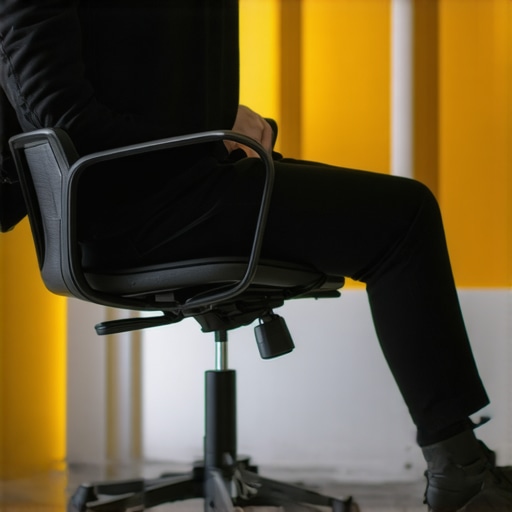
First, sit upright in your chair, place your right ankle on your left knee, and gently press down on your right thigh while leaning slightly forward. This mimics a gentle hip opener. I recall the first time I tried this; I wobbled and struggled to maintain balance, but just a few seconds of persistence made a noticeable difference in my hip tension. Repeat on the other side.
Engage in the Pelvic Tilt
Lie flat on your back or sit tall in your chair, and gently tilt your pelvis backward by tightening your abdominal muscles and tucking your tailbone under. Think of it as trying to flatten your lower back into the chair or floor. This movement helps reset your hip alignment and reduces strain. I found that doing this slowly, about five times, instantly relieved some nerve pinching I was feeling after long sitting periods.
Implement the 60-Second Hip Reset
Place your hands on your hips, engage your core, and gently rock your hips forward and backward from a seated position. Imagine swaying your pelvis as if shifting gears smoothly. This dynamic movement promotes fluidity and releases tightness. The first time I did this in the middle of a workday, I felt a wave of relief that lasted hours, and my posture improved instantly.
Practice the Standing Hip Circle
Stand comfortably and place your hands on your hips. Slowly move your hips in a circular motion clockwise, then counter-clockwise, about ten repetitions each way. This mimics a gentle joint lubrication process. I added this after work, and it helped me maintain mobility and prevent the usual stiffness that set in after prolonged standing or sitting.
Incorporate Gentle Neck and Shoulder Relaxation
Since tight hips often correlate with back and neck discomfort, gently tilt your head side to side, and roll your shoulders back and down. I once combined this simple routine with my hip stretches, and it was like rebooting my entire posture system. These movements are small but cumulatively prevent tension buildup.
Use Visual Cues to Improve Posture
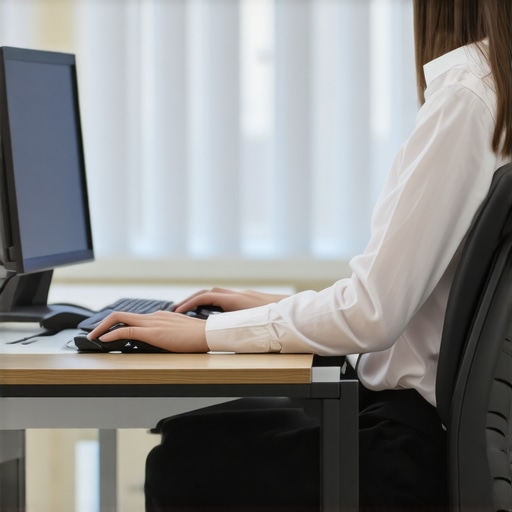
Position your monitor at eye level, and ensure your feet are flat on the floor. Small adjustments like these avoid compensating with your hips and spine. I experienced immediate relief when I realized my screen was too low, causing me to hunch and tighten my hips unconsciously.
If you’re looking for a more comprehensive approach, consider visiting a chiropractor who can tailor these movements to your specific needs. Consistency in these micro-movements, combined with awareness, will gradually restore your mobility and ease ongoing discomfort.
While many accept back pain, neck discomfort, and mobility issues as inevitable parts of aging or lifestyle choices, these perceptions often overlook critical nuances. A common myth is that pain is always due to structural damage requiring aggressive interventions. In truth, pain can stem from complex neuromuscular dysfunctions that are preventable with precise, targeted care—something chiropractors excel at. For example, many believe that stretching alone can resolve chronic issues, but without understanding the underlying cause, this can sometimes exacerbate the problem, especially if done improperly or prematurely. Overstretching tight muscles, like the hamstrings or hip flexors, can lead to destabilization of the pelvis and worse alignment, undermining long-term recovery (source).Maintaining your back health over the long haul requires more than just exercises—it involves the right tools and consistent practices. One of my favorite devices is a high-density foam roller, which I use daily to release muscle knots in my thoracic and lumbar areas. Proper use of a foam roller enhances my mobility and prevents tender spots from developing, serving as a proactive measure rather than a reactive fix. I personally prefer a textured roller that mimics my therapist’s touch, making my self-myofascial release sessions more effective. Additionally, I swear by a posture correction app like “Upright”—it reminds me to sit properly and alerts me when I begin to slouch, helping me build awareness throughout the day. These apps analyze your sitting habits via your webcam and provide personalized tips, which I find invaluable for ingraining good posture habits. For neck and shoulder tension, I utilize a cervical mobility device like the Neck Relaxer, which gently supports and mobilizes my cervical spine, reducing stiffness caused by prolonged tablet use. When it comes to long-term results, integrate these tools into a daily routine—consistency outperforms sporadic efforts. I predict that emerging smart devices and AI-powered biofeedback systems will increasingly personalize back care, making preventative measures effortless and more precise.
To stay effective, I recommend setting specific goals, such as aiming for 10-minute mobility sessions with your foam roller every morning. For tailored advice, consider consulting a professional—many chiropractors now offer virtual assessments, guiding you on how to use these tools safely. To explore advanced techniques, try incorporating my favorite dynamic stretching routines with your foam roller before your daily activities. For example, combining foam rolling with pelvic tilts amplifies mobility gains and reduces stiffness. Curious to see how this can transform your back health? Reach out through our contact page for personalized guidance or to schedule a session. Remember, sustained effort with the right tools is your best investment in long-term mobility and pain prevention.
What I Didn’t Realize About My Body’s Hidden Signals
One of the most eye-opening lessons I learned is that pain and tightness are often signs of deeper misalignments or muscular imbalances. Ignoring these signals can lead to chronic discomfort, but paying close attention and listening to my body has made all the difference.
Another insight was understanding the importance of consistency over intensity. Simple daily habits, like that 60-second chair stretch, proved more effective than sporadic intense exercises. Small, regular moments of movement create lasting improvements in mobility and pain relief.
Lastly, I discovered that personalized care — whether through a chiropractor or tailored tools — amplifies the benefits of self-care routines. Recognizing that my body responds uniquely encouraged me to seek expert guidance when needed, transforming my approach from trial-and-error to intentional action.