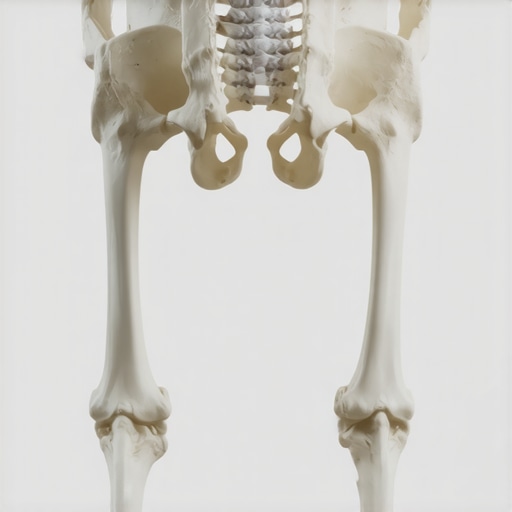
Why your dominant leg is causing your pelvic imbalance
I stood there, frozen, staring at my reflection in a store window. One hip was noticeably higher than the other. I looked like a lopsided marionette. For months, I’d been chasing back pain with every stretch in the book, yet here I was, crooked as a country road. It wasn’t until I realized I was leaning almost entirely on my right leg—my dominant side—that the lightbulb finally flickered on. I was literally standing myself into a pelvic tilt. Today, we are going to dive deep into why that “strong” leg of yours is actually sabotaging your alignment and how you can reclaim a balanced, pain-free stride.
Your Dominant Leg Is Hijacking Your Hips
It sounds crazy, right? We have a favorite hand, so of course, we have a favorite leg. But that preference comes with a price. When you always lead with one side or shift your weight to your “strong” leg while standing in line, you’re reinforcing a pattern that pulls your pelvis out of alignment. I made the classic mistake of thinking I just needed to “strengthen my core.” I did planks until I was blue in the face, but my core routine was failing my spine because I hadn’t addressed the foundation. Often, what feels like a back issue is actually a gait issue revealed through your lumbar health. [image_placeholder]
Does a simple habit really cause this much trouble?
You might be skeptical. After all, everyone has a dominant side. However, research published by the National Institutes of Health suggests that prolonged asymmetrical weight-bearing can lead to compensatory scoliosis and chronic sacroiliac joint dysfunction. I used to think it was just my wallet in my back pocket tilting my pelvis—and that was definitely a contributor—but the real culprit was how I used my dominant leg as a permanent kickstand. This constant “hitching” of the hip creates a muscular tug-of-war that your spine eventually loses. If you’ve ever felt like your walking style is causing hip pain, you aren’t imagining things. Have you ever noticed that you always stand on the same leg when you’re bored or waiting for the bus? Let’s look at how this happens and what you can do to stop the cycle.
Stop Using Your Hip Like a Kickstand
Think of your pelvis as a bucket of water. When you shift all your weight to one side, you’re essentially tipping that bucket. To keep the water from spilling, your spine has to curve like a flexible straw just to keep your eyes level with the horizon. This isn’t just about a “crooked look”; it’s a structural nightmare. I remember standing at my kitchen sink one Tuesday, mindlessly scrubbing a pan, when I caught my reflection in the window. My right hip was hiked so high I could have rested a coffee mug on it. When I tried to stand “straight,” my left leg felt three inches shorter than the right. It was a mess. I had to consciously learn the simple move to fix your posture while standing in line to stop the self-sabotage.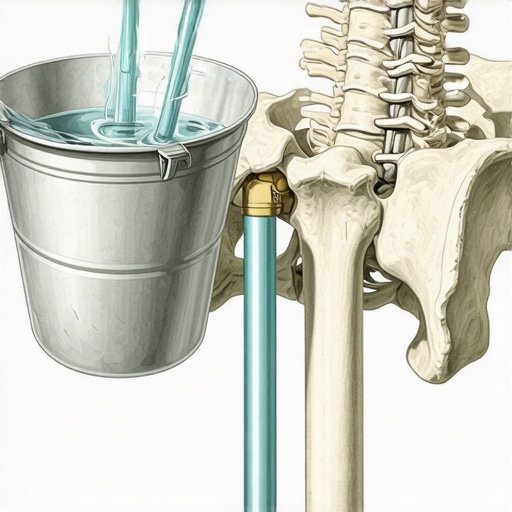
Master the 50/50 Distribution Rule
The first step is a mental reset. You have to treat your feet like two equal pillars of a bridge. If one pillar crumbles or leans, the entire bridge deck—your lower back—warps. When you are standing, imagine there are scales under each foot. Your goal is to see the exact same number on both. This sounds easy until you try to do it for five minutes while waiting for a bus. You’ll feel a “burn” in the muscles you’ve been neglecting. This is actually a good sign; you are forcing your nervous system to revitalize your mobility by waking up dormant stabilizers.
Your Feet Are the Foundation of Your Neck Health
It might seem a world away, but the way your arches collapse or how you distribute weight through your heels dictates the tension in your shoulders. It’s exactly why we look at your feet when your neck hurts. If you lean on your right hip, your left shoulder usually drops to compensate, pulling on the delicate muscles at the base of your skull. To fix this, press your big toe, pinky toe, and heel firmly into the ground—a “tripod” foot. This creates a stable base that travels up the kinetic chain, instantly taking the pressure off your lumbar discs.
Build Stability Without the Sway
Once you’ve corrected the standing habit, you need to “lock in” that alignment with movement. If your pelvis is wobbly, your brain will revert to its “kickstand” default the moment you get tired. This is where you need to stop doing generic crunches and start focusing on exercises that prevent rotation and side-leaning. I found that the dead bug exercise is the king of core stability because it forces your back to stay flat while your limbs move independently. It teaches your pelvis to stay neutral even when life tries to pull it out of whack.
Small Resets for the Long Haul
You don’t need a gym to keep this progress going. It’s about the micro-adjustments you make throughout the day. For instance, if you spend hours at a computer, you can use the simple towel roll trick for neck relief at your desk to maintain the natural curves of your spine while you focus on keeping your feet flat on the floor. Every time you catch yourself “hitching” a hip, see it as a signal to reset. It’s about progress, not perfection.Let’s dig deeper into the biggest lie we’re told about recovery: that if it feels tight, you must stretch it. I spent years trying to “lengthen” my right hip flexor because it felt like a guitar string. But here’s the nuance most people miss: tightness is often a neurological “brake” applied by your brain to protect a joint it doesn’t trust. If you keep pulling on that string without addressing the underlying instability, you’re just making the “knot” tighter. This is why stretching a tight muscle isn’t always the answer. In my case, my right hip wasn’t short; it was exhausted from trying to do the work of my lazy left glute. Then there’s the “Oops” factor that nearly sidelined me for good. I used to think a hard foam roller was my best friend. I’d lay on it and crunch my lower back, hoping for a release. Please, stop rolling your lower back on a hard foam roller. Your lumbar spine is designed for stability, and smashing those delicate tissues against a PVC pipe can trigger inflammatory spasms that take weeks to calm down.
How do you tell if a muscle is actually tight or just weak?
It’s the million-dollar question. An easy way to test this is to see if the “tightness” disappears after a set of stability work. If you do a few reps of the dead bug exercise and suddenly your hips feel looser, you didn’t need a stretch—you needed a wake-up call for your core. Research on “Regional Interdependence”—a concept frequently discussed in the Journal of Manual & Manipulative Therapy—suggests that pain in one area is often a symptom of dysfunction in a seemingly unrelated joint. This is exactly the hidden link between neck pain and spinal health. 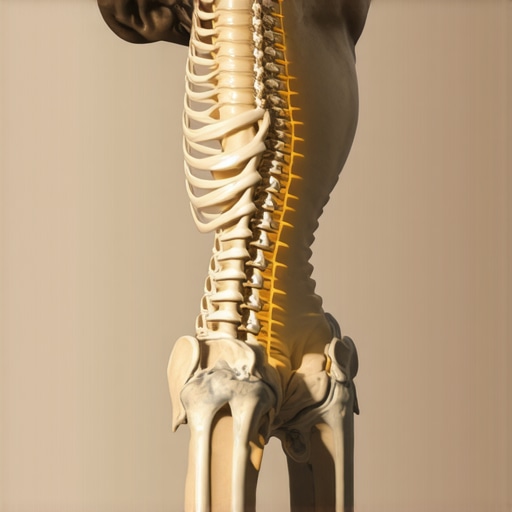
Treat Your Spine Like a Single Unit
When we treat the body as a series of isolated parts, we fail. I’ve seen patients struggle with headaches for years, only to find relief when they finally restore your back mobility through pelvic leveling. We often have to adjust the pelvis to fix neck tension because the spine is a closed loop. If your foundation is tilted, your roof—your head—will never sit straight. To truly enhance mobility naturally with chiropractic care, you have to stop looking at the spot that hurts and start looking at the spot that isn’t moving. Have you ever fallen into this trap of chasing the symptom instead of the source? Let me know in the comments!
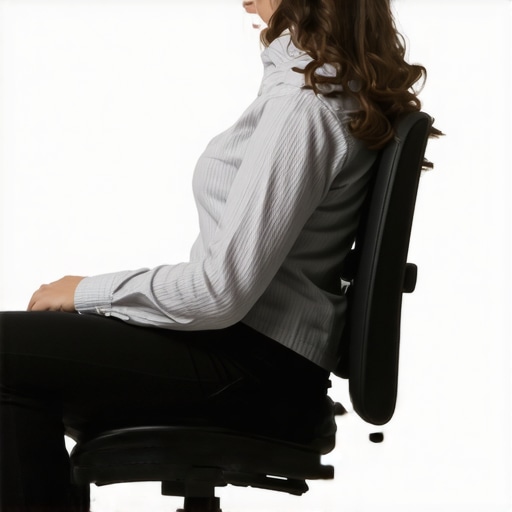
Maintaining that hard-won alignment isn’t about one-off fixes; it is about the systems you put in place when no one is watching. Once I finally corrected my pelvic tilt, I realized that my environment was constantly trying to pull me back into old, painful patterns. To fight back, I built a personal ‘spine kit’ that I use every single day. One of my non-negotiables is using a lumbar roll whenever I am sitting for more than twenty minutes. However, most people do this wrong by placing it too low or too high, which is why you need to learn how to use a lumbar roll without making your back stiffer. I personally use a firm, cylindrical roll because it mimics the natural lordotic curve of the lower back, preventing the ‘slump’ that leads to disc bulge over time.
The Low-Tech Tools That Save My Spine
You don’t need a thousand-dollar massage chair to find relief. In fact, my favorite tool is a simple tennis ball. I use it to target the ‘burn’ between my shoulder blades that usually flares up after a long day of writing. It is the most effective way to use a tennis ball to release upper back tension without needing a professional therapist on speed dial. By pinning the ball between my back and a wall, I can control the pressure and hit those specific trigger points in the rhomboids. This works because of a concept called ‘Ischemic Compression,’ which briefly restricts blood flow to a knot to flush out metabolic waste once the pressure is released. According to a study published in the Journal of Bodywork and Movement Therapies, this targeted pressure can significantly reduce myofascial pain and increase localized range of motion when performed consistently.
How can I keep my mobility gains for the next decade?
Consistency is the only real ‘secret’ to long-term success. I tell everyone that if they have five minutes before bed, they have enough time to save their spine. I swear by the 5-minute routine to decompress your spine after work. It acts as a mechanical ‘reset’ for your joints. If you’ve spent eight hours compressed in a chair, your spinal discs have literally lost height due to fluid being squeezed out. This decompression routine allows those discs to rehydrate. Beyond the tools, you have to look at your environment. I discovered that why your office lighting is causing your neck pain was actually because the glare made me crane my neck forward to see the screen clearly. It’s all connected.
The Future of Your Back Health is Personal and Wearable
Looking ahead, I predict we are moving away from general advice and toward real-time biofeedback. We are already seeing the rise of wearable sensors that vibrate the moment your shoulders round or your pelvis tilts. In the next few years, I believe AI-driven gait analysis will be available on every smartphone, allowing you to catch a limp or a hip hike before it ever turns into a chronic injury. This technology will help us boost neck comfort and function by alerting us to the subtle shifts we can’t feel yet. While tech is great, don’t forget the fundamentals. If you want to see immediate results today, go grab a tennis ball and spend two minutes on that tight spot between your shoulder blades. Your future self will thank you for the relief.
It took me a long time to realize that my body wasn’t broken; it was just incredibly efficient at cheating. After months of trial and error, I finally found that back pain recovery how chiropractic care transforms lives when you stop looking at the symptoms and start fixing the patterns.
Hard Truths About My Journey to a Level Pelvis
Reflecting on my lopsided years, there are a few things I wish someone had told me sooner. First, your ‘strong’ leg is often the most exhausted. It’s tight because it’s doing the work of two people. Second, you cannot out-stretch a lifestyle of bad standing. If you spend eight hours a day leaning on one hip, no amount of yoga will fix that tilt until you change the habit. Finally, mobility mastery expert tips for back pain prevention and recovery usually involve doing the boring stuff—like weight-shifting—consistently rather than doing the ‘cool’ exercises once a week. My biggest lightbulb moment? Realizing that my ‘short’ leg was actually just my pelvis being pulled up by a hyper-active lower back muscle.
Non-Negotiables for My Daily Spine Maintenance
I’ve whittled my recovery down to a few essential tools that I use every single day to keep my hips level and my head clear. I never travel without my cylindrical lumbar roll; it’s the only way to sit without losing my spinal curve. I also keep a standard tennis ball in my car to hit those glute trigger points that flare up during long drives. For my morning routine, I swear by the bruegger position the fastest way to reset your posture before I even check my emails. These low-tech solutions work because they provide the frequent input your nervous system needs to stay out of that ‘kickstand’ default mode.
You Don’t Have to Live Like a Marionette
Reclaiming your alignment is about more than just looking better in the mirror; it’s about regaining the freedom to move without fear. When you balance your foundation, you’ll find that boost mobility ease pain chiropractic techniques unveiled actually start to stick long-term. You aren’t destined to be crooked or in pain just because you have a dominant side. It starts with that first conscious shift to 50/50 weight distribution while you’re waiting for your morning coffee. Your spine is incredibly resilient—it just needs you to stop sabotaging it. Have you noticed which leg you naturally lean on more when you’re standing still? Let me know in the comments!