Why we look at your pelvis when your neck hurts
I’ll never forget the morning I woke up, grabbed a bottle of ibuprofen like it was my morning coffee, and realized I couldn’t even turn my head to check my blind spot while driving. It was humiliating and painful. I had spent six months—and way too much money—on fancy ergonomic pillows, buckwheat hull versions, and even a weird one shaped like a croissant. I was convinced my neck was just broken. Then, a chiropractor barely looked at my neck and started poking around my hips. I honestly thought I was being scammed. How could my backside have anything to do with the throbbing behind my ears? It felt like checking the tires when the engine is smoking. [IMAGE_PLACEHOLDER]
The Foundation You’ve Been Ignoring All Along
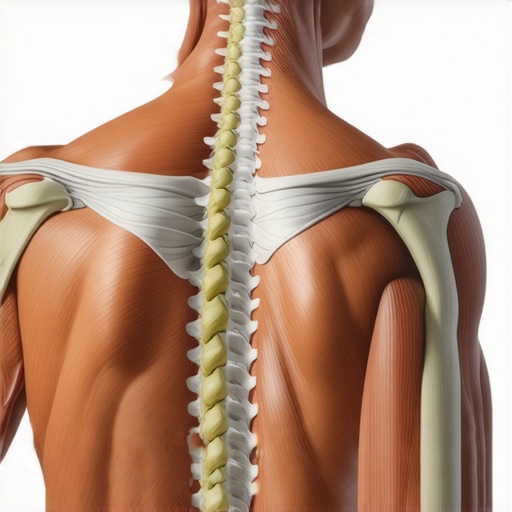
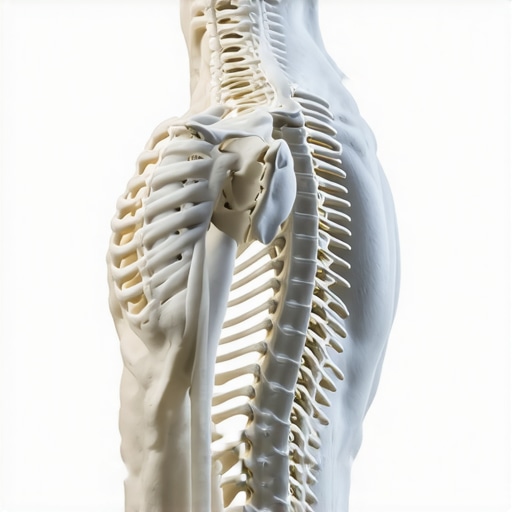
Most of us treat our bodies like a collection of separate parts, but that’s a massive mistake I made for years. Think of your spine like a mast on a ship. If the hull—your pelvis—is tilting or rocking unevenly, that mast is going to sway and strain, no matter how much you tighten the ropes at the top. When your pelvis is out of alignment, your entire upper body compensates. It’s a domino effect that ends right at your skull. I wasted so much time trying neck pain solutions that only addressed the symptoms rather than the source. It turns out, your neck is often just the loud-mouthed victim of a silent pelvic crime.
Wait, is my pelvis really the reason my neck is stiff?
It sounds far-fetched, doesn’t it? I was the ultimate skeptic. But here’s the reality: your body is a kinetic chain. A study published in the Journal of Physical Therapy Science found that pelvic tilt significantly influences the curvature of the thoracic and cervical spine, proving that where you sit affects how you hold your head. If your pelvis is tilted forward, your head naturally drifts toward your computer screen. This is exactly the hidden link between neck pain and spinal health that most people miss while they’re busy buying another heating pad. I eventually learned that why we adjust the pelvis to fix neck tension isn’t some chiropractic magic trick—it’s basic engineering.
Stop Chasing the Pain and Start Finding the Cause
If you’re currently rubbing your neck while reading this, ask yourself: have you ever felt like your stretches only work for about ten minutes? That was my life. I was stuck in a loop of temporary relief because I didn’t understand that finding the right pillow height wouldn’t matter if my hips were hiked up on one side. We have to stop looking at the spot that hurts and start looking at the spot that’s causing the trouble. Have you ever felt like your neck pain is just “stuck,” no matter what exercises you try? Leave a comment below, because you might be looking at the wrong end of your spine just like I was.
Stop blaming your monitor and start checking your hips
If you want to stop the cycle of stiffness, you need to look at how you’re sitting right now. Think of your pelvis as a bowl of water. If that bowl tips forward, the water spills out the front, and your lower back arches excessively. To keep your eyes level, your neck has to crank backward into a jagged, unnatural curve. This is why buying a new monitor stand won’t help if your foundation is tilted. I spent months adjusting my screen height, but the real issue was my hip flexors pulling my entire spine into a stress-inducing arch.
The belt line test you can do right now
Stand in front of a mirror from a side-view. Look at your waistband. Is it level with the floor, or does it dip down toward your toes? If it dips, you have an anterior pelvic tilt. This posture forces your head to jut forward like a turtle. To fix this, you need to perform the 10-second posture check you can do anywhere to recalibrate your center of gravity. Most people think they have ‘bad’ necks, but they actually have tight hips and weak lower abs.
Open your hips to save your neck
When I finally stopped obsessing over my upper traps and started working on my lower half, the results were almost immediate. I remember the first time I did the 2-minute hip opener for people who commute over an hour. I had just finished a brutal drive from Chicago, and my neck felt like it was in a vice. I didn’t stretch my neck at all. Instead, I spent two minutes stretching my hip flexors and squeezing my glutes. When I stood up, the tension behind my ears simply dissolved. It was a lightbulb moment: enhance mobility naturally with chiropractic care by focusing on the mechanics of the whole body, not just the symptomatic area.
Three moves that actually change your alignment
Instructional advice often fails because it’s too complicated, but you only need three core habits to start resetting your spine. First, you need to stop the passive stretching that yields zero results. If you feel like your muscles are ‘tight,’ they might actually be overstretched and weak. Instead of pulling on your neck, use the Bruegger position to reset your shoulders and chest in seconds. This move works like a hard reset for your nervous system, telling those upper back muscles to finally let go.
Master the dead bug for a stable spine
If your core is ‘turned off,’ your pelvis will always tilt, and your neck will always suffer. Most people do crunches, but why your core routine is failing your spine is usually because it lacks stability. You need to focus on exercises that keep your lower back flat against the floor. I started doing the dead bug exercise every morning for three minutes. It felt silly and easy at first, but that small act of stabilizing my midsection stopped my pelvis from drifting forward. Over time, this consistent stabilization is the secret to mobility mastery and long-term relief.I used to be the person who would feel a ‘knot’ in my neck and immediately try to pull my ear to my shoulder. I thought if I just pulled hard enough, the tension would snap like a twig. It took me years to realize that why stretching a tight muscle isn’t always the answer comes down to protective tension. Your brain is smarter than you think; it tightens muscles to stabilize a joint it perceives as ‘unsafe.’ If you force that muscle to relax through static stretching, you’re essentially removing the only thing keeping your spine stable. This is a common trap: people assume ‘tightness’ equals ‘shortness,’ but often, your muscles are ‘locked long.’ Stretching an already over-extended muscle is like pulling on a frayed rope. This is exactly why stretching your neck to the side might be causing more spasms instead of fixing them.
Stop pulling on your muscles like a rubber band
Most people approach mobility with a ‘more is more’ attitude, but that’s a dangerous ‘oops’ factor I had to learn the hard way. When you over-stretch a muscle that is already weak, you invite injury. Instead of aggressive pulling, the real secret is mastering back and neck pain relief by addressing the neurological ‘why’ behind the tension. Have you ever fallen into this trap where stretching actually made your pain worse? Let me know in the comments.
Can my flat feet really be the reason my neck throbs?
The short answer is a resounding yes. If your arches collapse, your knees rotate inward, your pelvis tilts, and your neck has to compensate just to keep your eyes level with the horizon. This is why we look at your feet when your neck hurts. It’s the ultimate expression of the kinetic chain. Research published in the Journal of Bodywork and Movement Therapies highlights that myofascial continuity means tension in the plantar fascia can translate all the way up to the suboccipital muscles at the base of the skull. If you’re ignoring the secret link between flat feet and chronic back pain, you’re only ever treating the smoke, never the fire.
Why icing that old injury is holding you back
One of the biggest mistakes I see people make is reaching for the ice pack the second they feel stiff. We’ve been conditioned to think ‘inflammation equals ice,’ but why icing a stiff neck might be making it harder to move is because ice constricts blood flow and can actually increase muscle guarding in chronic cases. Unless you just fell down the stairs, the truth about using heat versus ice for back injuries is that heat is usually your best friend for mobility. It encourages blood flow and tells the nervous system to calm down. I wasted months freezing my neck when what it really needed was the soothing warmth that allows the muscles to finally unlock.
Why I never leave home without a lumbar roll
Transitioning from chronic pain to consistent mobility wasn’t just about the office—it was about every seat I occupied. I used to think ‘ergonomic’ meant a $1,200 chair, but the real game-changer was a simple $25 foam roll. I learned that how to use a lumbar roll without making your back stiffer was less about pushing into the spine and more about maintaining that natural lordotic curve while driving or working. It’s my non-negotiable tool. If I’m in a car for more than twenty minutes, that roll is behind me. Without it, my pelvis slips into a posterior tilt, and within an hour, the familiar throb at the base of my skull returns. This isn’t just my observation; biomechanics expert Dr. Stuart McGill, author of Back Mechanic, emphasizes that maintaining a neutral spine under load—even the load of your own torso while sitting—is the single most important factor in disc health.
How do I keep my spine in check when life gets busy?
Consistency is the hardest part of any recovery journey. I found that I couldn’t rely on ‘remembering’ to have good posture. I had to build physical triggers. For instance, every time I receive an email notification, I perform the 5-minute desk reset for busy professionals. It’s a micro-habit that prevents the accumulation of ‘static load’ on my joints. I also committed to the isometric hold that builds a bulletproof core three times a week. These aren’t long, sweaty gym sessions; they are targeted moments of tension that remind my brain how to stabilize my spine. By focusing on boost your back health simple yet effective chiropractic hacks, I moved away from being a passive patient and became an active participant in my own alignment. This shift in mindset is the difference between temporary relief and understanding back pain as a manageable signal rather than a life sentence.
The future of spinal health is in your pocket
Looking ahead, I predict we are moving away from bulky furniture and toward ‘smart’ biofeedback. We are already seeing wearable sensors that vibrate when your shoulders round too far forward. In the next five years, AI-integrated cameras in our laptops will likely adjust our screen height or alert us to pelvic shifts in real-time. But until the tech catches up, the best tool you have is self-awareness. You don’t need a lab to tell you when your body is failing; you just need to listen to the whispers before they become screams. I challenge you today: don’t just read this and move on. Go grab a rolled-up towel, place it at the small of your back, and feel the immediate relief in your neck. That one small change is the first step toward long-term mastery.
The Lessons My Stiff Neck Taught Me
I spent years thinking my body was failing me, but I was just looking at the wrong map. Here are the hard-won truths that changed everything for me. First, pain is a messenger, not the enemy. My neck was shouting because my pelvis was silent, trying to compensate for an uneven foundation. Second, you cannot stretch your way out of a stability problem. If a muscle feels perpetually tight, it is often because your brain is using it as a biological brace to protect an unstable joint. Third, small, consistent movements are worth more than a massive gym session once a week. When I finally began to relieve neck and back discomfort using these expert methods, I realized my body was ready to heal; I just had to stop getting in its way. [IMAGE_PLACEHOLDER_E]
My Daily Gear for a Pain-Free Life
You do not need a house full of expensive gadgets to find lasting comfort. These are the tools I trust personally to keep my alignment in check: 1. Dr. Stuart McGill’s ‘Back Mechanic’: This is the manual for the human body I wish I had twenty years ago. It explains the mechanics of the spine in a way that makes sense to non-experts. 2. A Simple Lumbar Roll: This is my secret weapon for unlocking neck pain relief by supporting my lower back while driving. 3. A Quality Tennis Ball: Using this to work through trigger points in my glutes and hips did more for my neck than any heating pad ever could. 4. The Morning Lube: I never start my day without the 3-minute morning routine to lubricate your joints. It is the best insurance policy for a long day of desk work.
Your Path to Better Spinal Health Starts Today
Moving from chronic stiffness to effortless mobility is not about finding a magic pill; it is about respecting the design of your body. You do not have to live in fear of waking up with a kink in your neck or a spasm in your back. By shifting your focus to pelvic alignment and full-body mechanics, you can regain full mobility after injury and maintain it for years to come. Your body is incredibly resilient when you provide it with the right foundation. I believe in your ability to take these small steps and see massive results. Have you ever spent weeks stretching your neck only to find that the tension comes right back the next day? Let me know in the comments below!