Why we check your leg length during every visit
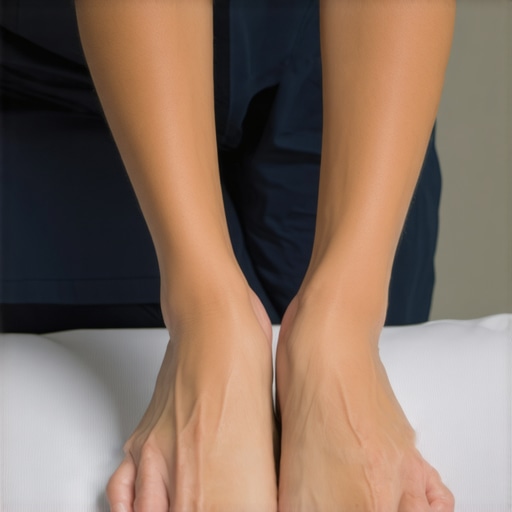
I remember lying face down on that cold vinyl table for the first time, feeling more than a little skeptical. My neck was locked up tight, and my lower back felt like it had been through a slow-motion car wreck, yet there was my chiropractor, standing at my feet and tugging on my heels. I actually laughed—a stiff, painful little chuckle—thinking, ‘Buddy, the problem is up here, not down there.’ It felt like a parlor trick. But then he showed me. One heel was nearly half an inch higher than the other. That ‘aha’ moment changed everything about how I viewed my body’s alignment. I’d spent years focusing on where the pain was, never realizing the foundation was tilted, like a house built on shifting sand during a coastal storm. Today, I’m going to pull back the curtain on this routine check so you can finally see why your foundation dictates your comfort. We’ll look at how this simple measurement prevents you from chasing symptoms and starts fixing the source.
Your Foundation is Tilted and You Probably Do Not Know It
If you have ever wondered why we look at your feet when your neck hurts, it is because your body is one giant, interconnected kinetic chain. Think of it like a skyscraper. If the basement settles unevenly, you are going to see cracks in the drywall on the 50th floor. Adjusting the neck without checking the legs is like patching that drywall while the building is still leaning. It is a waste of time and your hard-earned money. I learned this the hard way after I spent months getting ‘fixed’ only to have the pain snap back the moment I walked to my car.
Is checking leg length just a chiropractic gimmick?
I get it. It looks weird, and frankly, some people think we are just playing with your shoes. For a long time, I made the mistake of thinking I just needed more sit-ups to fix my ‘weak’ back. But I was wrong. In fact, my core routine was failing my spine because I was strengthening muscles around a crooked frame. Research published in the Journal of Manipulative and Physiological Therapeutics suggests that even a small functional leg length discrepancy—we are talking millimeters here—can lead to significant pelvic rotation and chronic lumbar issues. When your dominant leg causes a pelvic imbalance, your whole spine compensates by S-curving its way up to your skull. I’ve seen people struggle for months with ‘mystery’ pain that vanished once we addressed that half-inch difference. Have you ever felt like you’re walking slightly lopsided or noticed one shoe sole wears out faster than the other? Drop a comment below—I’d love to know if you’ve felt that ‘lopsided’ sensation before. It’s more common than you think, and it’s rarely just about the clothes you wear. Sometimes, even how a single tight ankle can cause chronic back pain plays into this exact measurement. We are not just looking for bone length; we are looking for how your nervous system is holding your muscles in tension. It’s the difference between a quick fix and a real solution that actually sticks. By the time we finish today, you’ll understand why that five-second leg check is the most important part of your visit.
How We Actually Map Your Spinal Imbalance
The first thing I do when you lie down on the table isn’t a wild guess; it’s a systematic reset of your nervous system’s current baseline. I ask you to lie prone, and the very first move is a ‘leg check.’ This isn’t just looking at shoes; it is an effective neck pain management step that tells us exactly which side of your pelvis has rotated. Think of your spine like a high-tension power line. If one of the base towers is leaning just a fraction of an inch, the wires at the very top will pull and fray. When I pull those heels together, I am looking for a ‘functional’ short leg—a leg that appears shorter because the hip is hiked or the pelvis is twisted.
The Three-Point Check for Pelvic Rotation
I remember a client named Sarah, a dedicated marathon runner who came to me because she couldn’t turn her head to the left without a sharp, stabbing pain. She had tried every massage and stretch in the book. On her first visit, I ignored her neck for the first five minutes. Instead, I looked at her right heel. It was pulled up nearly three-quarters of an inch. Her hip flexors were in a permanent state of ‘guarding,’ which pulled her entire right side upward. This is why we check your pelvis to solve mid-back tension and upper cervical issues simultaneously. Once we cleared that pelvic rotation, her neck range of motion improved by 40% before we even touched her shoulders.
Why Your Gait Dictates Your Neck Comfort
When your legs are uneven, every step you take sends a jagged shockwave up your spine. It is like driving a car with a sticky brake caliper; the car constantly pulls to one side, wearing out the tires and the alignment. To counter this, your brain forces your neck muscles to overwork just to keep your eyes level with the horizon. If you want to fix your gait for better spinal alignment, you have to stop thinking of your body as a collection of separate parts and start seeing it as a single, pressurized unit. We use these leg checks to determine if the issue is a mechanical ‘stuck’ joint or a neurological ‘misfire.’
The Difference Between Bone Length and Muscle Tension
It is a common myth that people are just born with one leg longer than the other. While that does happen, it is rare. Most ‘short legs’ are actually functional imbalances where the body is protecting itself. By using boosted mobility and chiropractic techniques, we can often ‘lengthen’ that short leg in a single session by releasing the pelvic torsion. This process is essential to restore your range of motion because it takes the constant ‘tug-of-war’ off your spinal cord. You might feel a strange sense of ‘floating’ or being taller after this adjustment, simply because your muscles are finally allowed to relax. If you’ve been tempted by the truth about cracking your own back, remember that self-cracking never addresses this foundational tilt; it only provides temporary relief for a symptom while the ‘leaning tower’ remains crooked. Instead, focusing on a 3-minute morning routine to lubricate your joints can help maintain the balance we achieve during these specific pelvic corrections. We are not just moving bones; we are recalibrating the internal GPS that keeps you upright and pain-free.
Stop Stretching the Symptoms and Start Addressing the Stability
One of the biggest mistakes I see—and I fell for this for years—is the obsession with static stretching. We are conditioned to think that if a muscle feels tight, we should pull on it until it gives up. But here is the nuance: tightness is often a protective ‘splinting’ mechanism by your brain. If your pelvis is out of alignment, your hamstrings or lower back muscles will lock down to prevent further injury. When you force a stretch on a muscle that is trying to protect you, you are essentially ripping the bandages off a wound. Instead of mindless stretching, you need to enhance mobility naturally with chiropractic care by resetting the joint first. If you keep stretching without fixing the alignment, you are just making your joints more unstable.
Can a single tight ankle really be the secret cause of your chronic back pain?
It sounds like a reach, but the kinetic chain does not lie. If you have had an old injury that limited your range of motion in one foot, you will naturally alter your gait to compensate. This shift travels up through the knee to the hip, eventually manifesting as that ‘short leg’ we discussed. Research published in the Journal of Bodywork and Movement Therapies highlights how myofascial continuity means tension in the lower extremities directly correlates with lumbar strain. This is why how a single tight ankle can cause chronic back pain is not just a theory; it is a mechanical reality. If we only treat the spot that hurts, we are ignoring the architect of the problem. 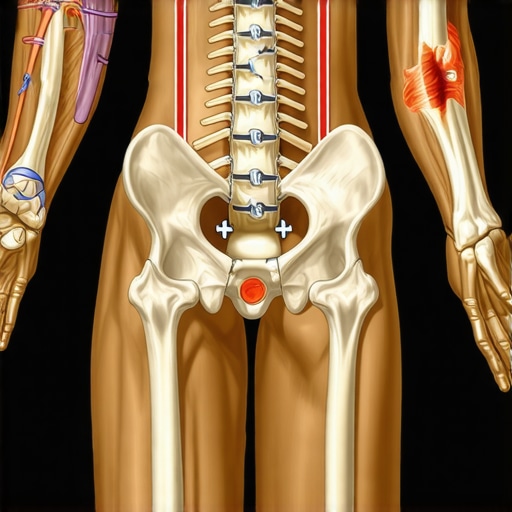
The Foam Roller Trap You Need to Avoid
Here is the ‘oops’ factor that sends more people to my office than almost anything else: foam rolling the lower back. I see influencers on social media doing it constantly, but it is a dangerous game. Your lumbar spine lacks the structural support of the ribcage that your upper back has. When you put your full body weight on a hard roller in the small of your back, you risk jamming your facet joints and putting excessive pressure on your discs. You are much better off using proven chiropractic strategies to decompress the area rather than trying to steamroll it into submission. If you must roll, stop rolling your lower back and stick to the glutes or the mid-back where the ribs provide a safety net.
Why ‘Good’ Posture Might Be Making Your Neck Pain Worse
Many people try to fix their ‘tech neck’ by pinning their shoulder blades back and puffing out their chest. This ‘military posture’ is actually exhausting for your nervous system and creates a different kind of tension. True effective neck pain management focuses on where your head sits over your center of gravity, not how hard you can squeeze your muscles. There is a hidden link between neck pain and spinal health that relies on ease, not effort. Have you ever fallen into the trap of trying to ‘force’ yourself into better posture only to end up with a headache? Let me know in the comments below. We need to move away from the ‘no pain, no gain’ mentality and start listening to the subtle signals of the kinetic chain. For those looking for long-term relief, essential chiropractic tips for 2025 suggest that the most ‘advanced’ thing you can do is often the simplest: get the foundation level so the rest of the structure can finally relax.
I’ve seen people spend thousands of dollars on high-end ‘ergonomic’ chairs that look like they belong in a spaceship, only to find themselves still hunched over in pain by lunch. The secret isn’t in the chair; it’s in the support of your natural curves. Personally, I stopped chasing the ‘perfect’ chair and started focusing on a high-density foam lumbar roll. Most built-in supports are placed too high or are too soft to actually block the pelvis from rolling backward. I use a firm roll right at the belt line because it forces the lumbar spine into its natural lordosis, which prevents the head-forward slump that causes that burning between your shoulder blades. If you want to stop the cycle of pain, you have to learn how to use a lumbar roll without making your back stiffer by ensuring it is firm enough to provide actual resistance.
How do I maintain my spinal alignment between chiropractic visits?
Maintenance isn’t about doing a two-hour workout; it’s about the small, neurological ‘check-ins’ you perform throughout the day. Dr. Kelly Starrett, a renowned physical therapist and author of Becoming a Supple Leopard, often notes that ‘movement is the best lubricant for our joints.’ He argues that static positions are the enemy of a healthy spine. To keep your foundation from tilting back into those old habits, I recommend a 3-minute morning routine to lubricate your joints. This isn’t just about flexibility; it’s about telling your brain that it is safe to let those ‘guarding’ muscles relax. If you can’t commit to three minutes, you’re essentially telling your nervous system that your chronic pain is an acceptable baseline.

As we look toward the future of spinal health, I predict we will move away from passive treatments and toward real-time neurological biofeedback. We are already seeing wearable sensors that vibrate when your pelvis tilts or your neck shears forward. This kind of tech will eventually bridge the gap between your weekly adjustment and your daily desk habits, providing the same kind of data we get from a gait analysis but in real-time. Until those become standard, you need to build your own internal feedback loop. Integrating the dead bug exercise into your evening routine is the ‘king’ of this process because it teaches your core to stabilize the spine while your limbs are moving—mimicking the exact mechanics of walking without the impact of gravity. This is how you achieve mobility mastery and keep your body from falling back into the ‘short leg’ trap we discussed earlier.
For anyone serious about long-term relief, I want you to try this one advanced tip today: set a ‘posture alarm’ for every 45 minutes. When it goes off, don’t just sit up straight; perform three deep diaphragmatic breaths. This simple act resets the pressure in your abdominal cavity and physically pushes your lumbar spine into a better position from the inside out. It’s a foundational piece of neck and back pain solutions that most people ignore because it’s ‘too simple.’ Don’t make that mistake. Start building your internal stability today, and you’ll find that your adjustments last longer and your energy levels stay high well into the evening.
The Hard Truths I Discovered While Realigning My Foundation
Over years of practice and personal recovery, I’ve realized that the spot where you feel the pain is almost never the spot where the problem started. My biggest ‘lightbulb’ moment was accepting that back pain recovery often begins at the ankles and hips rather than the lumbar spine. Here is what I wish I’d known sooner: first, a ‘short leg’ is usually a neurological defense mechanism, not a permanent deformity. Second, why stretching a tight muscle isn’t always the answer—sometimes that tightness is the only thing keeping you upright. Third, back pain recovery how chiropractic care transforms lives is a marathon of small habits, not a sprint of aggressive adjustments. By looking at the legs, we are looking at the honesty of your nervous system.
Tools and Wisdom for a More Stable Spine
If you want to dive deeper into this ‘foundation-first’ philosophy, I highly recommend checking out Becoming a Supple Leopard by Dr. Kelly Starrett. It’s the bible of human movement and will help you restore your back mobility by teaching you how to ‘torque’ your joints into a safe position. I also suggest investing in a high-density foam lumbar roll rather than relying on standard office chairs, as most chairs fail to block pelvic tilt. Finally, for a digital-age approach to wellness, explore the mobility mastery techniques that focus on functional movement rather than just static positions. These resources helped me stop being a patient and start being an architect of my own health.
Start Balancing Your Internal Scale Today
You don’t have to live with a body that feels like it’s constantly fighting against gravity. By addressing the tilt in your foundation, you allow your nervous system to finally let go of the ‘guarding’ patterns that cause chronic tension. It’s time to stop patching the cracks and start leveling the basement. Your journey toward lasting neck and back pain relief starts with a single, balanced step. When your foundation is level, your entire structure can finally relax into its natural, pain-free state. Have you ever noticed your clothes fitting differently on one side or one shoe wearing out faster than the other? I’d love to hear about your experience in the comments below.