The connection between your jaw tension and neck mobility
I spent three years convinced my pillow was trying to kill me. Every morning started the same way: a dull ache at the base of my skull and a neck so stiff I had to turn my entire body just to check for traffic. I bought the fancy memory foam, the buckwheat hulls, even a weird water-filled thing—nothing worked. Then, one afternoon while stuck in a meeting, I realized my teeth were clamped together so hard I could hear my pulse in my ears. The second I consciously let my jaw drop, I felt a literal “whoosh” of relief travel down my spine. It was a lightbulb moment that changed everything I knew about finding lasting neck relief. We focus so much on the spine that we forget the heavy-duty machinery sitting right above it. Today, I am going to show you how to stop fighting your own muscles and finally regain that lost range of motion by looking at the one spot you have likely been ignoring.
Why Your Teeth Are Clenching Your Neck Shut
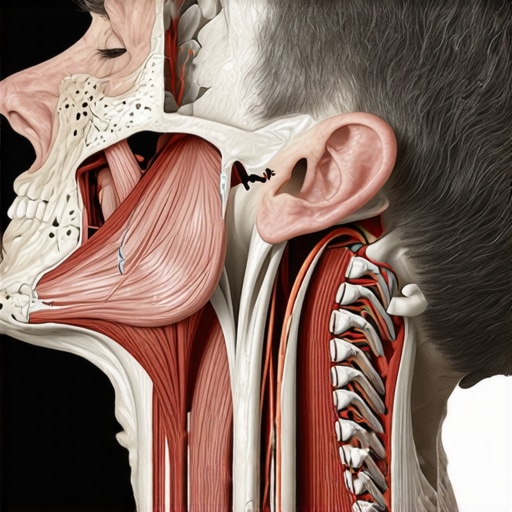
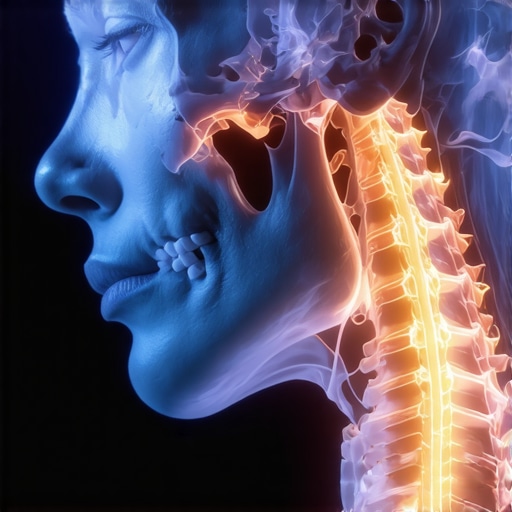
It sounds crazy, does it not? The idea that your bite could be the reason you can not look over your shoulder. But the human body is a masterpiece of interconnected wiring. When you clench your jaw, those muscles—some of the strongest in your body—send a “red alert” signal to the top of your spine. My biggest mistake early on was thinking I could just stretch the pain away. In fact, stretching your neck to the side often makes things worse because the muscles are guarding for a reason. I was literally pulling on a knot that the jaw was tying tighter every second.
Does fixing your jaw actually do anything for your spine?
You might be skeptical. I certainly was. I thought my jaw clicking was just a weird quirk, not a mechanical disaster. But research published in the Journal of Oral Rehabilitation shows a direct correlation between temporomandibular disorders and reduced cervical mobility. Your brain prioritizes the jaw because it is essential for eating and breathing; if it is stressed, the neck acts as the “support crew” and locks down to provide stability. It is why jaw tension might actually be a signal of upper back issues rather than just a dental problem. Have you ever noticed that your neck pain flares up exactly when you are stressed or concentrating hard on a screen? If you have been chasing symptoms without results, we are about to change your strategy for good.To break the cycle of chronic stiffness, you must first learn the ‘slack-jaw’ baseline. Think of your jaw like a heavy-duty suspension bridge. If the cables—your muscles—are constantly under maximum tension, the anchors—your cervical spine—eventually start to crumble under the stress. The first thing I do every time I feel a headache brewing is check my tongue position. It sounds silly, but your tongue is essentially the rudder for your entire head-and-neck ship. If it is pressed hard against the floor of your mouth or clamped against your teeth, you are engaging a stress reflex that locks your neck in place. Instead, let the tip of your tongue rest gently on that little ridge behind your upper front teeth. Keep your lips closed, but let your teeth drift about a quarter-inch apart. I remember the first time I tried this while stuck in bumper-to-bumper traffic on the I-95. Usually, my shoulders would be up around my ears, but by keeping my jaw loose, that burning sensation in my shoulder blades never actually triggered. It felt a bit messy at first, as if I were staring blankly into space, but the lack of pain was worth a few weird looks from drivers in the next lane.
Fix Your Pelvis to Save Your Neck
It is easy to get hyper-focused on the area that hurts, but your body is a closed kinetic loop. If your foundation is tilted, your head has to compensate to keep your eyes level with the horizon. This is a primary reason why chiropractors often adjust the pelvis even when your chief complaint is a stiff neck. Think of it like a stack of children’s blocks; if the bottom block is crooked, every block above it has to lean the opposite way just to stay balanced. If you find that your head feels heavy by the afternoon, you are likely fighting a postural battle that actually started at your hips. Moving your pelvis back into alignment stops the ‘tug-of-war’ that ends in your neck.
Moving Your Head Without the Squeeze
Once you have mastered the slack jaw, you can start reclaiming your lost range of motion. Most people try to force a stretch when they are stiff, which is a recipe for disaster. I used to grab my head and pull it toward my shoulder, thinking I was helping the knot. In reality, stretching a tight muscle isn’t always the answer because that muscle is tight for a protective reason. Instead of pulling, keep that jaw loose, tongue on the roof of the mouth, and slowly rotate your head only as far as you can go without feeling any resistance. The second you feel a ‘catch,’ stop and take a deep breath. By breathing through your diaphragm, you signal to your nervous system that it is safe to let go. This gentle, non-forced movement is the secret to lasting mobility mastery without the rebound spasms.
Stop Treating Your Spine Like It Is Made of Glass
One of the biggest lies we have been told about back health is that total rest is the ultimate healer. I used to think that if my back “went out,” the only solution was a week on the couch with a heating pad. This is the ultimate trap. When you stop moving, your muscles begin to atrophy and your discs lose the natural “pump” that keeps them hydrated. In my experience, your soft sofa is doing more harm than your hard office chair ever could. Research in the New England Journal of Medicine suggests that bed rest provides no benefit for acute low back pain compared to staying active. Instead of retreating to bed, the key is micro-movements. I am not talking about intense gym sessions; I am talking about the 30-second morning move to hydrate your spinal discs. If you wait for the pain to vanish before you move, you might be waiting for a day that never comes.
The “Tightness” Trap That Keeps You Stiff
Here is the advanced nuance: just because a muscle feels tight does not mean it is short. Often, a muscle feels tight because it is being stretched to its absolute limit—like a rubber band about to snap. This happens frequently when your pelvis is out of alignment, forcing your back muscles to over-lengthen. If you keep pulling on an already over-stretched muscle, you are not gaining mobility; you are causing micro-tears and triggering protective spasms. This is why static stretching might be prolonging your back pain. A study in the Journal of Strength and Conditioning Research found that prolonged static stretching can actually decrease joint stability. You think you are “opening up” your hips, but you might actually be destabilizing your foundation, leading to back pain recovery hurdles you did not anticipate.
Is your ice pack actually freezing your recovery progress?
We have been conditioned to reach for the ice the moment something hurts. While ice is great for a brand-new, swollen ankle, it is often the wrong choice for chronic neck or back stiffness. Cold causes tissues to contract and slows down blood flow—the very thing your muscles need to heal and stay pliable. I have found that heat is usually better than ice for old injuries because it encourages the “slide and glide” of your fascia. If you have been icing your neck every night and wondering why it is still stiff every morning, you have likely fallen for the “refrigeration myth.” Have you ever fallen into this trap? Let me know in the comments. To truly see results, you need to restore your back mobility by focusing on blood flow and neurological safety, not just numbing the area. Mistakes like icing a stiff neck can turn a three-day twinge into a three-week ordeal.Once you stop making the classic mistakes, it is time to build a maintenance kit that prevents the ‘oh no’ moments from returning. I do not advocate for expensive gadgets; my favorite tool is actually a standard tennis ball. It is the only thing that can get deep enough into the rhomboids to stop a neck spasm before it reaches the skull. If you have been wondering how to use a tennis ball to release upper back tension, the secret is not rolling around aimlessly, but pinning the tissue and breathing into the pressure. I also keep a lumbar roll in my car because most vehicle seats are designed for looks rather than spinal health. Learning how to use a lumbar roll without making your back stiffer saved my lower spine during a twelve-hour road trip last summer.
Stop guessing and build a toolkit that actually works
I bought every gadget on the market before realizing that mobility mastery does not come in a box. It comes from understanding the physics of your workspace. For instance, a standing desk is a double-edged sword. If you lock your knees, you are just trading neck pain for lower back strain. I learned this the hard way before implementing the correct way to use a standing desk without hip strain by using a small footstool to periodically shift my weight. This simple ‘weight-shifting’ hack keeps the pelvis from locking into a forward tilt.
How do I maintain these spinal gains for the long haul?
Maintenance is about daily micro-wins rather than a monthly overhaul. I treat my body like a high-performance machine that requires a daily warm-up, which is where the best exercises to keep your spine young come into play. I focus on global stability rather than just ‘stretching’ the area that hurts. As Dr. Stuart McGill, a world-renowned expert in spine biomechanics at the University of Waterloo and author of Back Mechanic, explains, the core must act as a rigid brace to protect the spine while the hips and shoulders move. This is exactly why we look at your pelvis when your neck hurts; if the central brace is weak, the top of the stack has to tighten up to keep you from falling over.
Why the future of back health is sitting in your pocket
Building a sustainable lifestyle also means auditing your environment regularly. I spent years in a subpar office chair until I mastered the 4-point check for a healthier home office setup. I predict that in the next five years, we will see a massive shift toward wearable biofeedback sensors that vibrate when your posture slips, effectively outsourcing our proprioception to AI. Until that tech is standard, you are your own best sensor. If you want to boost neck comfort and function right now, start with the tennis ball trick. Place it against a wall, find that ‘sweet spot’ of tension between your shoulder blade and your spine, and hold it for 90 seconds while breathing deeply. It is a simple, five-dollar fix for a thousand-dollar problem.
Lessons Learned from Three Years of Mismanaged Pain
Looking back, my biggest hurdle was not a lack of effort; it was a lack of precision. I used to think that more was better—more stretching, more force, more intensity. But your nervous system does not respond to force; it responds to safety. I had to learn the hard way that you cannot bully a muscle into relaxing. If you feel like your body is fighting you, it is likely trying to protect you from an imbalance you haven’t addressed yet. One of the biggest lightbulb moments for me was realizing that mobility mastery is about consistency over intensity. A ten-second jaw reset performed twenty times a day is infinitely more effective than a grueling one-hour stretch session on a Sunday night.
Another hard truth? Your pain is rarely where the problem actually lives. I spent years rubbing my neck when I should have been looking at my pelvis or my bite. When you finally stop chasing the hot spots and start looking at your body as a single, connected unit, the path to back pain recovery becomes much clearer and less frustrating.
#IMAGE_PLACE_HOLDER_E#
My Personal Toolkit for Long-Term Spinal Freedom
I have narrowed down my recovery essentials to a few high-impact resources and tools that I trust. First, I cannot recommend Dr. Stuart McGill’s Back Mechanic enough; it is a foundational guide for anyone who wants to move without stressing their discs. For physical tools, the humble tennis ball remains my go-to. Knowing how to use a tennis ball to release upper back tension is like having a therapist on call at all times. It is simple, portable, and addresses the neurological knots better than most expensive gadgets.
I also rely on a simple foam lumbar roll for any drive longer than twenty minutes. It is not about soft comfort; it is about maintaining that natural curve so your neck does not have to strain forward. Finally, I make sure to regularly restore your back mobility by practicing core stability exercises like the bird-dog, which provide the structural support my spine needs to stay safe during daily activities.
Reclaim Your Freedom One Micro-Win at a Time
Your journey toward a pain-free life does not require a total lifestyle overhaul overnight. It starts with the small things: letting your jaw hang loose while you read this, shifting your weight at your desk, or choosing heat over ice for that old recurring ache. You have the power to change the signals your brain is sending to your muscles. Do not be discouraged by setbacks; they are just data points helping you refine your approach. With the right strategy and a bit of patience, a full recovery is not just a dream—it is an achievable reality. Have you ever tried the tennis ball trick or the slack-jaw method before? Let me know your experience in the comments below!