Why we adjust your ankles to help your chronic hip pain
I remember the morning clearly. I rolled out of bed, my feet hit the floor, and a familiar, searing pinch shot straight through my right hip. It was my “normal” for years. I would spend twenty minutes every morning aggressively stretching my glutes and hamstrings, convinced that if I just got flexible enough, the pain would vanish. Spoiler alert: it did not. I was stuck in a cycle of temporary relief followed by frustrating relapses because I was looking at the wrong part of my body. It was not until I stopped obsessing over my hip and started looking at my stiff, old-injury-prone ankle that things finally changed.
Your Hips Are Just Doing Extra Homework for Your Ankles
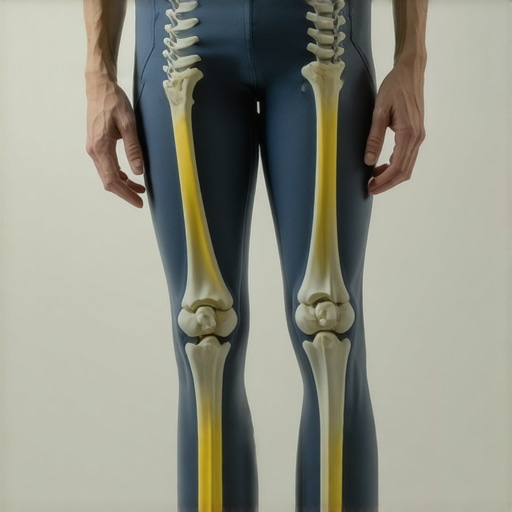
The human body is an interconnected chain of gears. When one gear gets stuck, the others have to work twice as hard to keep the machine moving. For the longest time, I fell into the trap of treating the smoke rather than the fire. I thought stretching a tight muscle was always the answer, but my hip was not tight because it was weak; it was tight because it was trying to stabilize a foundation that had gone completely wonky. If your ankle does not have the proper range of motion to let your foot roll through a step, your hip has to hike up or rotate prematurely to clear the ground. This is what we call the kinetic chain, a concept well-documented in sports medicine. In fact, peer-reviewed research often highlights how limitations in ankle dorsiflexion significantly alter hip and knee mechanics during functional movements. By ignoring my feet, I was effectively trying to align a car while the front tires were flat.
Does popping an ankle really fix a hip?
I get the skepticism. When a chiropractor first told me they wanted to adjust my ankle to help my groin and hip pain, I thought it was a bit of a stretch—literally. You might be wondering if this is just another “hack” that sounds good on paper but fails in reality. I certainly did. But think about it: have you ever tried to walk in a stiff boot or a cast? Your whole gait changes, and by the end of the day, your lower back and hips are screaming. That is exactly what happens on a microscopic level when your ankle joints are “stuck” or misaligned. One of the biggest mistakes I made early on was assuming that because my ankle did not “hurt,” it was not the problem. Pain is a liar. It is often just the loudest voice in the room, not the one causing the trouble. Today, I want to show you how restoring that basement-level mobility can finally give your hips the break they deserve. Have you ever felt like you are stretching the same muscle for years with zero permanent progress? We are going to dive into exactly how the secret to walking without hip pain actually starts several inches below where you think it does. It is time to stop chasing the ghost of your hip pain and start fixing the structural foundation.To get your hips to stop screaming, you have to stop pampering them and start challenging your ankles. I spent four months doing every hip flexor stretch known to man, and my pain barely budged. It was not until I sat down on the floor and realized I could not pull my toes toward my shin past a 90-degree angle that the lightbulb went off. This lack of range is exactly how a single tight ankle can cause chronic back pain and hip dysfunction.
The Wall Test That Exposes Your Foundation
Before you buy another massage gun, try the 5-inch wall test. Stand facing a wall with your toes about five inches away. Keep your heel glued to the floor and try to touch your knee to the wall. If your heel pops up or your knee veers inward like a collapsing bridge, you have found the fire causing your hip smoke. I remember trying this for the first time; my left knee touched easily, but my right—the side with the hip pain—stopped three inches short. It felt like my ankle was hitting a literal brick wall. This is a classic sign of a joint restriction that no amount of foam rolling will fix.
Mobilize the Joint Instead of Just Stretching the Calf
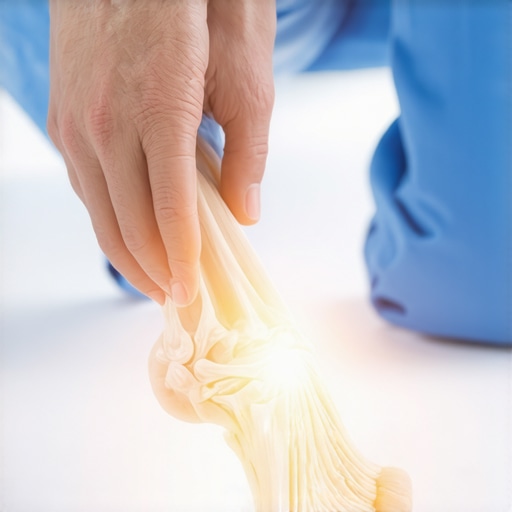
Most people think a tight ankle means a tight calf muscle, but often it is the talus bone not sliding backward in the joint. Think of it like a door hinge with a pebble stuck in it; you can oil the wood all day, but it will not swing until you move the pebble. To fix this, use a knee-to-wall mobilization. Set up in that same wall-test position and rhythmically drive your knee forward and back, focusing on keeping the heel heavy. This is a key part of the 3-minute morning routine to lubricate your joints. 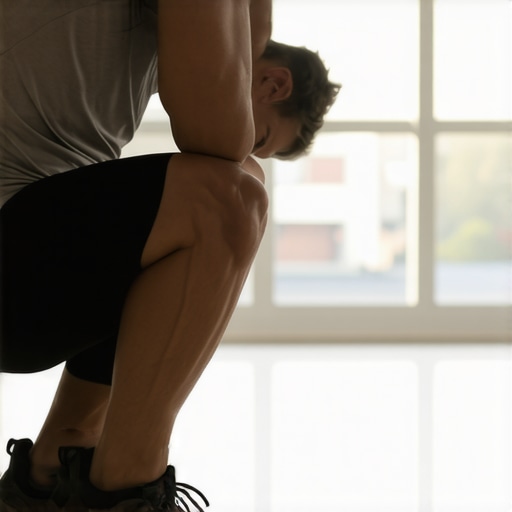
Why Your Foot Arch Matters for Your Hip Socket
If your ankle is stuck, your foot will likely over-pronate or collapse inward to find extra range. This forces your thigh bone to rotate inward, which grinds the head of the femur against the front of your hip socket. When I finally started addressing my arch support and ankle mobility, my gait naturally shifted. Learning how to fix your gait for better spinal alignment is a game changer because it removes the repetitive micro-trauma from every step you take. If the joint still feels blocked, this is where a specific chiropractic adjustment comes in. We use targeted thrusts to reset those tiny tarsal bones and restore proper mechanics. These chiropractic techniques unveiled often provide that instant release feeling that allows you to finally perform your mobility drills effectively. Stop treating your hip like an isolated island and start seeing it as the middle-man in a much longer chain.If you think the ankle-hip connection is surprising, wait until you look at the top of the chain. Most people treat neck pain like a stubborn rubber band that just needs more pulling. But here is the contrarian truth: stretching a tight neck is often the fastest way to make the pain permanent. When your neck feels stuck, it is frequently a neurological protective response. Your brain is intentionally tightening those muscles because it senses an underlying instability. If you force a stretch, your brain simply panics and tightens the guard even further. This is exactly why stretching your neck to the side might be causing more spasms rather than giving you the relief you crave. I spent years cranking my head from side to side, wondering why the release only lasted five minutes. It was because I was attacking the symptom, not the source.
Stop Falling for the Ice First Trap
We have been conditioned to grab an ice pack the second we feel a twinge. However, for chronic stiffness or those non-acute stuck feelings, ice can be a major setback. Cold constricts blood flow and can actually increase muscle guarding in the cervical spine. In many cases, why icing a stiff neck might be making it harder to move is simply because you are telling those already-tight muscles to freeze in place. Unless there is visible swelling or a fresh injury, heat or movement is usually the better medicine for restoring flow.
Why does my neck feel tight even when my MRI looks perfect?
This is the most common frustration I hear in my practice. Patients come in with a clean scan but can barely turn their heads to check a blind spot. The reality is that MRIs are static snapshots; they do not show how your joints move under load. Often, the issue is functional instability. A study published in the Journal of Manipulative and Physiological Therapeutics suggests that chronic neck pain is frequently linked to impaired sensorimotor control, not just structural damage. This means your brain has lost the map of how to move your neck safely. When this happens, it defaults to tension as a fail-safe. To break the cycle, you need overcoming chronic neck discomfort through neurological re-education and specific adjustments, not just mindless stretching. 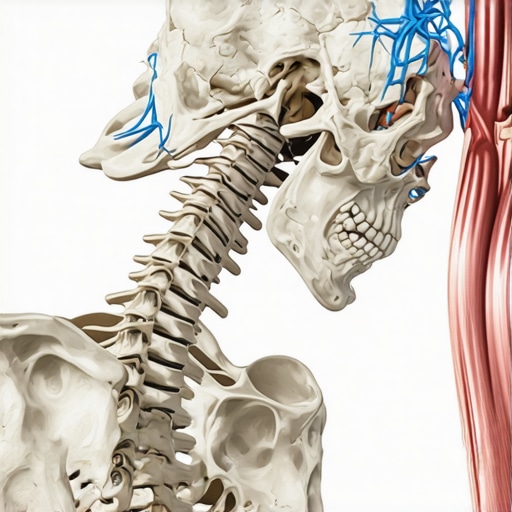
The Pelvic Foundation for Your Cervical Spine
It sounds counterintuitive, but I cannot tell you how many neck patients I have helped by adjusting their hips. There is a hidden link between neck pain and spinal health that starts at the base of your spine. If your pelvis is tilted—perhaps because of that stiff ankle we discussed earlier—your entire spine has to compensate to keep your eyes level with the horizon. Your neck muscles are simply the final link in that long compensation chain. If you only treat the neck, you are ignoring the crooked foundation. This is where mobility mastery comes into play; it is about looking at the body as a holistic unit. Have you ever fallen into this trap of chasing the pain instead of finding the source? Let me know in the comments.Once you realize that your body isn’t a collection of separate parts but a single, fluid system, the way you maintain it has to change. You can’t just get an adjustment and then go back to a sedentary lifestyle and expect the results to stick forever. I used to think that the hour I spent at the gym was enough to counteract the ten hours I spent hunched over a laptop. I was wrong. True mobility mastery comes from what you do in the small gaps of your day. It’s about creating an environment where your spine doesn’t have the chance to lock up in the first place.
Stop Buying Plastic Junk and Get a Lacrosse Ball
We are bombarded with ads for expensive massage chairs and vibrating gadgets, but my absolute favorite tool costs five dollars and fits in a coat pocket: the lacrosse ball. While foam rollers are great for large surface areas, they are often too blunt to reach the specific tissues that actually hold your tension. If you are learning the proper way to use a foam roller on your upper back, you quickly realize it’s hard to get into the nooks between your shoulder blades. A lacrosse ball allows for pinpoint accuracy. I use it against a wall to hit the levator scapulae and the rhomboids—those muscles that start burning after a long drive. According to technical documentation from the National Academy of Sports Medicine (NASM), effective self-myofascial release requires sustained pressure to trigger the Golgi Tendon Organ (GTO), which signals the muscle to finally let go of its protective contraction. This is exactly how to use a tennis ball to release upper back tension if a lacrosse ball feels too aggressive at first. 
How do I stay loose when I have to sit all day?
This is the question I get most often, and the answer isn’t a better chair—it’s “movement snacks.” You need to break the static load every 30 minutes. I personally use the 10-second posture check you can do anywhere to reset my neurological baseline. If I’ve been sitting too long, I immediately go into the 5-minute routine to decompress your spine after work. The goal isn’t to be perfect; it’s to be consistent. Maintenance is about reminding your brain that it has a full range of motion available. When you consistently restore your range through these small habits, you stop the accumulation of micro-stress that leads to those massive “out of nowhere” back spasms.
Wearable Biomechanics Will Change Everything
Looking ahead, the trend in spinal health is moving away from reactive care and toward real-time data. I predict that within the next five years, we will see mainstream adoption of smart insoles and wearable sensors that alert you when your gait begins to shift due to fatigue. Imagine your phone buzzing because your left ankle has lost 5% of its dorsiflexion, warning you that a hip flare-up is coming before you even feel the first pinch. This level of proactive maintenance will make chronic pain a choice rather than an inevitability for many. For now, don’t wait for a sensor. I want you to try this right now: find a tennis ball or lacrosse ball, place it between your shoulder blade and your spine while leaning against a wall, and breathe deeply for sixty seconds. Feel that knot melt? That’s the feeling of taking your foundation back into your own hands.
Lessons I Learned the Hard Way About My Joints
After years of working with patients and managing my own injuries, I realized that the loudest part of the body is rarely the one that needs the most attention. Here are a few perspective shifts that changed everything for me. First, don’t mistake tightness for shortness. Sometimes a muscle is tight because it’s overstretched and trying to pull you back together, not because it needs more length. Second, your body will always find a way to move; if your ankle won’t bend, your back will, and that’s usually where back pain recovery how chiropractic care transforms lives starts—by stopping that compensation. Lastly, movement is a skill, not a chore. If you don’t practice your range, your brain simply “forgets” it exists. This is why I often emphasize how chiropractic care enhances movement by clearing the neurological path so your brain can remember how to move properly again.
Tools That Actually Earned a Spot in My Bag
I have spent thousands on gadgets, but these are the only ones I actually use every week. I swear by a high-density lacrosse ball because it’s the only thing that gets into the deep hip rotators that cause that “stuck” feeling. I also recommend a simple pair of toe spacers to help boost your back health by widening your foundation. For reading, Dr. Stuart McGill’s work is my gold standard for understanding spinal stability. These resources are part of my own mobility mastery toolkit because they focus on long-term structural integrity rather than a quick, vibrating fix.
The First Step Toward a Pain-Free Version of You
Living with chronic discomfort can make you feel like your body is a betrayer, but it’s actually just a highly efficient communicator trying to tell you that something is out of sync. You aren’t destined to have a “bad back” or “crunchy knees” forever. By looking at the kinetic chain—from the ground up—you can stop the cycle of temporary relief. Taking a proactive approach to your back pain and mobility isn’t about doing an hour of exercises every morning; it’s about making small, smarter choices in how you move through the world. You can start today by simply checking your 5-inch wall test or using that tennis ball for sixty seconds. Every small win builds a more resilient foundation. A guide to better posture and mobility isn’t a destination; it’s a way of living with more freedom. Have you ever noticed that a certain pair of shoes or a specific way of sitting makes your neck or hips flare up? Let me know in the comments below!