Why stretching your hamstrings wont fix your back pain
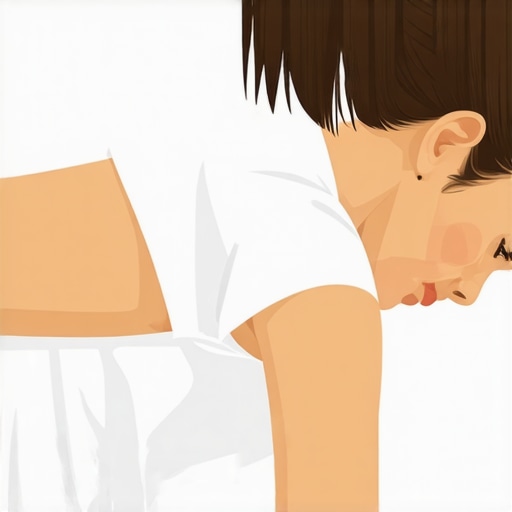
I remember waking up three years ago, feeling like my lower back was made of rusted iron. I did what most of us do: I rolled out of bed, stood up, and immediately reached for my toes. I thought if I could just pull on those hamstrings hard enough, that nagging ache in my spine would finally vanish. I was wrong. In fact, I was making it worse. I spent years in a cycle of stretching, feeling a fleeting moment of relief, and then collapsing into total back spasms. It felt like I was trying to fix a broken car door by oiling the tires. [image]
Stop Blaming Your Legs for Your Back’s Problems
We’ve been told the same story for decades: “Your back hurts because your hamstrings are tight.” But here is the reality I had to learn the hard way: your hamstrings are often tight because they are trying to protect your spine. They are the emergency brakes of your body. When I first started trying to restore my back mobility, I ignored the fact that my pelvis was completely out of whack. I was treating the symptom, not the engine failure.
I once spent an entire month doing deep, 90-second hamstring holds every single morning. By the end of the month, my hamstrings were “loose,” but I could barely stand up from a chair without a sharp jab of pain. I had made my spine unstable by removing its primary support system. This is a classic case where stretching a tight muscle isn’t always the answer. Sometimes, that tightness is a signal that your core or your pelvis needs help. It’s your nervous system’s way of saying “don’t move further, we aren’t safe here.”
Is stretching actually the enemy here?
It sounds counterintuitive, right? But the Journal of Orthopaedic & Sports Physical Therapy notes that many patients with lower back issues actually suffer from “neural tension” rather than short muscles. When you crank on your hamstrings, you might just be irritating the sciatic nerve. If you’ve ever felt a “zing” or a numbness while reaching for your toes, you aren’t stretching a muscle; you’re tugging on a nerve like a guitar string. This constant irritation causes the muscle to clamp down even harder to protect the nerve.
If you really want to get to the bottom of this, you have to look at the foundation. This is exactly why we check your pelvis when things feel stuck elsewhere. Have you ever spent weeks stretching only to feel tighter the next day? I’d love to hear your story in the comments—it’s a frustrating loop that most of us have been stuck in at some point. Today, we are going to dive into why we need to stop the tug-of-war with your legs and start looking at how your ankle mobility and lower back stability are actually the keys to that long-term relief you’re looking for.
Stop Stretching and Start Stabilizing
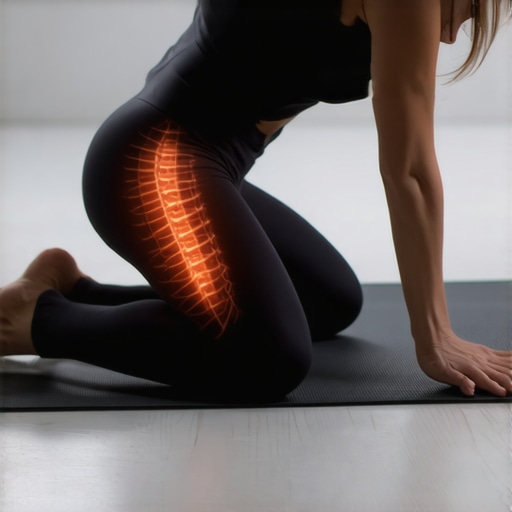
Think of your spine like a mast on a ship. If the guy wires—your core muscles—are loose, the mast will wobble. To prevent a snap, your body tightens the ropes at the bottom, which are your hamstrings, to keep everything from collapsing. This is exactly why your core routine is failing your spine if you only focus on ‘abs’ and ignore true stability. I learned this the hard way when I finally stopped trying to touch my toes and started practicing the dead bug exercise. At first, I felt like a flailing turtle; I couldn’t keep my back flat against the floor for more than five seconds without my ribs popping up. That was the signal: my core wasn’t ‘on duty,’ so my back was paying the price every time I moved.
Master the Art of the Hip Hinge
We often treat the lower back like a hinge, but it is actually a series of shock absorbers. The real hinge should be your hips. I remember a time I tried to lift a heavy cooler by rounding my spine, thinking I was being ‘flexible.’ Instead, I felt a sickening pull. Learning the hip hinge trick changed my life. Imagine there is a wall six inches behind you. Instead of reaching down, you reach back with your hips until you feel a slight tension in your hamstrings. That tension is your muscles loading up like a spring, protecting your discs. This is the same principle I use when teaching patients how to pick up a laundry basket without triggering a month-long flare-up.
Your Ankles Are Calling the Shots
If your ankles are as stiff as ski boots, your lower back has to move twice as much to compensate for every step you take. I once worked with a hiker who had chronic L5 pain that wouldn’t budge. We didn’t touch his back for two weeks; we just worked on his foot and ankle mobility. It turns out, how a single tight ankle can cause chronic back pain is one of the most overlooked links in the body. If you cannot walk properly because your ankles won’t bend, your pelvis will tilt, and those hamstrings will lock up to save you. It is a chain reaction you simply cannot stretch your way out of.
Stop Irritating Your Nerves
If you feel a sharp, electrical ‘zing’ when you reach for your shoes, stop. You are likely dealing with neural tension, not muscle tightness. Instead of a hard, static hold, try ‘flossing’ the nerve. This involves moving your leg and your head in a synchronized way to slide the nerve through the tissues like dental floss, rather than yanking it like a rope. This is why static stretching might be prolonging your back pain. By switching to dynamic movements and gentle pelvic tilts, you create a safer environment for the nervous system to finally let go of that protective guarding.
I used to believe that if I could just sit up straight enough, my back pain would eventually surrender. I treated my spine like a structural beam that needed to be perfectly plumb. But here is the nuance most people miss: your spine isn’t a statue; it’s a living, breathing engine. When you force yourself into a rigid, ‘chest-out, shoulders-back’ position, you aren’t fixing your alignment; you’re actually creating a state of constant muscle contraction. This is exactly why your perfect posture is actually making you stiff. We’ve been sold the lie that there is one ‘correct’ way to sit, but research published in the British Journal of Sports Medicine suggests that postural diversity—the ability to move through various positions—is far more important for long-term health than holding a single ‘ideal’ pose.
The Posture Trap You Are Likely Falling For
The most common mistake I see is the ‘military posture’ trap. People try so hard to avoid slouching that they overcorrect, arching their lower back and locking their joints. This creates massive amounts of compressive force on the facet joints of your spine. It’s one of the primary reasons why sit up straight is actually bad advice for some individuals, especially those with an existing anterior pelvic tilt. Instead of forcing a shape, we need to focus on how the body manages pressure. Have you ever fallen into this trap of trying to sit ‘perfectly’ only to end the day in more pain? Let me know in the comments—I used to be a victim of the ‘military posture’ myth myself for years.
Why does your “perfect” posture make you stiffer?
When you hold a static position, your muscles are performing an isometric contraction. Over time, this reduces blood flow to the area and leads to a buildup of metabolic waste, which your brain interprets as stiffness or ‘tightness.’ This is why we often find that the most rigid patients are the ones who suffer the most. To break this cycle, I often teach patients how to breathe through your diaphragm to reduce lower back pressure. Proper breathing actually moves the spine from the inside out, providing a micro-mobility that no external brace or ‘perfect chair’ can replicate.
Stop Crushing Your Lumbar Spine with a Foam Roller
If you are struggling with a tight lower back, your first instinct might be to grab a hard foam roller and go to town. This is a massive ‘oops’ factor that can lead to weeks of inflammation. You should stop rolling your lower back on a hard foam roller immediately. Unlike your upper back, which has the support of the ribcage, your lumbar spine is vulnerable. Aggressive rolling can cause your paraspinal muscles to go into a protective spasm, making the initial problem even worse. Instead, you should focus on the proper way to use a foam roller on your upper back and hips. By releasing the areas above and below the lower back, you allow the lumbar spine to relax without traumatizing the local tissues.
In our clinic, we take this a step further by looking at the mechanical root of the tension. It’s not just about where it hurts; it’s about why the tension is being displaced to that specific spot. This is why we check your leg length during every visit. A subtle shift in your foundation can force your entire upper body to compensate, creating that nagging ‘stiffness’ that no amount of posture correction can fix. By using advanced boost mobility ease pain chiropractic techniques unveiled in recent years, we can address these structural imbalances, allowing your body to find its natural, relaxed alignment without the constant mental effort of ‘trying’ to stand straight.
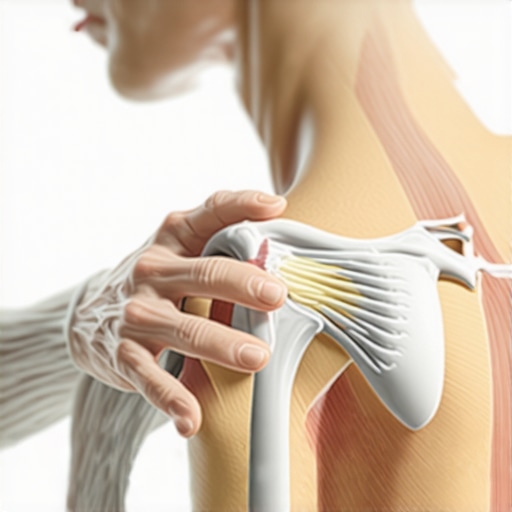
Once the initial fog of pain lifts, the real work begins—the maintenance phase. People often ask me what high-tech gadgets I have in my home gym. The truth is, my most valued tool cost exactly two dollars at a local sporting goods store. I have found that using a tennis ball to release upper back tension is far more effective than those expensive, vibrating massage guns that often just rattle your ribs and cause more guarding. By pinning the ball between my shoulder blade and a wall, I can hunt for those specific trigger points that a broad foam roller simply misses. It is about surgical precision rather than blunt force, allowing me to enhance mobility naturally with chiropractic care principles even when I am away from the office.
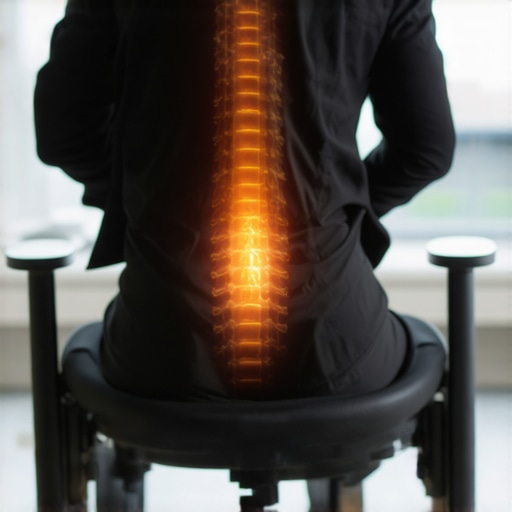
If you spend eight hours a day in a chair, your equipment is your environment, and it is likely working against you. I see dozens of patients buy five-figure ergonomic chairs only to sit on the very edge of them, negating every benefit. This is where a small, portable tool makes a massive difference in your daily comfort. Learning the correct way to use a lumbar roll can save your discs from that slow, creeping dehydration that happens during back-to-back Zoom calls. But even the best chair won’t save you if you do not change your state frequently. I personally switch to a standing setup every 45 minutes, though you have to be careful; I have previously detailed how to use a standing desk without hurting your hips because standing perfectly still is just as taxing on your joints as sitting.
How can I make these mobility gains actually last?
The secret is not a 90-minute gym session once a week; it is the spinal hygiene you practice in the margins of your day. As Dr. Stuart McGill, a world-renowned expert in spine biomechanics and author of ‘Back Mechanic,’ often emphasizes, the goal is to remove the ‘pain triggers’ while building a foundation of stability. This is why I swear by the 3-minute morning routine to lubricate your joints. It is the anatomical equivalent of warming up your car engine in the dead of winter. If you skip this and go straight to a heavy lift or a long commute, you are essentially asking your tissues for a performance they aren’t prepared to give, leading to the micro-tears that boost your back health only if managed correctly.
Looking toward the next decade, I predict we will see a massive shift toward bio-feedback wearables that monitor spinal ‘shear’ forces in real-time. Imagine your watch vibrating the moment it detects your lower back is rounding too much during a deadlift or while picking up a heavy grocery haul. Until that tech becomes mainstream, we have to rely on our internal sensors. You can start building that awareness today by incorporating the isometric hold that builds a bulletproof core into your commercial breaks or between meetings. It is about building a body that can handle the modern world, rather than trying to hide from it.
I want you to try one specific thing today to protect your foundation: next time you are standing at the sink, apply the simple trick to keep your spine neutral while washing dishes by opening the cabinet door and resting one foot on the ledge. It is an instant game-changer for offloading the pressure on your lumbar spine.
Hard Lessons from My Years of Chasing the Wrong Pain
For a long time, I treated my body like a collection of separate parts rather than a single, interconnected system. Here are the lightbulb moments that finally helped me break the cycle of stiffness. First, I stopped viewing ‘tightness’ as an enemy to be defeated and started seeing it as a message. If your hamstrings won’t let go, they are likely doing a job your core has abandoned. Second, I realized that if a movement feels like an electrical shock, it is a nerve issue, and more stretching is like pouring gasoline on a fire. Finally, I learned that how chiropractic care transforms lives often starts with changing how you move between sessions, not just what happens on the table. It is about building a lifestyle that supports your spine rather than just reacting to the pain.
Tools That Earned a Permanent Spot in My Routine
You don’t need a thousand-dollar setup to fix your posture. I rely on a few specific things every single day. I always keep a tennis ball nearby because it is the most precise tool for hunting down muscle knots. I also recommend checking out ‘Back Mechanic’ by Stuart McGill; it’s the gold standard for anyone who wants to take their recovery into their own hands. For my office setup, I never skip using a portable lumbar roll, and I’ve found that performing the best exercises to keep your spine young is easier when you have a simple visual reminder—like a sticky note on your monitor—to reset your posture every hour. [image]
Reclaim Your Movement One Small Win at a Time
Recovery isn’t a straight line, and there will be days when you feel stiff again. The goal isn’t perfection; it’s consistency. By focusing on expert tips for back pain prevention and recovery, you are slowly teaching your nervous system that it is safe to move again. Don’t be afraid to start small—even a few minutes of daily movement can revitalize your mobility in ways you didn’t think possible. You deserve to live a life that isn’t dictated by your lower back. Have you ever felt like your ‘tight’ muscles were actually just trying to protect you? Let me know your experience in the comments below!