The best way to carry a heavy grocery bag
I remember the day my grocery store pride almost sent me to the emergency room. It was a Tuesday, I had four heavy bags, and I absolutely refused to make two trips. Halfway to the door, I felt that sickening pop in my mid-back. I’ve been there—standing at the trunk of the car, looking at six overflowing bags, and thinking, I can do this in one go. I looped the plastic handles around my fingers until they turned purple, shifted my hips to the side like a leaning tower, and shuffled toward the kitchen. It felt like a triumph of efficiency until the next morning when I couldn’t even turn my head to check my blind spot while driving. That moment of grocery ego cost me a week of stiff-necked misery. We have all done it, but here is the truth: the way you haul your bread and milk is a stealthy saboteur of your spinal health.
Stop Punishing Your Spine at the Checkout Line
Carrying heavy bags improperly is one of those daily micro-traumas that adds up before you even realize you are in trouble. When you overload one side of your body, your spine undergoes lateral flexion and compression that it is not designed to handle for long. I used to think the one-trip rule was a badge of honor, but I was actually just begging for a disc issue. If you have been feeling that familiar twinge, you might need to revitalize your mobility or look into how to pick up your grocery bags to protect your spine before the damage becomes permanent. According to research from the American Chiropractic Association, mechanical stress from improper lifting is a leading cause of preventable back injuries. Have you ever felt that sharp, sudden zing in your lower back while trying to be the grocery hero? It is a wake-up call we should not ignore.
Think about the last time you walked from your car to your front door. If you are like I was, you probably looked like a pack mule on a mission. I used to think that making two trips was a sign of weakness. I would load up my left arm with the light stuff—usually just bread and eggs—and then heave the three-gallon milk jugs and the bulk laundry detergent in my right hand. By the time I hit the kitchen tiles, my right shoulder was three inches lower than my left. This is not just about feeling tired; it is about the hidden link between neck pain and spinal health. When we lopsidedly load our bodies, our core muscles often check out, leaving the delicate structures of the lumbar and cervical spine to take the hit. I learned the hard way that a few saved seconds are not worth months of effective neck pain management.
I made the classic mistake of thinking grip strength was the only thing that mattered. I would hook those thin plastic loops over my forearms like a human clothesline, not realizing I was actually compressing the nerves in my elbows and dragging my shoulders into a permanent shrug. This habit is a direct ticket to neck pain. If you find yourself constantly rubbing your traps after a shopping trip, your body is screaming for a better strategy. We need to focus on restoring your range by changing the mechanics of the carry itself. It is about working with your anatomy, not against it.
Is it really worth worrying about a five-minute walk from the car?
You might think five minutes is not enough to cause real damage. However, that repetitive strain is exactly how neck and back pain solutions become a necessity later in life. Much like how a heavy purse pulls your spine out of alignment, uneven grocery weight creates a shear force on your vertebrae. A study published in the Journal of Physical Therapy Science suggests that unilateral loading—carrying weight on just one side—significantly increases the risk of postural sway and spinal misalignment. Today, I am going to show you how to distribute that weight and move with intention so you can get the milk to the fridge without a side of sciatica. We are going to dive into the specifics of weight distribution, grip techniques, and why your core is your best friend at the supermarket.
Even Out the Weight Before You Walk
The first rule of grocery survival is symmetry. If you have 20 pounds of food, your spine wants 10 pounds in each hand, not 20 in one and a set of car keys in the other. When you load one side, your internal oblique muscles on the opposite side have to fire like crazy just to keep you upright. It is like a suspension bridge with the cables snapped on one side. I remember trying to carry two gallons of milk in my right hand while balancing a light bag of bread in my left. By the time I reached the porch, my left side was cramping from the effort of counterbalancing. This uneven load is a primary driver of neck pain and hip misalignment. If you find yourself leaning away from the heavy side, you are already compressing your spinal discs. Instead, take thirty seconds to rearrange your bags so they feel like equal anchors. This simple shift is one of the most effective chiropractic secrets to regain full mobility after injury because it prevents the micro-tears that happen when we move lopsidedly.

Stop Hooking Handles Over Your Forearms
We have all done the human clothesline move—sliding five plastic bags up to our elbows so our hands are free. It feels efficient, but you are effectively creating a tourniquet for your nerves. This position drags your shoulders forward and down, overstretching the trapezius muscles and causing that dreaded burning sensation between the blades. If you already struggle with this, you might need the 10-second reset for when your shoulder blades start burning. Instead of the hook, use a suitcase carry grip. Hold the handles in the center of your palms and keep your knuckles pointing toward the ground. This engages your triceps and lats, which are much better equipped to support the weight than the delicate nerves in your inner arm. I once spent an entire afternoon with a numb thumb because I hooked a heavy bag of oranges over my wrist; never again.
Engage Your Core Like a Structural Pillar
Your spine is only as stable as the muscles surrounding it. Most people let their bellies hang out when carrying groceries, which puts all the pressure on the lower back. Think of your core as a natural weightlifting belt. Before you lift, take a small breath and brace your midsection as if someone is about to poke you in the stomach. This intra-abdominal pressure creates a cushion for your discs. If you find your back arching as you walk, it is a sign that your core routine is failing your spine. I used to think abs were just for the gym, but bracing while carrying laundry or groceries is what actually keeps the chiropractor away. It is about functional stability, not six-pack aesthetics.
Keep Your Eyes on the Door to Save Your Neck
When the bags get heavy, our instinct is to look down at our feet to make sure we do not trip. This creates text neck on steroids. Your head weighs about 10 to 12 pounds, but for every inch it tilts forward, the effective weight on your neck doubles. Combine that with heavy bags pulling your shoulders down, and you have a recipe for a cervical strain. Keep your chin tucked slightly and look toward your destination. This aligns your cervical spine with the rest of your back. Your walk—or gait—is also a huge indicator of spinal health. Pay attention to whether you are shuffling or swinging your hips excessively, as what your gait analysis reveals about your lumbar health can be the key to stopping chronic pain before it starts. I started practicing this head-high walk even when I only had a single bag of chips, and the reduction in my evening tension headaches was almost immediate.
I used to think that ‘tightness’ always meant a muscle needed to be longer. If my neck felt stiff after a long day of carrying heavy bags or sitting at my desk, I would lean my head to the side and pull until I felt a deep, burning stretch. I was following the common logic: if it’s tight, stretch it. But here is the nuance most people miss: why stretching a tight muscle isn’t always the answer. Often, that tightness isn’t a length issue; it is a protective ‘brake’ applied by your nervous system because it senses instability elsewhere. When you force a stretch on a muscle that is trying to protect a vulnerable joint, you actually trigger more guarding. According to the British Journal of Sports Medicine, aggressive static stretching in the presence of neural irritation can increase protective muscle guarding rather than resolving it. You aren’t fixing the problem; you are essentially yelling at a security guard for locking the door.
Stop Stretching Your Way Into More Pain
The most common trap I see is the ‘stretch-pain-stretch’ cycle. People feel a pull in their upper traps and spend twenty minutes doing neck rolls. But if that tension is actually a symptom of poor ribcage mechanics or a pelvic tilt, you are just irritating the nerves further. This is precisely why we look at your pelvis when your neck hurts. The body is a closed kinetic chain. If the foundation is off, the top floor—your neck—has to work overtime to keep your eyes level with the horizon. If you have been stretching for weeks with no relief, you might actually be dealing with neural tension. Have you ever fallen into this trap? Let me know in the comments.

Is Your Rigid Core Actually Staging a Rebellion?
We are constantly told to ‘brace our core’ and ‘sit up straight,’ but there is a hidden danger in being too stiff. I have met athletes with six-pack abs who have the worst back pain of their lives because they have forgotten how to breathe and move fluidly. This is a classic case of why your strong core might actually be too rigid. A healthy spine needs to be able to rotate and oscillate. If you turn your torso into a solid block of granite, the force from every step you take travels straight into your spinal discs instead of being absorbed by your muscles. True stability is about being able to move through a range of motion with control, not just holding a rigid position until you gas out.
The Vicious Cycle of the ‘Self-Pop’ Habit
Then there is the ‘Oops’ factor of the self-adjustment. We’ve all been there—that heavy, full feeling in the mid-back where you just feel like you need to twist and ‘crack’ it yourself. It provides a momentary rush of endorphins, but it is a dangerous game. When you crack your own back, you are usually moving the segments that are already hypermobile (the ones that move too much), while the ‘stuck’ segments stay stuck. This creates a cycle of instability where you need to pop it more and more frequently just to feel normal. Understanding the truth about cracking your own back at home is vital because you are essentially loosening the wrong bolts. This can lead to strange symptoms like ‘cervicogenic’ issues, where you can’t quite tell if your dizziness is coming from your neck or something else entirely. High-level mobility is about precision, not just noise.
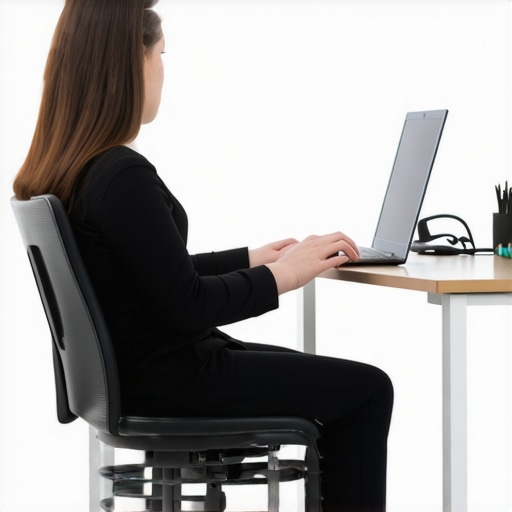
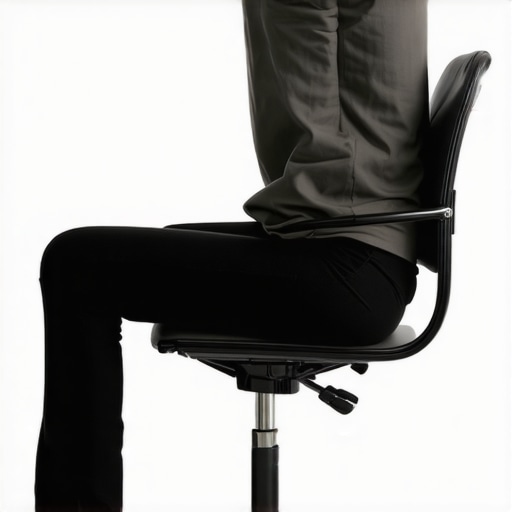
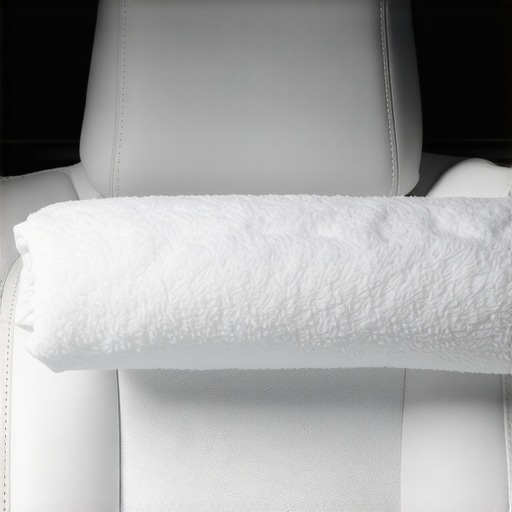
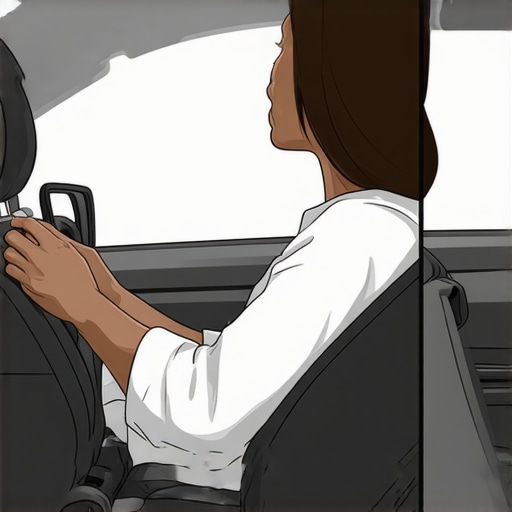
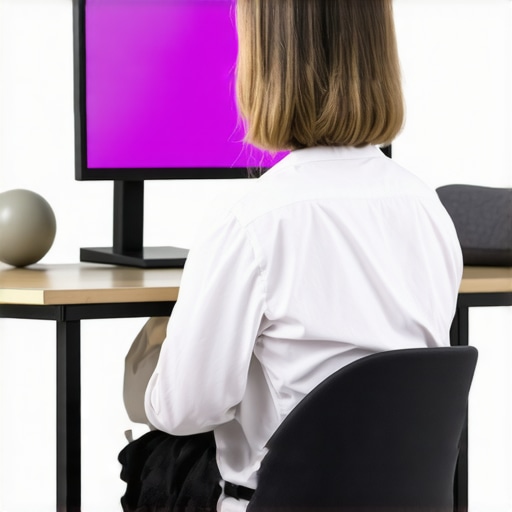
The work of protecting your spine doesn’t end when the grocery bags are finally on the counter. Real, lasting change happens in the quiet moments of the day when you aren’t thinking about your posture at all. I have spent years testing different gadgets and routines, and I have found that the most effective tools are often the simplest. For instance, I never sit in my car or office chair without a McKenzie-style lumbar roll. It provides that essential physical cue to maintain my lower back curve, preventing the slumping that leads to late-afternoon fatigue. If you are struggling with a chair that feels like a torture device, you should check out the correct way to use a lumbar roll in your office chair. It is not just about comfort; it is about keeping the spinal segments in their strongest mechanical position.
Equip Your Environment to Support Your Goals
I also keep a lacrosse ball in my desk drawer. When I feel that familiar knot starting to form under my shoulder blade—what I call the ‘grocery-hauler’s hangover’—I lean against the wall and use the ball to provide targeted pressure. This is a game-changer for effective neck pain management because it addresses the soft tissue before it pulls the joints out of alignment. Another tool I swear by is a high-quality orthopedic pillow. I used to wake up with a stiff neck every single morning until I realized that my pillow was too soft, causing my head to tilt at a weird angle for eight hours. Learning how to choose the right pillow height for your body type is perhaps the most underrated investment you can make in your recovery. Consistency with these small tools is what leads to neck pain no more.
How do I maintain my spinal health during a busy work week?
Maintenance is about building ‘spinal hygiene’ into your existing habits. According to Dr. Stuart McGill, a world-renowned spine biomechanist at the University of Waterloo, building muscular endurance in the core is far more protective than building raw strength. He advocates for the ‘Big 3’—the Bird-Dog, the Side Bridge, and the Curl-up—to create a ‘stiffness’ that protects the discs during daily tasks. I incorporate a version of these every morning as part of my 5-minute routine to decompress your spine. I also use a haptic feedback sensor occasionally. It is a small device that sticks to my upper back and vibrates whenever I slouch. It sounds annoying, but it retrains the brain to recognize where ‘neutral’ actually is. I predict that in the next few years, this kind of wearable tech will become standard, helping us navigate the ‘tech neck’ epidemic with real-time data.
If you want to see immediate results, start using the 10-second posture check you can do anywhere. Don’t wait for the pain to arrive before you pay attention. Use your reflection in store windows or the ‘low battery’ notification on your phone as a trigger to reset your shoulders and breathe through your diaphragm. These simple yet effective chiropractic hacks are the difference between someone who ‘has a bad back’ and someone who moves with ease. My challenge to you today is this: the next time you pick up your phone, bring it to eye level instead of dropping your head to meet it. It feels silly for the first ten times, but your cervical spine will thank you for years to come.
The Reality Check My Spine Needed After Years of Overloading
Reflecting on that sickening pop in my back, I realized that my ego was my biggest injury risk. I used to think that the weight didn’t matter because the walk was short, but your nervous system records every ounce of strain. One thing I’ve learned is that neural tension is often masquerading as simple muscle tightness. When you overload your frame, you aren’t just taxing your muscles; you are tugging on the electrical wires of your body. It is much easier to prevent a flare-up than it is to relieve neck and back discomfort once it has settled in. Another lightbulb moment was realizing that my efficient one-trip habit was actually a form of avoidance—avoiding the extra sixty seconds of walking while inviting sixty hours of pain.
The Gear That Keeps Me Out of the Treatment Room
Over the years, I have refined a toolkit that I trust implicitly for my daily health. First, I recommend heavy-duty canvas bags with reinforced handles; they do not dig into your palms like plastic, which helps you avoid nerve compression and shoulder shrugging. Second, I cannot recommend the work of Dr. Stuart McGill enough. His focus on spinal stability is the definitive guide for anyone serious about mobility mastery and back pain prevention. Finally, if you haven’t yet, look into how to fix your gait for better spinal alignment. Walking with the right mechanics makes the grocery carry feel like a functional workout rather than a hazardous chore. These tools aren’t just gadgets; they are investments in a future where you can pick up your grandkids without hesitation.
#IMAGE_PLACEHOLDER_E#
Trade the Grocery Store Heroics for a Pain-Free Life
Taking care of your spine does not require a total lifestyle overhaul. It starts with the awareness you bring to the mundane—like the walk from the car to the kitchen tiles. You have the power to change your physical trajectory by choosing symmetry over speed. I want you to feel empowered by these neck and back pain solutions and know that a pain-free life is built in the small, daily choices. Don’t let your grocery run be the reason you are stuck on the couch tomorrow. Your body is the only place you have to live, so carry your burden with the respect it deserves.
How many bags do you usually try to carry in one go? Are you a one-trip champion or a two-trip strategist? Let me know in the comments below!