
Why Your Lower Back Throbs After Gardening
I remember last April vividly. The sun was finally out, the dirt was moist, and I was determined to get my prize-winning petunias in the ground. I spent four hours hunched over those beds, feeling like a champion—until I tried to stand up. That first sharp twinge wasn’t just a minor protest; it was a full-blown throb that radiated across my lower back, making me walk like a question mark for three full days. My biggest mistake? I thought I could out-stubborn the laws of physics by bending straight over from the waist for hours on end without a single break. It is a classic trap, and if you have ever felt that deep, pulsing ache after a day in the dirt, you are certainly not alone. Today, I am going to break down exactly why your body revolts after a session in the yard and how you can garden for hours without a lumbar flare-up. Have you ever had to literally crawl back to the house because your back simply refused to unbend?
The Real Reason You Can’t Stand Up Straight After Weeding
When we garden, we often treat our spines like a construction crane, but we forget to install the counterweights. Most of that throbbing comes from the sheer fatigue of your spinal extensors and the sustained compression of your discs while you are reaching for that one stubborn dandelion. According to research published in the Journal of Biomechanics, leaning forward by just 20 degrees can more than double the pressure on your lumbar discs compared to standing upright. That pressure does not just vanish the moment you put the shovel away; it lingers as inflammatory noise. I spent years thinking my “bad back” was just an inevitable part of getting older until I realized I was actually misunderstanding how my posture influenced my recovery time. Your back is not broken; it is just exhausted from doing the job your legs were meant to do.
Is gardening actually worth the physical toll?
Many people ask me if they should just give up the trowel and stick to indoor plants. The answer is a resounding no, but you do have to change your tactical approach. The throb you feel is a signal that your functional hinge is misfiring. You are likely over-relying on your lower back because your hips are locked up or your core has gone on a temporary vacation. By focusing on strengthening your glutes to take the pressure off your spine, you turn those “yard work” muscles into a protective shield. It is not about working less; it is about moving in a way that does not leave your nerves screaming at the end of a beautiful afternoon.
Turn Your Hips into a High Powered Nutcracker
Think of your hip joint as a heavy duty nutcracker rather than a hinge made of paper. When you bend from the waist, you are essentially hanging your entire upper body weight off the delicate ligaments of your lower spine. By shifting that “hinge” to your hips, you engage the massive muscle groups in your posterior chain. I spent an entire afternoon last May practicing this while clearing thick brush along the fence line, and the difference in my recovery was staggering. By strengthening your glutes to take the pressure off your spine, you create a robust anchor that allows your torso to tilt without your discs taking a concentrated beating. Your glutes are meant to be the engine of every movement; your back is just the passenger. If you let the passenger drive the car through a rocky garden bed, you are going to end up in the ditch with a flare-up. 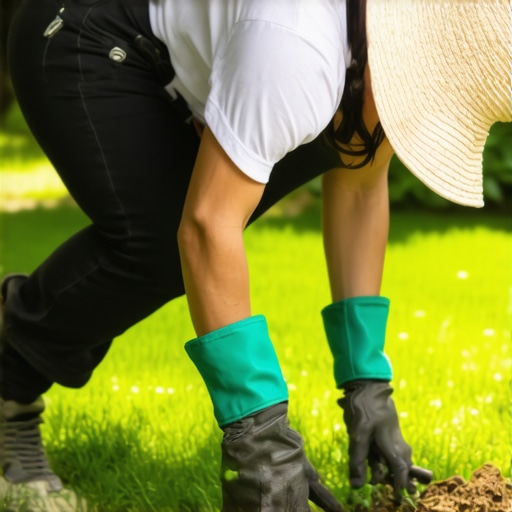
Keep Your Work Close or Pay the Price in Pounds
There is a brutal law of physics at play every time you reach for a trowel: the further an object is from your center of gravity, the heavier it becomes for your muscles to manage. When you reach three feet across a flower bed to pull a stubborn weed, that tiny plant can exert over fifty pounds of shearing force on your L5-S1 disc. This is exactly why your shoveling technique is killing your back—you are likely reaching too far forward instead of stepping into the work. I learned this lesson the hard way while trying to relocate a massive, water-heavy hosta three years ago. I stayed planted in one spot, reaching and tugging for forty minutes. When I finally stood up, I heard a sickening sound like a dry twig snapping. I couldn’t walk upright for a week. Now, I use a thick foam pad and literally crawl into the bed so the work is always directly under my chest, keeping my elbows tucked near my ribs.
Stop the Statue Effect with Frequent Position Swapping
Your spine was never designed to hold one shape for hours, no matter how “correct” that shape might be. I call the alternative the “Statue Effect.” Even a perfect posture becomes toxic if held too long because it restricts blood flow and creates static muscle loading. You need to rotate your tasks like a pro athlete rotates through training stations. Spend ten minutes weeding on your knees, then stand up and do some light pruning at shoulder height, then spend five minutes walking to the compost bin. This variety ensures that no single ligament takes the brunt of the day’s stress. It is fundamentally why your back feels better when you keep moving rather than staying hunched in a single “weeding zone” for two straight hours.
Use Your Breath as a Natural Back Brace
Most of us subconsciously hold our breath when we hit a tough root or lift a heavy bag of mulch, which is the fastest way to blow out a disc. Holding your breath creates internal tension but lacks the stabilization needed for the spine. Deep, diaphragmatic breathing creates intra-abdominal pressure—a natural, internal “airbag” that supports your vertebrae from the inside out. Learning how to breathe into your lower back to reduce muscle spasms can actually prevent that terrifying “locking up” sensation when you finally decide to head inside. If you feel a twinge starting to brew, don’t just push through it. Stop and perform the 5-minute reset for a stiff lumbar spine by doing gentle cat-cow stretches on your hands and knees right there on the grass. This movement keeps the synovial fluid circulating and prevents a minor ache from becoming a weekend-ruining injury.
Stop Pulling on Your Hamstrings to Fix Your Lumbar Spine
Most people believe that if their back feels tight after a day in the garden, the immediate solution is to reach for their toes. I used to be the first person on the floor trying to touch the carpet, thinking I was helping my recovery. However, there is a nuanced truth you must understand: your hamstrings often feel tight because they are working overtime to stabilize a pelvis that your lower back has already essentially “given up” on. In many cases, stretching your hamstrings won’t fix your back pain because the tightness is a protective reflex, not a length issue. Aggressively stretching a protective muscle can actually leave your spine more vulnerable to the shearing forces of shoveling. Instead, we look at mobility mastery through stabilization rather than just elongation. A study published in the Journal of Electromyography and Kinesiology suggests that spinal stability is more about the nuanced coordination of small, deep muscles rather than the raw strength of the large superficial ones. If you are just pulling on your legs, you are missing the internal architecture that actually keeps you upright and pain-free. 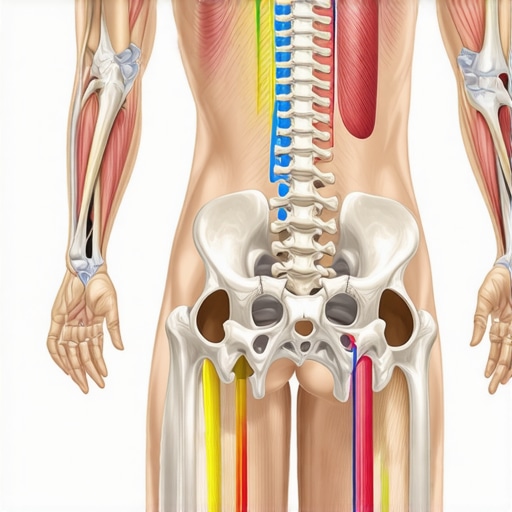
Why does my back still lock up even though I stretch every morning?
This is the question that haunts every active gardener who ends up flat on their back despite a rigorous morning routine. The trap is often found in how you brace your midsection. We have been told for decades to “pull your belly button to your spine” to protect ourselves, but this can lead to a state where your strong core might actually be too rigid. When you create a rigid “stone cylinder” out of your midsection, you lose the essential ability to absorb micro-shocks. Your spine needs to function like a suspension bridge, not a concrete pillar. If you are too stiff, the force of every shovel thrust or heavy bag of mulch goes directly into your facet joints. This is where advanced chiropractic techniques come into play—they don’t just address alignment; they restore the specific joint play required for fluid, organic movement. I have seen many patients who were “core-strengthening” themselves into a state of chronic inflammation because they forgot how to let their muscles relax and oscillate. Have you ever fallen into this trap of over-correcting your posture only to feel stiffer than before? Let me know in the comments.
The Movement Paradox Most Gardeners Ignore
We often focus so much on the lumbar region that we completely ignore the neighbors: the ribcage and the hips. If your mid-back is frozen from years of desk work, your lower back has to move twice as much to compensate for that lack of rotation. This is how chiropractic care transforms lives; it addresses the quiet areas that are forcing your lower back to shout. By restoring motion to the thoracic spine, we naturally take the load off the discs that are currently doing all the heavy lifting. Don’t just treat the site of the ache; look at the mechanics of the whole chain. If you want to stay in the garden until you are ninety, you have to stop viewing your back as a separate entity and start seeing it as the vital link in a dynamic system. Explore expert methods for relief that go beyond the basic approach and target the root of your mobility restrictions.
Stop Treating Your Hands Like Pliers
I used to grab whatever rusty trowel was sitting in the shed, never realizing that my grip was dictating the tension in my upper back. When you use a tool with a straight, narrow handle, your wrist is forced into a ‘cocked’ position that creates a kinetic chain of tension. This tension doesn’t stay in your hand; it travels up the forearm, into the elbow, and eventually settles in your levator scapulae muscles. It is exactly why your thumb pain is actually coming from your neck. I finally switched to ergonomic, curved-handle tools that allow for a neutral wrist position—meaning your thumb points forward rather than down. This simple shift in leverage significantly reduces the load on your cervical spine. If you are serious about your yard, stop using tools that treat your joints like a pair of overstressed pliers. 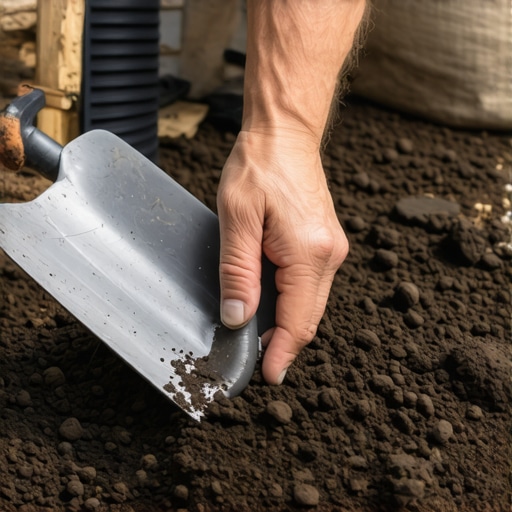
The Bench That Acts Like a Personal Assistant
One of the best investments I ever made for my lower back was a dual-purpose garden kneeler. It’s a simple padded bench that flips over to become a kneeling pad with sturdy side handles. These handles are the secret weapon; they allow you to use your arm strength to push yourself back to a standing position, bypassing the usual ‘lower back jerk’ we all do when standing up from the dirt. It is a game changer for finding the simple way to sit on a stool without pain while you are pruning those lower branches. By using your upper body to assist your legs, you distribute the mechanical load across your entire frame rather than concentrating it in the lumbar region.
How do I maintain my gardening longevity over time?
Consistency is the only real answer. You cannot expect your back to handle a 10-hour ‘spring blitz’ if you have been sedentary all winter. I recommend a protocol of ‘micro-loading’ where you spend 15 minutes a day in a deep squat or on all fours in the weeks leading up to planting season. Dr. Stuart McGill, a world-renowned expert in spine biomechanics and author of Back Mechanic, notes that ‘ligamentous creep’—the gradual stretching of your spinal tissues during prolonged bending—requires specific recovery intervals to avoid injury. To counter this, I use boost your back health simple yet effective chiropractic hacks like the ‘Founder’s Pose’ to retrain the posterior chain. I also integrate the scapular squeeze that relieves mid-back tension every time I walk to the garden hose. This keeps the thoracic spine mobile so the lower back isn’t doing double the work.
The Future of the Pain-Free Garden
I predict that within the next five years, we are going to see a massive surge in ‘wearable ergonomics’ for home gardeners. We are already seeing the rise of soft-shell exoskeletons in industrial warehouses, and it is only a matter of time before lightweight, haptic-feedback shirts tell us exactly when our posture is failing while we are planting tomatoes. Until then, you have to be your own sensor. You must restore your back mobility proven chiropractic strategies by listening to the early whispers of stiffness before they become shouts of pain. My advanced tip for you this week: try the ‘one-arm reach’ test every hour you are outside; if you can’t comfortably reach for the sky without a pinch in your mid-back, it’s time to go inside and hydrate. Your petunias can wait ten minutes; your spinal discs cannot.
The Hardest Lessons I Learned While Taming My Overgrown Yard
I used to think that as long as I did not feel a sharp pop, I was doing everything right. I was wrong. The biggest takeaway from my years in the dirt is that pain is a lagging indicator; your nerves often wait until you have sat down for dinner to tell you about the micro-damage you did at noon. Secondly, the ‘one more weed’ syndrome is the fastest way to a flare-up. I now set a timer on my phone for every twenty minutes to force a postural reset. I also discovered that proper hydration is as vital for your intervertebral discs as it is for your seedlings, as dehydrated discs lose their shock-absorbing height. Finally, I realized that why your perfect posture is actually making you stiff is often due to holding yourself too rigidly; fluidity is always superior to a static pose. If you find your muscles are not supporting you during a lift, it might be why your glutes won’t fire and how to fix it. #IMAGE_PLACEHOLDER_E#
My Must-Have Toolkit for Injury-Free Weeding
If you want to move beyond the basic trowel and shovel, I recommend starting with the book Back Mechanic by Dr. Stuart McGill; it is the gold standard for understanding how to load your spine safely. I also swear by a four-wheeled garden cart rather than a traditional wheelbarrow, as the added stability prevents the sudden twisting motion that often triggers sciatica. For those seeking a more professional approach to movement, I suggest pursuing mobility mastery to focus on functional stability rather than random stretching. To keep your joints fluid throughout the planting season, you can restore your back mobility proven chiropractic strategies that prioritize your natural range of motion.
Keep Planting and Keep Moving
Gardening should be a source of peace, not a source of physical dread. When you respect the mechanics of your body, you can spend decades tending to your flowers without fear. Resilience is built through smart, intentional movement, not just by avoiding activity. Seeing how back pain recovery how chiropractic care transforms lives has taught me that no matter how long you have struggled with stiffness, your body is capable of finding its rhythm again. Grab your gloves, mind your hip hinge, and get back to the earth. Have you ever tried a specific tool or a unique stretch that finally stopped your back from locking up after a long day of weeding? Let me know in the comments below!