Why Your Back Feels Better When You Keep Moving
I vividly remember the Saturday morning I decided to ‘play it safe.’ I’d felt a tiny, nagging pull in my lower back while grabbing the mail, and my instinct was to shut everything down. I grabbed a bag of frozen peas, a stack of magazines, and parked myself on the sofa for six hours straight. I thought I was being responsible. I thought I was giving my body a chance to heal. Instead, when I finally tried to stand up for dinner, I felt eighty years older. My spine felt like it had been fused with Elmer’s glue. That was the moment I realized my biggest mistake: I treated my back like a broken bone that needed a cast, when I should have treated it like a rusty hinge that needed oil. [image_placeholder]
Your Spine Thrives on Vitamin M
If you are currently terrified to move because your back is screaming, I get it. The natural response to pain is to freeze. But here is the cold, hard truth I learned the hard way: movement is the very thing that cleans out the biological ‘gunk’ causing your discomfort. When we stop moving, the circulation to our spinal discs slows down, and those tissues start to starve for nutrients. Earlier in my journey, I used to think that ‘perfect posture’ meant sitting as still as a statue. I was wrong. In fact, even the best posture becomes a problem if you hold it for too long. Today, we are going to look at why gentle, consistent motion is the secret sauce for long-term relief and how you can start moving again without the fear of a massive flare-up.
Is moving around really better than taking it easy on the bed?
It feels counterintuitive, doesn’t it? When a muscle spasms, your brain screams at you to stay still. But clinical research, including studies cited by the Harvard Medical School, suggests that prolonged bed rest is actually one of the worst things you can do for non-specific back pain. It leads to muscle atrophy and stiffness that makes the eventual recovery twice as long. I remember one specific Tuesday at the office where I refused to leave my chair because I was ‘protecting’ my lumbar spine. By 5 PM, I could barely walk to my car. If I had just known how to stay mobile at my desk, I could have avoided a week of misery.
The Secret Life of Your Spinal Discs
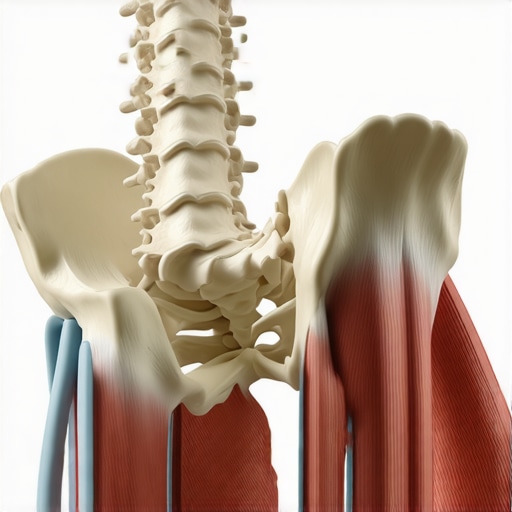
Your discs don’t have a direct blood supply. They rely on a process called ‘imbibition’—which is just a fancy way of saying they act like a sponge. When you move, you create pressure changes that pump nutrients in and waste out. If you stay static, that pump shuts off. This is why resting on a soft couch often makes you feel worse in the long run. You’re essentially letting those sponges go dry. We want to focus on proven strategies that keep things flowing without overtaxing your system. Have you ever spent a weekend ‘resting’ your back only to find that Monday morning felt like a total disaster? I’d love to hear if you’ve noticed that ‘stiff-as-a-board’ feeling after a long movie marathon or a flight. Before we get into the specific movements that saved me, we need to understand exactly what happens to your nerves when they get ‘stuck’ in one position for too long.
Grease the Hinge Every Hour
Movement isn’t just about weight loss or heart health; for your spine, it’s a survival mechanism. If you wait for a 60-minute gym session to move, you’ve already lost the battle against stiffness. Think of your spine like a bicycle chain that’s been left in the rain. If you let it sit, it rusts. If you move it just a little bit every hour, it stays smooth. I learned this the hard way during a cross-country flight where I refused to stand up. By the time we landed, my sciatica was screaming. Now, I never skip a chance to perform a 5-minute reset for a stiff lumbar spine to keep the nerves happy.

Break the Static Cycle with Micro-Moves
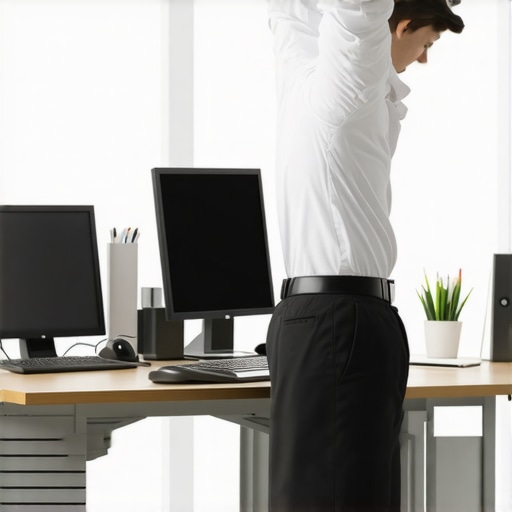
You don’t need a yoga mat or a tracksuit for this. The goal is simply to change the load on your discs. Stand up, tuck your chin slightly, and gently reach your arms toward the ceiling. This small act of decompression creates that ‘imbibition’ pump we talked about earlier. If you’re stuck at a desk, even rocking your pelvis back and forth while sitting can make a massive difference. We often think we need massive changes, but proven strategies for back pain relief usually involve these tiny, consistent wins rather than a total lifestyle overhaul.
Inhale Space into Your Tight Lumbar Muscles
When we are in pain, we tend to take shallow chest breaths. This actually tightens the muscles around your spine even further. Instead, try to breathe deep into your belly and lower back. Imagine your lower back expanding like a balloon with every inhale. Learning how to breathe into your lower back acts as an internal massage, pushing against the vertebrae from the inside out and calming the nervous system’s ‘danger’ signals.
Fix Your Foundation for Pain-Free Lifting
Most injuries don’t happen because of a heavy gym lift; they happen when you’re picking up a sock or a laundry basket. This is where the ‘hip hinge’ becomes your best friend. Instead of bending at the waist and putting all that leverage on your lower back, you push your hips back and keep your spine neutral. Last spring, I was mulching my garden and felt a twinge. I immediately switched to the hip hinge trick for pain-free gardening, and it allowed me to finish the job without a flare-up. It’s a game-changer for anything from picking up your laundry basket to unloading the car.
Roll Out of Bed Without the Morning Twinge
The first few movements of your day set the tone for your spinal health. If you sit straight up from a lying position, you’re essentially performing a high-stress sit-up while your discs are at their most hydrated (and vulnerable). Instead, use the ‘log roll’ method. Roll onto your side, swing your legs off the bed, and use your arms to push your torso up. Using the best way to get out of bed ensures you aren’t starting your morning with a micro-tear in your lumbar support structures. It’s also worth noting that tight hip flexors can cause a lower back arch that makes mornings even stiffer, so a quick stretch while the coffee brews is a non-negotiable for me.
Stop Stretching Your Hamstrings to Save Your Back
For years, I was a stretching addict. If my back felt tight, I immediately assumed my hamstrings were the culprit. I spent twenty minutes every night touching my toes, thinking I was doing my spine a favor. But here is the nuance most people miss: tight hamstrings are often a symptom, not the cause. Your brain keeps those muscles tight as a ’emergency brake’ because it feels your spine is unstable. When you force them to stretch, you’re essentially cutting your own safety lines. In my experience, why stretching your hamstrings won’t fix your back pain boils down to the fact that you aren’t addressing the source of the tension. Instead of focusing on the back of your legs, you should be looking at the link between ankle mobility and lower back stability. If your ankles are locked up, your back has to work twice as hard to keep you upright.
The Rigid Core Trap That Keeps You Stiff
We’ve been told to ‘brace our core’ for everything from lifting groceries to sitting at a computer. This is the biggest ‘oops’ factor in modern recovery. Many of us have become so obsessed with stability that we’ve created a rigid cage around our spine. A study published in the Journal of Electromyography and Kinesiology found that over-bracing the abdominal muscles actually increases the compressive load on the lumbar discs. By trying to be ‘strong,’ you are actually grinding your vertebrae together. I used to be a chronic ‘bracer’ until I realized why your strong core might actually be too rigid for real-world movement. Your spine needs to be able to sway and react, not just stand like a steel beam. When you lose that adaptability, you open the door for chronic flare-ups that seem to come out of nowhere.
Is Your Body Using Stiffness as a Shield?
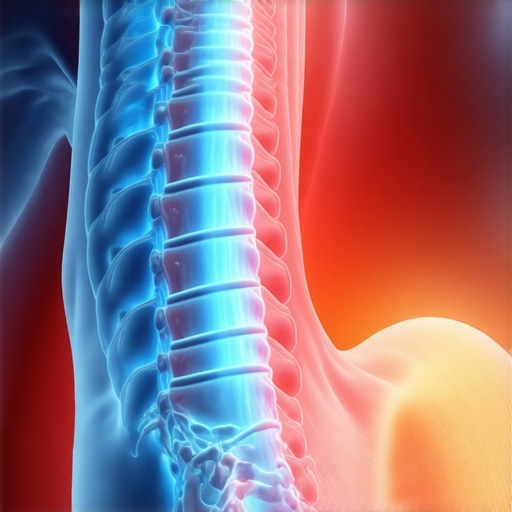
When you reach a certain level of understanding in your recovery journey, you realize that stiffness isn’t just about ‘tight muscles.’ It’s a neurological conversation. Your nervous system is constantly scanning for threats. If you’ve had a previous injury, your brain might be ‘guarding’ your neck or lower back by locking down the surrounding joints. This is why chiropractic secrets to regain full mobility after injury focus so much on resetting those neural pathways rather than just ‘cracking’ a bone. It’s about convincing your brain that it is safe to move again. Have you ever noticed that you’re more stiff when you’re stressed? That’s not a coincidence. If you find yourself constantly ‘fixing’ your posture but feeling worse, you might be falling for the trap where your perfect posture is actually making you stiff. True mobility is the ability to move through many postures, not the discipline of staying in one. Have you ever fallen into this trap? Let me know in the comments. We are going to dive into mastering back and neck pain relief by focusing on these hidden nuances that the ‘sit up straight’ crowd usually ignores.
For years, I looked for a high-tech solution to a low-tech problem. I bought the thousand-dollar chairs and the vibrating gadgets, but what actually kept me on my feet was surprisingly simple. My go-to tool is a basic tennis ball. I use it to target the ‘trigger points’ near my scapula that flare up after long writing sessions. Learning how to use a tennis ball to fix that spot under your shoulder blade was a revelation because it gave me a way to self-soothe without waiting for an appointment. I also carry a small lumbar roll everywhere. Most car and airplane seats are designed for aesthetics, not anatomy, and they force your spine into a ‘C’ shape. Knowing how to-use a lumbar roll without making your back stiffer is the difference between arriving at a destination ready to hike or arriving ready for a nap. I’ve even looked into the truth about inversion tables for disc relief, and while they have their place, they can’t replace the daily habits that build resilience.
How do I maintain my spinal health over time?
Maintenance isn’t about being perfect every day; it’s about catching the ‘drifts’ before they become ‘breaks.’ I follow the philosophy shared by Dr. Stuart McGill, a leading expert in spine biomechanics and author of Back Mechanic, who emphasizes that the ‘best’ posture is always the next posture. This means my maintenance routine focuses on expert tips for back pain prevention and recovery that emphasize variety. I schedule a checkup even when I feel great, just to ensure my pelvic alignment hasn’t shifted due to my habits. Often, why we check your leg length during every visit becomes obvious when we find a subtle tilt that would have caused a flare-up three months down the line. By using chiropractic techniques unveiled during these maintenance phases, I keep my nervous system from entering that ‘guarding’ mode we discussed earlier.#IMAGE_PLACE_HOLDER_D#
The Future of Back Care is Dynamic
We are moving toward an era where ‘ergonomic’ will no longer mean a static chair. I predict that within the next decade, we will see smart clothing that monitors ribcage expansion and ankle flexion in real-time. We’re already seeing the link between ankle mobility and lower back stability gain more traction in mainstream sports science. Instead of a doctor telling you to ‘sit up straight,’ your shirt might gently vibrate when it detects that your breathing has become shallow or your lumbar spine has remained static for more than twenty minutes. This shift from reactive treatment to proactive, data-driven movement is how we will finally end the epidemic of chronic back pain. If you want to start that journey today, I challenge you to try just one thing: the next time you feel that familiar ‘catch’ in your lower back, don’t reach for the ice. Instead, perform the 5-minute reset for a stiff lumbar spine and see how your body responds to motion rather than restriction.
The Lessons I Had to Learn Twice About My Spine
I used to think that pain was the enemy. Now I see it as a dashboard light—a signal to change my oil, not to park the car forever. If you treat your body like it’s fragile, it will eventually become fragile. The most important shift I made in my journey of back pain recovery was moving from a mindset of ‘protection’ to one of ‘preparation’. This involves understanding that better posture and mobility aren’t about holding a rigid position, but about staying adaptable. When you stop guarding your spine with tension, you finally start living again.
- The Brain is the Gatekeeper: If your nervous system feels unsafe, it will lock your muscles down in a ‘guarding’ pattern. Using chiropractic secrets to regain full mobility is as much about calming those neural alarms as it is about adjusting your joints.
- Consistency Beats Intensity: A simple five-minute walk every hour is worth more for your spinal discs than a two-hour gym session once a week.
- Stop Chasing the Symptom: If your lower back is screaming, check your breathing patterns, your ankle mobility, and your stress levels before assuming the spine itself is ‘broken’.
[image_placeholder_final]
The Toolkit for a More Resilient Back
You don’t need expensive gadgets to find relief; you just need the right approach to the tools you already have. These are the resources that kept me moving when I felt like giving up:
- The Tennis Ball Trick: It sounds humble, but fixing that spot under your shoulder blade with a tennis ball is my secret weapon for desk-bound stiffness.
- Passive Support with Purpose: I never take a road trip without my support roll. Mastering the correct way to use a lumbar roll keeps my natural spinal curve intact without making the surrounding muscles lazy.
- Reliable Wisdom: Whenever I feel a ‘drift’ toward my old, stiff habits, I return to these expert methods to relieve discomfort to recalibrate my daily routine.
Your Spine is Ready for a Second Act
Your spine is a marvel of biological engineering, built to move, twist, and carry you through a lifetime of experiences. Don’t let the fear of a flare-up keep you locked in a chair or trapped on the couch. Every small, intentional movement is an investment in your future freedom. I’ve witnessed how chiropractic care transforms lives by shifting people from a state of ‘surviving’ to a state of ‘thriving’. It’s time to stop treating your back like a problem to be solved and start treating it like a system to be nourished. What’s the one ‘safe’ habit you’ve been doing—like total bed rest or over-bracing—that you now realize might be keeping you stiff? Let’s talk about it in the comments below!