How to set up your home office on a budget
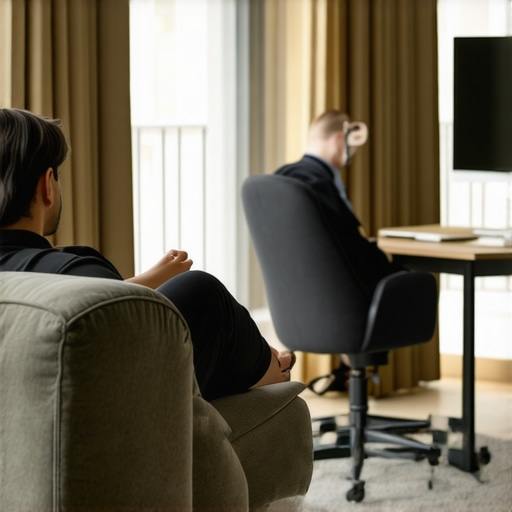
I was hunched over my laptop on the sofa, a half-eaten sandwich on the armrest and a mounting sense of dread in my lower back. Then it happened. A sharp, stinging sizzle shot through my shoulder blades, making me drop my mouse instantly. My neck locked up so tight I couldn’t even look at the clock on the wall. It was only 2 PM. I’d been working from home for three weeks, and I was already physically falling apart. I thought I was being frugal by avoiding expensive furniture, but I was actually fast-tracking a trip to the chiropractor. If you have ever felt like your head weighs a hundred pounds by lunchtime, you aren’t alone—you are just working in a ergonomic minefield. [image_placeholder_1]
Stop Paying for Your Savings with Chronic Back Pain
I used to think that as long as I had a flat surface and a chair, I was good to go. I spent hours working from a plush velvet armchair because it felt ‘cozy.’ Big mistake. By hour four, my pelvis was tilted like a sinking ship and my lumbar spine was screaming for mercy. I learned the hard way that your soft sofa is doing more harm than a hard office chair ever could. The issue isn’t the lack of padding; it’s the lack of structural support. You don’t need a thousand-dollar ergonomic throne to save your spine, but you do need to understand how to align your body without spending a fortune. I made the mistake of thinking expensive gear was the only way out. It’s not. You can fix the majority of your issues with items you already own, like heavy textbooks or a spare towel. For instance, the simple towel roll trick for neck relief is a total game-changer when you’re stuck at a kitchen table. Understanding why your screen height is the real cause of your headaches is far more valuable than buying a fancy motorized desk.
Can You Really Get a Proper Setup for Under Fifty Bucks?
It sounds like a total gimmick, right? We are constantly bombarded with ads for ‘smart chairs’ and ‘active stools’ that cost more than a mortgage payment. But your spine doesn’t care about the brand name or the mesh fabric; it cares about physics and angles. A surprising study published in Surgical Technology International found that tilting your head forward just 60 degrees—a common habit for laptop users—places about 60 pounds of force on your cervical spine. That is essentially like carrying a medium-sized dog around on your neck all day. To combat this, I started using a 4-point check for a healthier home office setup that completely changed my daily energy levels. I stopped the burning between my shoulder blades by realizing why your laptop should never be on your lap for more than 20 minutes. Have you ever finished a workday feeling like your neck was permanently stuck in a ‘C’ shape? I’d love to hear about your most creative makeshift desk setups in the comments. Next, I’ll walk you through the literal ‘shelf’ I built from old shoe boxes and the fastest way to reset your posture when the afternoon slump hits.The first thing I did to save my spine was raid my recycling bin. I stacked two large Amazon boxes under my laptop until the top third of the screen was perfectly level with my eyes. It felt strange at first—almost like I was looking over a wall—but the immediate relief in my upper neck was undeniable. If you don’t elevate your screen, you are essentially asking your neck muscles to hold up a bowling ball at a 45-degree angle for eight hours a day. This mechanical strain is exactly why your head feels heavy after 3 PM. 
Get Your Eyes and Elbows Into the Safe Zone
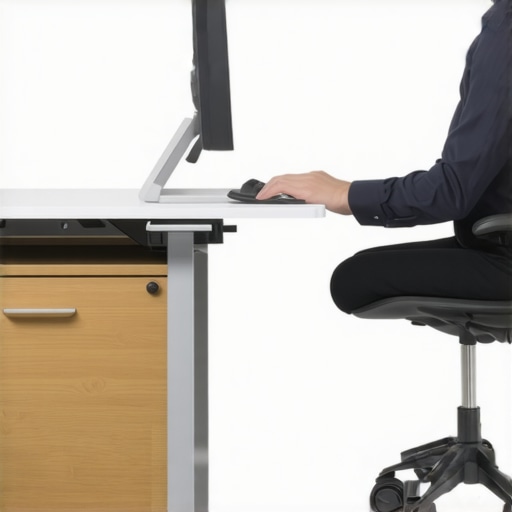
Once the screen is at eye level, you can no longer use the integrated laptop keyboard without bunching your shoulders up to your ears. To fix this, I grabbed a basic external keyboard and mouse for less than twenty dollars. This allowed me to keep my elbows tucked in at a 90-degree angle, which is the gold standard for avoiding that burning sensation between the shoulder blades. I remember the day I tried to ‘cheat’ by typing on my elevated laptop without the external keyboard; I lasted maybe fifteen minutes before a sharp cramp took over my forearm. It was a mess, but it proved that separating the screen from the input device is the only way to satisfy the 4-point check for a healthier home office setup. Think of your spine like the mast of a ship; if the rigging is pulled too tight on one side because the mast is leaning forward, the whole structure eventually fails.
Fix Your Cheap Chair with a Single Kitchen Towel
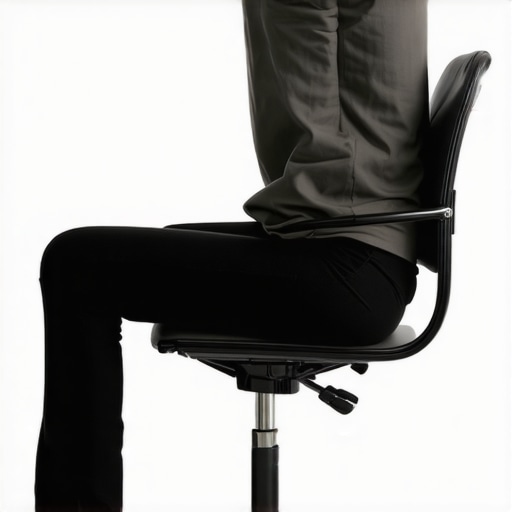
Most kitchen chairs or stylish ‘mid-century’ office chairs have a back as flat as a board. Your lower back, however, has a natural inward curve that needs support to stay healthy. I took a medium-sized kitchen towel, rolled it into a firm cylinder, and secured it to the back of my chair at the level of my belt line. It acted like a tiny, supportive shelf for my lumbar spine. Learning how to use a lumbar roll without making your back stiffer is the single most effective low-cost upgrade you can make. This simple hack prevents your pelvis from tilting backward, which is the root cause of the ‘slump’ that leads to chronic lower back pressure.
Reset Your Nervous System Without Leaving Your Desk
Even a perfect ergonomic setup becomes a cage if you stay frozen in it for too long. I now set a vibrating alarm on my phone for every 50 minutes. When it dings, I perform the fastest way to reset your posture, known as the Bruegger Relief Position. I sit on the very edge of my seat, spread my knees, turn my palms outward, and gently pull my shoulder blades back and down while taking a deep breath. It’s like hitting a ‘refresh’ button on your entire nervous system. If I’m in a meeting where I can’t move much, I’ll at least use the 10-second reset for when your shoulder blades start burning to prevent tension from snowbaling. Integrating a 5-minute desk reset at the end of your shift ensures you aren’t carrying the day’s physical stress into your evening, allowing your body to actually recover while you sleep.Most people think that if a muscle feels tight, the solution is to stretch it until it gives up. I used to be the ‘neck circle’ king, rolling my head around every fifteen minutes. But here is the nuance: often, that tightness is actually your brain’s way of protecting a joint that feels unstable. If you keep stretching a muscle that is trying to guard your spine, you’re just overriding your body’s security system. This is precisely why stretching a tight muscle isn’t always the answer. In fact, aggressive pulling can lead to protective guarding, which is why stretching your neck to the side might be causing more spasms rather than fixing them. The ‘Oops’ factor I see most often—and I was guilty of this for years—is the obsession with the ‘perfect’ static posture. We try to sit like statues in our ergonomically tuned chairs, but the human body is designed for motion, not stillness. Even a perfect setup becomes toxic after ninety minutes of total immobility. This is where chiropractic techniques to boost mobility and ease pain come into play, focusing on restoring the natural slide-and-glide of your tissues rather than just ‘fixing’ your seat height.
Why does my back still hurt even though I bought a $1,200 chair?
It’s frustrating to invest in high-end gear only to have the same dull ache by Friday. The hidden truth is that your spine is a kinetic chain. If you have collapsed arches or ‘flat feet,’ your pelvis tilts, your low back overcompensates, and your neck has to work double-time just to keep your eyes level with the horizon. It sounds wild, but it’s why we look at your feet when your neck hurts. A study in the Journal of Manipulative and Physiological Therapeutics highlighted that pelvic misalignment can significantly increase electromyographic activity in the neck muscles. Essentially, your neck is doing the job your hips and feet are failing at. Have you ever fallen into this trap of buying fancy gear while ignoring your body’s foundation? Let me know in the comments.  I’ve spent thousands on gadgets—neck hammocks, vibrating posture sensors, you name it. But these often act as a crutch, allowing your deep stabilizing muscles to get even lazier. If you rely on a device to hold you up, you’re never teaching your nervous system how to manage gravity on its own. This is a huge part of mobility mastery and expert tips for back pain prevention. Instead of another gadget, focus on how chiropractic care enhances movement by clearing the structural interference first. To truly get ahead of the pain, you need to stop looking at your neck as an isolated tower and start understanding back pain through a guide to better posture and mobility as a full-body project. I learned that my ‘desk neck’ wasn’t just about my screen; it was about how I walked, how I stood in the kitchen, and even the secret link between flat feet and chronic back pain. If you aren’t addressing the foundation, you’re just rearranging the deck chairs on the Titanic. Next time you feel that zing in your shoulder, don’t just reach for a foam roller; look down at your shoes.
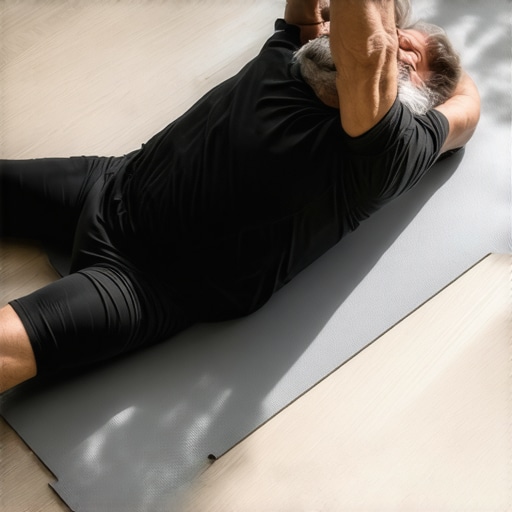
So, you’ve fixed your screen height and rolled up your towel. Now comes the part where most people fail: the long game. I used to think I could ‘finish’ my posture, like I was checking off a task on a to-do list. But your spine is a living system that requires regular maintenance, not a one-time adjustment. For me, that meant moving past the gadgets and mastering the tools I already had. I finally stopped treating my foam roller like a torture device and learned the proper way to use a foam roller on your upper back to actually mobilize my thoracic spine. If you’ve been smashing your lumbar spine against a plastic tube, stop immediately. There is a very specific reason you should stop rolling your lower back on a hard foam roller—it can actually trigger protective muscle guarding rather than the relief you’re after.
How can I maintain my spinal health for the long haul?
The secret isn’t a new chair; it’s a routine that addresses the day’s accumulated stress. I’m a huge advocate for what Dr. Stuart McGill, a world-renowned expert in spine mechanics at the University of Waterloo, calls the ‘Big Three’ exercises for core stability. These aren’t about getting six-pack abs; they are about building the endurance your spine needs to withstand gravity. I integrate these moves with a 5-minute routine to decompress your spine after work to ensure I’m not carrying my ‘desk shape’ into my evening. This approach to mobility mastery and expert tips for back pain prevention has kept me out of the acute pain zone for years. I also started paying attention to the mechanics of my breath. It sounds simple, but learning how to breathe through your diaphragm to reduce lower back pressure changed how my pelvis felt by the end of every workday.
Maintenance is also about movement variety. If you only move in one plane—sitting and standing—your joints eventually lose their range. This is why I swear by a 3-minute morning routine to lubricate your joints before you even check your email. Even the way you handle daily chores matters; I learned the hinge move that protects your spine while gardening and realized it applies to everything from unloading the dishwasher to picking up a toddler. A study published in the Journal of Bodywork and Movement Therapies found that integrating diaphragmatic breathing with core stabilization significantly reduces the frequency of acute low back pain episodes compared to traditional stretching alone.
The next frontier for our spines is definitely going to be AI-driven. We are already seeing wearables that vibrate when you slouch, but I predict that within the next few years, our computer webcams will use real-time skeletal mapping to adjust our desks and lights automatically. We are moving toward a world where your workspace reacts to your fatigue before you even feel a zing of pain. This is why I keep an eye on unlock neck pain relief essential chiropractic tips for 2025; the tech is changing, but our biological needs remain constant. If you want to revitalize your mobility, consistency is your only real currency. I want you to try one thing today: set a timer for 4 PM and perform just one minute of diaphragmatic breathing. You’ll be surprised at how it resets your entire ribcage. If you’re still feeling stuck despite a perfect desk, it’s likely because chiropractic care enhances movement by clearing structural interference that a foam roller simply cannot reach.
So, you’ve fixed your screen height and rolled up your towel. Now comes the part where most people fail: the long game. I used to think I could ‘finish’ my posture, like I was checking off a task on a to-do list. But your spine is a living system that requires regular maintenance, not a one-time adjustment. For me, that meant moving past the gadgets and mastering the tools I already had. I finally stopped treating my foam roller like a torture device and learned the proper way to use a foam roller on your upper back to actually mobilize my thoracic spine. If you’ve been smashing your lumbar spine against a plastic tube, stop immediately. There is a very specific reason you should stop rolling your lower back on a hard foam roller—it can actually trigger protective muscle guarding rather than the relief you’re after.
[image_placeholder_1]
What My Spine Taught Me After 500 Hours on a Kitchen Chair
The most profound lesson I learned wasn’t about the furniture itself, but about the signals my body was sending. Pain is a map, not just a nuisance. I realized that my body would rather be slightly uncomfortable and moving than perfectly ‘aligned’ and static for six hours. The nuance lies in the transition; the moment you feel that dull ache, your brain is actually begging for a change in blood flow.
I also discovered that the hidden link between neck pain and spinal health is often found in how we breathe under stress. When I was deep in a deadline, I’d take shallow chest breaths, which forced my neck muscles to work overtime. Now, I use the simple way to check your posture at home by standing against a flat wall to see how far my head has drifted forward during the day. It’s a reality check that no expensive chair can provide.
The High-Impact Toolkit for a Pain-Free Career
I don’t believe in cluttering your life with ‘ergonomic’ gadgets that end up in a junk drawer. Instead, I rely on a few specific resources and habits that actually move the needle for mobility. First, I swear by the ‘McGill Big Three’ exercises for spinal stability—they are the gold standard for anyone sitting for more than four hours a day. Second, I recommend keeping a simple, firm kitchen towel nearby; it is more versatile than any $100 lumbar pillow I’ve ever tested.
For those times when I’ve pushed too hard, I look into chiropractic secrets to regain full mobility after injury to understand how to safely return to movement. I also keep a copy of ‘Becoming a Supple Leopard’ by Dr. Kelly Starrett on my desk. It’s my go-to manual for troubleshooting joint stiffness before it turns into a crisis. If you feel like your progress has stalled, remember that back pain recovery and how chiropractic care transforms lives is often a journey of small, consistent wins rather than a single magic fix.
Stop Waiting for the Perfect Chair and Start Moving
The ergonomic minefield of working from home doesn’t have to be your permanent reality. You have the power to change your physical trajectory with nothing more than a few Amazon boxes, a kitchen towel, and a timer. Your neck pain and back pain are not inevitable consequences of your career; they are just signs that your current system needs a reboot. By applying these DIY fixes and staying curious about your body’s mechanics, you can turn your living room back into a sanctuary instead of a source of stress. The future of your health depends on the small actions you take between now and 5 PM. Have you ever noticed a specific ‘zing’ in your back when you sit in a certain chair? Let me know in the comments below!