How to sit on a long flight without sciatica flares
I remember one flight from London to New York where I spent four hours standing near the galley because sitting felt like someone was pressing a hot soldering iron against my glute. The flight attendants gave me ‘the look’—the one reserved for people who can not follow directions—but I did not care. I was desperate. My right leg was on fire, and every time I tried to buckle back in for turbulence, the shooting pain made my eyes water. We have all been there, trapped in a tin can at 35,000 feet, praying for the descent just so we can stand up. Today, I am going to share exactly how I stopped that nightmare from happening, so you can actually enjoy your vacation instead of spending the first three days hobbling.
Stop Letting Your Plane Seat Ruin Your Trip
When we sit in those cramped, bucket-style airline seats, our pelvis naturally tucks under, which is a recipe for disaster if you have a sensitive sciatic nerve. Early on, I made the mistake of thinking ‘more padding equals more comfort.’ I would grab two extra blankets and stuff them behind my lower back, not realizing I was creating an aggressive pelvic tilt that actually increased the pressure on my discs. I have since learned that how to sit on a long flight without triggering sciatica starts with small, intentional adjustments rather than just soft cushions. It is also the same reason I tell everyone why you should never sit with a wallet in your back pocket, especially on a plane. Even a half-inch of leather can tilt your entire spine out of alignment for hours.
Is it really possible to fly without a flare-up?
You might be skeptical. After all, those seats were designed by engineers who seemingly hate human anatomy. However, the Mayo Clinic notes that prolonged sitting is one of the most common triggers for nerve compression, but strategic micro-movements can significantly reduce the risk. Have you ever felt that familiar tingle start just as the ‘Fasten Seatbelt’ sign turns on? It is a helpless feeling, but it is manageable once you stop relying on the built-in lumbar support in modern chairs, which is often positioned way too high for the average person. I am going to walk you through my personal strategy for restoring your back mobility while in the air and keeping that nerve quiet until you hit the tarmac.
Turn Your Hoodie into a Lumbar Life Raft
To keep your spine from collapsing into a ‘C’ shape, you need to create a physical barrier between your lower back and the seat. Most people wait for the pain to start before they adjust, but you need to set the foundation before the wheels leave the tarmac. I once found myself on a flight to Tokyo where the lumbar support was basically a plastic bar stabbing my L5-S1 disc. Desperate, I rolled up my favorite thick hoodie into a tight cylinder—about the size of a large burrito—and wedged it right in the small of my back. Within ten minutes, that gnawing ache in my hip started to retreat. It wasn’t a luxury fix, but it worked because it restored the natural arch. This is the basic logic behind how to use a lumbar roll without making your back stiffer; it is about support, not just softness.
Find Your Pelvic Neutral
Once you have your makeshift roll in place, tilt your pelvis forward and back until you find the ‘sweet spot’ where your weight is centered on your sit-bones. If you are tucked too far under, you are stretching the sciatic nerve like a rubber band over a sharp edge. It is a much more effective strategy than why stretching a tight muscle isnt always the answer, because often that ‘tightness’ is actually nerve tension that needs slack, not more pulling. 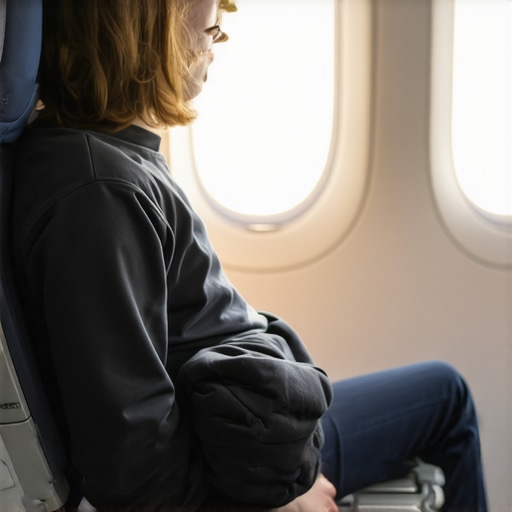
Pump Your Ankles to Feed Your Discs
Your spinal discs do not have a direct blood supply; they rely on movement to pump nutrients in and waste out—a process called imbibition. When you sit still, those ‘sponges’ go dry and become brittle. Every thirty minutes, perform twenty slow ankle pumps. Think of your legs as the fuel pumps for your spine. This simple action helps maintain mobility mastery expert tips for back pain prevention and recovery by keeping the lower chain active even when you are buckled in.
Breathe Your Way to Lower Back Pressure Relief
Most travelers hold their breath or breathe shallowly into their chest when they are stressed or in pain. This causes the psoas and core muscles to tighten, pulling directly on your lumbar vertebrae. Learning how to breathe through your diaphragm to reduce lower back pressure allows your ribcage to expand and takes the ‘grip’ off your spine. Imagine your torso is a balloon; as you inhale, the balloon expands in all directions, creating internal pressure that supports your back from the inside out. This internal stability is far superior to any external brace or seat cushion. Even if you cannot walk the aisles, you can still use the the 30-second morning move to hydrate your spinal discs by gently tilting your pelvis while seated to keep the fluid moving.
The Exit Row Strategy for Leg Room and Nerve Health
If you have the option, the exit row isn’t just about comfort—it is a medical necessity for nerve health. Being able to extend your knees fully reduces the stretch on the sciatic nerve. If you are stuck in a standard seat, keep your knees slightly lower than your hips. This prevents the pelvis from rotating backward and flattening your lumbar curve. By applying these proven strategies, you turn a potential week of recovery into a vacation that starts the moment you land, ensuring you remain ready for whatever adventure awaits.Most people assume that when their leg feels tight or ‘catchy’ during a long trip, the solution is to pull on the limb until it gives way. I see it at every airport gate: travelers leaning over their carry-on bags to touch their toes or aggressively pulling their knees to their chests in the terminal lounge. They think they are helping, but if you have an underlying disc issue, you are essentially pulling a sensitive, inflamed nerve across a jagged anatomical edge. This is the biggest ‘Oops’ I see in my clinical practice. In my experience, aggressive lunges and long-held static poses often backfire because why static stretching might be prolonging your back pain involves the fact that you aren’t just stretching muscle—you’re tugging on the entire nervous system. When a nerve is already under tension from a cramped plane seat, the last thing it needs is more tension.
Why Does the Tingling Move Even When You Are Perfectly Still?
It’s a phenomenon called ‘peripheralization,’ and it is a nuance many beginners miss. Advanced patients often ask why the sensation in their calf fluctuates even when they haven’t moved for an hour. A study published in the British Journal of Sports Medicine suggests that neural tension is highly sensitive to chemical inflammation and micro-vascular changes, not just physical pressure. This means that if you’ve been ‘self-correcting’ by twisting your spine in your seat, you might be fueling the inflammatory fire. I’ve seen many travelers try the truth about cracking your own back at home (or in an airplane seat), thinking a ‘pop’ will provide alignment. In reality, you’re often just over-stretching the protective ligaments around the joint, which leads to more instability and a potential rebound spasm once you stand up at baggage claim.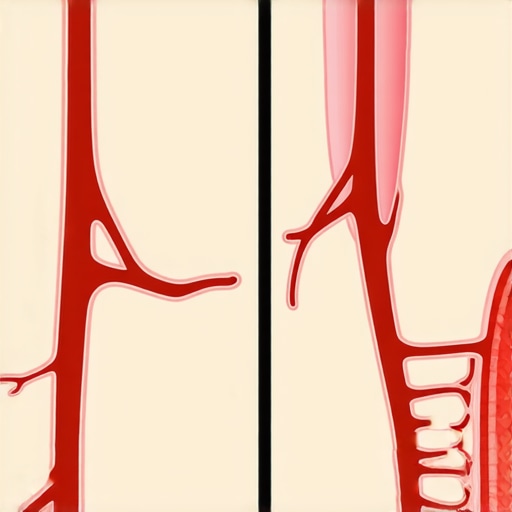
The Danger of Self-Cracking in Mid-Air
Another common trap is the ‘ice it until it’s numb’ approach when you get to the hotel. While ice is useful for a brand-new, acute injury, for a chronic travel-related flare-up, it can actually cause the paraspinal muscles to guard more aggressively. This is quite similar to why icing a stiff neck might be making it harder to move; excessive cold can decrease local circulation exactly when those thirsty, compressed discs need nutrient-rich blood flow. Instead, I recommend focusing on mobility mastery expert tips for back pain prevention and recovery by using gentle ‘nerve glides.’ This involves moving your ankle or neck in a way that encourages the nerve to slide through its surrounding tissue without actually stretching it. Have you ever fallen into the trap of over-stretching when you’re in pain? Let me know in the comments. By shifting your mindset from ‘stretching’ to ‘mobilizing,’ you can use a the 3-minute morning routine to lubricate your joints to effectively undo the damage of an eight-hour flight without triggering a secondary inflammatory response.Once you have stepped off the plane, the battle for your back health shifts from survival to maintenance. I never travel without what I call my ‘Spinal Survival Kit,’ and it is far simpler than you might think. My most trusted tool is a simple lacrosse ball. I use it to pinpoint the exact spot where my glutes or shoulders started to seize during the flight. It is effectively the same principle I share when teaching how to use a tennis ball to release upper back tension, but with a bit more firmness for those deep hip rotators. If you can spend five minutes in your hotel room leaning against a wall with one of these, you can often prevent a minor ache from turning into a full-blown spasm.
Pack These Three Tools for Your Next Layover
Another non-negotiable for me is a portable, inflatable lumbar roll. Unlike the bulky foam ones, these can be tucked into a jacket pocket and adjusted for firmness depending on the specific seat depth. This is how you take the guesswork out of how to use a lumbar roll without making your back stiffer. I also carry a small resistance band to perform ‘No-Moneys’ or rows in the terminal, which provides a much-needed the 10-second reset for when your shoulder blades start burning. These tools work because they address the postural collapse that happens when we are fatigued.
How do I maintain these results when I am constantly on the move?
Consistency is the only real secret. You do not need an hour-long gym session; you need high-frequency, low-intensity reminders for your nervous system. In my own routine, I rely on ‘The McGill Big Three,’ a set of exercises developed by Dr. Stuart McGill, a leading authority in spine biomechanics. He famously argues in his research that ‘spine sparing’ is about building endurance in the core rather than just raw strength. This is why I always prioritize the dead bug exercise why it is the king of core stability as soon as I get to my destination. It resets the relationship between my pelvis and my ribcage, which the airplane seat tried its best to destroy. Even if you are just waiting for your luggage, you can perform the 10-second posture check you can do anywhere to ensure your weight is distributed evenly. 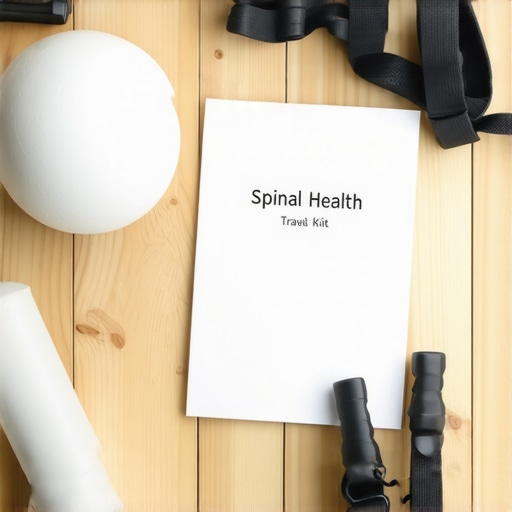
Smart Sensors and the Future of Spinal Care
Looking ahead, I predict we are going to see a massive shift toward wearable biofeedback. We are already seeing the early stages with ‘smart’ shirts and sensors that can track your spinal curvature in real-time. Within the next five years, your phone will likely vibrate the moment your L5-S1 disc reaches a critical compression point during a flight, prompting you to stand up before the pain even starts. Until that tech becomes mainstream, we have to rely on our own body awareness and mobility mastery expert tips for back pain prevention and recovery. I challenge you to try the ’10-second reset’ next time you feel that familiar burn in your shoulders—don’t wait for the plane to land to start your recovery. Building these habits is the cornerstone of back pain recovery how chiropractic care transforms lives, taking you from a passive passenger to an active participant in your own health.
Hard-Won Secrets from 100,000 Air Miles
One of the biggest shifts in my thinking came when I realized that comfort and support are not the same thing. On a twelve-hour flight, a soft seat is often your enemy because it allows your spine to collapse into a C-shape. I stopped looking for the plushest pillow and started looking for the firmest support. I also realized that why stretching a tight muscle isnt always the answer; most of the time, your muscles are tight because they are protecting an irritated nerve. If you keep pulling on them, you just make the nerve angrier. Finally, I learned that proactive movement is far more effective than reactive stretching. If you wait for the pain to start, you have already lost the battle.
The Gear That Actually Fits in Your Carry-On
You do not need a suitcase full of gadgets to stay mobile. My travel kit is minimal but incredibly effective. First, a simple lacrosse ball is the ultimate tool to work out glute knots after landing; it is basically a more intense version of how to use a tennis ball to release upper back tension. Second, I always carry a light resistance band. It weighs nothing but allows me to perform the 10-second reset for when your shoulder blades start burning while standing in the customs line. Lastly, I swear by the ‘Big Three’ approach for core stability. Once you reach your hotel, performing the dead bug exercise why it is the king of core stability is the fastest way to re-engage your core and stabilize your lumbar spine after hours of compression.
Your First Step Toward Pain-Free Travel
Travel should be about the destination, not the physical price you pay to get there. By taking control of your alignment and incorporating these micro-movements, you are doing more than just avoiding a flare-up; you are investing in back pain recovery how chiropractic care transforms lives. You do not have to be a victim of airline seat design. Take these tools, use them early and often, and reclaim your mobility before you even reach the hotel lobby. Have you ever found a specific seat hack or small tool that saved your lower back on a long-haul flight? Let me know in the comments below!