How to tell if your dizziness is coming from your neck
I remember standing in the middle of a grocery aisle, staring at a box of cereal, when the world suddenly tilted forty-five degrees to the left. I grabbed the shelf like a life raft, certain that I was about to pass out. For weeks, I convinced myself I had some rare inner ear infection or that I was just getting old. I even bought those motion sickness bands, which did exactly nothing. It wasn’t until I noticed that my dizzy spells usually flared up after a long day of hunching over my laptop that the lightbulb finally went off. I realized that my fast fix for sharp pain when turning your head wasn’t just a nuisance; it was actually the source of my instability.
Stop Blaming Your Inner Ear for Every Dizzy Spell
We often assume that vertigo is strictly an ear issue, but your neck is packed with sensory receptors that tell your brain where your head is in space. When those joints get jammed or inflamed, the signals get scrambled. It’s like a GPS that’s trying to recalculate while you’re driving through a tunnel. Today, I want to help you figure out if your balance issues are actually stemming from your cervical spine so you can finally get back on solid ground.
One of the biggest mistakes I made early on was treating the symptoms rather than the source. I’d pop an anti-nausea pill and hope for the best, completely ignoring the fact that I had zero range of motion. If you find that your dizziness increases when you move your head or after you’ve been stuck in one position for hours, you might be dealing with cervicogenic dizziness. It’s more common than you think. In fact, research published in the Journal of Manual & Manipulative Therapy suggests that up to 80-90% of patients with cervicogenic dizziness show improvement with manual therapy—like chiropractic care—which restores proper joint mechanics. This is why unlocking neck pain relief is so vital; it is not just about the ache, it is about your entire equilibrium. Have you ever felt lightheaded specifically after staring at your phone for too long?
Is this just another internet health fad?
I get it. It sounds a bit unbelievable to suggest that a stiff neck can make you feel like you’re on a cruise ship. You might be skeptical, thinking, “How can a bone in my neck make my eyes feel like they cannot focus?” But the connection is purely anatomical. Your suboccipital muscles—the tiny ones at the very top of your neck—are direct communicators with your visual system. When they are tight, your brain gets conflicting data. Have you ever felt that weird brain fog specifically after a long drive? Identifying that pattern is your first step toward freedom. By using simple tools like the simple towel roll trick for neck relief at your desk, you can start to decompress the area. But before we dive into the fixes, we need to look at the specific tells that separate a neck issue from a traditional vertigo case.
How to Tell if Your Neck is Lying to Your Brain
The first step in fixing this isn’t found in a pill bottle; it starts with pattern recognition. If your world spins only when you turn your head to check your blind spot or when you’ve been hunched over a keyboard for three hours, that’s a mechanical red flag. Think of your spine as the mast of a ship. If the cables—your muscles and nerves—are pulled too tight on one side, the whole mast tilts. This creates a massive conflict between what your eyes see and what your neck feels. To get a handle on this, you need to look at the hidden link between neck pain and spinal health to understand how a single misaligned segment can throw off your entire internal compass. I spent months thinking I had a neurological disorder when, in reality, I just had a ‘stuck’ upper cervical joint that was screaming for a reset.
Listen to the Timing of Your Spells
I remember a specific Tuesday morning when I reached for a coffee mug on a high shelf. The moment my chin tilted up, the kitchen floor seemed to drop three inches. It was terrifying, but it was also a clue. True inner ear vertigo usually lasts for hours or days and is often accompanied by ringing. Cervicogenic dizziness is usually short-lived—seconds or minutes—and is triggered by specific movements. If you can replicate the dizziness by pressing on the base of your skull, you’ve found the source. This is why effective neck pain management focuses so heavily on restoring movement rather than just numbing the area. If the joint doesn’t move, the brain doesn’t know where it is.
The Reset Technique That Actually Works
To stop the ‘spinning’ signals, we have to talk about decompression. When your head sits forward—a posture we call ‘Tech Neck’—it puts nearly 60 pounds of pressure on those tiny balance-sensing muscles. Think of it like a garden hose with a kink in it; the information just can’t flow. One of the most effective ways to unkink that hose is by using the Bruegger position to reset your posture. This isn’t just about looking better in photos; it’s about physically widening the space where your nerves exit the spine. When I first started doing this, I felt a strange ‘rush’ of clarity in my vision. It was as if someone had finally cleaned a dirty lens I didn’t know I was looking through.
Fix the Foundations From the Ground Up
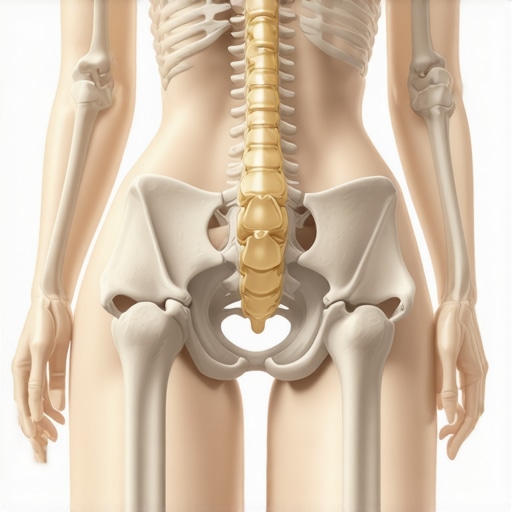
It sounds counterintuitive, but your neck might be acting out because your lower back is failing. Your spine is a kinetic chain; if the bottom is crooked, the top has to compensate to keep your eyes level with the horizon. This constant micro-adjustment in your neck is what leads to that ‘heavy head’ feeling by 3 PM. You might notice the real reason your head feels heavy is actually a lack of support much further down the line. This is precisely why we adjust the pelvis to fix neck tension. By stabilizing the base, your neck muscles can finally stop pulling ‘double duty’ as stabilizers, which allows those balance receptors to calm down. If you’ve been stretching your neck for weeks with no relief, the problem is likely an inch or two lower than you think. Using chiropractic techniques to boost mobility ensures that every link in the chain is pulling its weight, preventing that sensory overload that leads to dizziness.
Everyone tells you that if a muscle feels tight, you should stretch it until it gives up. In my years of clinical observation and personal recovery, I’ve found this to be one of the most counterproductive habits you can develop. If your neck is in a protective spasm to stabilize a misaligned joint, stretching it is like trying to loosen the lug nuts on a car while it is still moving. You are actually stripping away the only thing keeping your cervical spine from further injury. This is why stretching a tight muscle isn’t always the answer. Sometimes, that tightness is your body’s last line of defense against a deeper structural issue.
Stop stretching that tight muscle right now
The biggest ‘oops’ factor I see is the obsession with static stretching during a flare-up. When you feel that ‘knot’ in your upper trap, your instinct is to pull your head to the opposite side. However, why stretching your neck to the side might be causing more spasms is rooted in the stretch reflex; the muscle is already overextended and weak, and pulling it further just triggers a more intense contraction. Instead of relief, you get a rebound headache. I fell into this trap for years, wondering why my 20-minute yoga routine left me feeling more fragile than when I started.
Can a stiff ankle really be the cause of your dizziness?
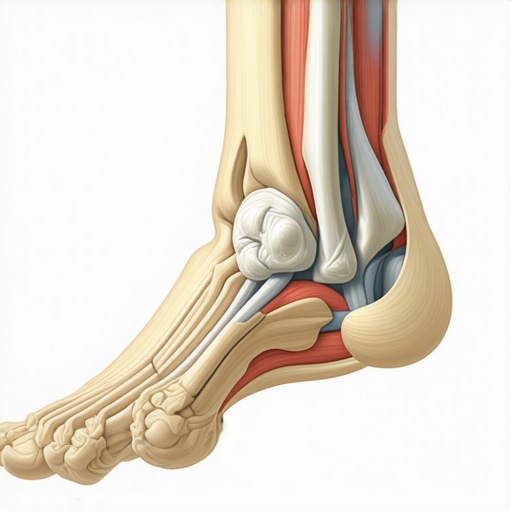
Let’s look at the kinetic chain—a concept often ignored in basic wellness circles. A study published in the Journal of Bodywork and Movement Therapies highlights how myofascial continuity means tension in the feet can travel all the way to the cranium via the posterior chain. I’ve seen patients who couldn’t resolve their ‘tech neck’ until we looked at their footwear or their old sports injuries. It sounds crazy, but how a single tight ankle can cause chronic back pain and eventually, neck instability, is a scientific reality. When your gait is off, your neck has to work ten times harder to keep your eyes level with the horizon. You might find that why we look at your feet when your neck hurts is the most important realization of your recovery journey.
The ice trap you need to avoid during a flare-up
Another common mistake is reaching for the ice pack the moment your neck feels stiff. While ice is great for a brand-new, swollen injury, using it on a chronically tight neck can actually backfire. Cold causes tissues to contract and can decrease the local blood flow needed for healing. This is why icing a stiff neck might be making it harder to move. In many cases, why heat is usually better than ice for old injuries holds true because it encourages the muscles to let go of that protective guarding. If you’ve been ‘icing and stretching’ with zero results, you are likely stuck in a cycle of metabolic waste buildup and muscle guarding.
Are you treating a symptom or a structural failure?
True mobility mastery isn’t about how far you can bend; it’s about how well your joints communicate with your brain. If you are constantly using how to use a tennis ball to release upper back tension but the pain returns every three days, you aren’t fixing the problem—you are just hitting the snooze button on an alarm. We need to look at the hidden link between neck pain and spinal health to see if the foundation is crumbling. Have you ever fallen into this trap of stretching a muscle that just won’t let go? Let me know in the comments.
I used to think that a single adjustment would fix me forever. It was a naive hope that somehow my twenty years of bad habits could be erased in twenty minutes. The truth is that the work we do in the clinic is only 20% of the battle; the other 80% happens in your living room and at your desk. If you want to stop the dizziness from coming back, you have to audit your environment. I started by looking at my sleep setup. For years, I woke up with a ‘kink’ that felt like a hot poker in my shoulder blade. It wasn’t until I learned how to choose the right pillow height for your body type that I stopped waking up in a defensive posture. Your pillow isn’t just a soft place to land; it is a structural support system for your cervical curve.
Equip your workspace to protect your progress
Your desk is likely the primary antagonist in your story. I tell everyone who walks into my office that their monitor is the most important piece of health equipment they own. If you are looking down even slightly, you are doubling the weight of your head on your neck joints. I personally use a heavy-duty monitor arm to keep my screen at eye level, ensuring I never have to ‘search’ for the screen with my chin. This is why your screen height is the real cause of your headaches and why no amount of massage can fix a bad desk layout. I recommend the 4-point check for a healthier home office setup to my clients because it addresses the keyboard, the monitor, the chair, and the feet simultaneously. If one of these is off, the neck pays the price.
In the coming years, I suspect we will see a massive shift toward wearable biofeedback—tiny sensors that vibrate when your cervical joints hit a certain degree of flexion. We are moving away from passive recovery and toward real-time correction. Until those become mainstream, you have to be your own sensor. A study published in the Journal of Physical Therapy Science found that even a 15-degree forward head tilt increases the weight on the spine to 27 pounds. That is like carrying a medium-sized dog around your neck all day. To counter this, I integrated the 5-minute desk reset for busy professionals into my daily calendar. It is a non-negotiable appointment with my spine.
How do I maintain these results over time?
Maintenance isn’t about doing more; it’s about doing the right things consistently. I shifted my focus from ‘stretching’ to ‘stability.’ If your core is weak, your neck will try to stabilize your entire torso. I started using the dead bug exercise because it is the king of core stability without putting any shear force on the lumbar spine. This shift in focus is how you achieve mobility mastery. You also have to be mindful of how you move when you aren’t thinking about it. For example, learning the proper way to get out of bed to protect your discs saved me from that morning ‘stiffness’ that used to haunt me for hours. It’s these tiny, mechanical wins that stack up to a pain-free life. I want you to try one thing today: move your monitor up by two inches and see if that afternoon brain fog starts to lift. You might find that chiropractic secrets to boost neck comfort and function are actually just hidden in your daily ergonomics.
The Hardest Realities I Faced While Finding My Balance Again
The first thing I had to accept was that healing isn’t a straight line. I used to get so frustrated when a dizzy spell would hit after three “good” days, but I eventually learned that my nervous system was just recalibrating. It’s like teaching a child to walk; there will be stumbles, but those stumbles are part of the learning process. Secondly, I realized that my environment was often my biggest enemy. If I didn’t proactively change how I sat or slept, I was just spinning my wheels.
Finally, I learned that silence is a symptom. When your neck stops hurting but you still feel “off,” your body might just be in a state of high-alert guarding. True recovery means reaching a point where your body feels safe enough to let go of that tension entirely. This is why I often tell people that chiropractic secrets to boost neck comfort and function are less about a single “pop” and more about the daily maintenance of your internal GPS.
My Personal Arsenal for a Resilient Spine
I don’t go a single day without these staples. First, I start every morning with the 30-second morning move to hydrate your spinal discs. It’s like oiling the hinges of a rusty door before you try to swing it open. For desk work, I live by the 4-point check for a healthier home office setup. If my monitor is too low or my feet aren’t flat, my neck will inevitably pay the price within the hour.
To keep my foundation strong, I rely on the dead bug exercise. It sounds silly, but it’s the most effective way to ensure your core is doing the heavy lifting so your neck doesn’t have to. I also keep a tennis ball in my desk drawer; learning how to use a tennis ball to release upper back tension has saved me from dozens of afternoon headaches.
#IMAGE_PLACE_HOLDER_E#
Take Your First Step Toward a Life Without the Spin
Dizziness and chronic stiffness can make your world feel very small, but you don’t have to stay stuck there. By shifting your focus from chasing symptoms to building structural stability, you can reclaim your confidence. Every small adjustment—whether it’s raising your screen or practicing better effective neck pain management—is a deposit into your long-term health. You deserve to move through your day without the floor tilting beneath you. Have you ever felt like your dizziness was tied to your posture? Tell me about your ‘lightbulb moment’ in the comments below.