What Your Chiropractor Wishes You Knew About Heavy Lifting
I was halfway through a set of deadlifts when I felt it—a sharp, electric zing that shot straight down my leg and made my vision go blurry for a second. It wasn’t even a personal record weight. It was a warm-up. I remember standing there, frozen, thinking, “Not again.” I’d spent years thinking my back was made of steel, but that morning, my spine decided to remind me who was actually in charge. I made the classic mistake of relying on raw strength while completely ignoring the subtle signals my body was sending. I thought because I worked out, I was immune to the kind of persistent back pain that plagues everyone else. I was wrong. Today, I’m going to share exactly why your heavy lifting routine might be a ticking time bomb and how you can fix your mechanics before you’re forced onto a treatment table.
The Day My Lower Back Decided to Quit
It’s a common story in my neighborhood: someone hits the gym, feels great, and then spends the next week hobbling around because they tried to ‘power through’ a lift. I was that guy. My biggest error early on was assuming that if I could move the weight, I was doing it right. I ignored my bracing, I let my ribs flare, and I treated my spine like a crane rather than a living, breathing structural masterpiece. This ego-driven approach is exactly what leads to long-term issues. According to the Journal of Orthopaedic & Sports Physical Therapy, improper spinal loading is a leading predictor of disc-related injuries, yet most of us prioritize the number on the bar over the integrity of our vertebrae. We need to shift the focus from ‘how much’ to ‘how well’ we move. This isn’t just about the gym, either; I’ve seen people throw their backs out because they didn’t know how to pick up a laundry basket safely.
Does a lifting belt actually protect your spine?
Many people think strapping on a piece of leather makes them invincible, but that’s a dangerous myth. There is a specific truth about weightlifting belts and spinal stability that most lifters ignore: a belt is a tool for intra-abdominal pressure, not a replacement for a strong core. If you don’t know how to breathe into your pelvis, that belt is just a fashion accessory. Have you ever felt that terrifying ‘pop’ or a sudden ‘catch’ in your lower back while doing something totally mundane?
It is Not Just About the Weight You Move
Your chiropractor sees the aftermath of ‘toughing it out.’ We see the shifted pelvises and the locked-up SI joints that come from repetitive strain. When we talk about back pain recovery, we aren’t just talking about getting you back to the gym; we’re talking about restoring your ability to live without fear of a sudden spasm. The secret isn’t just in the adjustment—it’s in the way you carry yourself every single day. I had to learn the hard way that my ‘perfect’ form was actually putting massive shear force on my L5-S1 disc. Once I started listening to what my spine was actually telling me, everything changed.
Rebuild your foundation from the ground up
Moving weight safely isn’t about being a gym rat; it’s about mastering the mechanics of a human machine that was designed for efficiency, not just brute force. When I was recovering from my own injury, I had to treat my spine like a high-performance engine that had fallen out of alignment. The first thing you have to fix isn’t your squat—it’s how you create internal pressure. Think of your torso as a soda can. When the can is full and sealed, it can support an incredible amount of weight. But if you put a single dent in the side or leave the top open, it collapses instantly. Your core is that pressurized can.
Stop breathing with your chest and start bracing
Most people take a big gulp of air into their shoulders right before a lift. This is a disaster because it raises your center of gravity and disconnects your rib cage from your pelvis. Instead, you need to learn how to breathe into your lower back to reduce muscle spasms and create 360-degree expansion. I remember a specific session where I was struggling with a basic overhead press; I kept feeling a pinch in my mid-back. My coach stopped me, poked my obliques, and told me to ‘push my fingers out’ with my breath. I felt like a different person. That simple shift in pressure stabilized my spine and allowed me to restore my range without that familiar, nagging ache. 
Find your neutral pelvis before you touch the bar
If your pelvis is a bowl of water, you don’t want it tilting forward and spilling out the front. This ‘anterior tilt’ is what causes your lower back to arch excessively, putting all the stress on your facet joints. I’ve found that mastering the pelvic tilt trick for instant lumbar relief is the fastest way to turn off overactive back muscles. When I started implementing the dead bug variation that actually fixes lower back instability, my deadlifts finally stopped feeling like a gamble with my health. You have to actively pull your ribs down and tuck your hips slightly to ensure the weight is distributed across your muscles rather than your bone structure.
Lock your shoulders into your back pockets
Most lifters focus so much on their lower back that they forget the upper spine dictates what happens below. If your shoulders are rounded forward, your lower back has to overcompensate to keep you upright. You can fix this by performing the scapular squeeze that relieves mid-back tension before every set. This ‘packs’ the lats and creates a rigid upper frame. I see so many people struggle because their ribs flare when they reach overhead, which is a neon sign for impending back pain. By pinning the shoulder blades back and down, you create a structural anchor that protects the delicate discs of your lumbar spine while you move through your range of motion.
Stop stretching your hamstrings to fix your back
We’ve been told for decades that ‘tight’ muscles are the enemy. If your back hurts, you probably reach for your toes or pull your knees to your chest, thinking that more flexibility will finally provide the relief you crave. But here is the contrarian truth: for many lifters and desk workers, stretching is actually the fuel on the fire. When your spine is unstable, your brain sends a signal to the surrounding muscles to tighten up—it’s a protective ‘splinting’ mechanism. By aggressively stretching those hamstrings or your lower back, you are effectively trying to rip off the bandage that your nervous system put there to keep you safe. I see this constantly in clinical practice. People come in with a ‘tight’ feeling that is actually neural tension or a disc that is struggling to stay centralized. In these cases, back pain recovery isn’t about getting more flexible; it’s about building the stiffness that your body is desperately trying to create on its own. Dr. Stuart McGill, a world-renowned expert in spine biomechanics, has shown that spinal stability, not flexibility, is the primary predictor of a healthy, pain-free back. If you’ve been stretching for months and the ‘tightness’ always comes back within an hour, stop. Your body is trying to tell you that it needs more stability, not more length. Have you ever fallen into this trap of stretching a ‘tight’ muscle until it felt even worse? Let me know in the comments.
The foam roller trap most lifters fall into
If you own a foam roller, there is a high chance you’ve used it directly on your lower back. This is a massive ‘oops’ factor that can lead to a significant flare-up. Unlike your mid-back (the thoracic spine), which is protected by your rib cage, your lumbar spine is relatively exposed. When you put the full weight of your body on a hard roller in the lower back region, you are pushing the vertebrae into extension and potentially irritating the facet joints or putting undue pressure on the discs. This is exactly why your foam roller might be hurting your lower back rather than helping it. Instead of rolling the site of the pain, focus on the tissues above and below. Roll your quads, your glutes, and your thoracic spine to restore your range. Leave the lumbar spine alone; it needs a solid foundation, not a deep-tissue massage from a piece of plastic. 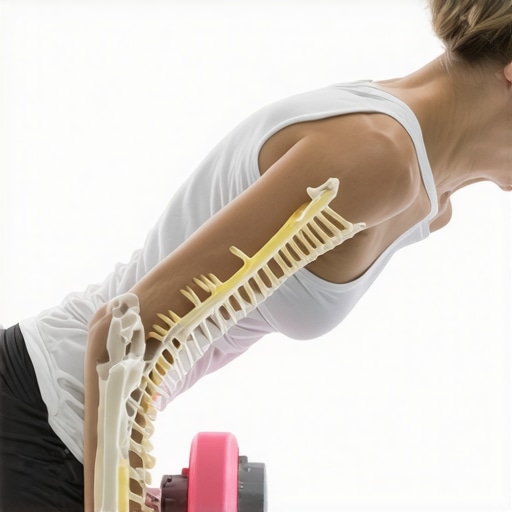
Can your choice of footwear actually trigger a neck migraine?
It sounds like a stretch, but the kinetic chain is a real thing. This is a nuance that most people miss: why we look at your feet to solve your neck issues is because your foundation dictates your head position. If your arches are collapsing, your knees rotate inward, your pelvis tilts, and your head has to jut forward just to keep your vision level. This creates a ‘top-down’ strain that manifests as chronic tension at the base of the skull. This is why back pain recovery or neck relief is rarely just about where it hurts. We have to look at the global map of how you move. If you aren’t addressing the hidden link between neck pain and spinal health starting from the ground up, you are just chasing symptoms while the root cause remains untouched.Once the initial fire of acute pain is out, the real work begins. I’ve seen too many people treat their chiropractor like a mechanic—they come in for a ‘tune-up’ when the engine smokes, then drive 100mph until it breaks again. True back pain recovery isn’t a destination; it’s a lifestyle of maintenance.
Keep your spine from sliding back into old habits
The hardest part of the journey isn’t the first adjustment; it’s the six months of boring, consistent habits that follow. If you sit at a desk for eight hours, no amount of gym time can fully undo that ‘crescent moon’ spine shape unless you integrate micro-movements. I personally use a ‘standing desk alarm’ every 45 minutes. It’s not about just standing up; it’s about performing a 5-minute reset for a stiff lumbar spine to tell my nervous system that we aren’t in a state of permanent slouch.
The tools I actually keep in my gym bag
You don’t need a $5,000 recovery pod. I swear by two things: a standard lacrosse ball and a high-quality massage gun. I use the lacrosse ball to fix that spot under your shoulder blade that always feels like a hot poker. Why? Because a foam roller is too blunt. You need something that can get into the laminas and the rhomboids. When I use a massage gun, I’m careful to use a massage gun on your lower back safely by avoiding the bone and focusing on the soft tissue of the QL and glutes. 
How do I keep my back healthy for the next decade?
Long-term success comes from understanding the ‘one-joint rule’ popularized by Dr. Kelly Starrett in Becoming a Supple Leopard. He argues that you should never move your spine through a range of motion while it’s under significant load—you move from the hips and shoulders instead. This philosophy is how you restore your back mobility without re-injuring the discs. It’s about creating a ‘stiff’ torso so your limbs can be powerful.
Why real-time biofeedback is the next big thing
I predict that within five years, we’ll all be wearing thin, adhesive sensors that vibrate the second our lumbar spine loses its neutral curve. We are moving away from ‘guessing’ if our posture is good and toward data-driven spinal health. But you don’t have to wait for the future. Start today by testing your own resilience. If you’ve been sitting for more than an hour, I want you to stop right now and try the Bruegger’s relief move. It’s the single most effective way to reset your neural pathways and remind your body what ‘upright’ actually feels like. Don’t just read this—stand up and do it. Your L5-S1 will thank you later.
The Reality Checks That Changed My Recovery Forever
After years of trial and error, I realized that my spine wasn’t fragile; it was just poorly managed. One of the biggest shifts in my mindset was accepting that pain is a messenger, not a defect. When I stopped trying to silence the signal with ibuprofen and started back pain recovery through mechanical changes, my world opened up. I also learned that “stiffness” in the morning is often a protective mechanism from a long day of poor sitting habits, not just “getting old.” Knowing how to tell if your back pain is serious vs. mechanical fatigue gave me the confidence to keep moving even when things felt “off.” Finally, I discovered that true mobility mastery isn’t about reaching your toes; it’s about how well you can stabilize your core while your limbs do the heavy lifting.
Tools and Resources That Won a Permanent Spot in My Routine
I don’t believe in over-complicating things, but there are a few resources that changed my life. First, Dr. Stuart McGill’s book Back Mechanic is the bible of spinal health—it taught me more about my own body than a decade in the gym. Second, a simple lacrosse ball for trigger point therapy is indispensable for those days when the fascia feels tight. Third, a standing desk setup that allows for the 5-minute reset for a stiff lumbar spine has been a game-changer for my productivity and posture. I trust these tools because they focus on long-term structural integrity rather than quick, temporary fixes.
The Path to a Resilient Spine Is Shorter Than You Think
You don’t have to live in fear of the next “pop” or spasm. By shifting your focus from raw intensity to intentional mechanics, you can enhance mobility naturally with chiropractic care and daily awareness. Your spine is incredibly resilient when you give it the support it needs. Don’t wait for another injury to start treating your body with the respect it deserves. Have you ever tried stretching a tight spot in your back only to find the pain returned even worse an hour later? Let me know in the comments below!