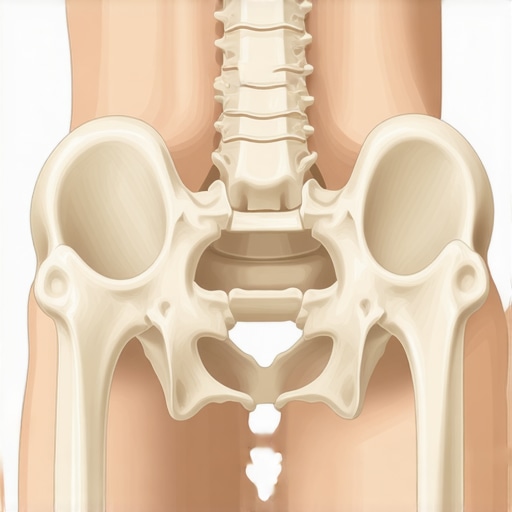
The ‘Chin Tuck’ Mistake That Is Making Your Neck Pain Worse
I remember sitting at my kitchen table, pulling my chin back so hard I looked like a human turtle, desperate to fix the burning ache in my shoulders. I was trying to be the perfect patient, doing exactly what I thought the ‘experts’ on the internet suggested. Instead of relief, I woke up the next morning with a headache that felt like a hot poker behind my left eye and a neck so stiff I couldn’t check my blind spot while driving. I had fallen into the most common trap in corrective exercise: the aggressive over-correction. I thought more force meant faster healing. I was wrong. We have been told that the chin tuck drill to combat tech neck instantly is the gold standard, but if you’re jamming your spine into a ‘double chin’ position with all your might, you are actually trashing your joints. Today, I want to share the subtle shift that changed everything for me and will finally help you find real relief.
Stop jamming your neck and start feeling better
Most people think the goal of a chin tuck is to see how many folds they can create under their jaw. I made that exact mistake for months, thinking I was ‘strengthening’ my muscles when I was actually just compressing my upper cervical vertebrae. What I didn’t realize then was that the hidden link between neck pain and spinal health is built on precision, not power. When you yank your head back horizontally, you often end up hinging at the wrong segment of your spine. This mechanical error is how to tell if your headache is actually coming from your neck rather than just standard stress. Real progress comes from a gentle ‘nod’ rather than a forceful ‘slide.’ Have you ever noticed that your neck feels even tighter right after you finish your daily stretches? If so, you’re likely over-tucking and irritating the very nerves you’re trying to soothe.
Is this exercise actually worth the risk?
It is a fair question to ask, especially if you have ever felt why you feel dizziness after a neck strain or a sharp zing while trying to fix your posture. The reality is that the chin tuck isn’t the villain—the execution is. According to research published in the Journal of Orthopaedic & Sports Physical Therapy, for every inch your head tilts forward, the effective weight on your spine increases by about 10 pounds. We absolutely have to address that forward lean, but we can’t do it by being aggressive. By learning the ‘long neck’ approach instead of the ‘double chin’ squash, you can start unlocking neck pain relief without causing more inflammation. Let’s look at why your current form is likely failing you and the three-second tweak that makes this exercise safe again.
Treat your spine like a telescope
Imagine your neck is a vintage telescope. If you jam the sections together with force, you risk bending the metal and ruining the lens. This is exactly what happens when you perform a traditional ‘aggressive’ chin tuck. Instead of finding relief, you end up with compressed joints. To fix this, we need to focus on axial elongation. This means instead of moving your chin back toward your spine, you imagine a string attached to the very crown of your head, pulling you toward the ceiling. When you lengthen upwards, you create space between those tiny cervical vertebrae, which is the first step to restore your range and stop the grinding sensation in your joints.
The invisible string technique for instant height
I remember practicing this while sitting at a red light in my old Honda. I used to press my head into the headrest so hard that my ears would pop and my vision would get blurry for a second. I thought I was ‘realigning’ myself, but I was just creating a massive amount of internal pressure. The shift happened when I stopped pushing ‘back’ and started thinking ‘up.’ By gently lifting the back of my skull, my chin naturally tucked about half an inch without me even trying. This subtle move is one of the most effective chiropractic techniques unveiled for desk workers because it offloads the weight of your head from the delicate nerves. If you feel a slight stretch at the base of your skull rather than a pinch in the front of your throat, you are doing it right.
The ‘micro-nod’ is your secret weapon
Once you have found that extra bit of height, the next step is the ‘micro-nod.’ Forget about the double chin for a moment. Instead, imagine there is a tiny marble sitting right at the top of your spine, and you are trying to roll it forward just a few millimeters with your nose. This tiny rotation is how you learn how to strengthen your deep neck flexors without involving the big, beefy muscles on the side of your neck that are already overworked. When these deep stabilizers wake up, they act like a natural neck brace, holding your head in place so your traps can finally stop burning.
Keep your jaw out of the fight
A major mistake I see is people clenching their teeth while trying to fix their posture. If your jaw is tight, your neck cannot move freely. This is why chiropractic secrets to boost neck comfort and function often involve relaxing the mouth. While you perform your micro-nods, keep your lips together but your teeth slightly apart. If you find this difficult, try pairing the movement with the simple shoulder blade squeeze for instant neck relief. By opening the chest and relaxing the jaw simultaneously, you break the ‘slouch cycle’ that keeps you in pain. To make this a habit, follow the 20-20-20 rule for desk workers and neck health, but add a five-second ‘upward lengthen’ every time you look away from the screen. If you’re really feeling stuck, incorporating the Bruegger’s relief move twice a day can act as a total reset button for your nervous system.
Let’s dig deeper into the mechanics of why these generic fixes often fail. Most people believe that if a muscle feels tight, the only logical solution is to stretch it until it gives up. In my experience, this ‘stretch-first’ mentality is exactly why chronic pain persists. We’ve been conditioned to think that more flexibility always equals less pain, but that is a dangerous myth. For instance, why stretching your hamstrings won’t fix your lower back pain is a concept that shocks many of my clients. Often, those hamstrings aren’t actually ‘short’; they are under constant tension because your brain is using them as secondary stabilizers to protect a vulnerable spine. When you stretch them, you are essentially pulling on a rope that is already at its breaking point.
The tension trap you are likely falling into
This is the classic ‘Oops’ factor in mobility training: mistaking protective tension for muscle shortness. If you have a desk job, you likely feel the urge to pull your shoulders back or stretch your chest every twenty minutes. However, if your spinal segments are misaligned, your body will instinctively tighten the surrounding muscles to prevent further injury. This is the hidden link between neck pain and spinal health that most YouTube tutorials completely ignore. By aggressively stretching a muscle that is trying to protect you, you are fighting your own nervous system. This often leads to a cycle where you feel ‘loose’ for ten minutes, only to have the pain return with a vengeance an hour later. Real back pain recovery requires identifying whether a muscle is tight because it’s short or tight because it’s terrified.
Could a lack of stability be masquerading as tightness?
This is the question that separates beginners from experts. When we look at the research, the answer is almost always yes. A study published in the Journal of Physical Therapy Science demonstrated that improving deep core and spinal stability had a significantly greater impact on functional mobility and pain reduction than passive stretching protocols. This explains why your core strength isn’t stopping your back from hurting—you might have ‘abs,’ but you don’t have the micro-stability needed to let your larger muscles relax. To truly restore your back mobility, you have to prove to your brain that your spine is safe. Only then will it release the ’emergency brake’ on your movement. Have you ever fallen into the trap of over-stretching only to feel tighter the next day? Let me know in the comments, and let’s figure out how to stop that cycle together.
Once you stop fighting your own nervous system, you need a plan to keep those gains. I’ve spent thousands of dollars on gadgets that promised to fix me, from electric stimulators to vibrating chairs, but the most effective tools I own cost less than a tank of gas. For me, a firm 5-inch lacrosse ball and a simple McKenzie-style lumbar roll are non-negotiable. I use the roll every time I’m in the car because it forces my spine into a neutral position, which is one of those boost your back health simple yet effective chiropractic hacks that actually works. Without that physical reminder, my lower back defaults to a ‘C’ curve within ten minutes, undoing all my morning mobility work. Every time I ignore this, the tightness returns by noon.
The gear that actually lives in my gym bag
I am often asked if fancy massage guns are worth the hype. While they feel great, they are often used as a ‘distraction’ for the brain rather than a real fix. I personally use one to desensitize areas that are too painful to roll, but I am careful to avoid bony prominences. Learning how to use a massage gun on your lower back safely is crucial because hammering away at a sensitive lumbar disc can actually trigger a muscle spasm that sets you back weeks. My rule is simple: if it makes you hold your breath or wince, you are moving backward. Real progress is quiet and calm.
How do I maintain my spinal health over time?
Consistency is boring, but it’s the only thing that works. You can’t just ‘fix’ your neck and expect it to stay that way if you spend eight hours a day hunched over a laptop. I recommend building a the morning spinal hygiene routine every desk worker needs that takes less than five minutes. Think of it like brushing your teeth; you don’t wait for a cavity to start brushing. To ensure long-term stability, I follow the ‘Big Three’ protocols developed by Dr. Stuart McGill, a world-renowned expert in spine biomechanics. In his technical book Back Mechanic, McGill emphasizes that building ‘endurance’ in your core—rather than just raw strength—is the key to preventing the micro-movements that cause disc irritation. This is the foundation for mobility mastery expert tips for back pain prevention and recovery.
Wearable tech is changing the posture game
Looking ahead, I believe we are moving toward a world where biofeedback is the standard. We are already seeing wearable sensors that buzz when your shoulders round too far forward. While some find this annoying, I see it as a way to revitalize your mobility proven strategies for back pain relief by outsourcing the mental effort of ‘remembering’ your posture. The future isn’t about ‘forcing’ yourself to sit straight; it’s about using technology to build an awareness that eventually becomes second nature. If you’re struggling with recurring issues, I challenge you to try this one specific tip: for the next seven days, use a lacrosse ball for just two minutes before bed on your glutes, not your spine. This relaxes the ‘anchors’ that pull on your pelvis, giving your lower back the breathing room it needs to recover while you sleep.
Hard-Won Truths from Years of Trial and Error
Reflecting on my own journey, I’ve realized that consistency is far more valuable than intensity. If I could go back and talk to my younger, stiffer self, I would emphasize that overcoming chronic neck discomfort isn’t about one magic stretch; it’s about a hundred tiny, correct decisions made every single day. Here are the core realizations that finally stuck: First, pain is a sophisticated signal from your nervous system, not a muscle that needs to be beaten into submission. Second, the ‘why’ matters more than the ‘how’—if you don’t know why a muscle is tight, you are just guessing at the solution. Finally, micro-adjustments beat macro-movements every single time. When you start to relieve neck back discomfort using these expert methods, you’ll find that the body responds to gentleness with much more enthusiasm than it does to force.
The Trusted Tools for My Daily Spinal Maintenance
I don’t believe in hoarding gadgets, but I do believe in high-quality mechanical support. My first recommendation is always Dr. Stuart McGill’s Back Mechanic. It is the gold standard for anyone serious about understanding back pain a guide to better posture and mobility because it treats the spine like a living system rather than a stack of bricks. For daily maintenance, I never travel without a firm 5-inch lacrosse ball for soft tissue work and a high-density lumbar roll to maintain my spinal curves while driving. These aren’t just ‘items’; they are external cues that help my brain remember what neutral alignment feels like when my focus is elsewhere.
Your Path to a Pain-Free Future Starts Now
Transitioning from constant aches to effortless movement is a journey of patience, not a race. When you commit to seeking out neck pain no more expert chiropractic solutions that work, you stop fighting symptoms and start addressing the source. Your body has an incredible capacity for healing if you stop interrupting it with aggressive over-corrections. Start small, stay curious, and remember that every neck pain relief strategy works best when paired with mindful movement. Have you ever felt like your daily stretches were actually making your stiffness worse? Let me know your experience in the comments below.