Why Stretching Your Hamstrings Won’t Fix Your Lower Back Pain
I remember the morning clearly—I was bent over in my living room, face red, desperately trying to touch my toes for the thousandth time. I figured if I could just get my hamstrings loose enough, that nagging ache in my lumbar spine would finally vanish. But instead of relief, I felt a sharp, electric zip that sent me straight to the floor. I’d been stretching for six months, yet my back felt like it was made of dry kindling. This was my wake-up call: the very thing I thought was the cure was actually fueling the fire.
Stop Yanking on Those Hamstrings
Most of us are taught from gym class onward that tight muscles need to be pulled until they yield. It’s a logical thought process, right? If it’s tight, make it longer. However, when it comes to your lower back, your hamstrings are often acting like a protective brake. They are tight because your brain is trying to stabilize a spine that feels vulnerable. If you force them to relax without fixing the underlying issue, you’re essentially taking the emergency brake off a car parked on a hill. I made the mistake of ignoring this for years, assuming my body was just stubborn. I didn’t realize that my lower back instability was the real culprit, and my hamstrings were just trying to help.
Does stretching actually make the pain go away?
I get it. You’ve probably been told by every yoga instructor or fitness app that more flexibility is the holy grail. You might be worried that if you stop stretching, you’ll turn into a human pretzel of stiffness. But here’s the truth: researchers like Dr. Stuart McGill, a world-renowned expert in spine biomechanics, have found that excessive spinal flexibility can actually be a risk factor for back pain, rather than a solution. Often, what you feel as tightness is actually neural tension—your nerves are being pulled, and they don’t like it.
The Day I Realized My Toes Weren’t the Problem
My lightbulb moment happened when I stopped focusing on my legs and started looking at how I moved as a whole. I started identifying back pain as a puzzle of stability rather than a lack of reach. When I finally sought professional help, I learned that my pelvis was tilted in a way that kept my hamstrings on a constant stretch already. Adding more force to them was like trying to stretch a rubber band that was already at its limit. It’s a common cycle that many people get trapped in, leading to a long road of back pain recovery that feels like it’s going nowhere. Have you ever spent weeks stretching only to find your back feels even more stuck the next morning? Let me know if you’ve felt that same frustration, because I have been there, and I promise there is a more effective way to get your life back.
Think of Your Torso Like a Pressurized Soda Can
To stop the cycle of back pain, you have to change how you view your core. Instead of a collection of muscles to be ‘ripped,’ think of your midsection as a pressurized canister. When a soda can is full and sealed, you can stand on it without it buckling. Once you pop the tab, it collapses under the slightest weight. Most back pain comes from a ‘leaky’ canister. I spent years trying to stretch my way out of pain, but the real fix was learning how to breathe into your lower back to reduce muscle spasms. By expanding your breath into your sides and back, rather than just your chest, you create internal pressure that supports your discs from the inside out. I remember practicing this while sitting at red lights; at first, I felt like I was just bloating my stomach, but within a week, that ‘fragile’ feeling in my lumbar spine started to fade. 
Move Your Hips and Keep Your Spine Quiet
The spine is meant to be a stable pillar, while the hips are meant to be the engines of movement. When your hips are locked up—often because they are trying to protect a shaky spine—your lower back starts trying to do the hips’ job. This is where the damage happens. You need to master the hip hinge. This means bending at the crease of your legs while keeping your back as still as a surfboard. I had to relearn this the hard way when I tried to how to pick up your kids without throwing your back out. I used to round my shoulders and pull with my lower back. Once I switched to a hinge, driving my weight into my heels and using my glutes, the constant ‘twinge’ I felt during daily chores disappeared. It’s about the proper way to rotate your pelvis to ensure your vertebrae aren’t taking the brunt of the force.
The Neural Floss Secret for Stubborn Tightness
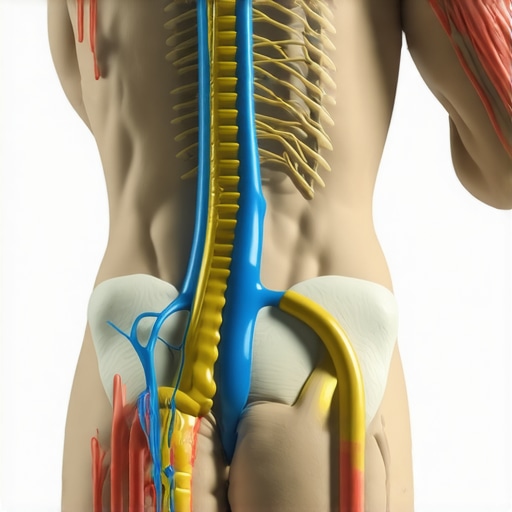
If you still feel that ‘tight’ hamstring sensation even after stabilizing your core, it’s likely not a muscle issue—it’s your sciatic nerve. Nerves don’t like to be stretched; they like to slide. Think of a nerve like a silk thread running through a straw. If the straw is gunked up, the thread gets stuck. Instead of yanking on it, you use the nerve floss technique for stubborn leg pain to gently pull the thread back and forth. When I first tried flossing, I was skeptical because it felt too easy. I wasn’t sweating or shaking. But by moving my ankle and head in a coordinated rhythm, I cleared the ‘neural grit’ that was making my legs feel like lead. This is a core part of how to restore your back mobility without causing more inflammation. Stop fighting your body with aggressive stretching and start giving it the stability and glide it actually needs.
Your Body Might Be Stiff for a Good Reason
Common wisdom tells us that if a joint feels stuck, we should force it into movement. But there is a massive nuance people miss: your body isn’t stupid. Often, that stiffness you feel in your neck or lower back is an intentional ‘splinting’ mechanism. If your spine feels unstable, your brain sends a signal to the surrounding muscles to tighten up and protect the area. I see this all the time with people who try to fix their own issues by cranking their necks side to side. They think they are helping, but why icing isnt always the best move for a stiff neck applies here too; sometimes you are just irritating an already inflamed joint rather than calming it. This is the ‘Oops’ factor that leads many to chronic pain—treating the protective response as the actual problem.
Why does my neck feel tight even when I stretch every day?
This is a sophisticated question that points toward the hidden link between neck pain and spinal health. If you are stretching daily and the tension returns within an hour, you aren’t dealing with a flexibility issue; you’re dealing with a stability deficit or a structural misalignment. Dr. Stuart McGill, a titan in spine biomechanics, emphasizes that ‘proximal stiffness leads to distal mobility.’ In plain English: if your core and mid-back aren’t stable, your neck and lower back will tighten up to compensate. It’s why why we adjust your mid back to help your lower back recover is such a game-changer; we address the anchor so the rest can let go. Have you ever fallen into this trap of stretching the same spot for months with zero progress? Let me know in the comments.
The Danger of Over-Mobility in the Wrong Places
One of the most common mistakes is trying to gain range of motion in segments of the spine that are actually meant to stay quiet. Your lumbar spine and your lower neck crave stability. When you force them into deep stretches, you risk micro-trauma to the discs. Instead, focus on how to restore your range how chiropractic care enhances movement by targeting the areas designed for movement, like your hips and thoracic spine. When you revitalize your mobility proven strategies for back pain relief, you’re not just getting loose; you’re getting smart about where that movement comes from. 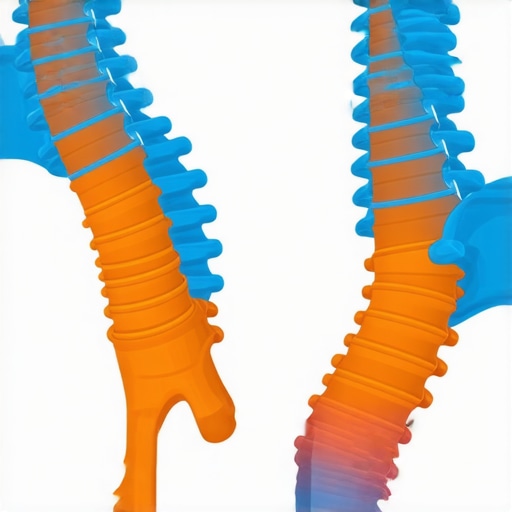
Stop Fighting the Splint and Start Fixing the Foundation
I spent years fighting my body’s natural urge to tighten up, not realizing that my why your neck muscles tighten during stress was actually my nervous system trying to keep my head on straight. Once I stopped the aggressive stretching and focused on targeted adjustments and core bracing, the ‘tightness’ vanished on its own. It wasn’t because I finally pulled the muscle long enough; it was because my brain finally felt safe enough to let the muscles relax. True mobility is a byproduct of a well-aligned and stable spine.
The Gear That Actually Lives in My Gym Bag
Once you stop the ‘stretch-until-it-hurts’ cycle, you need tools that actually support your new stability. I don’t go anywhere without my percussion massager, but I’ve learned the hard way that you can’t just hammer away at your spine. You have to know how to use a massage gun on your lower back safely by targeting the thick muscle of the glutes and the erectors, rather than the vertebrae themselves. I use it for two minutes before a workout to ‘wake up’ the tissue, not to beat it into submission. If I feel a specific pinch, I skip the expensive tech and grab a simple lacrosse ball. Learning how to use a tennis ball to fix that spot under your shoulder blade was a revelation for my neck health. It’s about precision, not power. As Dr. Kelly Starrett often says in his work with The Ready State, we should all spend at least ten minutes a day on ‘basic maintenance’ to offset the tax of modern living.
How do I keep my spine healthy for the long haul?
Maintenance isn’t a weekend project; it’s a daily ritual of checking in with your joints. I follow the principles of mobility mastery expert tips for back pain prevention and recovery, which mostly involves moving through a full range of motion every morning. 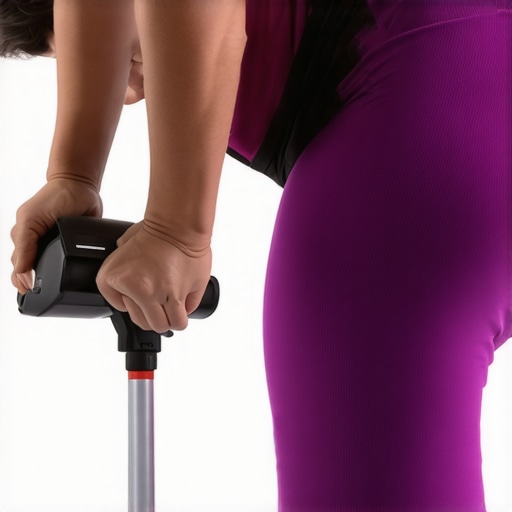
Why Your Standing Desk Might Be Part of the Problem
I see so many people buy a standing desk and think their back problems are over, only to find that why standing desks cause hip pain and how to fix it becomes their new reality. Standing is better than sitting, but static standing is just another form of ‘stuck.’ You have to keep the movement fluid. I recommend using the the 20-20-20 rule for desk workers and neck health, but applying it to your whole body—every 20 minutes, move for 20 seconds. Looking ahead, I predict we’ll see a massive shift toward wearable biofeedback sensors that vibrate when your pelvis tilts out of a neutral ‘safe zone.’ Until then, you are your own best sensor.
The Professional Edge for Long-Term Results
While tools are great, they are like the oil changes for your car; eventually, you need a mechanic to check the alignment. This is where chiropractic secrets to regain full mobility after injury come into play. A professional adjustment clears the structural ‘static’ so your home exercises actually stick. I’ve found that boost your back health simple yet effective chiropractic hacks like regular mid-back mobilization allow the rest of my body to function without that constant ‘splinting’ sensation. My challenge to you: Pick one area where you feel ‘stuck’ and use a tennis ball to apply pressure for 90 seconds today—don’t roll, just breathe into the pressure. You’ll be surprised how much your brain lets go when you stop fighting it.
The painful truths I wish I’d known before my spine hit the floor
Reflecting on my journey, I realized that I was often trying to solve a structural hardware problem with a superficial software update. My persistent tightness wasn’t a lack of muscle length; it was a lack of internal safety. I eventually learned that the hidden link between neck pain and spinal health often means your body is tightening one area to compensate for weakness in another. I also realized that the old ‘no pain, no gain’ mantra is a dangerous lie when it comes to nerve tension; if a movement zips or burns, you must back off and prioritize stability before you ever try to chase flexibility again.
The tiny kit that saves me from morning stiffness
I don’t need a massive home gym or expensive machines to keep my spine resilient. My daily toolkit is surprisingly small: a simple lacrosse ball for precision muscle work, a lumbar roll for my office chair, and a consistent commitment to the 20-20-20 rule to break up static postures. I’ve found that using these tools alongside professional care is the most effective way to boost mobility and ease pain. If I’m traveling or short on time, I focus on targeted movements that enhance mobility naturally, like the cat-cow or gentle hip hinges, rather than aggressive long-hold stretches that often leave my joints feeling loose and vulnerable.
#IMAGE_PLACEHOLDER_E#
You are not a passenger in your own recovery
The most important shift occurs when you stop waiting for a miracle cure and start participating in your own recovery process. When you stop fighting your body’s protective mechanisms and start providing the stability it craves, the results follow much faster than you’d expect. By combining smart movement patterns with expert guidance, you are mastering back and neck pain relief for the long term. Your spine is designed to support you for a lifetime; you just have to give it the right environment and the right alignment to do so. Have you ever noticed that your back feels tighter the more you try to stretch it? Let me know your experience in the comments below.