The Truth About Inversion Tables for Sciatica
I remember the morning I tried to pick up a single stray sock from the laundry room floor and felt a white-hot lightning bolt shoot from my hip down to my ankle. It was the kind of visceral, breath-snatching pain that makes you reconsider every movement you make for the rest of the day. I was desperate for relief. I’d tried the creams, the heating pads, and even [the specific reason your lower back hurts after washing dishes](https://quackersspinal.com/the-specific-reason-your-lower-back-hurts-after-washing-dishes) didn’t quite cover the intensity of this flare-up. Then, I saw it: an inversion table on a late-night infomercial. It looked like a medieval torture device, but the guy on the screen was smiling like he’d just found the fountain of youth. I thought, “If hanging upside down like a bat is what it takes to stop this fire in my leg, sign me up.”
Stop Hanging Around Without a Real Plan
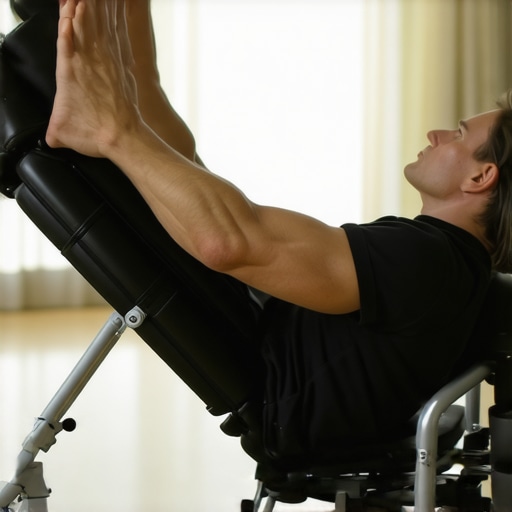
I spent a few hundred dollars on a whim, convinced that gravity was my only enemy. But I made a massive mistake early on: I hopped on that table, tilted all the way back to a full 90 degrees, and stayed there for twenty minutes on my first try. I assumed more decompression meant faster healing. Instead, I woke up the next morning feeling like my spine had been stretched on a rack. My muscles had gone into a protective spasm because I hadn’t built up the tolerance for such a drastic change. The truth is, while you might [feel taller after a chiropractic adjustment](https://quackersspinal.com/why-you-feel-taller-after-a-chiropractic-adjustment), forcing that space into your spine without professional guidance can backfire. Today, I want to help you avoid that same mistake and figure out if these tables are a miracle tool or just a very expensive place to hang your laundry. Have you ever tried an inversion table only to feel worse the next day, or are you too nervous to even give it a flip?
Is Flipping Upside Down Actually Worth the Hype?
It sounds perfectly logical: gravity crushes us down all day, so flipping over should pull us back out. However, it isn’t always that simple. According to research published in the Journal of Physical Therapy Science, while mechanical traction can temporary increase the space between your vertebrae, it does not necessarily lead to long-term disc rehydration or permanent relief without addressing underlying structural issues. You need to understand [the truth about inversion tables for disc relief](https://quackersspinal.com/the-truth-about-inversion-tables-for-disc-relief) before you bet your entire recovery on one piece of equipment. Sometimes the issue isn’t just the disc; it could be that [your si joint hates your soft mattress](https://quackersspinal.com/why-your-si-joint-hates-your-soft-mattress) or your core is actually too rigid to allow for proper movement. Before you start dangling, let’s break down how to use these tools safely and when you should absolutely stay upright.
Start with a Gentle Tilt Instead of a Full Flip
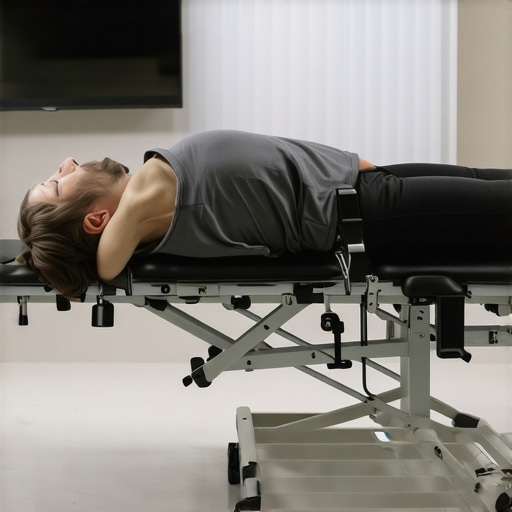
When I first got my table, I thought I needed to be a bat. I was wrong. Think of your spine like a dry sponge; if you pull it apart too quickly, it just tears. You want to start at a 15 or 20-degree angle. This slight incline allows your nervous system to realize it isn’t under attack. If you feel your muscles bracing, you’ve gone too far. This is where most people fail and end up needing to know how to handle a sudden back spasm when you are alone. I remember one Tuesday I ignored this rule, tilted to 60 degrees immediately, and my lower back felt like it was being squeezed by a vice. My body wasn’t ready for the decompression, and it fought back by tightening every muscle in my lumbar region.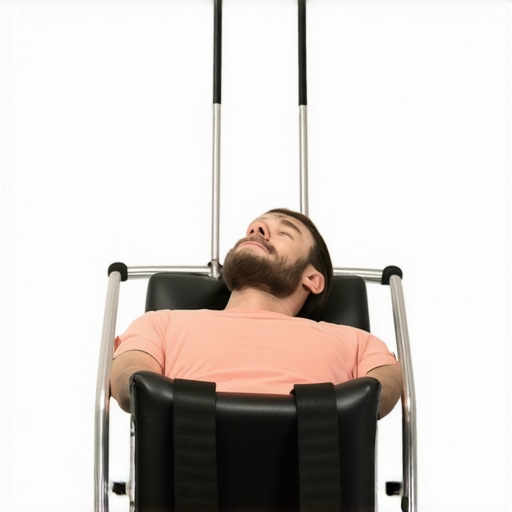
Keep Your Sessions Short and Sweet
You don’t need twenty minutes of hanging. In fact, three to five minutes is often the sweet spot. Long bouts of inversion can actually increase blood pressure in the head and strain the ligaments. You are looking for a subtle release, similar to how you might boost your back health with simple yet effective chiropractic hacks. While you’re hanging, focus on your breath. If you hold your breath, your muscles stay guarded. Instead, try to breathe deep into your belly to signal to your brain that it’s okay to let go. This is a much safer alternative than the extreme approach some take with the truth about gravity boots and back health.
Master the Art of the Slow Ascent
This is the part everyone messes up. After three minutes of bliss, people pop back up like a jack-in-the-box. This is a recipe for disaster. When you decompress, your discs are like little balloons filling with fluid. If you stand up instantly, gravity slams that weight back down on those ‘balloons’ before they’ve stabilized. I learned this the hard way after a session where I jumped off the table to answer the door. I spent the next two hours lying on the floor because my spine couldn’t handle the sudden re-loading. Treat the return like the best way to get out of bed for disc health: go to horizontal first, wait a full minute, and then come all the way up.
Build Stability Once You Are Upright
Hanging upside down creates space, but your muscles have to learn how to hold that space. If you don’t follow up with stability, you’ll be right back where you started. You should be strengthening your glutes to take the pressure off your spine so that your pelvic floor and hips can support your newly ‘tall’ stature. Without this, you might find the hidden link between neck pain and spinal health becomes more apparent as your body compensates for a weak lower half. It’s about building a frame that can actually support the house gravity is trying to tear down.Let’s peel back another layer. Most people think that if a muscle feels tight, the logical solution is to pull on it. We’ve been conditioned to believe that “more flexibility” always equals “less pain.” In reality, that tightness is often a neurological brake—your brain’s way of saying, “I don’t trust the stability of this joint, so I’m going to lock it down.” If you go on an inversion table and force that brake to release without giving the brain a reason to trust the joint again, you’re just setting yourself up for a cycle of instability and spasm. It’s one of the reasons stretching your hamstrings won’t fix your back pain if the real issue is a pelvic tilt that your body is trying to compensate for.
Tightness is Usually a Protective Lie
When you feel that nagging pull in your lumbar spine, your instinct is to reach for your toes. But have you considered that your strong core might actually be too rigid in all the wrong places? We see patients who spend hours on mobility drills only to find their pain returns the moment they sit back down. This is the “Mobility Trap.” True healing requires a balance between the space you create (mobility) and the strength required to maintain it. If you’re just hanging upside down and then going right back to a slumped posture at your desk, you’re essentially “undoing” the benefits within minutes. You need to restore your back mobility with proven chiropractic strategies that actually address how your joints move in relation to one another, not just how far you can stretch a muscle.
Why Does My Spine Feel ‘Fragile’ After Decompressing?
This is a common question from people who use mechanical traction or inversion tables regularly. They feel great while upside down, but the moment they stand up, they feel “loose” in a way that’s almost scary. Dr. Stuart McGill, a world-renowned expert in spine biomechanics, has pointed out that excessive stretching of the spinal ligaments can actually lead to “micro-movements” that irritate the nerves. This is why strengthening your glutes to take the pressure off your spine is non-negotiable. Without that muscular “corset” to stabilize the newly created space, your vertebrae are essentially rattling around. Have you ever fallen into this trap where you feel better for ten minutes and then worse for two days? Let me know in the comments.

Stability is the Real Mobility Secret
Advanced recovery isn’t just about the lower back; it’s about the entire kinetic chain. We often find that looking at your ribcage movement for better mobility is the missing piece of the puzzle. If your mid-back is frozen, your lower back has to do double the work, leading to that constant feeling of being “out of alignment.” Furthermore, the hidden link between neck pain and spinal health suggests that if your head is shifted forward, it changes the center of gravity for your entire spine, making tools like inversion tables far less effective. You have to treat the body as a single, integrated unit rather than a collection of parts that need stretching. The goal isn’t just to be “flexible”—it’s to be functional and resilient against the daily grind of gravity.
Stop Buying Every Gadget on Instagram
I’ve spent thousands on fancy chairs, high-tech massage guns, and ergonomic footrests, but the most effective tool in my kit actually cost me less than a sandwich: a pair of lacrosse balls taped together into a ‘peanut.’ I use this specifically for segmental mobilization of the thoracic spine. Most people use a foam roller, but a roller is a blunt instrument; it can actually be counterproductive if you have an existing injury. The peanut allows you to cradle the spinous processes and apply pressure directly to the transverse processes. According to Dr. Stuart McGill, a leading expert in spine biomechanics, creating stiffness in the core through the ‘Big Three’ exercises is far more valuable for long-term health than simply seeking more range of motion. This is why I focus on restore your back mobility with proven chiropractic strategies that prioritize stability over raw flexibility. If you aren’t using a tool with a specific anatomical goal, you’re just bruising your fascia and hoping for the best.
How do I maintain these spinal gains over time?
Maintenance isn’t about a grueling hour-long gym session; it’s about the ‘micro-breaks’ you take throughout the day. I swear by the 5-minute reset for a stiff lumbar spine every afternoon at 3:00 PM. This isn’t just a suggestion—it’s a neurological requirement. Your brain needs frequent reminders of what ‘neutral’ feels like, especially if you spend your day at a computer. Think of it as mobility mastery expert tips for back pain prevention and recovery scaled down into bite-sized habits. If you can’t commit to five minutes, you’ll eventually be forced to commit to five weeks of physical therapy. I’ve found that the more consistent I am with these small check-ins, the less I actually need the ‘big’ tools like the inversion table. It’s about staying ahead of the tension before it morphs into a full-blown spasm.

The Future of Back Health is Wearable
I predict that in the next five years, we are going to see a massive shift away from passive tools like traction tables toward active biofeedback wearables. We are already seeing sensors that vibrate when your pelvis tilts too far forward or when your shoulders began to round during a deep-work session. This real-time data will be a game-changer for people who struggle with the 10-second stretch for people who type all day because it removes the guesswork. Instead of wondering if your posture is ‘good enough,’ an app will tell you exactly when your deep neck flexors are fatiguing. This level of precision is exactly how you achieve the 3-step morning routine for hip mobility that actually sticks. We are moving toward a world where your clothes will literally coach you into better spinal alignment. Until then, the best advanced tip I can give you is the ‘Wall Slide’ test: Stand with your back against a wall, arms at 90 degrees, and see if your wrists and elbows can touch the wall without your lower back arching away. If you fail this, your ribcage is locked, and that is exactly where your daily maintenance needs to start.
The Hard Truth About My Upside-Down Obsession
After years of trial and error, I realized that gravity isn’t something you fight; it’s something you learn to dance with. First, I learned that more isn’t better. Spending thirty minutes upside down won’t fix three decades of poor sitting habits. Second, I discovered that my brain was the one holding the tension, not just my muscles. If I didn’t feel safe on the table, my body would never actually let go. Finally, I saw that the real magic happens in the five minutes after you stand up. That is when you must use proven chiropractic strategies to restore your back mobility by reinforcing your new range of motion with stability exercises. If you skip this part, your muscles will simply snap back into their old, protective patterns.
My Go-To Kit for a Bulletproof Spine
I don’t just rely on gadgets; I rely on principles. Here are the tools I actually use every week to stay out of pain. First, the ‘peanut’ (two lacrosse balls taped together) is essential for my thoracic spine. It targets the areas a foam roller simply misses by cradling the spine. Second, I cannot recommend the book Back Mechanic by Dr. Stuart McGill enough; it’s the definitive guide to spine hygiene and understanding how to move without pain. Third, I use a simple vibrating timer on my watch to remind me of expert tips for back pain prevention and recovery like taking micro-breaks every thirty minutes. These tools help me stay ahead of the tension instead of constantly playing catch-up once the spasm starts.#IMAGE_PLACEHOLDER_E#
Take Your First Step Toward a More Resilient You
You don’t have to live in fear of a sudden “twinge” or a lightning bolt in your hip. Whether you choose to use an inversion table or prefer to focus on the link between neck pain and spinal health, the key is to start small and stay consistent. Your spine is incredibly resilient if you give it the right environment to heal. I’ve found that even a 5-minute reset for a stiff lumbar spine can be more life-changing than the most expensive equipment when done daily. You’ve got the knowledge; now it’s time to put it into practice and rebuild your foundation. Have you ever felt that ‘fragile’ sensation after using an inversion table, or did it provide the relief you were looking for? Let me know in the comments.