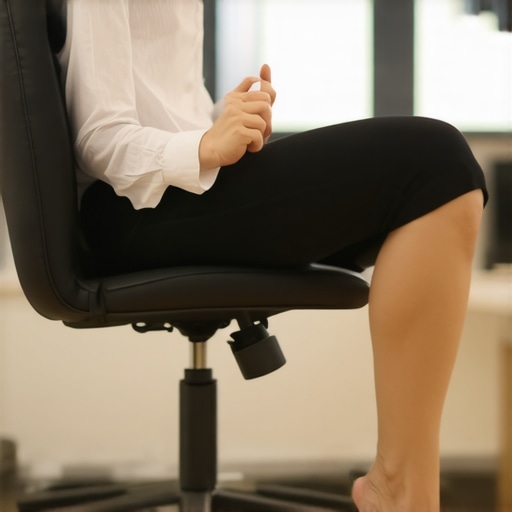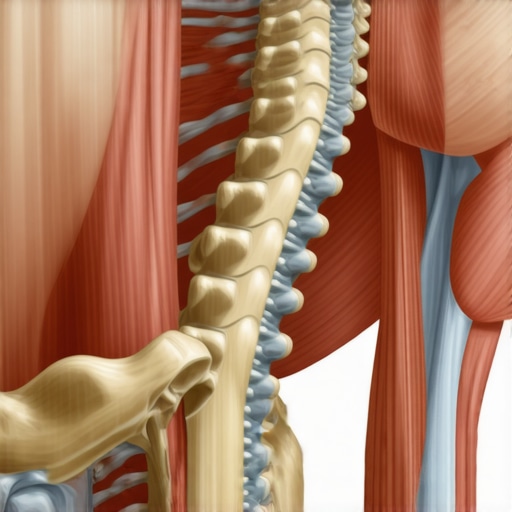
The 3-Step Morning Routine for Hip Mobility
I remember the exact Tuesday morning my body decided it was done being young. I rolled out of bed, reached for my slippers, and—*crunch*. Not a good crunch. It was that deep, dull ache in my pelvis that made me feel eighty years old before I had even brushed my teeth. I spent months thinking I just needed a better mattress or maybe a new pair of shoes. I was frustrated, stiff, and honestly, a bit scared that this was just my ‘new normal.’ But the reality was much simpler: my hips were locked tighter than a bank vault after hours, and it was ruining my entire day before it even started. Today, I am sharing the exact three-step routine that saved my sanity and my spine.
Your Hips Are the Secret Engine of Your Spine
Most people think back pain starts in the back. I was one of them. For years, I made the classic mistake of thinking I could fix the problem by stretching my hamstrings like a madman. It felt good for five minutes, but the stiffness always came roaring back. When your hips don’t move, your lower back is forced to do the heavy lifting, acting as a pivot point it was never designed to be. This compensation leads to a nasty cycle of inflammation and fatigue. According to experts at Harvard Health, limited hip mobility is a primary driver of lower back strain because it disrupts the natural kinetic chain of your body. If the engine—your hips—is seized up, the rest of the car is going to rattle apart. Have you ever felt like your body was literally fighting against you the moment you stood up? If so, you are not alone, and it is likely your hips crying for help.
Is a morning routine actually worth the effort?
You might be thinking you don’t have twenty minutes to do yoga before your first cup of coffee. I get it; I don’t either. My biggest failure early on was trying to follow those complex, hour-long mobility flows I saw on social media. I would do them for two days, get bored, and quit. A routine only works if you actually do it. This 3-step process takes less than five minutes and requires zero equipment. It is not about becoming an acrobat; it is about telling your nervous system that it is safe to move. We are looking for consistency over intensity.
Stop Treating the Symptoms and Fix the Pivot Point
We often focus so much on where it hurts that we forget to look at *why* it hurts. In my journey to relieve discomfort, I discovered that my sedentary desk job had turned my hip flexors into tight guitar strings. This tension was pulling my pelvis out of alignment, which is exactly why we adjust the pelvis even when the tension feels like it is in the upper body. By focusing on strengthening my glutes alongside these mobility moves, the pressure on my spine finally started to lift. It is about creating a foundation that supports you all day, whether you are picking up a laundry basket or sitting through a long meeting. Let’s get into the first move that actually makes a difference.
Master the Hip Hinge Before You Lift Anything Else
Think of your hips like a massive door hinge. If that hinge is rusted shut, you are going to try to force the door open by pulling on the frame—and that is exactly what happens to your lower back. I learned this the hard way last summer when I tried to move a heavy cast-iron skillet from a bottom cabinet. Instead of hinging, I rounded my spine like a scared cat. A sharp, electric zap shot through my lumbar, and I was horizontal for two days. That was my wake-up call to master the hip hinge trick. To do this, stand with your feet shoulder-width apart and imagine there is a button behind you that you need to press with your glutes. Your shins should stay vertical, and your back should stay flat. This movement pattern is the single most important skill for anyone looking for proven strategies for back pain relief. Once you nail the hinge, you can learn how to pick up your laundry basket without the burn that usually follows a day of chores.
The Spider-Man Stretch Is Your New Morning Best Friend
If you spend hours at a desk, your hip flexors are likely as tight as a drum string. This constant tension creates a literal tug-of-war with your pelvis, which is why tight hip flexors are the real cause of your lower back arch. To fix this, I swear by the Spider-Man stretch that clears up morning stiffness. You start in a push-up position and bring one foot up to the outside of your hand. It feels intense at first, almost like you are trying to pull apart a piece of stubborn taffy. But as you breathe into it, you’ll feel that deep release in the groin and the front of the hip. When I first started doing this, I could barely get my foot past my waist. Now, it is the only way I can start my day without feeling like I need a WD-40 shower. 
Waking Up Your Glutes to Shield Your Spine
A common mistake is thinking mobility is just about being loose. You also need the ‘brakes’ to work. Your glutes are the biggest muscles in your body, yet for most of us, they are effectively asleep. When they aren’t firing, your lower back takes the hit. I started incorporating ten simple glute bridges into my morning routine, and the difference was night and day. By strengthening your glutes to take the pressure off your spine, you create a muscular shield that absorbs the shock of walking and standing. This simple activation is the key to how to get out of bed without that morning back twinge. I remember the first week I committed to this; I actually walked to the grocery store and realized halfway there that my back didn’t feel ‘heavy’ for the first time in years. It wasn’t magic; it was just my body finally using the right muscles for the job. Stop letting your spine do the work your hips were built for.Let’s dig deeper into why these routines often fail if you are chasing the wrong goal. Most people I talk to are obsessed with ‘perfect posture.’ They sit at their desks with their shoulders pinned back and their spines as straight as a board, thinking they are doing their bodies a favor. But here is the truth: your spine was never meant to be a static pillar. In fact, why your perfect posture is actually making you stiff is one of the most overlooked hurdles in modern recovery. When you force yourself into a rigid position, you are essentially creating a low-grade isometric contraction that lasts for hours. This starves your muscles of fresh blood flow and oxygen, leading to that deep, gnawing fatigue by 3 PM.
Stop trying to sit like a statue
In my experience, the ‘sit up straight’ mantra has done more harm than good for people with chronic tension. This is precisely why sit up straight is actually bad advice for some; it creates an artificial rigidity that prevents the natural micro-movements your spinal discs need to stay hydrated. Think of your spine like a sponge: it needs to be squeezed and released through movement to stay healthy. Research published in The Lancet highlights that movement variability—simply changing your position often—is far more protective than maintaining any single ‘correct’ posture. 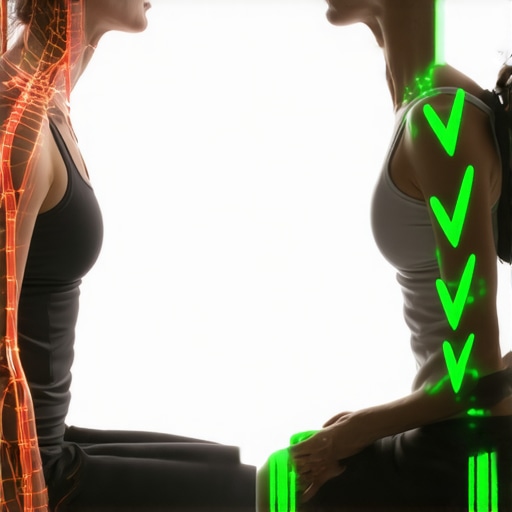
Can a core that is too strong actually cause more harm than good?
This brings us to a sophisticated mistake I see among the most dedicated fitness enthusiasts: the ‘over-braced’ core. There is a common myth that you should always ‘engage your core’ to protect your back. While stability is vital, why your strong core might actually be too rigid is a nuance that many miss. If your abdominal muscles are constantly ‘on,’ your spine loses its ability to adapt to small changes in terrain or movement. It is like driving a car with the parking brake partially engaged. You aren’t just working harder; you are wearing out the system. To find real relief, you have to find the hidden muscle that stabilizes your lower spine and learn how to let it work without manually gripping your six-pack muscles all day.
The trap of chasing the ‘pop’ instead of the movement
Another ‘oops’ factor is the obsession with self-adjusting. I used to be the person who would twist my back until I heard a loud crack, thinking I was fixing the problem. But ‘chasing the pop’ is often just a temporary endorphin rush that masks the real issue: a lack of segmental mobility. True mobility mastery involves expert tips for back pain prevention and recovery that focus on how the joints actually glide, not just the noise they make. When a professional provides an adjustment, they are targeting specific segments that are ‘stuck’ to restore your range and enhance movement, rather than just moving the segments that are already too loose. This distinction is the difference between a temporary fix and long-term health. Have you ever fallen into this trap of trying to ‘crack’ your own back for relief? Let me know in the comments.Once I stopped the self-cracking habit, I had to replace it with tools that actually supported my anatomy rather than just providing a quick fix. My first game-changer was a simple, firm lumbar support. Learning the correct way to use a lumbar roll in your office chair completely changed how my spine felt at 5 PM. I also keep a tennis ball in my top drawer at all times. Whenever I feel that sharp pinch between my shoulder blades, I use how to use a tennis ball to fix that spot under your shoulder blade to pin and stretch the tissue without destabilizing my joints. For those of us stuck in the grind, the 10-second stretch for people who type all day is the bare minimum you should be doing every hour to break the cycle of stagnation.
Invest in gear that works when you aren’t thinking about it
It is easy to buy every gadget on the market, but I have found that less is usually more. A common mistake is relying on expensive chairs that do the work for you. In reality, you need tools that facilitate movement. Dr. Stuart McGill, a world-renowned expert on spine biomechanics and author of Back Mechanic, emphasizes the concept of ‘spinal hygiene’—the idea that how you move throughout the entire day matters more than a single exercise session. This is why I focus on neck back pain solutions insights from wellness experts that prioritize functional movement over static bracing. Even the way you stand matters; for instance, many people are surprised to learn that the secret to better balance starts with your big toe, which acts as the anchor for your entire kinetic chain.
How do I maintain my mobility as the years go by?
Maintenance isn’t about being perfect every day; it is about cumulative habits that prevent the ‘tipping point’ where load exceeds your body’s capacity. To stay on the right side of that line, I regularly revisit mobility mastery expert tips for back pain prevention and recovery. This involves more than just stretching; it requires a proactive approach to revitalize your mobility through proven strategies for back pain relief.
The future of the spine is in your pocket
I predict that in the next five years, we will see a massive shift toward AI-integrated wearables that track your ‘spinal budget’ in real-time. Instead of a simple ‘slouch alert,’ we will have haptic feedback that encourages movement variability before stiffness even sets in. This technology will help us understand understanding back pain not as a mystery, but as a data-driven result of our environment. Until those tools are perfected, you have to be your own biofeedback loop. Use relieve neck back discomfort using these expert methods to check in with your body every morning.  Ready to level up? I want you to try one specific advanced tip right now: stand up, find a wall, and perform the tennis ball release on that one stubborn knot you’ve been ignoring for weeks. It serves as a crucial signal to your nervous system that you are taking control of your recovery.I remember the exact Tuesday morning my body decided it was done being young. I rolled out of bed, reached for my slippers, and—*crunch*. Not a good crunch. It was that deep, dull ache in my pelvis that made me feel eighty years old before I had even brushed my teeth. I spent months thinking I just needed a better mattress or maybe a new pair of shoes. I was frustrated, stiff, and honestly, a bit scared that this was just my ‘new normal.’ But the reality was much simpler: my hips were locked tighter than a bank vault after hours, and it was ruining my entire day before it even started. Today, I am sharing the exact three-step routine that saved my sanity and my spine.
Your Hips Are the Secret Engine of Your Spine
Most people think back pain starts in the back. I was one of them. For years, I made the classic mistake of thinking I could fix the problem by stretching my hamstrings like a madman. It felt good for five minutes, but the stiffness always came roaring back. When your hips don’t move, your lower back is forced to do the heavy lifting, acting as a pivot point it was never designed to be. This compensation leads to a nasty cycle of inflammation and fatigue. According to experts at Harvard Health, limited hip mobility is a primary driver of lower back strain because it disrupts the natural kinetic chain of your body. If the engine—your hips—is seized up, the rest of the car is going to rattle apart. Have you ever felt like your body was literally fighting against you the moment you stood up? If so, you are not alone, and it is likely your hips crying for help.
Is a morning routine actually worth the effort?
You might be thinking you don’t have twenty minutes to do yoga before your first cup of coffee. I get it; I don’t either. My biggest failure early on was trying to follow those complex, hour-long mobility flows I saw on social media. I would do them for two days, get bored, and quit. A routine only works if you actually do it. This 3-step process takes less than five minutes and requires zero equipment. It is not about becoming an acrobat; it is about telling your nervous system that it is safe to move. We are looking for consistency over intensity.
Stop Treating the Symptoms and Fix the Pivot Point
We often focus so much on where it hurts that we forget to look at *why* it hurts. In my journey to relieve discomfort, I discovered that my sedentary desk job had turned my hip flexors into tight guitar strings. This tension was pulling my pelvis out of alignment, which is exactly why we adjust the pelvis even when the tension feels like it is in the upper body. By focusing on strengthening my glutes alongside these mobility moves, the pressure on my spine finally started to lift. It is about creating a foundation that supports you all day, whether you are picking up a laundry basket or sitting through a long meeting. Let’s get into the first move that actually makes a difference.
Master the Hip Hinge Before You Lift Anything Else
Think of your hips like a massive door hinge. If that hinge is rusted shut, you are going to try to force the door open by pulling on the frame—and that is exactly what happens to your lower back. I learned this the hard way last summer when I tried to move a heavy cast-iron skillet from a bottom cabinet. Instead of hinging, I rounded my spine like a scared cat. A sharp, electric zap shot through my lumbar, and I was horizontal for two days. That was my wake-up call to master the hip hinge trick. To do this, stand with your feet shoulder-width apart and imagine there is a button behind you that you need to press with your glutes. Your shins should stay vertical, and your back should stay flat. This movement pattern is the single most important skill for anyone looking for proven strategies for back pain relief. Once you nail the hinge, you can learn how to pick up your laundry basket without the burn that usually follows a day of chores.
The Spider-Man Stretch Is Your New Morning Best Friend
If you spend hours at a desk, your hip flexors are likely as tight as a drum string. This constant tension creates a literal tug-of-war with your pelvis, which is why tight hip flexors are the real cause of your lower back arch. To fix this, I swear by the Spider-Man stretch that clears up morning stiffness. You start in a push-up position and bring one foot up to the outside of your hand. It feels intense at first, almost like you are trying to pull apart a piece of stubborn taffy. But as you breathe into it, you’ll feel that deep release in the groin and the front of the hip. When I first started doing this, I could barely get my foot past my waist. Now, it is the only way I can start my day without feeling like I need a WD-40 shower. #IMAGE_PLACE_HOLDER_B#
Waking Up Your Glutes to Shield Your Spine
A common mistake is thinking mobility is just about being loose. You also need the ‘brakes’ to work. Your glutes are the biggest muscles in your body, yet for most of us, they are effectively asleep. When they aren’t firing, your lower back takes the hit. I started incorporating ten simple glute bridges into my morning routine, and the difference was night and day. By strengthening your glutes to take the pressure off your spine, you create a muscular shield that absorbs the shock of walking and standing. This simple activation is the key to how to get out of bed without that morning back twinge. I remember the first week I committed to this; I actually walked to the grocery store and realized halfway there that my back didn’t feel ‘heavy’ for the first time in years. It wasn’t magic; it was just my body finally using the right muscles for the job. Stop letting your spine do the work your hips were built for.Let’s dig deeper into why these routines often fail if you are chasing the wrong goal. Most people I talk to are obsessed with ‘perfect posture.’ They sit at their desks with their shoulders pinned back and their spines as straight as a board, thinking they are doing their bodies a favor. But here is the truth: your spine was never meant to be a static pillar. In fact, why your perfect posture is actually making you stiff is one of the most overlooked hurdles in modern recovery. When you force yourself into a rigid position, you are essentially creating a low-grade isometric contraction that lasts for hours. This starves your muscles of fresh blood flow and oxygen, leading to that deep, gnawing fatigue by 3 PM.
Stop trying to sit like a statue
In my experience, the ‘sit up straight’ mantra has done more harm than good for people with chronic tension. This is precisely why sit up straight is actually bad advice for some; it creates an artificial rigidity that prevents the natural micro-movements your spinal discs need to stay hydrated. Think of your spine like a sponge: it needs to be squeezed and released through movement to stay healthy. Research published in The Lancet highlights that movement variability—simply changing your position often—is far more protective than maintaining any single ‘correct’ posture. #IMAGE_PLACE_HOLDER_C#
Can a core that is too strong actually cause more harm than good?
This brings us to a sophisticated mistake I see among the most dedicated fitness enthusiasts: the ‘over-braced’ core. There is a common myth that you should always ‘engage your core’ to protect your back. While stability is vital, why your strong core might actually be too rigid is a nuance that many miss. If your abdominal muscles are constantly ‘on,’ your spine loses its ability to adapt to small changes in terrain or movement. It is like driving a car with the parking brake partially engaged. You aren’t just working harder; you are wearing out the system. To find real relief, you have to find the hidden muscle that stabilizes your lower spine and learn how to let it work without manually gripping your six-pack muscles all day.
The trap of chasing the ‘pop’ instead of the movement
Another ‘oops’ factor is the obsession with self-adjusting. I used to be the person who would twist my back until I heard a loud crack, thinking I was fixing the problem. But ‘chasing the pop’ is often just a temporary endorphin rush that masks the real issue: a lack of segmental mobility. True mobility mastery involves expert tips for back pain prevention and recovery that focus on how the joints actually glide, not just the noise they make. When a professional provides an adjustment, they are targeting specific segments that are ‘stuck’ to restore your range and enhance movement, rather than just moving the segments that are already too loose. This distinction is the difference between a temporary fix and long-term health. Have you ever fallen into this trap of trying to ‘crack’ your own back for relief? Let me know in the comments.Once I stopped the self-cracking habit, I had to replace it with tools that actually supported my anatomy rather than just providing a quick fix. My first game-changer was a simple, firm lumbar support. Learning the correct way to use a lumbar roll in your office chair completely changed how my spine felt at 5 PM. I also keep a tennis ball in my top drawer at all times. Whenever I feel that sharp pinch between my shoulder blades, I use how to use a tennis ball to fix that spot under your shoulder blade to pin and stretch the tissue without destabilizing my joints. For those of us stuck in the grind, the 10-second stretch for people who type all day is the bare minimum you should be doing every hour to break the cycle of stagnation.
Invest in gear that works when you aren’t thinking about it
It is easy to buy every gadget on the market, but I have found that less is usually more. A common mistake is relying on expensive chairs that do the work for you. In reality, you need tools that facilitate movement. Dr. Stuart McGill, a world-renowned expert on spine biomechanics and author of Back Mechanic, emphasizes the concept of ‘spinal hygiene’—the idea that how you move throughout the entire day matters more than a single exercise session. This is why I focus on neck back pain solutions insights from wellness experts that prioritize functional movement over static bracing. Even the way you stand matters; for instance, many people are surprised to learn that the secret to better balance starts with your big toe, which acts as the anchor for your entire kinetic chain.
How do I maintain my mobility as the years go by?
Maintenance isn’t about being perfect every day; it is about cumulative habits that prevent the ‘tipping point’ where load exceeds your body’s capacity. To stay on the right side of that line, I regularly revisit mobility mastery expert tips for back pain prevention and recovery. This involves more than just stretching; it requires a proactive approach to revitalize your mobility through proven strategies for back pain relief.
The future of the spine is in your pocket
I predict that in the next five years, we will see a massive shift toward AI-integrated wearables that track your ‘spinal budget’ in real-time. Instead of a simple ‘slouch alert,’ we will have haptic feedback that encourages movement variability before stiffness even sets in. This technology will help us understand understanding back pain not as a mystery, but as a data-driven result of our environment. Until those tools are perfected, you have to be your own biofeedback loop. Use relieve neck back discomfort using these expert methods to check in with your body every morning. Ready to level up? I want you to try one specific advanced tip right now: stand up, find a wall, and perform the tennis ball release on that one stubborn knot you’ve been ignoring for weeks. It serves as a crucial signal to your nervous system that you are taking control of your recovery.
Why my biggest breakthroughs came from doing less
One of the hardest lessons I had to learn was that intensity doesn’t equal healing. For a long time, I thought the more I sweated during a mobility session, the faster my back would stop aching. I was wrong. The real progress happened when I slowed down and realized that why we adjust your mid-back to help your lower back recover is rooted in the interconnectedness of the whole spine. I stopped treating my body like a machine to be fixed and started treating it like a system to be understood. My lightbulb moment was discovering that pain is simply data—it is a request from your nervous system for more options, not necessarily more force.
The few tools I actually use every day
I’ve tried every vibrating foam roller and posture corrector out there, but my essential toolkit has shrunk significantly over the years. I trust Back Mechanic by Dr. Stuart McGill because it offers a no-nonsense approach to understanding back pain through biomechanics. I also never travel without a simple tennis ball and a high-quality lumbar roll for my car seat. These aren’t flashy, but they work because they support natural alignment. If you want to dive deeper into professional methods, I highly recommend checking out chiropractic techniques unveiled to see how targeted adjustments can accelerate your progress.
Take back the freedom to move again
Don’t let a stiff morning routine make you feel like you are trapped in an aging body. Your spine is designed for movement, and your hips are the key to unlocking its full potential. When you choose to revitalize your mobility through proven strategies for back pain relief, you are investing in a future where you can pick up your grandkids or hit the golf course without fear. Start small, be consistent, and listen to the signals your body is sending. Have you ever tried using a tennis ball for those stubborn knots under your shoulder blade, or do you have a different ‘secret weapon’ for back relief? Let me know in the comments below!