The wall stretch that opens up tight chest muscles instantly
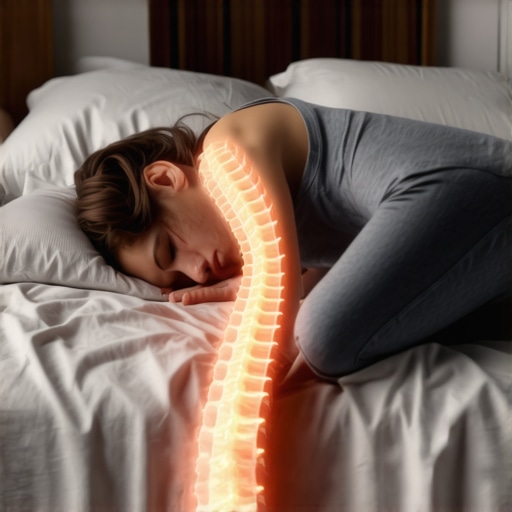
I was hunched over my laptop, chasing a deadline, when I realized I couldn’t remember the last time I’d taken a full, satisfying breath. It felt like my collarbones were migrating toward each other and my ribs were frozen solid. I even tried those expensive posture shirts, thinking a piece of fabric would save me. Spoiler alert: it didn’t. My shoulders were pinned forward, and every time I tried to stand tall, my mid-back would just ache with the effort of fighting my own front-side tension. I spent months thinking I needed to “strengthen my back” to fix the slouch, but I was ignoring the real culprit—my chest muscles had become a tight, shortened mess that refused to let go. We’re going to use a simple wall to literally peel those chest muscles open and reset your posture in seconds.
Your Desk is Physically Shrinking Your Chest
We spend hours in a “forward-folded” state. Whether you’re driving, texting, or typing, your pectoral muscles are constantly firing and shortening. This doesn’t just look bad; it wreaks havoc on your internal mechanics. When your chest stays tight, it pulls your shoulders forward, which then strains the muscles in your upper back and neck. This is often why your shoulder pain is actually coming from your neck. I learned the hard way that you can’t just “sit up straighter” to fix this. In fact, for many people, the generic advice to sit up straight is actually bad advice because you’re just stacking tension on top of tension. [IMAGE_PLACEHOLDER]
Is a simple wall really better than a fancy foam roller?
I get it. You’ve probably spent fifty bucks on a high-density foam roller or a massage gun, and here I am telling you to use a flat vertical surface you already own. But here is the thing: a wall provides the stable leverage you need to target the pec minor—that tiny muscle that acts like a stubborn anchor for your shoulders. Foam rollers are great for the mid-back, but they often miss the specific angle needed to unglue a tight chest. If you’ve been using a foam roller on your upper back without seeing progress, it’s because you’re addressing the symptom, not the source.
The Day I Stopped Fighting My Own Ribcage
One of the biggest mistakes I made early on was focusing entirely on my spine while ignoring my breathing. I used to think my back was the problem, but it was like trying to straighten a bent pole while the guy wires on the other side were still pulling it down. That mistake cost me months of discomfort. According to research published in the Journal of Physical Therapy Science, restricted chest expansion directly correlates with reduced lung capacity and increased stress on the cervical spine. When I finally found this specific wall drill, it wasn’t just about “posture.” It was about oxygen. You might notice the connection between shallow breathing and back pain once those muscles finally release. When we work together in the office, why we look at your ribcage movement for better mobility becomes very clear—if the front doesn’t move, the back can’t heal. Have you ever felt that sharp, “pinched” sensation in your chest after a long day at the computer?
Find a Corner and Claim Your Space
To start, you don’t need a gym; you just need a sturdy corner or a doorway. I remember the first time I tried this at my old office. I was so desperate for relief from a “stuck” mid-back feeling that I basically threw myself against the drywall. Mistake number one. You aren’t trying to break the wall; you’re trying to melt into it. Stand in the doorway with your forearms flat against the frame, elbows at shoulder height. This is your baseline. If you feel a sharp pinch, you’ve gone too far. Instead, look for a gentle “pull” across the front of the shoulders. This is the foundation of the 5-minute doorway stretch for rounded shoulders that I now do every single afternoon.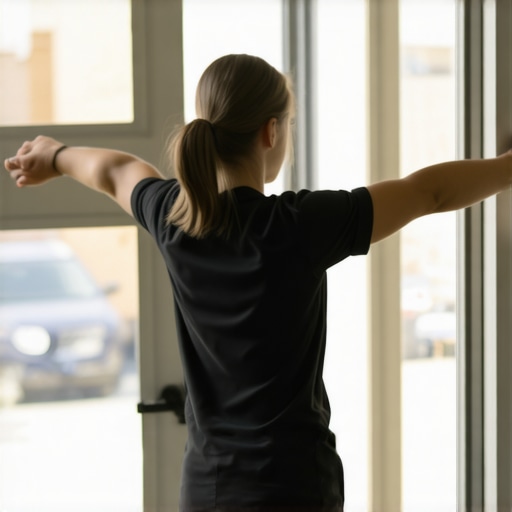
The 90-90 Rule That Saves Your Rotator Cuffs
Your arm position matters more than you think. Think of your arms like a “U” shape—elbows bent at 90 degrees. If your hands are too high, you’re straining the neck; too low, and you’re missing the pec minor entirely. I once tried to “power through” a stretch with my arms way overhead, thinking more was better, and ended up with a week of sharp pain when turning my head. Now, I keep my elbows level with my shoulders. Lean forward slowly until you feel that tension, then hold. This isn’t about bouncing; it’s about a steady, unrelenting pressure that signals your nervous system to let go.
Don’t Just Stretch—Breathe the Tension Away
This is where most people fail. They hold their breath while stretching, which tells the brain the body is in “fight or flight” mode. When the brain senses a threat, it actually tightens the muscles more to protect the joints. It’s a physiological stalemate. You have to how to breathe through your diaphragm to reduce lower back pressure while you’re in this position. Inhale deeply through your nose, feeling your ribcage expand like a blooming flower, then exhale slowly through your mouth. On the exhale, imagine your chest bone sinking an inch closer to the floor.
Consistency Beats Intensity Every Single Time
When I first started, I thought doing this once for ten minutes would “fix” me. I woke up the next day feeling like I’d been in a car wreck. My muscles were so sore they actually pulled me deeper into a slouch. The real secret is the the 10-second posture check you can do anywhere coupled with these short 30-second wall bursts. Think of your mobility like brushing your teeth. You wouldn’t brush for two hours once a week and expect no cavities. You need those frequent, small wins to boost mobility and ease pain long-term. If you feel your back starting to “pop” or release during this, don’t panic—it’s often just the ribs finally finding their proper home.But here is the uncomfortable truth that most posture gurus won’t tell you: you can’t simply stretch your way out of a decade of desk work. In fact, if you’re doing it wrong, you might be making your instability worse. I see people in the gym every day aggressively pulling their shoulders back, thinking they are fixing their slouch, but they are actually just hyper-extending their lower back and flaring their ribs. This is a classic case of why why your perfect posture is actually making you stiff. If you aren’t careful, you’re just substituting one type of tension for another.
Stop Stretching Your Aching Back Muscles
It sounds counterintuitive, I know. When your upper back feels like a knotted mess of piano wire, your first instinct is to grab a foam roller or do a deep rounded-back stretch. But here’s the expert nuance: those muscles feel tight because they are overstretched and weak, not short. They are like a rubber band that has been pulled to its limit for eight hours a day. Adding more stretch to an already over-elongated muscle is a recipe for chronic instability. This is precisely why stretching a tight muscle isnt always the answer. Instead of attacking the back, you need to continue focusing on the front—the pectorals—to allow the back muscles to finally contract and rest. 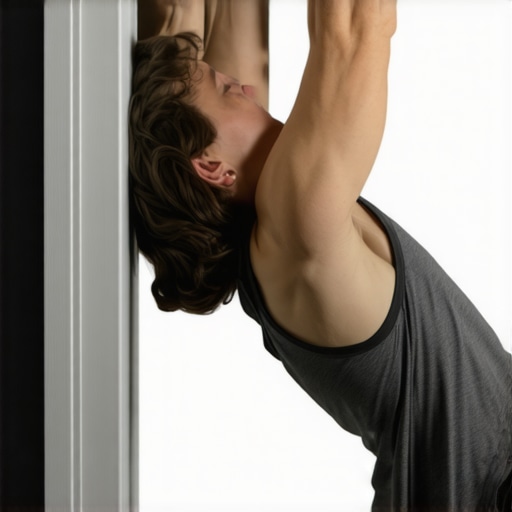
Why does your chest stay tight even when you stretch it every day?
If you’ve been doing wall drills for weeks and your shoulders still roll forward the second you walk away, you’re likely dealing with a neurological protective mechanism rather than a physical length issue. According to a study in the Journal of Athletic Training, the nervous system will often keep a muscle ‘locked’ if it perceives the opposing muscles are too weak to support the joint. This means no amount of stretching will work if you don’t also address the underlying mechanics. You might find that chiropractic secrets to boost neck comfort and function involve more than just movement; they involve resetting the brain’s baseline for what ‘neutral’ feels like.
The Trap of Neural Tension
One of the biggest ‘oops’ factors I see is people mistaking nerve tension for muscle tightness. If you feel a tingling or a ‘zinging’ sensation down your arm while doing the wall drill, stop immediately. You aren’t stretching your pec; you’re yanking on your brachial plexus. This is a common mistake that leads many to believe they have a shoulder injury when they really have a mobility bottleneck. Understanding the difference between muscle soreness and spinal pain is vital here. If the wall stretch feels ‘electric’ rather than ‘stretchy,’ you need to back off the intensity. Over-stretching nerves can actually lead to more inflammation, which is why static stretching might be prolonging your back pain in some specific cases. Have you ever fallen into the trap of ‘stretching through’ a sharp pain only to feel worse the next morning? Let me know in the comments below, and let’s troubleshoot your form together.
Your $1,000 Chair Still Fails You Without These Tweaks
I used to think a high-end ergonomic chair would solve all my problems. I spent a fortune on mesh and adjustable armrests, but I still felt like a crumpled soda can by 3:00 PM. The truth is, even the best furniture can’t fight gravity if your setup is off. I started using a simple lumbar roll, but I quickly realized most people use them as a pillow for their mid-back rather than a support for the natural curve of the low back. Learning the correct way to use a lumbar roll in your office chair changed my daily fatigue levels almost overnight. It isn’t just about the tool; it’s about the placement. If your screen is too low, no amount of lumbar support will save you from the inevitable slouch. We often focus on the big things, but small habits like the phone grip adjustment to prevent tech neck pain are what actually sustain your progress between sessions. 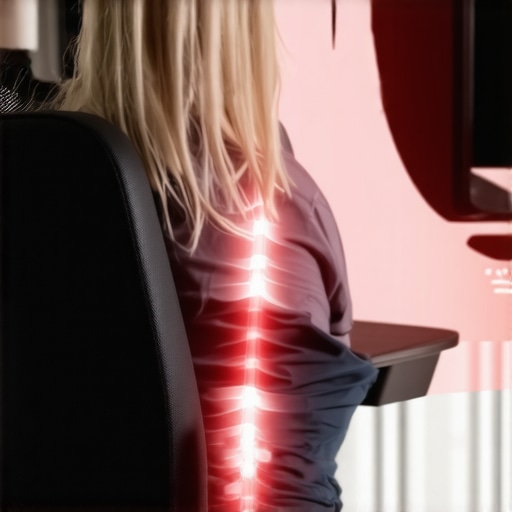
How do I maintain my mobility results over time?
Maintenance isn’t a destination; it’s a rhythm. As Dr. Stuart McGill, a world-renowned biomechanics expert at the University of Waterloo, emphasizes in his book Low Back Disorders, ‘spinal hygiene’ is about the cumulative load on your tissues rather than a single ‘miracle’ exercise. This means you need to stop thinking about your ‘workout’ and start thinking about your ‘movement diet.’ I personally recommend mobility mastery expert tips for back pain prevention and recovery that focus on micro-breaks. Every hour, I perform a quick check-in. If I feel my shoulders creeping toward my ears, I don’t wait for the pain to start. I use the 10-second reset for when your shoulder blades start burning to recalibrate my nervous system. This consistent ‘re-booting’ is what prevents the temporary relief of a stretch from vanishing the moment you get back to work.
The Future of Your Spine is Tech-Integrated
I suspect that within the next five years, we will see smart fabrics with built-in haptic feedback that gently vibrate when your chest starts to cave in, replacing the clunky posture braces of today. Until then, we have to be our own bio-feedback loops. Understanding the hidden link between neck pain and spinal health is the first step in that journey. For those who have suffered for years, back pain recovery how chiropractic care transforms lives often starts with these exact realizations: it is the small, repeated movements that either break us or build us. If you’re ready to stop the cycle of stiffness, your next step is to gain a deeper understanding back pain a guide to better posture and mobility and apply it to your specific workspace. Try this right now: Take one minute to adjust your monitor height so the top third of the screen is at eye level. This tiny shift alone can reduce the load on your cervical spine by up to 30 pounds.
The Hard Truths I Learned While Fixing My Broken Posture
After years of fighting my own body, I realized that my tightness was actually my brain’s way of protecting a spine it didn’t trust. I spent too much time trying to force a shape rather than earning it. One major lightbulb moment was realizing that revitalize your mobility proven strategies for back pain relief actually starts with the nervous system, not just the muscle fibers. I also learned that if I didn’t address my desk habits, the best stretch in the world was just a temporary bandage. Finally, I stopped looking for a quick fix and started looking for movement hygiene—the small, repeated habits that add up over a decade. I learned that revitalize your mobility proven strategies for back pain relief require more than just a single daily stretch.
My Personal Recovery Kit for a Supple Spine
To keep my results, I rely on a few specific resources that have stood the test of time. I highly recommend diving into the work of Dr. Stuart McGill; his insights are foundational for mastering back neck pain relief tips from the pros 300. I also keep a simple, firm lumbar roll at my desk to ensure my spine stays neutral without constant effort. For those days when the tension feels too deep to manage alone, restore your range how chiropractic care enhances movement through professional assessment is my go-to for clearing out the physiological gunk I can’t reach myself. These tools are the reason I no longer feel like a crumpled soda can by Friday afternoon.
Your Body is Ready to Change If You Are
You do not have to live in a body that feels like a cage. By opening your chest and respecting your anatomy, you can achieve neck pain no more expert chiropractic solutions that work and finally feel like yourself again. The wall is always there; it is a stable, silent partner in your recovery. All you have to do is lean in and give your nervous system permission to let go. Have you ever tried a posture fix that actually made you feel worse before you got better? Let me know in the comments below!