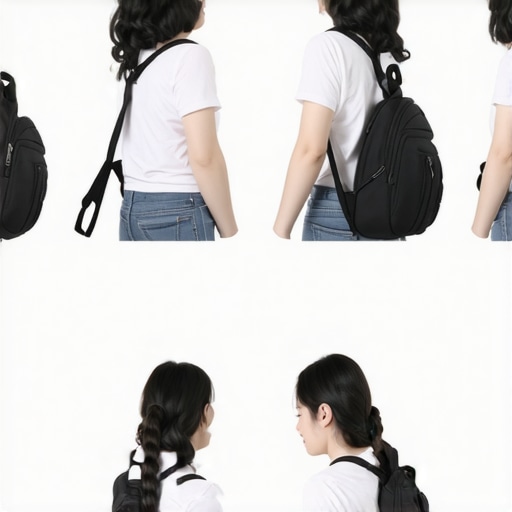
The simple move to fix your posture while washing dishes
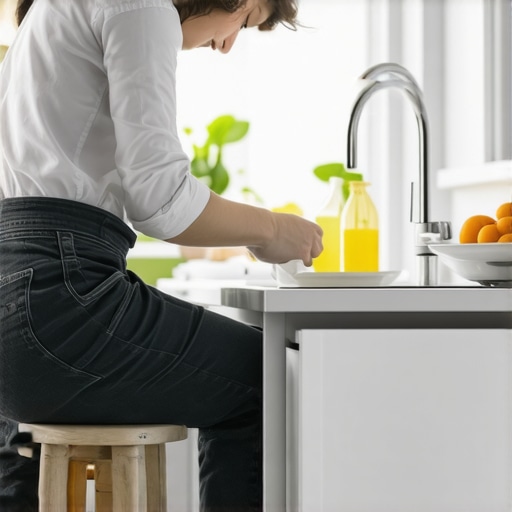
I was standing there, elbow-deep in lukewarm suds, when it hit me. Not a wave of productivity, but a sharp, burning tingle right at the base of my spine. I had only been scrubbing for ten minutes, but I felt like I had just run a marathon with a piano strapped to my back. It is a little embarrassing, isn’t it? We spend so much time worrying about our gym form or the ergonomics of our office chairs, but then the simple act of cleaning a few dinner plates leaves us reaching for the heating pad. I used to think I just had a bad back, but eventually, I realized I was actually sabotaging myself every single time I stepped up to the sink.
The Day I Realized My Sink Was a Trap
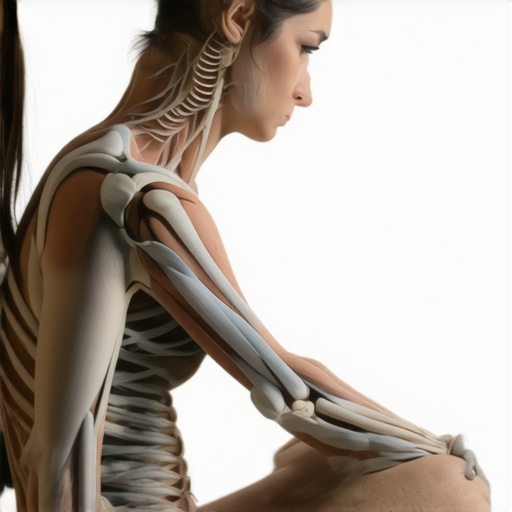
For years, I made the mistake of thinking posture was only something you practiced while sitting upright in a fancy chair. I would spend hours understanding back pain and trying to stay active, only to come home and hunch over the porcelain basin like a human question mark. That sink slump is a silent killer for your spinal discs. When we lean forward even slightly, the pressure on our lumbar spine increases exponentially. In fact, landmark research by Dr. Alf Nachemson demonstrated that leaning forward while standing can increase the load on your lower back discs by up to 150 percent compared to standing perfectly upright. I will be honest with you: I used to be the person who ignored these little signals. I figured a bit of neck and back discomfort was just the price of admission for adulthood. I was wrong. By the time I finished the drying, my shoulders were up at my ears and my lower back felt like it was made of dry, cracking glass. Have you ever had to sit down halfway through cleaning up just to let your back reset? If so, you are definitely not alone, and you are not just getting old—you are just fighting a losing battle against gravity.
Is a Tiny Shift Really Enough to Save Your Spine?
You might be skeptical. I certainly was when a colleague first mentioned it. How can one little movement change the way your entire body feels during a chore? We often look for complicated, expensive fixes, like medical braces or total kitchen remodels. But the truth is, the fix is much simpler than that. Today, I am going to show you exactly how to fix your posture while washing dishes using a trick so easy you will wonder why you did not think of it a decade ago. We are going to stop that burning sensation in your shoulder blades and the deep ache in your hips before the water even gets cold.
Stop Trying to Muscle Through the Fatigue
Earlier in my journey, I made a massive mistake: I tried to strengthen my way out of the problem. I thought if I just did more core exercises, the dishwashing ache would disappear. But even the strongest core in the world cannot save you if your mechanics are fundamentally broken. It is like trying to drive a car with the parking brake engaged; you are just wearing down the parts. It was not until I learned the secret to emptying the dishwasher without twisting and applied that same logic to the sink that things actually changed. We are going to talk about why your pelvis is the real culprit behind your kitchen fatigue and how to use your cabinets to your advantage.
Open Your Cabinet Door and Change Everything
You don’t need a standing desk or a $200 kitchen mat to fix this; you just need to open the cabinet door under your sink. I remember the first time I tried this. I was battling a lasagna pan that had been soaking for two days, and usually, that pan would have cost me thirty minutes of ice packs later. Instead, I opened the doors, rested one foot on the inner shelf, and felt the tension in my sacrum vanish. This is what I call the ‘Captain Morgan’ of kitchen ergonomics. By elevating one foot, you take the ‘tug-of-war’ tension out of your hamstrings and psoas, which prevents that nasty forward pull on your lower back. If you have ever wondered why your lower back aches after standing for 10 minutes, it is likely because your pelvis is locked in a battle it cannot win. Moving one foot up onto a small stool or the cabinet floor shifts your weight and resets your center of gravity, effectively decompressing the lumbar discs without you even realizing it.#IMAGE_PLACE_HOLDER_B#
Reset Your Hips to Stop the Lower Back Burn
Think of your pelvis like a bowl of water. When you hunch over the sink, that bowl tips forward, ‘spilling’ the water out the front and arching your lumbar spine into a dangerous curve. To fix this, you need to master a subtle internal shift. I used to think I needed to clench my abs until I turned blue, but that actually makes things worse. Instead, try the pelvic tilt trick for instant lumbar relief. It is a tiny rotation—imagine tucking your tailbone just an inch toward your heels. This simple engagement wakes up the muscles that actually support your spine. When I first started doing this, I realized why your glutes won’t fire and how to fix it; my backside had basically gone on vacation while my lower back was doing all the heavy lifting. By ‘firing’ the glutes, you create a stable base that protects your spine from the repetitive reaching involved in scrubbing.
Keep Your Chest Open and Your Shoulders Down
The kitchen sink is a magnet for the ‘gorilla’ posture—shoulders rolled forward and chin jutting out toward the faucet. This is why you feel that burning sensation between your shoulder blades. You are overstretching the middle back muscles while the chest muscles become tight and short. Before you even turn on the water, perform the 30-second pec stretch to fix slumping shoulders against the kitchen doorframe. It opens the ribcage and makes it much harder to collapse into a slump. During the actual washing, imagine there is a string pulling the crown of your head toward the ceiling. I found that if I kept my chest pointed ‘at’ the dishes rather than ‘over’ them, the tension in my neck disappeared entirely. This is a key component of effective neck pain management because it stops the mechanical stress before it can travel up to your cervical spine. Avoid leaning your belly against the sink; keeping a two-inch gap forces your deep stabilizers to stay active and prevents you from ‘hanging’ on your joints.
Why Your Favorite Hamstring Stretch Might Be Making Things Worse
Most people assume that if their lower back feels tight, the solution is to touch their toes. I spent years doing this, thinking I was helping my mobility, but I was actually aggravating my sciatic nerve. This is a classic case where common wisdom fails. When you have disc-related issues, repeated forward bending can increase the ‘creep’ in your spinal tissues, making them more vulnerable to injury. In fact, research by world-renowned spine biomechanist Dr. Stuart McGill suggests that for many people with lumbar issues, the focus should be on stability rather than excessive flexibility. This is why stretching your hamstrings won’t fix your lower back pain if the root cause is actually neural tension or a disc bulge. You are essentially pulling on an already irritated nerve, which is why that ‘good stretch’ feeling often turns into a dull ache an hour later. Have you ever fallen into this trap of over-stretching only to feel stiffer the next day? Let me know in the comments. #IMAGE_PLACE_HOLDER_C#
Can Your Breathing Patterns Really Stabilize Your Spine?
If you want to move like a pro, you have to look beyond the big mirror muscles. Everyone talks about ‘core strength,’ but they usually just mean doing crunches. Real stability comes from the inside out. I have seen countless patients who have rock-solid abs but cannot hold a simple plank without their back killing them. This is often because why your glute medius is more important than your abs for back health; it controls the lateral stability of your pelvis. Even more nuanced is the role of the diaphragm. If you are not using your breath to create intra-abdominal pressure, your spine has to pick up the slack. Learning how to breathe properly to reduce tension in your shoulders is not just about relaxation; it is about creating a pressurized ‘canister’ that supports your lumbar discs from the front.
Don’t Ignore the Signal Coming From Your Hands
A common mistake I see in those seeking neck pain relief is focusing exclusively on where it hurts. If your hands are going numb or your forearms feel heavy, the problem is rarely in your wrists. It is almost always ‘upstream.’ This is why we adjust your neck to fix your numb hands. The nerves that control your fingers exit from the lower cervical vertebrae. If those joints are jammed or misaligned from looking down at a screen, no amount of wrist stretching will fix the tingling. This is the ‘Oops’ factor: treating the symptom instead of the source. Similarly, why your pelvic floor matters for spinal stability is a conversation most people avoid, but that deep muscular sling is the floor of your core. If it is too tight or too weak, your lower back will never feel truly supported, no matter how many adjustments you get. You have to address the system, not just the segment.If you want to move beyond just surviving the dishes and actually start thriving in your body, you need a toolkit that doesn’t require a second mortgage. I have tried every vibrating foam roller and ‘posture-correcting’ shirt on the market, but I always come back to a $5 lacrosse ball. The reason is simple: precision. A foam roller is a sledgehammer; a lacrosse ball is a scalpel. I use it specifically because learning how to use a massage ball to release hip flexor tension correctly can shut off the ’emergency brake’ in your pelvis in under two minutes. By pinning the ball just inside your hip bone and slowly moving your leg, you are performing a targeted release that most generic stretches simply cannot reach.
How do I keep my spine resilient for the long haul?
Maintenance is not a weekend project; it is a daily tax you pay to avoid the ‘pain interest’ later in life. I have found that the most effective way to stay mobile is by stacking small habits onto things you already do. Every single morning, while my coffee is brewing, I go through the morning spinal hygiene routine every desk worker needs. It is not about sweating; it is about ‘lubricating’ the facet joints and reminding the nervous system that it is safe to move through a full range of motion. Dr. Kelly Starrett, a renowned doctor of physical therapy and author of *Becoming a Supple Leopard*, emphasizes the importance of a ‘bracing sequence’—organizing your spine before you even begin a movement. If you do not set your midline before you reach for a heavy laundry basket or even a coffee mug, you are essentially gambling with your discs. #IMAGE_PLACE_HOLDER_D#
Your Desk Setup is Still Lying to You
Even with the best tools, you cannot out-stretch eight hours of a bad environment. I spent months tweaking my office until I found the specific chair height that stops mid-back burning for my height. It was not about the price of the chair, but the relationship between my elbow angle and my screen. I am predicting that in the next few years, we will see a massive shift toward biofeedback-driven furniture. We are already seeing wearable sensors that vibrate when you slouch, but the future is likely AI-integrated vision systems. I have noticed how your vision impacts your neck position while gaming or working; if your eyes have to strain, your neck will follow. Future systems will adjust your monitor height or light levels in real-time based on your pupil dilation and head tilt to ensure you stay in a neutral zone.
Take Action with the Bruegger’s Relief Move
If you feel like your posture is a lost cause, start today with one advanced maneuver: the Brueggers relief move to reverse hours of hunched sitting. It takes thirty seconds. Perform it every time you finish a task—whether that is washing the dishes or sending a long email. You are essentially telling your brain to ‘reset’ the software that controls your muscles, shifting you from a state of chronic tension back into a state where you can revitalize your mobility. Don’t wait for the burning tingle to return to your spine; give your body the tools it needs to support you before you even step up to the sink.
Lessons From a Thousand Dirty Plates
Looking back at the years I spent wincing over a stack of plates, I realized that the biggest barrier to achieving lasting back pain relief wasn’t the dishes themselves—it was my own stubbornness. Here are a few things I learned the hard way: First, your sink is almost certainly not designed for your specific height, which means you have to be the one to adapt proactively. Second, the ‘Captain Morgan’ foot-prop is the single most effective way to enhance mobility naturally with chiropractic care principles without ever leaving your home. Finally, I discovered why taking ibuprofen for every back ache is not a solution; it just mutes the alarm while the fire is still burning. Real progress happened when I stopped treating my body like a tool and started treating it like a partner.
The Minimalist Tools That Saved My Spine
You do not need a luxury kitchen remodel to fix your form, but a few specific resources made all the difference in my recovery. I keep a lacrosse ball in my junk drawer because learning how to use a massage ball to release hip flexor tension was the only thing that stopped my lower back from seizing up after a big dinner. I also swear by a consistent morning spinal hygiene routine to ensure my joints are lubricated before I even pick up a sponge. If you spend time at a desk during the day, finding the specific chair height that stops mid-back burning is a game-changer that carries over into how you stand and move in the kitchen.
Your Kitchen Shouldn’t Feel Like a Battlefield
It is easy to feel defeated when your body protests against simple, daily tasks. But remember, every small adjustment you make—opening that cabinet door, tucking your tailbone, or relaxing your shoulders—is a massive victory for your long-term health. You deserve to move through your day without a constant background hum of discomfort. By using these proven strategies for back pain relief, you are not just washing dishes; you are investing in a future where you can stay active and present for the things that actually matter. Have you tried the cabinet door trick yet, or do you have another secret for staying comfortable at the sink? Let me know below.