Why walking on concrete is harder on your spine than you think
I remember a crisp October afternoon in New York City when I finally realized my back wasn’t just “tight”—it was under siege. I had spent six hours exploring the West Village, and by the time I reached the subway, every step felt like a lightning bolt shooting from my heels to my neck. For years, I told myself that walking was the safest exercise I could do. I was wrong. I was ignoring the fact that human spines weren’t designed to spend decades pounding against man-made stone. Today, I want to show you why that morning stroll might be the culprit behind your stiffness and how you can reclaim your mobility without giving up your daily walks. Have you ever noticed that your back aches more after a trip to the mall or a city walk than a hike in the woods? Let me know, because I’ve been there too.
The Hidden Toll of Every Step on the Pavement
When you walk on a trail, the earth yields to you. It’s a polite conversation between your foot and the ground. But concrete? Concrete is a one-sided argument. Every time your heel strikes that sidewalk, a shockwave travels upward at a speed your body isn’t always prepared to handle. Early in my journey to better health, I made a massive mistake: I assumed that if I just bought the most cushioned shoes on the market, I’d be bulletproof. I ignored how to fix your gait for better spinal alignment and instead trusted a piece of foam to do the work my muscles should have been doing. This neglect often leads to why your morning walk makes your lower back ache. Research published in the journal Clinical Biomechanics highlights that walking on hard surfaces increases ground reaction forces significantly compared to natural terrain, putting immense pressure on the intervertebral discs.
Is it really the ground’s fault or just my bad shoes?
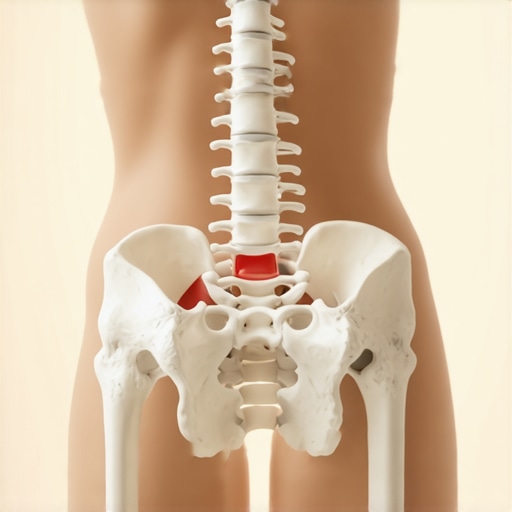
It’s tempting to blame the sneakers, but even the best footwear can’t fully compensate for the total lack of “give” in urban environments. If you have any underlying issues, such as the secret link between flat feet and chronic back pain, the concrete simply amplifies the misalignment. This constant jarring doesn’t just stay in your feet; it travels, manifesting as that familiar dull throb in your lumbar region. Learning about back pain recovery how chiropractic care transforms lives was the turning point for me, helping me understand that my spine needed more than just a soft insole—it needed a structural reset to handle the reality of modern life.
Trade the Heavy Heel Strike for a Gliding Step
Walking on concrete is like using a hammer on a stone floor; the energy has nowhere to go but back into the tool—in this case, your skeleton. Most of us have developed a “heavy” gait, reaching out with our lead foot and slamming the heel down. This over-striding is the fastest way to jam your sacroiliac joints. I remember a trip to London where I walked six miles a day. By day two, I was miserable. I forced myself to shorten my stride, keeping my feet more underneath my center of gravity. It felt like I was “gliding” rather than marching. By shifting to a mid-foot strike, you allow the arch of your foot and your calf muscles to act as natural springs. This is why why walking in flat shoes might be worsening your alignment—without proper support or mechanics, that “spring” never engages, and your lower back pays the price. #IMAGE_PLACE_HOLDER_B#
Why Stiff Ankles are Sabotaging Your Lower Back
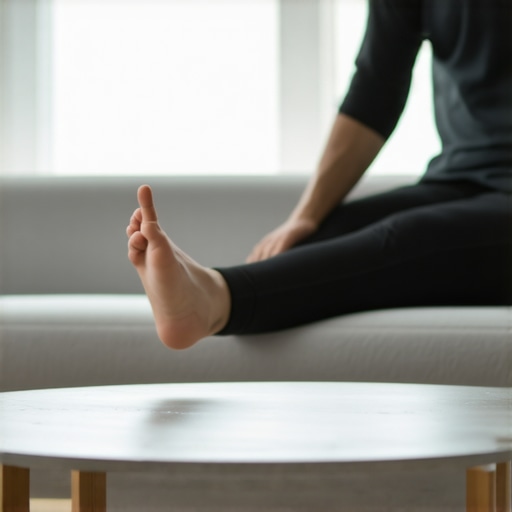
Think of your body as a series of connected gears. If the bottom gear—your ankle—is rusted shut, the gear above it has to work twice as hard to compensate. When your ankle lacks the range of motion to bend properly as you push off, your pelvis has to tilt to finish the step. This repetitive micro-tilting is a silent killer for your lumbar discs. I spent years stretching my hamstrings to fix my back, but the real culprit was my rigid ankles from an old basketball injury. Understanding the link between ankle mobility and lower back stability changed everything for me. Before you head out for a long city walk, spend sixty seconds doing some basic ankle circles or calf pumps. Using the 3-minute morning routine to lubricate your joints can prime these “gears” so they don’t lock up on the pavement.
Activate Your Internal Shock Absorbers
You don’t need a six-pack to protect your spine, but you do need an active core. Imagine your torso as a tall, flexible mast on a ship. Without the “guy-wires” (your deep abdominal muscles) pulled taut, the mast wobbles and strains the base. When walking on hard surfaces, I practice a “gentle zip.” It’s the feeling of pulling your belly button slightly toward your spine, as if you’re trying to fit into a pair of jeans that are just a half-inch too tight. This creates intra-abdominal pressure that supports your vertebrae from the inside out. If you’ve been struggling to find that relief, restore your range how chiropractic care enhances movement by ensuring those neural pathways between your brain and your core are actually firing correctly.
Hit the Reset Button Once You Get Home
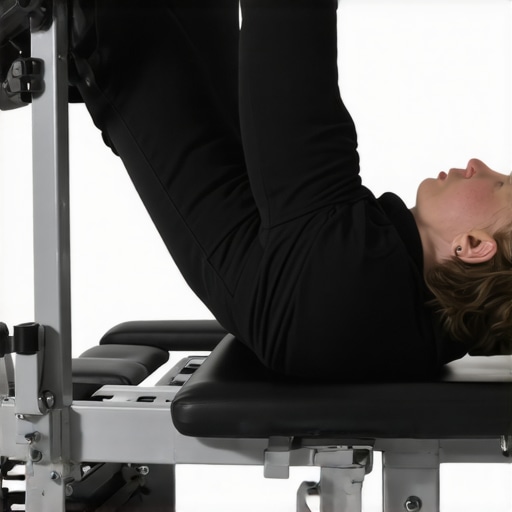
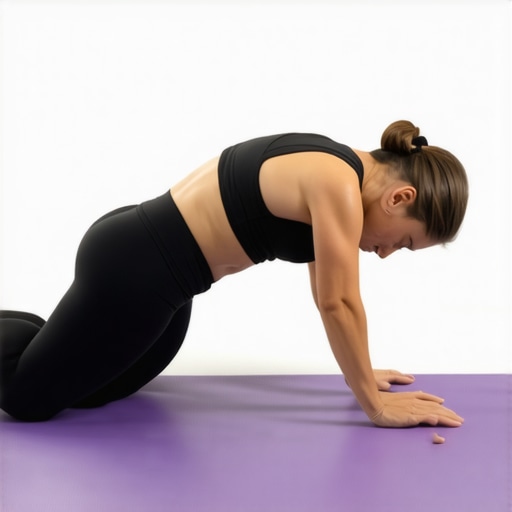
Gravity and concrete are a relentless duo. Even with perfect form, your spine will be slightly more compressed at the end of the day than it was in the morning. When I get home from a long day of urban trekking, I don’t just sit on the sofa—that actually locks the compression in. Instead, I spend a few minutes on the floor. Gravity is the only free medicine we have, and using it to your advantage is key. Try the 5-minute routine to decompress your spine after work to let those intervertebral discs breathe again. This “reset” phase is the difference between waking up stiff and waking up ready to go again. If you’re recovering from an old tweak, check out mastering back neck pain relief tips from the pros to see how professional adjustments can speed up this decompression process.It’s a common scene: someone feels a twinge in their upper traps and immediately starts cranking their head from side to side, hoping a deep stretch will provide relief. But here is the nuance most people miss: tightness is often a protective tension, not a structural one. When your brain senses instability elsewhere—perhaps in your lower back or even your ankles—it commands the neck muscles to ‘lock down’ to keep your head (and your vestibular system) level. If you force a stretch on a muscle that is voluntarily guarding your spine, you aren’t just wasting time; you’re actively fighting your body’s survival mechanism. This is why stretching a tight muscle isn’t always the answer and can sometimes lead to more inflammation. Have you ever fallen into this trap? Let me know in the comments.
Stop chasing the site of the pain
In the world of advanced biomechanics, we often talk about ‘tensegrity’—the idea that a change in one part of the system affects everything else. Most people assume neck pain starts in the neck. In reality, your cervical spine is often the victim, not the culprit. For example, if you have a pelvic tilt from sitting all day, your entire spine has to shift to keep your eyes on the horizon. This constant micro-adjustment is the hidden link between neck pain and spinal health. Research published in the Journal of Manipulative and Physiological Therapeutics suggests that cervical issues are frequently linked to imbalances in the lower kinetic chain. This is exactly why we look at your pelvis when your neck hurts; addressing the foundation is the only way to let the upper floor relax. #IMAGE_PLACE_HOLDER_C#
Is your “perfect posture” actually a prison for your spine?
We have been told since grade school to ‘sit up straight’ and ‘pull your shoulders back.’ However, trying to maintain a rigid, military-style posture is one of the biggest mistakes you can make. This ‘static’ posture creates immense muscular fatigue and prevents the natural oscillating movement your discs need to stay hydrated. True spinal health isn’t about a fixed position; it’s about dynamic stability. I see patients all the time who are ‘perfectly’ upright but are absolutely miserable because they’ve lost the ability to move fluidly. Learning why your perfect posture is actually making you stiff is a massive eye-opener for most. Instead of a stiff pose, focus on how chiropractic care enhances movement by restoring the joint play that allows for effortless, rather than forced, alignment.
The trap of the morning ice pack
When a neck gets stiff, the first instinct is often to reach for an ice pack. While ice is great for a brand-new, acute injury with visible swelling, using it on a chronic, ‘grumpy’ neck can actually backfire. Cold causes tissues to contract and can decrease the local blood flow needed for repair. In many cases, why icing a stiff neck might be making it harder to move comes down to the fact that you are essentially ‘freezing’ a muscle that is already in spasm. Switching to gentle heat or, better yet, movement-based therapy is often the ‘secret’ to unlocking neck pain relief for the long term. If you’ve been struggling with recurring stiffness, it’s time to stop treating the symptoms and start looking at the structural global pattern. Check out chiropractic secrets to boost neck comfort and function to understand how a professional can spot these subtle mechanical failures before they become chronic disabilities.I’ve spent thousands of dollars on high-tech gadgets that promised to ‘fix’ my alignment overnight. Most of them are currently gathering dust in a closet. But two low-tech items stay in my travel bag wherever I go: a standard tennis ball and a simple lumbar roll. I use the tennis ball because its diameter and compression rate are nearly perfect for hitting the rhomboids and levator scapulae without irritating the bone. I’ve learned that how to use a tennis ball to release upper back tension is far more effective than a high-speed massage gun because it allows for static, ischemic pressure—holding a point until the muscle actually ‘gives’ and resets its resting length. Meanwhile, the lumbar roll is my ‘commuter’s secret.’ Most car seats are designed for safety and style, not individual spinal curvature. By learning the correct way to use a lumbar roll in your office chair and transferring that logic to my driver’s seat, I stopped arriving at my destination with a locked-up lower back. These aren’t just accessories; they are tools that keep the work done in the clinic from being undone by the car ride home.
How do I maintain my spinal health over time?
The mistake I see most often in my blog community is the ’emergency-only’ mindset. You shouldn’t wait for a crisis to check your alignment. I view my monthly visits as ‘mechanical tuning’ for my nervous system. This is where mobility mastery expert tips for back pain prevention and recovery become part of a lifestyle rather than a rescue mission. Research by world-renowned spine expert Dr. Stuart McGill, author of Back Mechanic, suggests that building ‘endurance’ in the core—rather than just raw strength—is what actually protects the intervertebral discs over the long haul. His ‘Big Three’ exercises (the modified curl-up, side bridge, and bird-dog) are the gold standard for creating a protective ‘belt’ of muscle around your lumbar spine. When you combine this daily core endurance with the way chiropractic care enhances movement naturally, you aren’t just managing symptoms; you are actively building a body that can handle the pavement without breaking down. #IMAGE_PLACE_HOLDER_D#
The future of back health is wearable and real-time
Looking ahead, I predict we are moving away from reactive treatments toward real-time haptic biofeedback. We are already seeing the emergence of smart shirts and sensors that gently vibrate the moment your shoulders round or your pelvis tilts into a compromised position. This ‘digital nagging’ will eventually become the norm, helping us bridge the gap between a professional adjustment and our 40-hour-a-week desk habits. Until that technology is ubiquitous, we have to be our own sensors. I recommend starting with proven chiropractic strategies to restore your back mobility to clear out the existing mechanical ‘noise’ in your nervous system. Once the slate is clean, these tools and habits actually have a chance to work. If you’re tired of the constant stiffness cycle, try my ‘tennis ball reset’ tonight before bed and see how much lighter your shoulders feel tomorrow morning.
The Hardest Lesson My Spine Taught Me on the Sidewalk
If you wait until you can’t turn your head to address your alignment, you’re playing a losing game of catch-up. One of the most vital lightbulb moments for me was realizing that pain is often the very last symptom to show up and the first to leave, but the underlying mechanical issue remains. I’ve learned that chiropractic secrets to regain full mobility after injury are vital, but preventative maintenance is the real superpower. Stretching into sharp pain is a recipe for disaster; if a muscle feels perpetually tight, it is often acting as a protector, not a problem. Your environment won’t change, so your mechanics must. The concrete isn’t getting softer, and your desk isn’t getting more ergonomic on its own. You have to be the variable that shifts to survive the urban jungle.
The Gear That Earns a Permanent Spot in My Travel Bag
I am frequently asked which tools actually make a difference versus which ones are just clever marketing. First, Dr. Stuart McGill’s ‘Back Mechanic’ is the only book I recommend to every single person I meet. It helped me understand that stability is the foundation of freedom and that endurance beats raw strength for disc health. Second, a Simple Tennis Ball is the most cost-effective tool in existence. Knowing how to use a tennis ball to release upper back tension has saved me from dozens of looming tension headaches after long flights. Third, a Portable Lumbar Roll is non-negotiable for my car and office chair. Finally, nothing replaces a pair of trained hands checking your alignment; I rely on chiropractic techniques unveiled to keep my nervous system firing without mechanical interference. #IMAGE_PLACE_HOLDER_E#
Your Body Is Ready for a Reset
Chronic pain can feel like a heavy fog that never lifts, but it doesn’t have to be your permanent reality. By implementing these small shifts—shorter strides, better breathing, and targeted recovery—you can revitalize your mobility and get back to enjoying your daily walks. You don’t need a miracle; you just need a better relationship with your own mechanics and the consistency to keep them tuned. Your back pain doesn’t define you—it’s just a signal from your body that it’s time to move differently. Have you ever noticed that your back aches more after a specific daily chore, like washing dishes or walking the dog? Let me know in the comments below.