Why we look at your feet to solve your neck issues
I remember sitting in my kitchen three years ago, trying to massage a knot in my neck that felt like a hot marble. I had changed my pillow, bought a standing desk, and even tried those weird posture shirts. Nothing worked. It wasn’t until I visited a specialist who barely looked at my neck and instead asked me to take off my shoes that the lightbulb finally flickered on. I spent years rubbing my neck, thinking the problem was my desk, but I was ignoring the very foundation I stood on every day. If you are struggling with that constant, nagging tightness at the base of your skull, you might be looking in the wrong place entirely.
Your Neck Is Only the Messenger
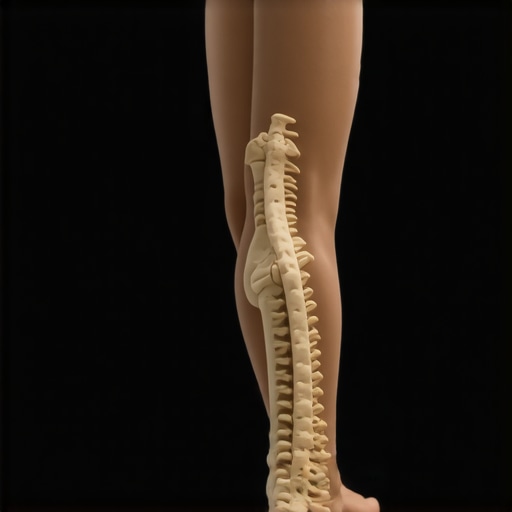
When we talk about why we look at your feet when your neck hurts, we are talking about the kinetic chain. Think of your body like a skyscraper. If the basement is shifting or the foundation is uneven, you’re eventually going to see cracks in the penthouse. Your neck is the penthouse. I made the massive mistake early on of thinking that if I just did enough chin tucks, the pain would vanish. But I was wearing worn-out sneakers that forced my knees to cave in, which tilted my pelvis and sent a ripple of instability all the way up to my shoulders. This is exactly the hidden link between neck pain and spinal health that most people miss. According to a study published in the Journal of Manipulative and Physiological Therapeutics, foot orthotics and proper gait support can significantly reduce strain in the upper kinetic chain by stabilizing the pelvis. Today, we are going to dive into how your walk dictates your posture and why fixing your gait is often the fastest way to find lasting relief for your cervical spine.
Can my big toe really cause a headache?
It sounds like a stretch, doesn’t it? You’re skeptical because the fire is in your neck, not your toes. But consider this: when your arch collapses, your leg rotates inward, your hip drops, and your spine has to curve to compensate. If your foundation is off, the secret to better balance—and a pain-free neck—might literally be how you use your feet. I found out the hard way that walking in flat shoes was sabotaging all the work I did at the gym. Have you ever noticed that your neck tension gets significantly worse after a day of walking around in unsupportive flip-flops or heavy boots? That is your body screaming for a better base. We aren’t just treating a neck; we are balancing a whole person.
Check Your Foundation Before You Touch Your Neck
Start by standing in front of a mirror with your feet shoulder-width apart. Look at your arches. Do they disappear as soon as you put weight on them? This collapse triggers a domino effect. When I first started investigating this, I realized my left arch was significantly flatter than my right. This led to a subtle tilt in my pelvis, which my neck had to compensate for by tightening the muscles on the opposite side just to keep my eyes level. We often see this when we check your leg length during every visit—it’s rarely about the bones being different sizes and usually about how your feet are interacting with the ground. If your feet aren’t level, your head can’t be either.
The Sneaker Test That Saved My Cervical Spine
Next, audit your footwear. I used to love those ultra-flat, stylish sneakers because they felt light. But for my specific foot structure, they were a disaster. I spent three months wondering why my jaw was clicking until I swapped them for something with actual arch support. It turns out that the secret link between flat feet and chronic back pain is often hidden in your favorite pair of shoes. Take your most-worn shoes and set them on a table. If they lean inward or if the heel is worn down on just one side, you are essentially walking on a slanted floor all day. This constant micro-adjustment is exactly why your neck feels stiff after using the treadmill; your body is fighting for balance on an unstable platform.#IMAGE_PLACE_HOLDER_B#
Retrain Your Strike to Protect Your Spine
To fix this, you need to retrain how you strike the ground. Most of us are “heel strikers” who slam our weight down, sending a shockwave straight up the kinetic chain. Try focusing on a mid-foot strike. It feels weird at first—like you’re learning to walk again—but it softens the impact on your cervical discs. This is a core part of how to fix your gait for better spinal alignment. I remember the first week I tried this; my calves were screaming because they were actually doing their job, but for the first time in years, that burning sensation at the base of my skull didn’t flare up after my afternoon walk. You can also enhance mobility naturally with chiropractic care by ensuring your ankles aren’t locked, as stiff ankles force the knees and hips to take the brunt of every step.
Use Your Toes for Better Stability
Don’t forget the power of your big toe. It acts as the anchor for your entire body. If you can’t press your big toe into the ground while you walk, your arch will inevitably collapse. I used to “scrunch” my toes inside my shoes, which deactivated my arch and sent tension straight into my upper traps. Learning that the secret to better balance starts with your big toe changed everything. By simply focusing on “grabbing” the ground with my toes, I stabilized my pelvis and felt my shoulders drop an inch. This small mechanical shift is often why your jaw clicking is actually a neck problem—tension travels upward until it finds the smallest, most vulnerable joints.But here is where most of us get it wrong. We think the solution to tension is simply more stretching. I spent years reaching for my toes or pulling my head to the side, only to find the relief lasted about ten minutes. The reality is that why stretching a tight muscle isnt always the answer often comes down to muscle inhibition. If a muscle is tight because it is weak or overstretched by a poor gait, more stretching just destabilizes the joint further. This is a primary reason why chiropractic secrets to boost neck comfort and function focus on activation and alignment rather than just flexibility.
Stop trying to sit like a statue
We have been told since kindergarten to sit up straight, but that advice is actually incomplete. When you force your spine into a rigid, upright position, you are creating isometric tension that exhausts your deep spinal stabilizers. This is why sit up straight is actually bad advice for some; the ideal posture is actually your next posture. Movement is the lubricant for your discs. A study published in the Journal of Bodywork and Movement Therapies highlights that micro-movements and frequent postural shifts are far more effective at reducing spinal compression than holding a perfect static pose. #IMAGE_PLACE_HOLDER_C#
How do I know if my headache is actually a hidden neck issue?
It is easy to mistake a cervicogenic headache for a standard tension headache or even a migraine. If you notice that your pain starts at the base of your skull and wraps around to your temple, you need to learn how to tell if your headache is starting in your neck. Often, these headaches are the final symptom of the gait and foot issues we discussed earlier. Your neck is simply the part of the chain that finally gave up.
The trap of the Perfect Core
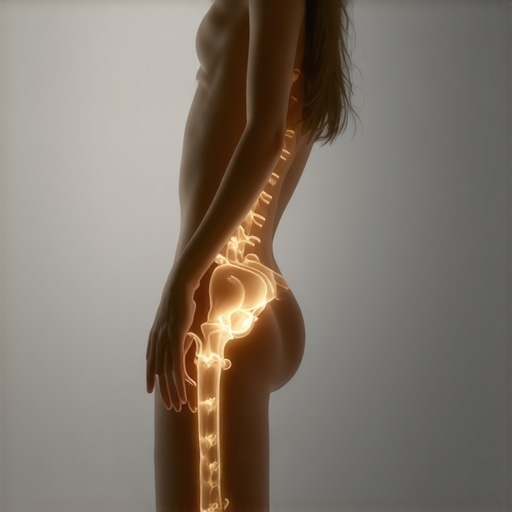
Here is another nuance: you can actually have a core that is too strong. I see athletes all the time who brace their abdominals so tightly that they lose the ability to breathe into their lower back. This rigidity travels upward and locks the thoracic spine, forcing the neck to do all the work of turning and looking around. Understanding why your strong core might actually be too rigid is a major breakthrough for many. If you cannot breathe while you brace, you are not stable—you are just stuck. Have you ever fallen into this trap of trying to force your posture into place? Let me know in the comments below.
Ditch the Foam Roller for Your Low Back
I see so many people trying to ‘roll out’ their lower back pain, but if you’re using a foam roller directly on your lumbar spine, you might be doing more harm than good. Because the lower back lacks the structural protection of the rib cage, excessive pressure can actually cause your muscles to seize up further. Instead, my go-to tool is a simple pair of lacrosse balls taped together. I use them on my mid-back—the thoracic spine—to create the extension I lose while sitting. This is a core part of revitalize your mobility proven strategies for back pain relief. By opening up the mid-back, your neck doesn’t have to crane forward to see the world.
Focus on Your Feet to Free Your Neck
If you want to maintain these results, you need a toolkit that targets your foundation. I’m a huge advocate for using a single lacrosse ball on the soles of your feet every morning. This breaks up the fascia that gets ‘glued’ together from years of wearing narrow shoes, and it’s the first step in how to improve your balance by strengthening your toes. I also swear by toe spacers. They look silly, but they are essential for undoing the ‘tapered’ toe box damage that forces your arches to collapse. When your toes splay naturally, your gait stabilizes, and that nagging tightness in your upper traps often disappears. #IMAGE_PLACE_HOLDER_D#
How do I maintain my spinal alignment over time?
Consistency always beats intensity. I used to think a long yoga session once a week was the answer, but I was wrong. The real transformation happens in the 30-second resets you do throughout the day. You should prioritize mobility mastery expert tips for back pain prevention and recovery by moving your joints through their full range while doing mundane tasks. Dr. Kelly Starrett, author of Becoming a Supple Leopard, argues that ‘all human beings should be able to perform basic maintenance on themselves.’ This means testing your own range daily. If you can’t comfortably look over your shoulder while driving or touch your toes without a struggle, don’t wait for the pain—adjust your movement immediately.
Sensors are the future of your posture
I predict we are moving away from ‘ergonomic’ chairs and toward wearable haptic sensors. In the next few years, back pain recovery how chiropractic care transforms lives will be supported by biofeedback data from our clothing. Imagine a shirt that gently vibrates when your shoulders round or socks that alert you when your arch starts to collapse. This real-time data will allow us to fix our gait before the first spark of neck pain even begins. For now, you have to be your own sensor. Try this right now: Take your shoes off and try to lift only your big toe while keeping the other four flat on the floor. If you can’t do it, your foundation is weak. Commit to two minutes of this ‘toe yoga’ daily to stabilize your entire kinetic chain. If you’re feeling stuck, don’t hesitate to contact us for a personalized assessment.
The Subtle Shift That Finally Stopped the Burning
Reflecting on my own recovery, I realized the biggest hurdle was my mindset. I was treating my body like a collection of separate parts rather than a single, fluid machine. When I finally embraced the idea that my feet were ‘silent’ inside my shoes, the lightbulb went off. My neck was screaming because it was doing the work of my arches and my glutes. Here are the core truths I learned on that journey:
- Pain is a protective output: Your brain tightens your neck because it doesn’t trust your balance. When you stabilize your foundation, your nervous system finally gives your cervical spine permission to relax. This is a core part of unlocking neck pain relief expert tips for lasting comfort.
- Consistency over intensity: You don’t need an hour of stretching. You need two minutes of toe yoga and a few mid-day gait checks.
- The expensive chair isn’t a cure: You can’t out-buy a poor kinetic chain. No ergonomic setup can fix a pelvis that is tilted because you are walking on your heels.
My Minimalist Toolkit for Whole-Body Alignment
If you are ready to stop chasing symptoms and start addressing the cause, I recommend starting with these specific tools. I personally use a pair of lacrosse balls taped together to tackle my mid-back stiffness; it is more precise than any foam roller. For foot health, I swear by silicon toe spacers to undo the ‘tapering’ effect of modern footwear, which is essential for revitalize your mobility proven strategies for back pain relief. Finally, I highly suggest reading Becoming a Supple Leopard by Dr. Kelly Starrett. It’s the ultimate manual for understanding how to maintain your own joints and avoid the traps of static posture.
Your Spine Doesn’t Have to Feel Like a Permanent Knot
It is easy to feel like your body is failing you when chronic tension sets in, but remember that your neck is simply reacting to the world you’ve built beneath it. By focusing on your feet, retraining your gait, and moving with intention, you are giving your spine the support it has been craving for years. Real, effective neck pain management isn’t about one ‘magic’ stretch; it’s about the foundation you stand on every single day. Take that first step literally and focus on how your big toe hits the floor today.
Have you noticed that your neck pain flares up specifically after wearing a certain pair of shoes or spending a long day walking on hard surfaces? Let me know in the comments below, or contact us to see how we can help you find your balance.